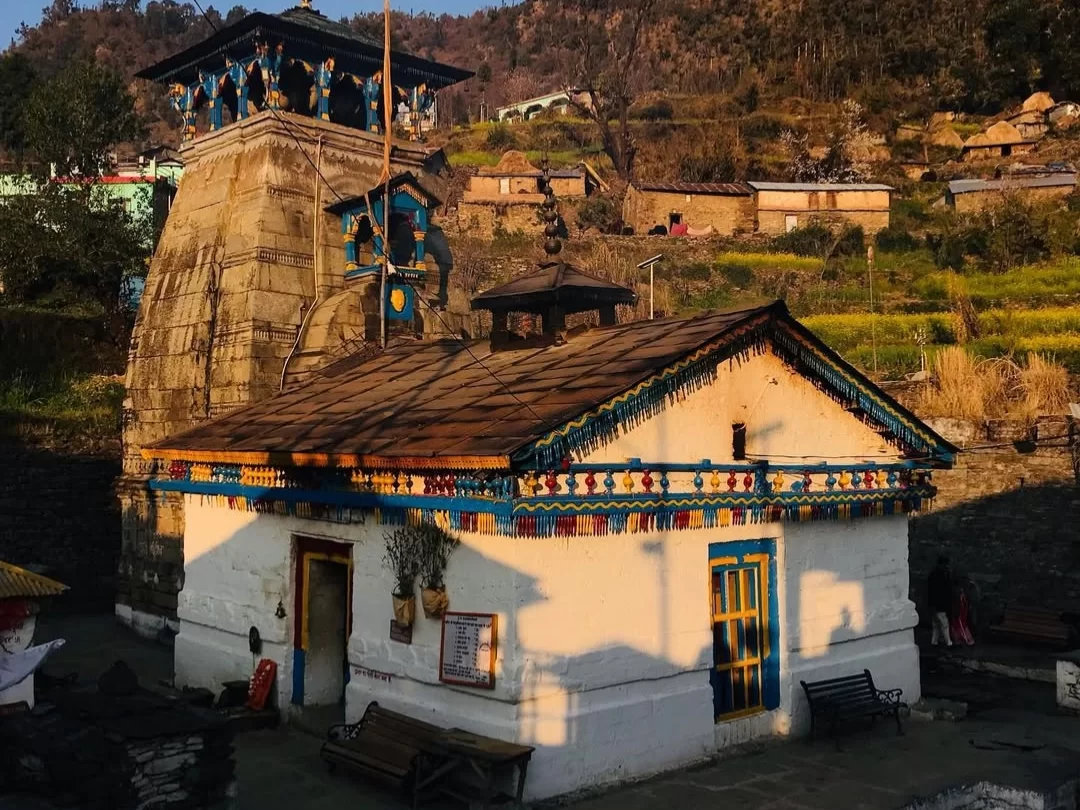
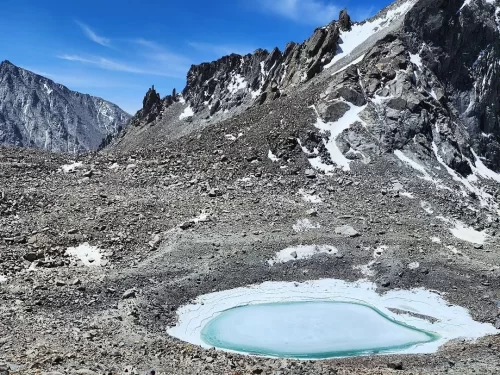
Triyuginarayan Temple Guptkashi, Uttarakhand, India

Triyuginarayan Temple , Guptkashi
Visitors come for religious worship and to see the sacred fire believed in local tradition to have burned since the mythological wedding of Lord Shiva and Goddess Parvati. The temple features traditional stone architecture and is accessible by road from Sonprayag, with increased footfall during the Char Dham pilgrimage season.

Quick Facts About Triyuginarayan Temple

Entry Fee Free
Timings 06:00 - 20:00
Altitude (m) 1980
Ideal Visit Duration (hrs) 1
Best Time of Day Morning
Crowd Level Moderate
Distance from Guptkashi (km) 12
Walking Difficulty Easy
Parking Available Yes
Last Mile Access Road
Suitable for Kids Yes
Suitable for Seniors Yes
Wheelchair Friendly No

Why Visit Triyuginarayan Temple, Guptkashi

Triyuginarayan Temple near Guptkashi attracts devotees and travelers for its association with the sacred wedding of Lord Shiva and Goddess Parvati, as per Hindu tradition. Located in a quiet Himalayan village, the temple is visited both as a pilgrimage stop and as a cultural landmark connected to the Kedarnath circuit.

The atmosphere at the temple is calm and village-centered, with stone pathways and surrounding mountain views creating a simple, open setting. A continuously burning sacred fire, believed to symbolize the divine wedding flame, remains the focal point within the courtyard, drawing steady but manageable footfall.

What makes Triyuginarayan Temple distinct is its living ritual of the eternal flame combined with its location away from the heavier crowds of major Himalayan shrines. Unlike large pilgrimage complexes, it offers a compact temple experience rooted in mythology and local tradition within a peaceful mountain environment.

History of Triyuginarayan Temple, Guptkashi

Triyuginarayan Temple is an ancient Hindu temple located in Rudraprayag district near Guptkashi, Uttarakhand. The temple is dedicated to Lord Vishnu and is traditionally associated with the celestial marriage of Lord Shiva and Goddess Parvati, which, according to Hindu belief, took place at this site in the presence of Lord Vishnu.

The present stone structure is believed to date back to the early medieval period, likely between the 8th and 12th centuries CE, and reflects North Indian Nagara-style temple architecture similar to that seen in other Himalayan shrines. The temple complex contains an eternal fire (Akhand Dhuni), which local tradition holds has been burning since the divine wedding ceremony; this association is regarded as sacred legend rather than verifiable historical record.

Triyuginarayan Temple remains an active pilgrimage site and is protected as a heritage structure. Its historical identity is shaped by its medieval architectural form and its enduring religious association with one of the most significant mythological events in Shaivite tradition.

Best Time to Visit – Triyuginarayan Temple Guptkashi

Triyuginarayan Temple near Guptkashi is best visited when Himalayan roads are stable and skies are clear, as the temple sits at high altitude and weather directly affects travel comfort and mountain visibility.
  • Ideal months: April to June and September to November offer the most reliable travel and darshan conditions.
  • Weather during the best season: Late spring and early summer bring daytime temperatures of approximately 10–22°C with clearer skies and comfortable conditions for exploring the temple courtyard and nearby kunds. Post-monsoon autumn provides crisp air, greener surroundings, and improved Himalayan visibility.
  • Periods to avoid (and why): July to August sees monsoon rainfall in the Rudraprayag district, increasing landslide risk on mountain roads and making pathways slippery. December to March can be very cold, with occasional snowfall and temperatures near freezing, which may affect road access and visitor comfort.

How to Reach Triyuginarayan Temple Guptkashi

  • Nearest Airport: Jolly Grant Airport, Dehradun (approximately 230–240 km from Triyuginarayan). The airport has regular connectivity to Delhi and select Indian cities. From Dehradun, taxis to Guptkashi/Triyuginarayan typically take 7–8 hours depending on mountain road and weather conditions.
  • Nearest Railway Station: Rishikesh Railway Station (approximately 210–220 km away) has limited connectivity, while Haridwar Railway Station (around 240 km away) offers broader train services. From either station, buses and taxis operate toward Rudraprayag and Guptkashi.
  • Road Access & Last-Mile Connectivity: Triyuginarayan Temple is located about 12–14 km from Sonprayag and around 30 km from Guptkashi in Rudraprayag district. Motorable access is available up to Triyuginarayan village via a narrow hill road branching from the Sonprayag route. Private vehicles and taxis can reach near the temple entrance, with limited parking available in the village. The final access involves a short walk through the village to the temple complex. Roads are steep and winding and may be affected by landslides during the monsoon or snowfall in winter months.

What to Expect When You Visit Triyuginarayan Temple Guptkashi

  • Environment and Surroundings: Triyuginarayan Temple is located in Triyuginarayan village, about 12–15 km from Sonprayag and around 35 km from Guptkashi in Rudraprayag district, Uttarakhand. The temple sits at an altitude of approximately 1,980 metres, surrounded by Himalayan foothills and terraced fields. The stone-built temple complex resembles the Kedarnath architectural style and is set within a quiet mountain village. Winters (December to February) can be cold with occasional snowfall, while monsoon months (July to September) bring mist and slippery paths.
  • Facilities and Amenities: Basic facilities are available near the temple, including small shops selling prasad and tea stalls. Simple guesthouses and homestays operate in the village. Public toilet facilities are limited and basic. There are no large commercial establishments within the immediate temple courtyard. Drinking water may be available from local sources, but carrying personal water is advisable.
  • Accessibility and Movement: The temple is accessible by motorable road from Sonprayag and Guptkashi, though the approach road includes hilly stretches with sharp turns. Parking is available near the village area, followed by a short walk to the temple entrance. Movement within the complex involves walking on stone-paved surfaces and navigating a few steps. During winter or monsoon, surfaces can become slippery.
  • Typical Visitor Behavior and Conditions: The temple attracts pilgrims and couples seeking traditional wedding ceremonies, as it is associated with the mythological marriage of Lord Shiva and Goddess Parvati. Footfall is moderate throughout the year, increasing during the Char Dham Yatra season (May to October). Visitors typically spend 30–60 minutes exploring the temple and sacred kund areas. During peak pilgrimage months, waiting times may increase slightly, though crowds are generally manageable compared to Kedarnath.

Important Visitor Information – Triyuginarayan Temple Guptkashi

  • Crowd & Weather Notes: The temple receives steady pilgrims year-round, with higher footfall during the Char Dham Yatra season (May to October) and on auspicious Hindu wedding dates, as it is traditionally associated with the celestial marriage of Lord Shiva and Goddess Parvati. Winters (December to February) can be very cold with occasional snowfall, limiting access.
  • Peak / Quiet Hours: Late mornings between 9:00 AM and 12:30 PM are generally busier, particularly during wedding ceremonies and yatra season. Early mornings are comparatively quieter for darshan.
  • Dress Code: Modest attire is expected within the temple premises. Footwear must be removed before entering the shrine area. Warm layered clothing is advisable due to the village’s high-altitude location.
  • Safety Notes: The temple is situated in a hill village with stepped pathways and uneven stone flooring that may be slippery during monsoon or winter frost. Road access from Guptkashi involves narrow mountain stretches; caution is required while driving. Basic facilities are available in the village, but medical infrastructure is limited.

Photography and Viewpoints – Triyuginarayan Temple Guptkashi

  • Best viewpoints/angles: The stone temple is best photographed from the main courtyard, framing the shikhara with the stepped kund (sacred water tank) in the foreground; a slight diagonal angle from the right side highlights the temple’s layered stone architecture against the Himalayan backdrop; the eternal flame (Akhand Dhuni) area can be included from the outer mandapa without obstructing devotees.
  • Lighting & time-of-day: Early morning offers softer light on the grey stone façade and clearer Himalayan views behind the temple; late afternoon enhances texture on the stone walls with angled illumination; winter months typically provide sharper mountain visibility compared to monsoon haze.
  • Rules/restrictions: Photography is generally permitted in the outer temple complex, but avoid photographing inside the sanctum (garbhagriha); do not use flash near the eternal flame or during active ???? (worship); drone usage may require prior permission due to religious and local administrative regulations.
  • Crowd & access factors: The temple sees increased footfall during wedding ceremonies and peak pilgrimage season (May–June, September–October), limiting uninterrupted courtyard compositions; early weekday mornings provide quieter access; the stone flooring can be uneven and slippery during monsoon.

Near By Attraction

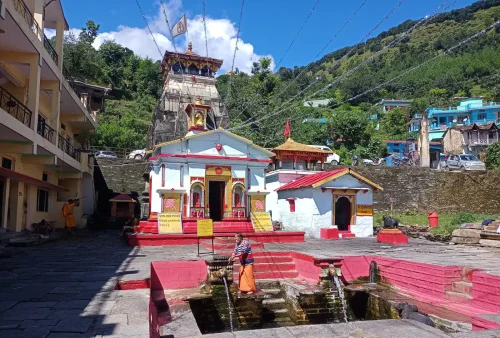
Gauri Kund Uttarakhand sacred hot water spring and pilgrimage stop near Kedarnath trek route Kund

Gaurikund

Gaurikund is the base and starting point for the Kedarnath trek, known for its hot springs, Shiva temple, and scenic Himalayan surroundings.
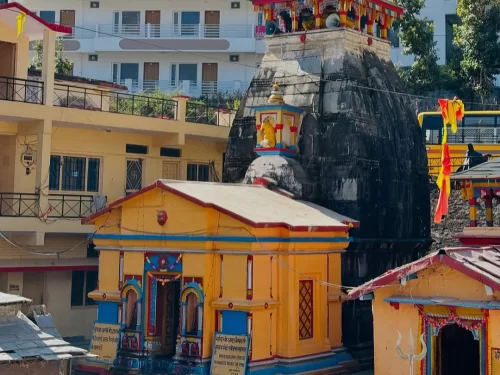
Shree Kashi Vishwanath Temple Guptkashi ancient Shiva temple near Kedarnath with traditional Himalayan architecture Temple

Shree Kashi Vishwanath Temple Guptkashi

Shree Kashi Vishwanath Temple in Guptkashi is a revered Shiva temple on the Kedarnath pilgrimage route, attracting devotees seeking blessings and spiritual experience.

Ukhimath Omkareshwar Temple towering stone shikhara colorful blue red yellow wood carved facade cloudy skies flag fluttering, perfect Kedarnath winter Shiva temple, Uttarakhand tour packages. Temple

Ukhimath Omkareshwar Temple

Ukhimath Omkareshwar Temple in Guptkashi is a revered Shiva shrine and winter seat of Kedarnath’s deity, attracting pilgrims from across Uttarakhand.

Frequently Asked Questions About Triyuginarayan Temple

Triyuginarayan Temple is located near Guptkashi in Rudraprayag district of Uttarakhand, situated in a small mountain village at moderate altitude.
Triyuginarayan Temple is generally open from early morning around 6 am until evening around 7 pm. Timings may vary slightly during special religious events in Uttarakhand.
There is no mandatory entry fee to visit Triyuginarayan Temple. Visitors can enter freely and offer voluntary donations at the shrine.
Visitors can reach Triyuginarayan Temple by road from Guptkashi in Uttarakhand using private vehicles or local taxis. The nearest major railway station is Rishikesh, and Jolly Grant Airport in Dehradun is the closest airport.
The best time to visit Triyuginarayan Temple is between April and June and September to November when the weather in Uttarakhand is pleasant and roads are usually clear.
Most travelers spend about 45 minutes to 1.5 hours at Triyuginarayan Temple including darshan time and exploring the temple courtyard.
Triyuginarayan Temple is accessible by a motorable road up to the village, with a short walk required from the parking area to the temple entrance.
Guesthouses, small hotels, and homestays are available in Guptkashi and nearby areas in Uttarakhand. Limited basic stays may also be available in the temple village.
Small local eateries are available near Triyuginarayan Temple in the village area. Restroom facilities are basic and may be limited, so visitors should plan accordingly.
Triyuginarayan Temple is suitable for senior citizens as it is road accessible, though a few steps near the entrance may require careful movement.

Loved this place ? Let’s Plan Your Uttarakhand Trip

Get customized Uttarakhand tour planning designed around seasonal weather changes, hill road travel timing, pilgrimage flow, and comfort-based pacing. Whether you are visiting for spiritual journeys, Himalayan views, wildlife reserves, river valleys, or p

⚡ Quick Response | 💰 Free consultation | 🕒 24×7 expert support

×

Plan Your Trip