Quick Facts About Nandaprayag
Nandaprayag, Uttarakhand Quick Facts
| Entry Fee | No entry fee for visiting the confluence area and town |
| Timings | Open 24 hours; nearby temples follow their own specific schedules |
| Altitude (m) | Approximately 900–920 m above sea level |
| Ideal Visit Duration | 1–2 hours for the confluence viewpoint; longer if visiting temples |
| Best Time of Day | Morning or late afternoon for clear views and comfortable weather |
| Crowd Level | Low to moderate; increases during Char Dham pilgrimage season |
| Distance from City Centre (km) | 0 km (located within the main town area) |
| Walking Difficulty | Easy; short walks on uneven paths near riverbanks |
| Parking Available | Limited roadside parking available in town areas |
| Last Mile Access | Direct road access; short walk required to reach river confluence points |
| Suitable for Kids | Yes, with supervision near water edges |
| Suitable for Seniors | Yes, with caution on uneven and sloped areas |
| Wheelchair Friendly | Partially accessible; town roads are usable but riverfront areas are limited |
Why Visit Nandaprayag, Uttarakhand
Travelers visit
On the ground,
History of Nandaprayag, Uttarakhand
Nandaprayag is one of the Panch Prayag, located at the confluence of the Alaknanda and Nandakini rivers in the Garhwal region of Uttarakhand. This meeting point has long been recognized as a significant geographical and spiritual landmark in the Himalayan river system.
The name Nandaprayag is traditionally associated with local beliefs linked to King Nanda and, in some interpretations, with devotional references to Goddess Nanda. These associations have contributed to its religious identity within regional traditions of the Himalayas.
Historically, Nandaprayag has functioned as a resting and passage point on pilgrimage routes toward higher Himalayan shrines. Its river confluence has remained central to its cultural and spiritual importance for travelers and local communities.
Best Time to Visit Nandaprayag, Uttarakhand
Nandaprayag is most accessible and visually rewarding during stable travel seasons when river confluences are clearly visible and road conditions across the Garhwal region remain dependable for pilgrimage and hill travel.
- Ideal Months: April to June and September to November are the most suitable periods for visiting, offering reliable road access and clearer views of the Alaknanda–Nandakini confluence.
- Weather Conditions: These months generally provide comfortable daytime conditions with clear skies, making river viewpoints, temple visits, and highway travel through the region more manageable.
- Periods to Avoid: July to August should be avoided due to heavy monsoon rainfall, which can cause landslides, road closures, and reduced safety on mountain routes. Mid-winter months can also bring cold conditions that may limit comfort for extended outdoor exploration.
How to Reach Rudraprayag, Uttarakhand
- By Air: The nearest airport is Jolly Grant Airport in Dehradun, located around 160–180 km from Rudraprayag. It is the main operational airport for the Garhwal region with regular domestic flights. From the airport, taxis and private cabs are available, but the onward journey involves long mountain driving through winding roads.
- By Train: The nearest railway stations are Rishikesh (around 140 km) and Haridwar (around 160–180 km). These stations are well connected to major Indian cities. After reaching either station, travelers must continue by road via buses, shared jeeps, or taxis, as there is no rail connectivity beyond the plains.
- By Road: Rudraprayag is located on National Highway 7, forming a key junction on the route to Kedarnath. It is accessible from Rishikesh, Srinagar (Garhwal), Karnaprayag, and Joshimath via regular bus and taxi services. The road route is fully mountainous with sharp curves and variable driving speeds, and travel time may increase significantly during monsoon season due to landslides, fog, or maintenance work. Local travel beyond the town is mainly dependent on shared taxis and jeeps.
What to Expect When You Visit Nandaprayag, Uttarakhand
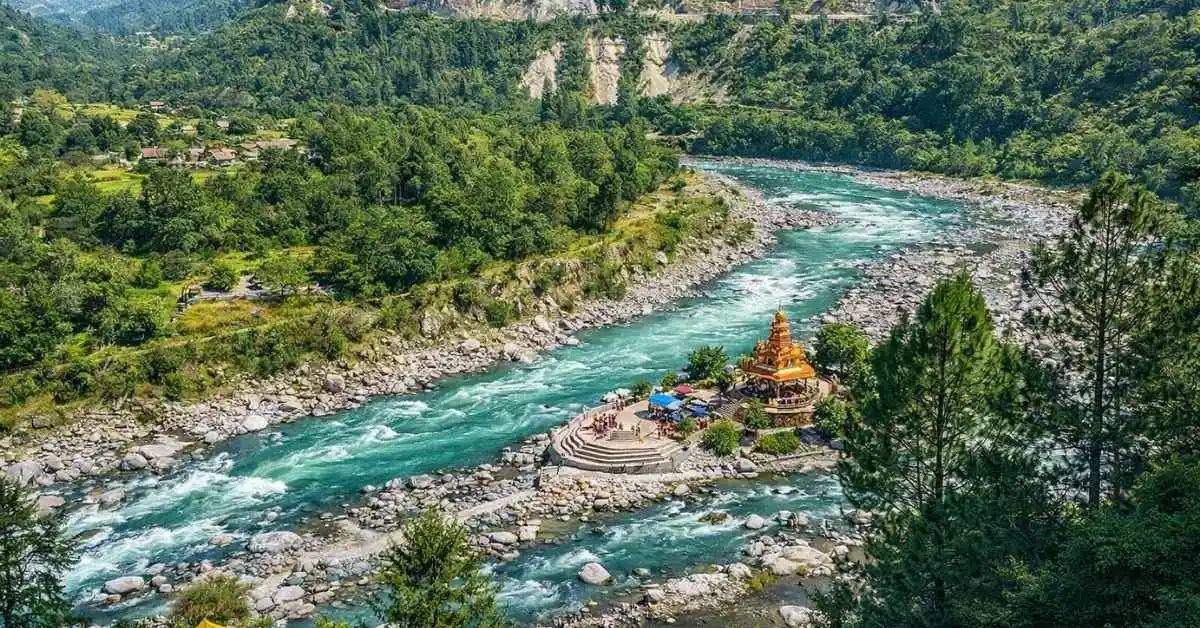
is a small Himalayan confluence town located where the Alaknanda River meets the Nandakini River, surrounded by steep mountain slopes, terraced fields, and tightly clustered hillside settlements. - The natural environment is dominated by river valleys, rock-cut terrain, and forested ridges. River flow is strong and the confluence area is the main visual focus, while surrounding areas remain largely residential and agricultural in character.
- Facilities are basic and functional, with limited guesthouses, small eateries, local shops, and essential services. Visitors should not expect urban-level infrastructure, and availability of premium accommodation or dining is minimal.
- Movement through the town is constrained by narrow mountain roads and short walking stretches on uneven or inclined paths, especially near river access points and local temple areas. Parking space is limited and often informal.
- The town primarily serves pilgrims and transit travelers moving between major Char Dham routes, so visitor flow is seasonal and can increase sharply during pilgrimage months, leading to congestion in transport and lodging capacity.
- Weather conditions can shift quickly, with fog, rainfall, and cold temperatures affecting visibility and road conditions, particularly during monsoon and winter seasons when travel delays are more likely.
- Overall conditions remain quiet and locally oriented, with daily life centered around river confluence activity, religious stops, and brief halts rather than extended tourist stays or entertainment-driven visits.
Important Visitor Information for Nandaprayag, Uttarakhand
- Nandaprayag experiences peak crowd levels during the Char Dham Yatra months (May–June and September–October), when pilgrimage traffic increases along the Alaknanda route, while winter months remain comparatively quiet with fewer travelers.
- Early morning hours offer the most peaceful experience at the confluence of the Alaknanda and Nandakini rivers, with clearer views and minimal vehicular movement, while daytime sees steady transit traffic through the town.
- Monsoon season (July–August) can bring heavy rainfall, reduced visibility, and landslide risks on connecting mountain roads, often affecting travel time and accessibility in the region.
- Modest clothing is appropriate when visiting nearby temples and religious points, as Nandaprayag is part of a sacred confluence route frequently used by pilgrims.
- Visitors should exercise caution near riverbanks due to strong currents and slippery rocks, especially during and after rainfall when water levels in the confluence rise rapidly.
- Roads around Nandaprayag include steep gradients and sharp bends; cautious driving is essential, and night travel is best avoided during poor weather conditions or low visibility.
Photography and Viewpoints at Nandaprayag, Uttarakhand
- The primary photography location in Nandaprayag is the confluence point of the Alaknanda and Nandakini rivers, best captured from the main highway bridge where both rivers and the valley settlement can be framed in a single wide shot.
- Side angles from the approach roads leading into the town provide lower elevation perspectives of the Sangam, allowing layered compositions of river currents, retaining walls, and hillside settlements.
- Morning hours offer clearer visibility of the river confluence with reduced haze in the narrow Himalayan valley, while late afternoon light highlights the surrounding slopes and adds depth to the river texture.
- During monsoon season, the rivers become significantly stronger and more turbid, limiting close access but creating high-impact visual contrasts when viewed safely from the bridge and elevated roadside points.
- Photography near small local temples and residential ghats should be done discreetly, with respect for local religious activity and avoidance of intrusive close-range shooting during rituals.
- Traffic on NH-7 (Char Dham route) runs close to the main viewpoint areas, and stopping space is limited, so most clear shots are taken quickly from designated pull-offs or the pedestrian sections of the bridge.
- Peak pilgrimage movement during the Kedarnath Yatra season can restrict uninterrupted framing at the bridge due to continuous vehicle flow and pedestrian congestion.