Bheem Pul Mana, Uttarakhand, India

Bheem Pul , Badrinath
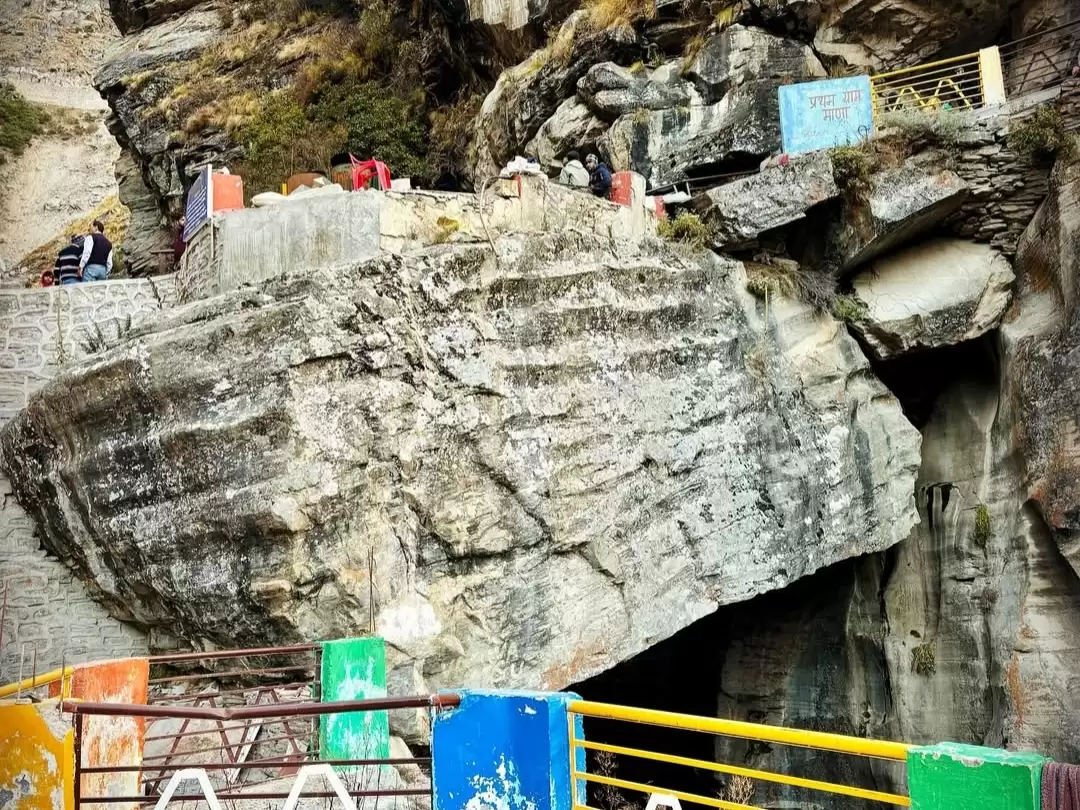
Visitors come to see the large stone slab positioned across the Saraswati River, which, according to local legend, was placed by Bhima from the Mahabharata to help Draupadi cross the river. The site lies on the route toward Vasudhara Falls and is accessible by foot from Mana village.

Quick Facts About Bheem Pul

Entry Fee Free
Timings 06:00 - 18:00
Altitude (m) 3200
Ideal Visit Duration (hrs) 1
Best Time of Day Morning
Crowd Level High
Distance from Badrinath (km) 4
Walking Difficulty Moderate
Parking Available Yes
Last Mile Access Walk
Suitable for Kids Yes
Suitable for Seniors No
Wheelchair Friendly No

Why Visit Bheem Pul, Mana

Bheem Pul in Mana village attracts visitors for its massive natural rock bridge spanning the Saraswati River near the Indo-Tibetan border region of Uttarakhand. Travelers visiting Badrinath often extend their trip to Mana to see this landmark, which sits along the short trail toward Vasudhara Falls.

The atmosphere at Bheem Pul is dramatic and energetic, with the fast-flowing Saraswati River rushing beneath the rock slab. The setting is high-altitude and open, surrounded by steep mountain terrain, and the sound of the water dominates the experience, especially during the summer pilgrimage season.

What makes Bheem Pul distinct is the naturally placed boulder forming a bridge-like crossing over a powerful river channel. Combined with its location in India’s last village before the border and its association with local epic traditions, it offers travelers both a striking geological feature and a culturally referenced stop.

History of Bheem Pul, Mana

Bheem Pul is a natural rock bridge located near Mana village in Chamoli district, Uttarakhand, close to the Indo-Tibetan border. The formation spans the Saraswati River, which flows forcefully through a narrow gorge before meeting the Alaknanda River downstream.

According to local tradition rooted in the Mahabharata, the rock is believed to have been placed by Bhima, one of the Pandava brothers, to help Draupadi cross the river during their final journey toward the Himalayas. This association is regarded as a sacred legend and forms the primary cultural narrative connected to the site rather than documented archaeological history.

Bheem Pul remains a naturally formed geological feature without constructed architectural elements. Its historical identity is shaped by epic-era legend and its proximity to pilgrimage routes leading to Badrinath, making it a culturally significant stop within the broader Char Dham region.

Best Time to Visit – Bheem Pul, Mana

Bheem Pul in Mana village near Badrinath is accessible only during the high-altitude pilgrimage season, as heavy snowfall in winter leads to complete closure of the region and restricted road access.

  • Ideal months: May to June and September to early October offer the safest and most reliable access.
  • Weather during the best season: Late spring and early summer bring daytime temperatures of approximately 8–18°C with clearer skies and open road access from Badrinath to Mana. Post-monsoon September visits offer improved visibility of the Saraswati River gorge, though evenings can turn cold.
  • Periods to avoid (and why): Late October to April sees heavy snowfall in Mana, and the entire Badrinath–Mana stretch is typically closed to tourists. July and August bring monsoon rain in the Chamoli region, increasing landslide risk on mountain roads and making pathways near the river slippery and hazardous.

How to Reach Bheem Pul, Mana

  • Nearest Airport: Jolly Grant Airport, Dehradun (approximately 310–320 km from Mana village). The airport has regular connectivity to Delhi and select Indian cities. From Dehradun, taxis to Badrinath/Mana typically take 9–10 hours depending on traffic and mountain road conditions.
  • Nearest Railway Station: Rishikesh Railway Station (approximately 295–300 km away) is the nearest railhead with limited connectivity. Haridwar Railway Station (around 320 km away) offers broader train connectivity. From either station, buses and taxis operate toward Badrinath, with onward travel to Mana by road.
  • Road Access & Last-Mile Connectivity: Bheem Pul is located in Mana village, about 3 km beyond Badrinath in Chamoli district, Uttarakhand. The site is directly accessible by road up to Mana village via NH 7, which remains open seasonally (generally May to October) depending on weather conditions. From the designated parking area in Mana, visitors must walk approximately 300–500 meters on a paved but uneven mountain path to reach Bheem Pul. Roads include steep Himalayan stretches prone to landslides during the monsoon and temporary winter closures due to heavy snowfall.

What to Expect When You Visit Bheem Pul Mana

  • Environment and Surroundings: Bheem Pul is located in Mana village, about 3–4 km from Badrinath in Chamoli district, Uttarakhand. The site sits at high altitude in the upper Alaknanda valley, surrounded by steep rocky mountains and fast-flowing glacial streams. The natural stone bridge spans the Saraswati River, which flows forcefully through a narrow gorge below. Weather conditions can change quickly; summers (May to June) are cool and clear, while the monsoon (July to September) brings heavy flow in the river and slippery paths. The area remains closed during peak winter months due to heavy snowfall and road inaccessibility.
  • Facilities and Amenities: Basic facilities are available near Mana village, including small tea stalls and souvenir shops, but there are no structured amenities directly at the bridge. Public toilets are limited and typically located near the village parking area. Seating is minimal near the viewpoint, and there are no protective enclosures beyond basic railings in certain sections. Visitors are expected to manage personal safety and avoid standing too close to the gorge edge.
  • Accessibility and Movement: Bheem Pul is accessible by motorable road up to Mana village, which is the last Indian village before the Indo-Tibetan border. From the village parking area, visitors walk approximately 400–500 metres on a paved but slightly inclined pathway to reach the bridge. The path includes stone steps and uneven sections. At this altitude (over 3,000 metres), some visitors may experience shortness of breath. During monsoon, surfaces can be wet and slippery.
  • Typical Visitor Behavior and Conditions: The site attracts pilgrims visiting Badrinath as well as general tourists exploring Mana village. Footfall is high during the Char Dham Yatra season (typically May to October). Visitors usually spend 15–25 minutes at the bridge for viewing and photography. Due to the strong river current and narrow viewing space, crowd movement can slow during peak hours.

Important Visitor Information – Bheem Pul Mana

  • Crowd & Weather Notes: Bheem Pul sees high footfall during the Char Dham Yatra season (May to October), especially from pilgrims visiting Badrinath, as Mana is the last motorable village near the Indo-Tibetan border. Weather remains cool even in summer, while monsoon (July–September) brings mist and increased river flow in the Saraswati River gorge.
  • Peak / Quiet Hours: Late mornings between 10:00 AM and 2:00 PM are typically the busiest due to tour groups arriving from Badrinath. Early mornings are comparatively quieter before group movement increases.
  • Dress Code: No formal dress code applies, but modest attire is advisable given its proximity to Badrinath Temple. Warm layers are recommended as temperatures can drop suddenly, even in summer.
  • Safety Notes: The stone bridge sits above a fast-flowing, narrow gorge of the Saraswati River; visitors should avoid leaning over edges or crossing beyond designated viewing areas. Surfaces can be slippery due to mist and water spray. The site is at high altitude (over 3,000 meters), so those sensitive to altitude should move slowly. Parking is available in Mana village, followed by a short uphill walk.

Photography and Viewpoints – Bheem Pul, Mana

  • Best viewpoints/angles: The natural stone bridge spanning the Saraswati River is best photographed from the designated viewing platform slightly downstream, capturing the full arch with turbulent water beneath; side angles from the stepped pathway highlight the force of the river as it rushes through the narrow gorge; elevated spots along the marked trail allow framing the bridge against rugged Himalayan cliffs.
  • Lighting & time-of-day: Morning hours provide clearer mountain visibility and balanced light across the gorge; midday light can create strong highlights on the fast-moving water; post-monsoon months offer fuller river flow with improved clarity compared to peak monsoon mist.
  • Rules/restrictions: Photography is allowed in the open viewing areas, but crossing safety railings or climbing onto unstable rocks near the river is dangerous and not permitted; drone use may be restricted due to proximity to the Indo-Tibetan border zone and requires official permission.
  • Crowd & access factors: The site receives steady tourist flow during the Badrinath pilgrimage season (May–October), limiting uninterrupted compositions near the main platform; early morning visits provide clearer access; pathways can be uneven and slippery due to spray from the river, affecting stable footing.

Near By Attraction

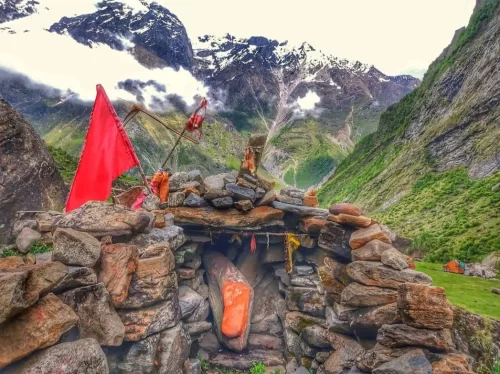
Vishnu Charan Paduka Badrinath stone shrine red flag offerings orange cloth cave snowy Himalayan peaks valley, Uttarakhand Char Dham tour packages.  Pilgrimage Site

Vishnu Charan Paaduka

Vishnu Charan Paaduka is a revered pilgrimage site near Badrinath, believed to preserve the divine footprints of Lord Vishnu.

Vasudhara Falls Badrinath cloudy sky tall waterfall steep rocky cliffs green grassy slopes trekking path Uttarakhand Char Dham tour packages. Waterfall

Vasudhara Falls

Vasudhara Falls is a high altitude waterfall located near Mana Village, reached through a scenic Himalayan trekking route from Badrinath.

Tapt Kund Badrinath hot spring pilgrims bathing gold pot steam white cloth dhoti green bucket Char Dham Yatra spiritual purification ritual. Kund

Tapt kund badrinath

Tapt Kund is a natural hot water spring located just below Badrinath Temple, where pilgrims traditionally bathe before temple darshan.

Frequently Asked Questions About Bheem Pul

Bheem Pul is located in Mana Village near Badrinath in Chamoli district of Uttarakhand, close to the India Tibet border area.
Visitors can reach Bheem Pul by road up to Mana Village from Badrinath in Uttarakhand, followed by a short walk from the village parking area.
There is no separate entry fee to visit Bheem Pul, but visitors may need to pay standard parking charges in Mana Village, Uttarakhand.
Bheem Pul is generally accessible during daylight hours, especially between morning and late afternoon when travel routes to Badrinath in Uttarakhand remain open.
The best time to visit Bheem Pul is from May to October when the weather in Uttarakhand is suitable for travel and the Badrinath route is open.
Most travelers spend about 30 minutes to 1 hour at Bheem Pul while exploring Mana Village and nearby viewpoints.
Bheem Pul can be visited by children and elderly travelers, but the rocky terrain and strong river flow require careful movement and supervision.
Small tea stalls and basic eateries are available in Mana Village near Badrinath, Uttarakhand. Restroom facilities are limited and may be basic in nature.
Photography is allowed at Bheem Pul, and visitors often capture views of the Saraswati River and surrounding mountains in Uttarakhand.
Bheem Pul is commonly visited along with Mana Village, Vyas Gufa, and Badrinath Temple in Uttarakhand as part of a short local sightseeing plan.

Loved this place ? Let’s Plan Your Uttarakhand Trip

Get customized Uttarakhand tour planning designed around seasonal weather changes, hill road travel timing, pilgrimage flow, and comfort-based pacing. Whether you are visiting for spiritual journeys, Himalayan views, wildlife reserves, river valleys, or p

⚡ Quick Response | 💰 Free consultation | 🕒 24×7 expert support

×

Plan Your Trip