Quick Facts About Vasudhara Falls
| Entry Fee | Free |
| Timings | 06:00 - 18:00 |
| Altitude (m) | 3700 |
| Ideal Visit Duration (hrs) | 6 |
| Best Time of Day | Morning |
| Crowd Level | Moderate |
| Distance from Badrinath (km) | 9 |
| Walking Difficulty | Hard |
| Parking Available | Yes |
| Last Mile Access | Trek |
| Suitable for Kids | No |
| Suitable for Seniors | No |
| Wheelchair Friendly | No |
Why Visit
Vasudhara Falls is one of the most scenic high altitude natural attractions near Badrinath, known for its dramatic setting amid the rugged Himalayan landscape. The trek from Mana Village to the falls offers expansive views of snow covered peaks, deep valleys, and alpine terrain rarely experienced on regular pilgrimage routes. Visitors looking for a blend of nature exploration and peaceful mountain surroundings find this destination particularly rewarding.
The atmosphere along the trail remains calm and open, far less crowded than the main Badrinath temple area. As trekkers move higher, the environment becomes quieter with strong mountain winds, clear skies during stable weather, and wide panoramic views. The sound of flowing water echoing through rocky cliffs adds to the sense of isolation and natural beauty, creating a reflective trekking experience rather than a commercial tourist stop.
What makes Vasudhara Falls special is its high altitude location above 3600 meters and the thin stream of water descending from steep rock faces into the valley below. The falls are visible from a distance long before reaching the base, giving trekkers a sense of scale against the vast mountain backdrop. The combination of a challenging Himalayan trek, untouched natural surroundings, and panoramic viewpoints makes it a unique addition to a Badrinath travel itinerary for physically prepared visitors.
Religious Significance
Vasudhara Falls holds spiritual importance within local Himalayan pilgrimage traditions associated with the Badrinath region. According to long standing beliefs connected to the Mahabharata journey routes, the area around Mana Village and beyond is linked with the path taken by the Pandavas during their final ascent toward the higher Himalayas. The waterfall is considered a sacred natural site, and some pilgrims believe that the falling water symbolizes purity and blessings for those who undertake the physically demanding trek with sincere intent.
The surrounding landscape is also associated with ancient sages and meditation practices due to its remote and isolated environment. While the waterfall itself is a natural geological formation rather than a constructed temple, it continues to be visited by pilgrims who combine spiritual reflection with high altitude trekking as part of their extended Badrinath pilgrimage experience.
Best Time to Visit
Vasudhara Falls is accessible mainly during the Badrinath travel season, typically from May to October, when the high altitude trekking route from Mana Village remains free from heavy snow. The most comfortable and safest months for trekking are May–June and September–October, when skies are clearer and trail conditions are relatively stable. During the monsoon period (July–August), heavy rainfall can make the rocky paths slippery and may increase the risk of landslides along access roads. Winter months remain inaccessible due to heavy snowfall and extreme weather conditions.
- Best Season: May to June for pleasant weather and September to October for clearer mountain views and fewer trekkers.
- Avoid Monsoon: July and August can bring unstable trails, slippery rocks, and reduced visibility.
- Winter Closure: November to April access is generally not possible due to snow and harsh Himalayan conditions.
- Best Time of Day: Start early morning to complete the trek safely and return before afternoon weather changes.
- Weather Conditions: High altitude winds and sudden cloud cover are common; always check local conditions before starting the trek.
- Acclimatization: Spending at least one night in Badrinath or Mana Village helps reduce altitude related discomfort during the trek.
How to Reach
- By Road: Vasudhara Falls is accessible via a trekking route from Mana Village, which is about 9 km from Badrinath town. Badrinath is well-connected by road to Rishikesh, Haridwar, Dehradun, and Joshimath. Shared taxis, private cabs, and government-run buses operate during the pilgrimage season.
- By Rail: The nearest railway stations are Rishikesh (approx. 295 km) and Haridwar (approx. 320 km). From either station, travelers continue by road to Badrinath and Mana Village.
- By Air: Jolly Grant Airport in Dehradun (approx. 310 km) is the nearest airport. From there, taxis or buses can be taken via Rishikesh and Joshimath to reach Badrinath and Mana Village.
- Last Mile Access: From Mana Village parking area, a marked trekking trail of approximately 5–6 km leads to Vasudhara Falls. The trek involves moderate climbing and exposure to high altitude conditions.
- Travel Advisory: Roads in the Himalayan region are weather dependent. It is advised to begin trekking early in the morning, carry sufficient water, wear proper trekking shoes, and check for recent trail conditions and weather updates before starting the trek.
What to expect when you visit
- A moderately challenging high-altitude trek of about 5–6 km from Mana Village with rocky paths, steep inclines, and exposed terrain, suitable for physically fit visitors.
- Breathtaking views of the surrounding Himalayan peaks, Alaknanda River valley, and Mana Village along the trekking route, offering excellent opportunities for nature photography.
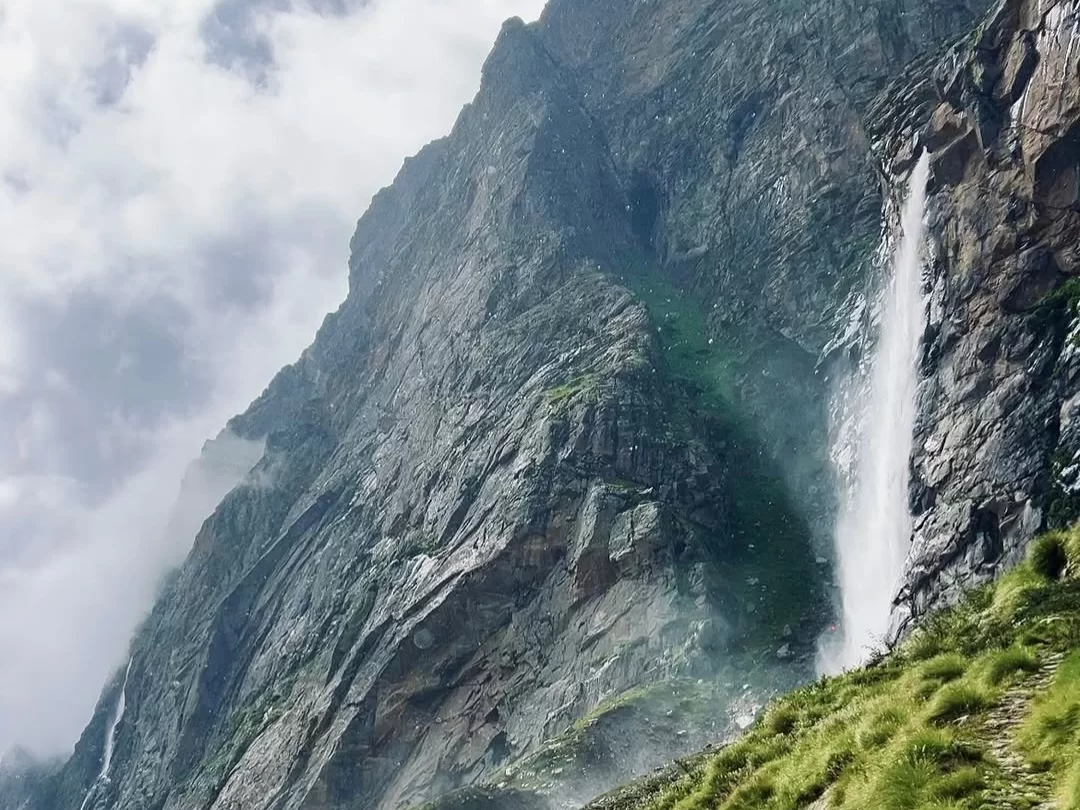
- The waterfall itself appears as a narrow but powerful stream cascading down steep cliffs, creating a misty and scenic environment at the base.
- Cold and windy conditions even during summer months; trekkers should wear layered clothing and carry sun protection, as temperatures drop rapidly in the shade or in the evening.
- Limited facilities along the trail; visitors should carry water, snacks, and basic first aid, as there are no permanent shops or shelters near the falls.
- Peaceful atmosphere with minimal crowds compared to Badrinath town, allowing for a quiet, reflective trekking experience and immersion in Himalayan nature.
- Potentially slippery stones and uneven terrain near the waterfall base; visitors are advised to proceed cautiously and supervise children closely.
Important Visitor Information
- Crowd and Weather Notes: Vasudhara Falls is relatively less crowded compared to Badrinath Temple, but pilgrim and trekking traffic increases during May–June and September–October. Weather can change rapidly with sudden wind, fog, or rain at high altitude.
- Peak and Quiet Hours: Early morning hours are the best for a quieter trek and clear views, while mid-day may see increased trekking groups and guided pilgrims.
- Dress Code: Wear layered clothing suitable for cold and windy conditions. Sturdy trekking shoes are essential due to rocky and slippery paths. Modest attire is recommended if the trek is combined with religious visits nearby.
- Safety Notes: The trek involves uneven stone paths, steep inclines, and high altitude exposure. Carry sufficient water, avoid overexertion, and take breaks. Children and elderly should be accompanied and monitored carefully. Weather updates should be checked before starting the trek.
Photography and Viewpoint
- The trekking route to Vasudhara Falls provides spectacular panoramic views of the snow-capped Himalayan peaks, Mana Village, and the Alaknanda River valley, making it ideal for landscape photography.
- The waterfall itself, cascading from a height of over 100 meters, is visually striking against the rocky cliffs, offering excellent opportunities for capturing long exposure shots and mist effects in the morning light.
- Early morning is the best time for photography due to softer natural light, minimal cloud cover, and fewer trekkers along the trail.
- The viewpoint near the base of the waterfall allows for wide-angle shots, showing the falls in the context of surrounding alpine terrain and rugged cliffs.
- Photographers should exercise caution near slippery rocks and wet surfaces while composing shots; tripods are recommended for stable landscape photography.
- The trek also passes through scenic meadows and traditional Himalayan stone pathways, providing multiple secondary viewpoints and photo opportunities before reaching the main falls.