Quick Facts About Prem Mandir
| Entry Fee | Free |
| Timings | 05:30 - 20:30 |
| Altitude (m) | 170 |
| Ideal Visit Duration (hrs) | 2 |
| Best Time of Day | Evening |
| Crowd Level | High |
| Distance from City Centre (km) | 2 |
| Walking Difficulty | Easy |
| Parking Available | Yes |
| Last Mile Access | Road |
| Suitable for Kids | Yes |
| Suitable for Seniors | Yes |
| Wheelchair Friendly | Yes |
Why Visit
Why Visit: Prem Mandir is one of Vrindavan’s most beautiful spiritual landmarks, offering serene darshan, peaceful gardens, and inspiring depictions of Lord Krishna’s divine pastimes in a grand marble setting.
Atmosphere: The temple environment is calm, devotional, and visually uplifting, especially in the evening when the complex glows with soft illumination, devotional music, and a deeply spiritual ambiance.
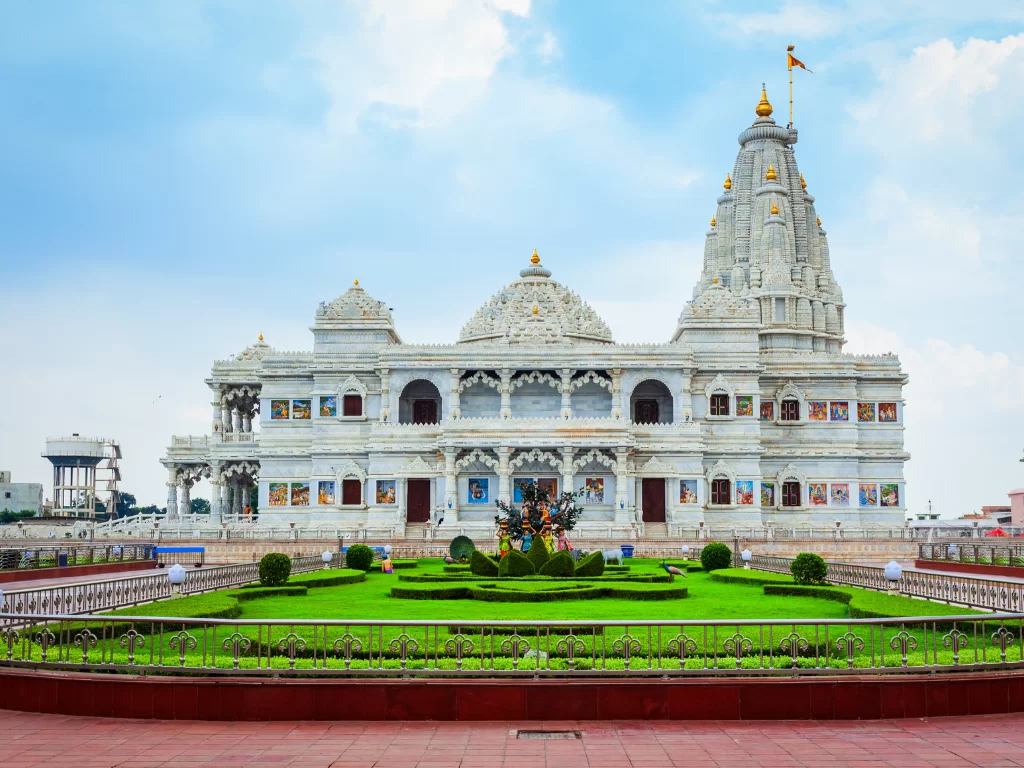
What Makes it Special: Crafted entirely from white marble with intricate carvings and life-size sculptures of Krishna’s leelas, Prem Mandir is globally admired for its architectural beauty, spiritual symbolism, and tranquil garden surroundings.
History
Prem Mandir was established by Jagadguru Shri Kripalu Ji Maharaj and inaugurated in 2012 as a grand spiritual monument dedicated to Lord Radha Krishna and Sita Ram. The temple was constructed using high-quality Italian white marble, intricately carved with verses, floral motifs, and scenes from Hindu scriptures.
The temple complex was designed to present the divine pastimes of Lord Krishna through sculpted panels and landscaped gardens, making spiritual teachings accessible through visual storytelling. Since its inauguration, Prem Mandir has become one of Vrindavan’s most visited pilgrimage and tourist landmarks.
The temple holds strong devotional importance as a centre for bhakti worship, meditation, and spiritual learning, attracting devotees from across India and around the world.
Best Time to Visit
The best time to visit Prem Mandir is between October and March when the weather in Vrindavan remains pleasant for temple visits, garden walks, and evening light displays. Summers can be very hot, while monsoon months bring humidity and occasional crowd surges during festivals.
- October to March: Ideal climate for comfortable sightseeing and peaceful darshan
- August–September: Janmashtami celebrations with special decorations and devotional programs
- March: Holi festival draws large crowds and vibrant temple festivities
- Evenings: Best for illuminated temple views and calm garden walks
- Weekdays: Less crowded compared to weekends and festival dates
How to Reach
- By Air: Nearest airport is Agra Airport (~65 km); Delhi IGI Airport (~150 km) offers wider flight connectivity.
- By Train: Mathura Junction (12 km) is the nearest major railway station, connected to Delhi, Agra, Jaipur, and Mumbai.
- By Road: Vrindavan is well connected via NH-19 and state highways; regular buses and taxis operate from Delhi (3–4 hours) and Agra.
- From Mathura: Auto-rickshaws, e-rickshaws, and taxis reach Prem Mandir in about 25–30 minutes.
- Local Transport: Cycle-rickshaws and e-rickshaws provide easy last-mile access to the temple complex.
What to Expect When You Visit
- Grand white marble temple with intricate carvings depicting scenes from Lord Krishna’s life
- Peaceful darshan experience in a spacious, well-organised prayer hall
- Beautiful landscaped gardens with devotional sculptures and walking paths
- Mesmerising evening illumination and light displays across the temple complex
- Clean, secure premises with regulated entry and helpful volunteers
- Festive atmosphere during Janmashtami, Holi, and major Vaishnav celebrations
Important Visitor Information
- Crowd & Weather Notes: Heavy crowds during evenings, weekends, and festivals; summers are hot, winters mild and pleasant.
- Peak / Quiet Hours: Peak hours are 6:00–9:00 PM; mornings and early afternoons are quieter.
- Dress Code: Modest clothing covering shoulders and knees is recommended; footwear must be removed before entry.
- Safety Notes: Follow queue systems, avoid carrying valuables, and comply with temple security checks.
Photography and Viewpoint
- Photography is permitted in the outer premises, gardens, and temple exterior but restricted inside the sanctum
- Best viewpoints include the front marble steps, landscaped gardens, and central courtyard for wide-angle shots
- Evening illumination offers the most striking visuals for architectural and night photography
- Early morning light highlights marble carvings and peaceful surroundings
- Respect signage, devotees’ privacy, and temple guidelines while taking photos