Quick Facts About Mata Vaishno Devi Temple
Mata Vaishno Devi Temple, Vrindavan Quick Facts
| Entry Fee | No entry fee |
| Timings | Generally open daily from 5:00 AM to 12:00 PM and 4:00 PM to 9:00 PM; timings may vary on festivals and special occasions |
| Altitude (m) | Approximately 170 m above sea level |
| Ideal Visit Duration | 30 minutes to 1 hour |
| Best Time of Day | Early morning or evening aarti |
| Crowd Level | Moderate; very high during Navratri, Janmashtami, and major Hindu festivals |
| Distance from City Centre (km) | Approximately 3 km from Vrindavan city centre |
| Walking Difficulty | Easy |
| Parking Available | Yes, limited parking is available near the temple |
| Last Mile Access | Easily accessible by auto-rickshaw, e-rickshaw, taxi, followed by a short walk from the parking area |
| Suitable for Kids | Yes |
| Suitable for Seniors | Yes |
| Wheelchair Friendly | Partially accessible; ground areas are accessible, but some sections may have steps |
Why Visit Mata Vaishno Devi Temple, Vrindavan, Uttar Pradesh
Visitors come to Mata Vaishno Devi Temple in Vrindavan to worship Goddess Vaishno Devi in a temple inspired by the famous shrine in Jammu. It offers devotees an opportunity to seek blessings while exploring Vrindavan's diverse network of Hindu temples.
The on-ground atmosphere is devotional and family-friendly, with visitors walking through the temple's cave-like passages before reaching the sanctum. Regular prayers, devotional music, and well-organized pathways create a comfortable experience for pilgrims and tourists alike.
What makes Mata Vaishno Devi Temple distinct is its recreation of the traditional cave pilgrimage within the spiritual setting of Vrindavan. The combination of immersive temple design, accessible worship, and its location among the town's renowned Krishna temples offers a unique addition to a Braj pilgrimage itinerary.
History of Mata Vaishno Devi Temple, Vrindavan, Uttar Pradesh
Mata Vaishno Devi Temple in Vrindavan is a modern Hindu temple dedicated to Goddess Vaishno Devi. It was developed to provide devotees with an opportunity to experience the traditions associated with the revered Vaishno Devi shrine of Jammu and Kashmir without undertaking the Himalayan pilgrimage.
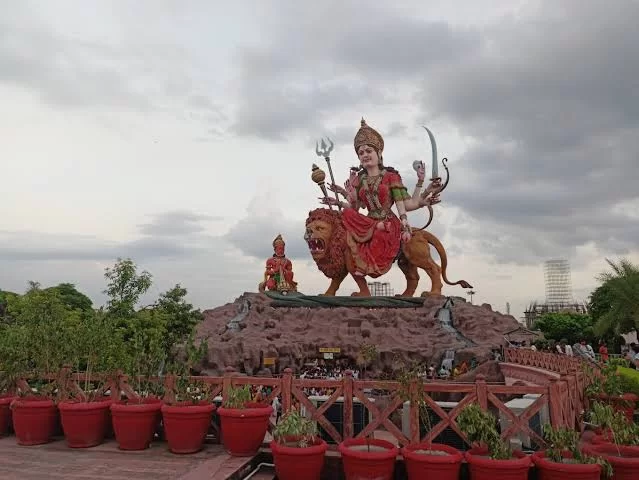
The temple is known for recreating the cave-like passage that symbolizes the sacred journey to the original Vaishno Devi shrine. It holds religious significance as a place where devotees worship the Goddess in her forms of Mahakali, Mahalakshmi, and Mahasaraswati.
Today, the temple is an active center of worship in Vrindavan, attracting pilgrims and visitors who seek the blessings of Mata Vaishno Devi while visiting the city's prominent religious sites.
Best Time to Visit Mata Vaishno Devi Temple, Vrindavan, Uttar Pradesh
Mata Vaishno Devi Temple in Vrindavan is best visited during the cooler months, when visitors can comfortably explore the temple complex and combine their trip with other prominent pilgrimage sites across the town.
- Ideal Months: October to March is the most suitable period for visiting the temple and experiencing Vrindavan's spiritual atmosphere.
- Weather Conditions: Pleasant daytime temperatures and cooler mornings and evenings make temple visits, walking, and sightseeing around Vrindavan more comfortable.
- Periods to Avoid: April to June can be extremely hot, making daytime visits less comfortable. During major festivals such as Navratri, Holi, and weekends, expect larger crowds and longer waiting times for darshan.
How to Reach Mata Vaishno Devi Temple, Vrindavan
- By Air: The nearest airport is Agra Airport, approximately 75 km away, with limited commercial flights. Indira Gandhi International Airport, Delhi, about 165 km from Vrindavan, offers the widest domestic and international connectivity. Taxis and private cabs are available from both airports.
- By Train: Mathura Junction, around 14 km from Mata Vaishno Devi Temple, is the nearest major railway station. It has regular train services from Delhi, Agra, Jaipur, Mumbai, Kolkata, and other major cities. Auto-rickshaws, e-rickshaws, taxis, and app-based cabs provide convenient onward transport.
- By Road: The temple is situated along the Chhatikara–Vrindavan Road and is easily accessible via NH 19. UPSRTC buses, private buses, taxis, and self-drive vehicles connect Vrindavan with nearby cities. Local e-rickshaws and auto-rickshaws are readily available for the last-mile journey. Traffic congestion may occur on weekends and during major festivals such as Janmashtami and Holi.
What to Expect When You Visit Mata Vaishno Devi Temple, Vrindavan, Uttar Pradesh
- Mata Vaishno Devi Temple is located in Vrindavan and is designed to recreate the pilgrimage experience of the Vaishno Devi shrine, with landscaped surroundings and a peaceful devotional atmosphere.
- The temple complex features a replica cave passage leading to the sanctum, where visitors walk through narrow sections that simulate the traditional Vaishno Devi pilgrimage. Short waiting times may occur during busy periods.
- Basic amenities such as parking, drinking water, restrooms, footwear storage, and shops selling prasad and religious items are available within or near the temple complex. Additional facilities can be found in the surrounding area of Vrindavan.
- The temple is easily accessible by road, with taxis, auto-rickshaws, and e-rickshaws providing convenient transport. Internal pathways are well maintained, although the cave section requires walking through confined spaces and may not be suitable for visitors with severe mobility limitations.
- Visitor numbers are generally moderate on regular days but increase significantly during Navratri, weekends, and other major Hindu festivals, resulting in longer queues for entry and darshan.
- Most visitors spend their time offering prayers, passing through the replica cave, and participating in aarti ceremonies. The atmosphere remains orderly and family-friendly throughout the day.
- Visitors are expected to wear modest clothing, remove footwear before entering designated areas, and follow temple instructions regarding photography and movement inside the cave and sanctum.
Important Visitor Information for Mata Vaishno Devi Temple, Vrindavan, Uttar Pradesh
- The temple receives the largest number of devotees during Navratri, weekends, and major Hindu festivals, while weekday mornings generally offer a quieter darshan experience.
- Early morning hours are ideal for visiting with shorter queues, whereas evenings become busier during aarti and devotional gatherings.
- Vrindavan experiences very hot weather from April to June, making morning and late afternoon visits more comfortable, while winter provides pleasant conditions for temple visits.
- Visitors are expected to wear modest attire appropriate for a Hindu place of worship, and footwear must be removed before entering the temple premises.
- The temple includes steps and elevated sections in parts of the complex, so visitors should use handrails where available and walk carefully, especially during periods of heavy footfall.
- During Navratri and other peak festivals, the temple can become crowded, requiring visitors to follow queue management instructions and move patiently through the darshan route.
Photography and Viewpoints at Mata Vaishno Devi Temple, Vrindavan, Uttar Pradesh
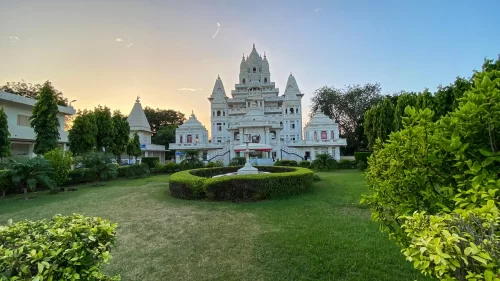
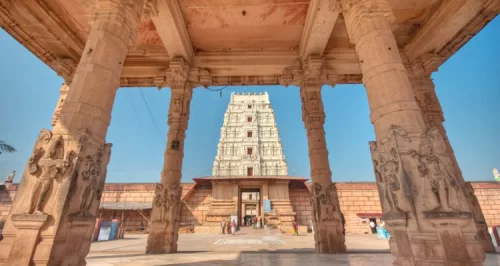
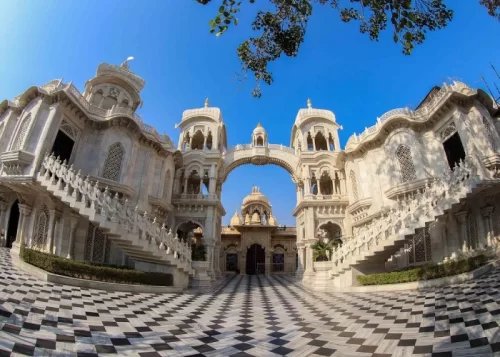
- The temple entrance façade provides the most direct framing, capturing the cave-temple-inspired structure, sculpted rock formations, and devotional motifs unique to Mata Vaishno Devi Temple in Vrindavan.
- Wide-angle compositions from the entry bridge and approach pathway highlight the artificial cave design, surrounding landscaping, and the temple’s hillside-style architecture in a single frame.
- Early morning light offers balanced illumination inside the semi-enclosed passages, reducing shadows in the cave-style interiors and improving visibility of sculptural details.
- Evening lighting during aarti enhances the interior ambiance with decorative illumination, though low-light conditions inside cave sections may limit clear handheld photography.
- Photography restrictions may apply inside the inner sanctum and cave corridors, and visitors are expected to follow temple signage and instructions from on-site staff regarding flash usage and restricted zones.
- The temple attracts heavy crowds during weekends, Navratri, and Vrindavan festival periods, which can restrict movement through narrow cave passages and reduce access to clear vantage points.
- Access involves walking through enclosed cave-like corridors, where limited space and guided movement patterns influence timing and positioning for unobstructed shots.