+91 9910402252
admin@chalbanjare.com


| Entry Fee | Free |
| Timings | 00:00 - 24:00 |
| Altitude (m) | 80 |
| Ideal Visit Duration (hrs) | 1 |
| Best Time of Day | Morning |
| Crowd Level | High |
| Distance from City Centre (km) | 1 |
| Walking Difficulty | Moderate |
| Parking Available | No |
| Last Mile Access | Walk |
| Suitable for Kids | No |
| Suitable for Seniors | No |
| Wheelchair Friendly | No |
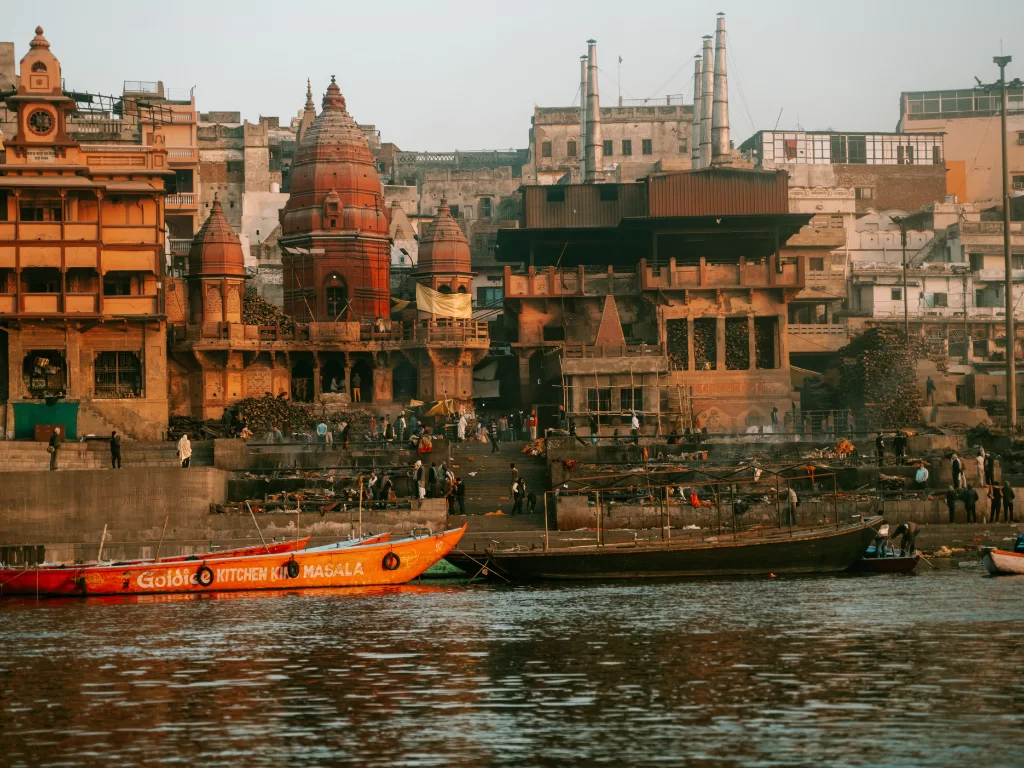
Manikarnika Ghat is one of the most spiritually powerful and historically significant places in Varanasi, offering visitors a deep insight into Hindu traditions, beliefs, and the concept of moksha (liberation). Known as the main cremation ghat of Kashi, it is believed that those cremated here attain freedom from the cycle of rebirth. Visiting Manikarnika Ghat is not just about sightseeing—it is an experience that reflects the raw reality of life and death, making it one of the most meaningful cultural attractions in India.
The ghat holds immense religious importance and is mentioned in ancient scriptures and local legends. It is closely associated with Lord Shiva and Goddess Parvati, and many pilgrims consider it the holiest place to perform final rites. The continuous sacred fire at the ghat, which is said to have been burning for centuries, adds to its unmatched spiritual aura. For travelers interested in heritage, rituals, and authentic Indian culture, Manikarnika Ghat is an unforgettable destination.
The atmosphere at Manikarnika Ghat is intense, sacred, and deeply emotional. Unlike other ghats known for prayer ceremonies or evening aartis, this ghat is always active with funeral rituals, priests chanting mantras, and families performing last rites. The sound of temple bells, the sight of smoke rising from pyres, and the constant movement of devotees create a solemn yet spiritually charged environment.
Despite the seriousness of the rituals, the ghat represents the Hindu belief that death is not an end but a transition. Visitors often describe the experience as humbling and thought-provoking. It is one of the rare places in the world where you can witness centuries-old traditions continuing uninterrupted, making the atmosphere both culturally rich and spiritually profound.
Manikarnika Ghat is special because it is considered the most sacred cremation ground in Hinduism and one of the oldest continuously functioning cremation sites in the world. It represents the core belief of Varanasi being the city of salvation, where death is seen as a gateway to liberation. The eternal flame used for cremations is believed to be sacred and has great religious significance among devotees.
Another unique feature is the Manikarnika Kund (sacred pond) located near the ghat, which is linked to ancient legends and is believed to have divine origins. The ghat’s historical setting, narrow surrounding lanes, ancient temples, and traditional wooden pyres create an environment that feels timeless. For those interested in spirituality, philosophy, and authentic Indian heritage, Manikarnika Ghat stands as one of the most extraordinary places to visit in Varanasi.
Manikarnika Ghat is one of the oldest and most sacred ghats in Varanasi, with its origins deeply rooted in ancient Hindu traditions. It has been mentioned in several old scriptures and is believed to have been an important cremation ground for centuries, making it one of the most historically significant places along the River Ganga. Over time, it became the primary cremation ghat of Kashi, where final rites are performed continuously day and night.
According to local belief, Manikarnika Ghat has existed since the earliest days of Varanasi, a city considered older than history itself. Many kings, saints, and pilgrims have visited this ghat over generations, and the surrounding area developed into one of the oldest parts of the city. The narrow lanes, ancient temples, and traditional funeral practices still preserved here reflect the timeless heritage of Varanasi.
Manikarnika Ghat holds unmatched religious significance in Hinduism because it is believed that cremation here grants moksha (liberation from the cycle of rebirth). This belief is strongly connected with Lord Shiva, who is worshipped as the protector of Varanasi. Many devotees believe that Lord Shiva whispers the Taraka Mantra (mantra of salvation) into the ears of the dying, ensuring spiritual freedom.
A major spiritual highlight of the ghat is the presence of the sacred Manikarnika Kund, a holy pond located near the cremation ground. According to legend, Goddess Parvati once dropped her jeweled earring (Manikarnika) here, giving the ghat its name. Another belief states that Lord Vishnu created the kund while performing intense penance, and the spot became eternally sacred for funeral rituals.
The ghat is also known for its eternal funeral fire, which is believed to have been burning continuously for hundreds of years. This sacred flame is used to ignite funeral pyres, symbolizing the uninterrupted cycle of life and death. For pilgrims, Manikarnika Ghat is not just a place of cremation—it is one of the holiest spiritual gateways in India, representing the Hindu philosophy that death is a passage toward salvation.
The best time to visit Manikarnika Ghat is during the winter season from October to March, when the weather in Varanasi remains pleasant and comfortable for walking through the old city lanes. During these months, the daytime temperature is ideal for sightseeing, and the atmosphere near the River Ganga feels calm and less exhausting compared to summer.
The summer months (April to June) are usually very hot in Varanasi, with high temperatures and strong sunlight, making it uncomfortable to explore the ghat area for long. The monsoon season (July to September) brings humidity and occasional heavy rains, and water levels of the Ganga may rise, which can make the ghat steps slippery and crowded.
For the best experience, visit early in the morning when the surroundings are quieter, or in the evening when the temperature drops and the riverfront becomes cooler. Since Manikarnika Ghat is an active cremation ghat, visitors should always maintain respect and avoid peak crowd times if they prefer a calmer visit.
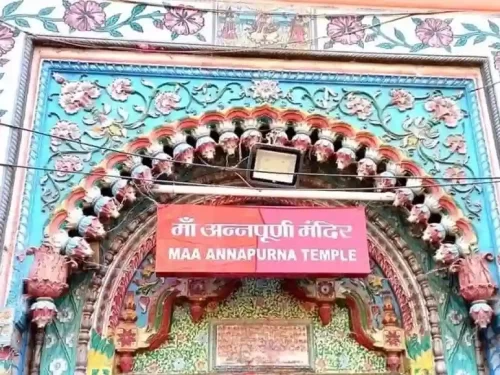 Temple
Annapurna Temple is a revered Hindu temple in Varanasi dedicated to Goddess Annapurna, the deity of nourishment and food.
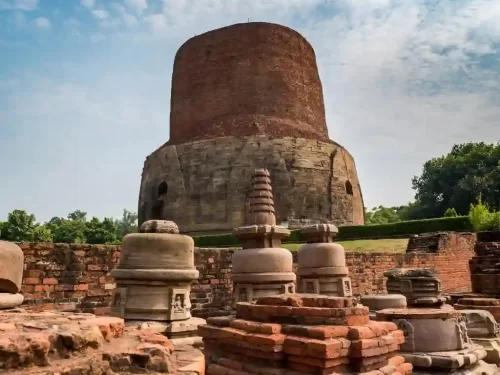 Stupa
Stupa
Dhamek Stupa in Bodh Gaya is a revered Buddhist monument marking the spot where Buddha delivered his first sermon after attaining enlightenment.
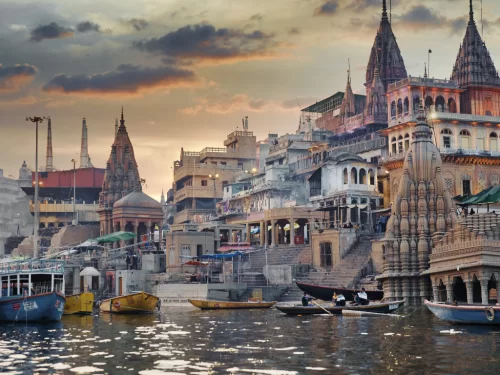 River Ghat
Dashashwamedh Ghat is the most famous and lively ghat in Varanasi, known worldwide for its grand Ganga Aarti and spiritual atmosphere on the River Ganga.
Get customized Uttar Pradesh tour planning designed around seasonal weather, travel distances between heritage regions, spiritual travel flow, and comfortable pacing. Whether you are visiting for historic monuments, temple circuits, river experiences, cul
⚡ Quick Response | 💰 Free consultation | 🕒 24×7 expert support

