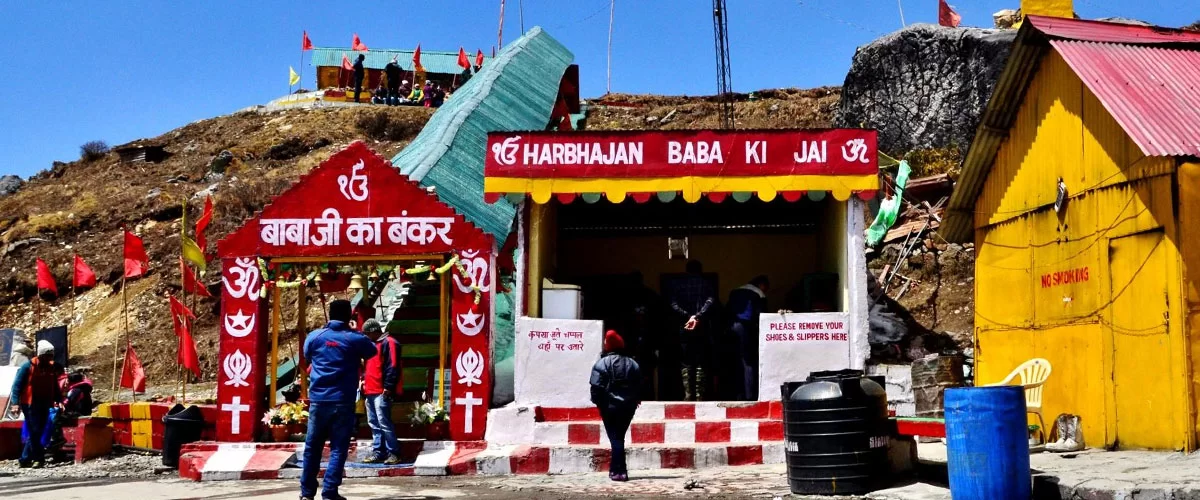
Baba Harbhajan Singh Temple, East Sikkim, Sikkim, India

Baba Harbhajan Singh Shrine , Gangtok
Visitors come to the temple to pay respects at the shrine dedicated to Baba Harbhajan Singh, an Indian Army soldier. The site is maintained by the Indian Army and is commonly included in guided tours to Nathula Pass and Tsomgo Lake, subject to permit access and weather conditions.

Quick Facts About Baba Harbhajan Singh Shrine

Baba Harbhajan Singh Temple, Gangtok, Sikkim Quick Facts

Entry Fee No entry fee; East Sikkim Protected Area Permit required (arranged via registered tour operators)
Timings Generally open from 6:00 AM to 8:00 PM; access may be restricted during army movements or weather conditions
Altitude (m) Approximately 4,000 m (about 13,123 ft) above sea level
Ideal Visit Duration 30–60 minutes
Best Time of Day Morning for clearer skies and smoother road conditions on the Nathula–Tsomgo route
Crowd Level Moderate to high during peak tourist season; lower in winter months
Distance from City Centre (km) Approximately 52–55 km from Gangtok (en route to Nathula Pass)
Walking Difficulty Easy; short walking distance from parking area, but high altitude may affect stamina
Parking Available Yes, designated parking available for tourist vehicles
Last Mile Access Accessible by road via shared or private permitted vehicles; short walk to shrine complex
Suitable for Kids Yes, but high altitude requires caution
Suitable for Seniors Partially suitable; only for those comfortable with high-altitude travel
Wheelchair Friendly No; uneven terrain and high-altitude infrastructure limit accessibility

Why Visit Baba Harbhajan Singh Temple, Gangtok, Sikkim

Visitors come to Baba Harbhajan Singh Temple near Gangtok to experience a unique military-maintained shrine located on the high-altitude route toward Nathula Pass. It is a well-known stop for travelers exploring East Sikkim’s border region.

The on-ground atmosphere is quiet and disciplined, with a simple shrine structure, prayer flags, and strong winds typical of the high-altitude terrain. Visitors usually stop briefly here as part of guided journeys through the restricted mountain route.

What makes Baba Harbhajan Singh Temple distinct is its unusual setting within an operational border area managed by the Indian Army. The combination of military presence, high Himalayan landscape, and consistent visitor interest gives it a unique place among Gangtok’s attractions.

History of Baba Harbhajan Singh Temple, Gangtok, Sikkim

Baba Harbhajan Singh Temple is a memorial shrine located near the Nathula and Kupup region in East Sikkim, dedicated to Indian Army soldier Harbhajan Singh, who served in the area during the 1960s. The site is maintained by the Indian Army and is widely known as a place of remembrance.

The temple is associated with the belief that Baba Harbhajan Singh continues to watch over soldiers stationed in the high-altitude border region. This belief has contributed to its strong cultural and emotional significance among military personnel and visitors.

Today, the shrine is an active memorial site visited by tourists and army personnel, recognized for its association with military history and its unique place in the cultural landscape of East Sikkim.

Best Time to Visit Baba Harbhajan Singh Temple, Gangtok, Sikkim

Baba Harbhajan Singh Temple, located on the route between Gangtok and Nathula, is best visited during months when the high-altitude road remains open and weather conditions allow safe travel, as access is heavily dependent on military permissions and seasonal weather.

  • Ideal Months: April to June and October to early December are generally the most suitable periods, subject to permit approval and road accessibility.
  • Weather Conditions: These months typically offer cold, crisp high-altitude weather with clearer skies, allowing better visibility of the surrounding Eastern Himalayas and relatively smoother travel conditions.
  • Periods to Avoid: July to September should be avoided due to heavy monsoon rainfall, fog, and landslides on the Nathula corridor. January to March may also see extreme cold, snowfall, and restricted access due to road closures.

How to Reach Baba Harbhajan Singh Temple, Gangtok, Sikkim

  • By Air: The nearest airport is Pakyong Airport, located approximately 40–45 km from Baba Harbhajan Singh Temple. Bagdogra Airport in West Bengal, around 160–170 km away, offers better connectivity with major Indian cities. From either airport, travelers must reach Gangtok and proceed onward by road.
  • By Train: New Jalpaiguri (NJP) Railway Station is the nearest major railhead, situated about 150–160 km away. From NJP or Siliguri, taxis and shared jeeps are available to Gangtok, followed by onward travel to Tsomgo Lake–Nathula route.
  • By Road: Baba Harbhajan Singh Temple is located on the Gangtok–Nathula Road near Kupup, approximately 60–65 km from Gangtok. Access is possible only via registered vehicles with a mandatory Protected Area Permit arranged through authorized tour operators. The route passes through high-altitude terrain with sharp bends, and travel may be affected by snowfall, fog, and occasional road closures, especially in winter months.

What to Expect When You Visit Baba Harbhajan Singh Temple, Gangtok, Sikkim

  • Baba Harbhajan Singh Temple is located on the road between Gangtok and Nathula Pass at a high-altitude military-managed site surrounded by rugged mountains, sparse vegetation, and cold alpine conditions.
  • The environment is extremely cold for most of the year, with strong winds, thin air, and frequent fog or snowfall depending on the season. Weather conditions can change rapidly, affecting visibility and comfort.
  • Facilities are very basic, with limited shelter, drinking water points, and small resting areas. The site is maintained under army supervision, and commercial amenities are minimal or absent.
  • Access is by road through a regulated permit route from Gangtok. Visitors usually stop at designated parking areas and walk short distances to reach the temple complex and memorial structures.
  • Visitors typically spend a short time offering prayers, observing the shrine and memorial, and learning about the local military folklore associated with Baba Harbhajan Singh.
  • Crowd levels vary depending on tourist season and permit traffic toward Nathula Pass, with brief waiting times possible during peak daytime hours when multiple vehicles arrive together.
  • Visitors should expect high-altitude conditions, limited oxygen levels, and basic infrastructure. Warm clothing, slow movement, and adherence to army guidelines and photography restrictions are essential.

Important Visitor Information for Baba Harbhajan Singh Temple, Gangtok, Sikkim

  • The temple experiences steady visitor flow throughout the year, with higher footfall during weekends, public holidays, and peak tourist seasons (March–May and October–November).
  • Early morning visits are generally calmer, while midday hours see increased tourist convoy arrivals en route to Nathula and Tsomgo Lake circuits.
  • The high-altitude route remains cold year-round, with winter snowfall and monsoon fog often affecting visibility and road conditions.
  • No specific dress code is required, but warm layered clothing and sturdy footwear are essential due to strong winds and cold temperatures at the site.
  • Visitors should remain within designated temple and memorial areas and follow instructions from army personnel stationed at the site.
  • Photography restrictions may apply in certain sections; visitors should respect signage and avoid blocking movement of defense vehicles on the route.

Photography and Viewpoints at Baba Harbhajan Singh Temple, Gangtok, Sikkim

  • The main temple courtyard provides the primary viewpoint, capturing the memorial shrine, prayer flags, and surrounding high-altitude terrain along the Nathula route in a single frame.
  • Approach road viewpoints near the Old Baba Mandir stretch offer wide compositions of the rugged mountain landscape, army-maintained structures, and winding border roads.
  • Early morning hours provide the clearest visibility of the Himalayan ridgelines, while shifting clouds later in the day can quickly obscure distant views.
  • Photography is allowed in designated public areas, but visitors must follow army regulations and avoid photographing restricted military installations and personnel.
  • The site experiences controlled visitor flow due to its proximity to the Indo-China border region, and photography stops are regulated by security protocols during peak movement hours.
  • Weather conditions change rapidly at this altitude, with fog, wind, and snowfall often affecting visibility and limiting long-range photography opportunities.
  • Access is via a managed road route with designated stopping points, where visitors can safely capture views without blocking traffic or entering restricted zones.

Near By Attraction

Tsomgo Lake prayer flags during sunny winter day, featuring colorful fluttering flags reflecting on turquoise lake with snowy glacier mountains backdrop, perfect adventure Sikkim tour packages. Lake

Tsomgo Lake

Tsomgo Lake is a high-altitude glacial lake located on the road between Gangtok and Nathula in East Sikkim.
 Waterfall

Mandakini waterfall

Mandakini Waterfall is a natural waterfall located in West Sikkim along forested mountain terrain.

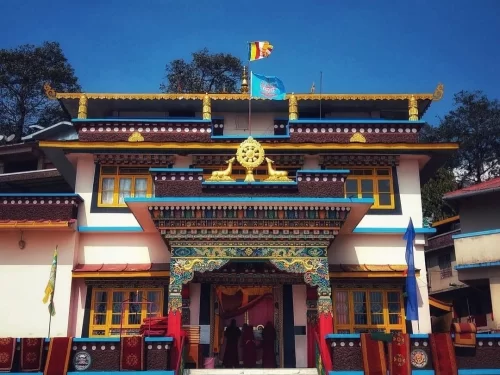
Gonjang Monastery Gangtok Sikkim Buddhist monastery with colorful Tibetan architecture and prayer flags Monastery

Gonjang Monastery

Gonjang Monastery is a Tibetan Buddhist monastery located on the outskirts of Gangtok in Sikkim.
Frequently Asked Questions About Baba Harbhajan Singh Shrine

The best time to visit Baba Harbhajan Singh Temple is generally from April to June and October to early December. These months usually offer clearer skies, cold but manageable weather, and better road movement on the Nathula and Tsomgo route, subject to permit approval and actual road conditions.
Baba Harbhajan Singh Temple is generally open from 6 AM to 8 PM, but tourist access depends on army movement, permits, and weather conditions. Since it lies on a regulated high altitude route, visitors should start early from Gangtok and keep some flexibility for road checks or delays.
There is no entry fee for Baba Harbhajan Singh Temple. However, tourists need an East Sikkim Protected Area Permit to travel on this route. The permit is usually arranged through registered tour operators, especially when the visit is combined with Nathula Pass or Tsomgo Lake sightseeing.
Baba Harbhajan Singh Temple is reached by road from Gangtok through the Nathula route near Kupup. Visitors must travel in registered shared or private permitted vehicles. The journey passes through high altitude mountain roads, so access can change because of fog, snowfall, landslides, or army restrictions.
Most tourists need around 30 to 60 minutes at Baba Harbhajan Singh Temple. The visit usually includes offering prayers, seeing the memorial area, taking permitted photographs, and spending a short time in the high altitude surroundings. Longer stays are uncommon because weather and route schedules are tightly managed.
Baba Harbhajan Singh Temple is only partially suitable for senior citizens because it is located at around 4000 metres altitude. The walking distance is short, but thin air, cold winds, and uneven terrain may affect comfort. Seniors should visit only if they are comfortable with high altitude road travel.
Baba Harbhajan Singh Temple can be visited with children, but families should be careful because of the high altitude, cold weather, and limited facilities. Kids should be dressed in warm layers, moved slowly, and watched for discomfort. The site is easy to walk around, but altitude caution is important.
Designated parking is available for tourist vehicles near Baba Harbhajan Singh Temple. Visitors usually stop at the parking area and walk a short distance to the shrine complex. Since the route is controlled and also used by defense vehicles, tourists should park only where permitted and avoid blocking road movement.
Photography is allowed only in designated public areas around Baba Harbhajan Singh Temple. Tourists can capture the shrine, prayer flags, and surrounding mountain views, but should avoid photographing restricted military installations, defense vehicles, or army personnel. Following signage and instructions from security staff is essential on this border route.
Facilities at Baba Harbhajan Singh Temple are basic because the site is located in a high altitude military managed area. Visitors may find limited shelter, drinking water points, and small resting spaces. Commercial amenities are minimal, so it is better to carry essentials from Gangtok before starting the journey.
Baba Harbhajan Singh Temple sees moderate to high crowds during peak tourist months, weekends, and public holidays. Midday can become busier when tourist convoys arrive on the Nathula and Tsomgo circuit. Early morning visits are usually calmer and also offer better chances of clearer mountain visibility.
Visitors should carry warm layered clothing, sturdy footwear, drinking water, basic snacks, identity documents, and permit related papers for the Baba Harbhajan Singh Temple route. The weather remains cold and windy for much of the year, and facilities are limited, so carrying essentials from Gangtok makes the visit more comfortable.
Baba Harbhajan Singh Temple is commonly combined with attractions on the East Sikkim route, especially Tsomgo Lake and Nathula Pass when permits and roads allow. The page also lists nearby Sikkim attractions such as Gonjang Monastery and Mandakini Waterfall, though route planning should depend on available time and access.
Baba Harbhajan Singh Temple is not wheelchair friendly because of uneven terrain, high altitude conditions, and limited infrastructure at the site. Although the walking distance from the parking area is short, the environment may still be difficult for visitors with mobility concerns or those needing smooth accessible pathways.
Common mistakes include underestimating the altitude, travelling without proper permits, wearing light clothing, starting late from Gangtok, and ignoring army instructions. Visitors should also avoid taking photographs in restricted areas and should not expect full tourist facilities because the shrine lies on a sensitive high altitude border route.

Loved this place ? Let’s Plan Your Sikkim Trip

Get customized Sikkim tour planning based on season, altitude comfort, travel permits, and realistic road travel time. Whether you are visiting for scenic landscapes, monastery circuits, mountain views, or peaceful hill stays, our experts design practical

⚑ Quick Response | πŸ’° Free consultation | πŸ•’ 24Γ—7 expert support

×

Plan Your Trip