Quick Facts About Seth Bhandashah Jain Temple
Seth Bhandashah Jain Temple, Bikaner – Quick Facts
| Entry Fee | No entry fee |
| Timings | Approx. 6:00 AM – 12:00 PM and 4:00 PM – 8:00 PM; may vary during religious events |
| Altitude (m) | Approx. 225 m |
| Ideal Visit Duration | 20–30 minutes |
| Best Time of Day | Morning hours for quieter atmosphere and natural light |
| Crowd Level | Low on weekdays; moderate during festivals and prayer times |
| Distance from City Centre (km) | Approx. 1.5 km from Junagarh Fort area |
| Walking Difficulty | Easy |
| Parking Available | No dedicated parking; roadside parking nearby |
| Last Mile Access | Narrow old-city lanes; accessible by foot or auto-rickshaw |
| Suitable for Kids | Yes |
| Suitable for Seniors | Yes, with minimal steps at entrance |
| Wheelchair Friendly | No |
Why Visit Seth Bhandashah Jain Temple, Bikaner, Rajasthan
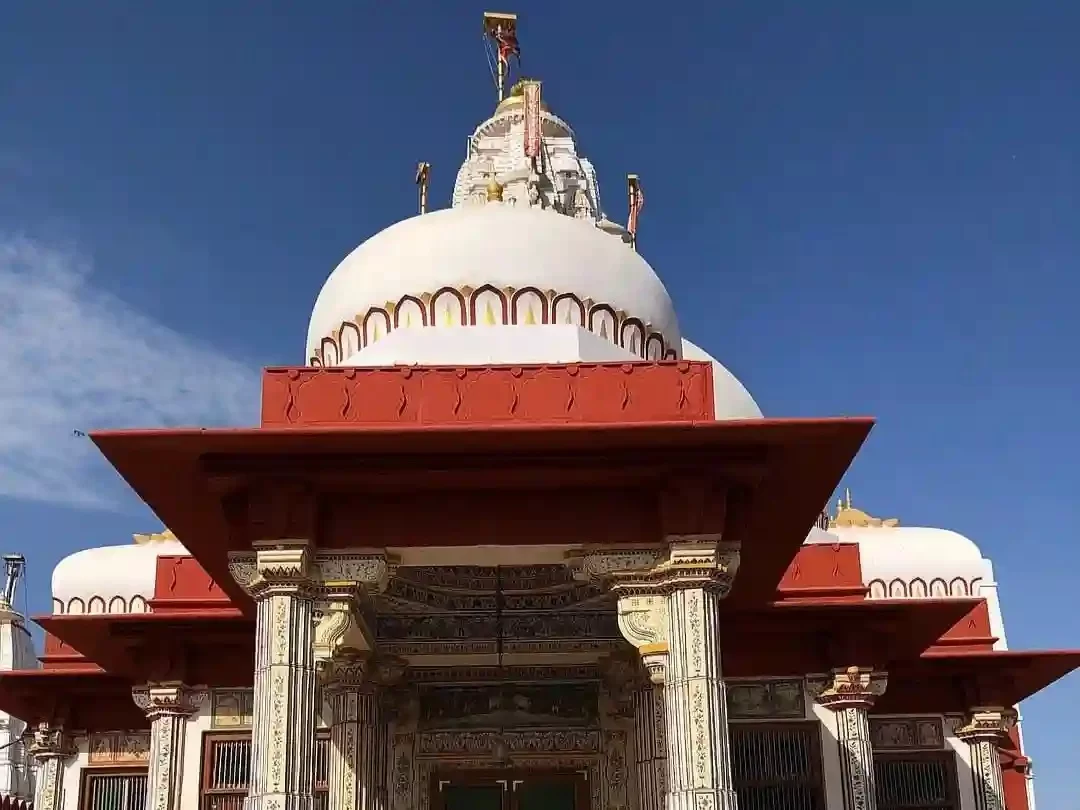
Visitors come to Seth Bhandashah Jain Temple to view its richly decorated interiors, including painted panels, marble work, and mirror inlay.
The temple functions as an active place of worship, with a quiet indoor atmosphere and regular prayer activity rather than tourist crowds.
What makes this temple distinct is the level of preserved interior detailing, which can be observed closely in a compact, accessible setting.
History of Seth Bhandashah Jain Temple, Bikaner, Rajasthan
Seth Bhandashah Jain Temple was built in the 15th century by the Jain merchant Seth Bhandashah during the early years of Bikaner’s development.
The temple is dedicated to Sumatinath, the fifth Jain Tirthankara, and continues to function as an active place of worship for the local Jain community.
Its interior decoration, including frescoes and gold-leaf work, reflects the patronage of wealthy traders who supported temple construction in desert trading towns.
Best Time to Visit Seth Bhandashah Jain Temple, Bikaner, Rajasthan
Seth Bhandashah Jain Temple is most comfortable to visit during cooler months, as the approach involves walking through open old-city streets.
- Ideal months: October to March
- Weather conditions: Mild daytime temperatures suitable for walking and indoor temple visits
- Periods to avoid: April to June due to extreme heat; major Jain festivals due to heavy local crowds
How to Reach Seth Bhandashah Jain Temple, Bikaner, Rajasthan
- Nearest airport: Nal Airport, Bikaner (approx. 17 km); limited commercial flight connectivity, taxis available on arrival.
- Nearest railway station: Bikaner Junction (approx. 2 km); reachable by auto-rickshaw or taxi.
- Road access: Located inside Bikaner old city near Junagarh Fort; narrow lanes restrict car entry, final access is usually on foot.
What to Expect When You Visit Seth Bhandashah Jain Temple, Bikaner, Rajasthan
- Environment: Located in a dense old-city neighborhood with surrounding shops, homes, and regular pedestrian movement.
- Facilities: No visitor amenities such as restrooms, lockers, or seating areas; footwear must be removed before entry.
- Accessibility: Entry involves steps and narrow passages; interior spaces are compact and not wheelchair accessible.
- Visitor conditions: Visitors are expected to maintain silence, dress modestly, and avoid photography during prayer times.
Important Visitor Information for Seth Bhandashah Jain Temple, Bikaner, Rajasthan
- Crowds are usually low, with brief increases during morning and evening prayer times and on Jain religious days.
- Quiet visiting hours are late morning and mid-afternoon; midday heat can affect walking conditions in summer.
- Modest clothing is required; shoes must be removed before entering the temple premises.
- Photography inside the temple may be restricted; follow posted signs and instructions from temple staff.
Photography and Viewpoints at Seth Bhandashah Jain Temple, Bikaner, Rajasthan
- Exterior photographs are best taken from the temple entrance lane, capturing the façade and surrounding old-city streetscape.
- Interior lighting is low; natural light enters through small openings, making mid-morning the most workable time for permitted photography.
- Photography inside the temple is often restricted; visitors should confirm with temple staff before using cameras or phones.
- Prayer times and religious gatherings can limit interior access and photography opportunities.