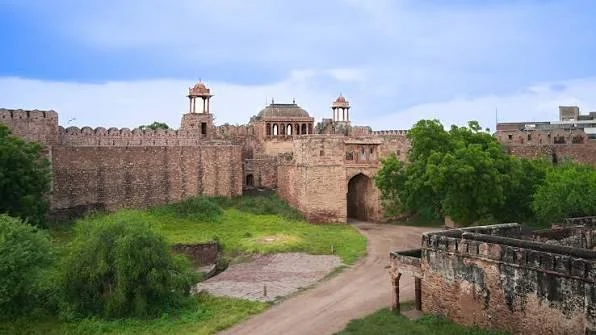
Ahhichatragarh Fort – Historic Rajput Fort in Nagaur

Ahhichatragarh Fort , Bikaner
Tourists visit Ahhichatragarh Fort to explore its fortified walls, palaces, courtyards, and decorative frescoes reflecting centuries of Rajput and Mughal influence. The fort complex contains historic structures, water systems, and restored heritage sections that provide insight into the region\'s architectural and political history.

Quick Facts About Ahhichatragarh Fort

Ahhichatragarh Fort, Rajasthan Quick Facts

Entry Fee Entry fee may apply as per current heritage site regulations; rates can vary for Indian and foreign visitors
Timings Generally open during daylight hours; exact timings may vary based on site management and conservation activities
Altitude (m) Approximately 300 m above sea level
Ideal Visit Duration 1–2 hours
Best Time of Day Morning or late afternoon for comfortable exploration and photography
Crowd Level Low to moderate
Distance from City Centre (km) Approximately 2 km from Nagaur city centre
Walking Difficulty Easy to moderate; includes walking through large fort premises and uneven heritage surfaces
Parking Available Yes, parking is generally available near the fort entrance
Last Mile Access Accessible directly by motorable road up to the entrance area
Suitable for Kids Yes
Suitable for Seniors Yes, though some sections may involve uneven walking surfaces
Wheelchair Friendly Partially accessible; historic architecture and uneven pathways may restrict access to certain areas

Why Visit Ahhichatragarh Fort, Rajasthan

Visitors come to Ahhichatragarh Fort in Nagaur to explore an extensive fort complex known for its palaces, courtyards, gateways, and decorative interiors. The site appeals to travelers interested in Rajput architecture and heritage structures beyond Rajasthan’s more frequently visited forts.

The on-ground atmosphere is spacious and relatively quiet, allowing visitors to move through large open courtyards, restored buildings, and elevated sections of the fort at a relaxed pace. The setting provides clear views of the surrounding town and the arid landscape of the region.

What makes Ahhichatragarh Fort distinct is its combination of military fortifications and intricately decorated palace spaces within a single complex. The fort offers a less crowded heritage experience while showcasing architectural details and restoration work that are often overlooked on mainstream Rajasthan itineraries.

History of Ahhichatragarh Fort, Rajasthan

Ahhichatragarh Fort, located in Nagaur, was built in the early 12th century and became an important stronghold in the Marwar region of Rajasthan. Its strategic position made it a significant center of political and military activity for successive ruling dynasties.

The fort came under the control of various Rajput rulers and later the Mughals, reflecting the shifting power dynamics of northern India. Several structures within the fort complex were expanded and renovated over different periods, contributing to its layered architectural character.

Today, Ahhichatragarh Fort is recognized for its historical importance, preserved palaces, temples, courtyards, and decorative frescoes, offering insight into the region's medieval heritage and royal legacy.

Best Time to Visit Ahhichatragarh Fort, Rajasthan

Ahhichatragarh Fort in Nagaur is best explored during the cooler months, when visitors can comfortably walk through its extensive courtyards, palaces, gateways, and restored heritage structures without the challenges of intense desert heat.
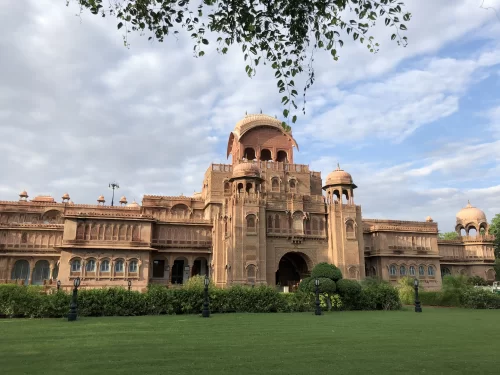
  • Ideal Months: October to March is the most suitable period for visiting the fort and exploring Nagaur's historic attractions.
  • Weather Conditions: These months typically offer mild daytime temperatures, lower heat exposure, and comfortable conditions for spending several hours exploring the fort complex on foot.
  • Periods to Avoid: April to June can be extremely hot, with daytime temperatures making outdoor sightseeing uncomfortable. July to September brings occasional monsoon showers, which may affect outdoor exploration but are generally less disruptive than summer heat.

How to Reach Ahhichatragarh Fort, Rajasthan

  • By Air: The nearest airport is Jodhpur Airport, located approximately 140 km from Ahhichatragarh Fort in Nagaur. The airport is connected to major Indian cities, and taxis are available for the onward journey to Nagaur.
  • By Train: Nagaur Railway Station, about 3–5 km from the fort, is the nearest railhead. It has rail connectivity with Jodhpur, Jaipur, Delhi, and other cities in Rajasthan and North India. Local transport is readily available from the station to the fort complex.
  • By Road: Ahhichatragarh Fort is situated within Nagaur city and is easily accessible by road from Jodhpur, Jaipur, Bikaner, and Ajmer via state and national highways. Rajasthan State Road Transport buses, private buses, taxis, and self-drive vehicles regularly serve Nagaur. The fort can be reached through city roads with convenient last-mile access. Travel conditions are generally good throughout the year, although summer temperatures can be extremely high during daytime visits.

What to Expect When You Visit Ahhichatragarh Fort, Rajasthan

  • Ahhichatragarh Fort is located in Nagaur and stands within the semi-arid landscape of central Rajasthan, surrounded by historic urban settlements, open plains, and traditional Rajasthani architecture.
  • The fort complex contains extensive courtyards, palaces, gateways, temples, water structures, and decorative interiors. Visitors should expect a large site that requires considerable walking to explore thoroughly.
  • Facilities are generally limited to basic visitor services such as ticketing, parking, and occasional interpretive information. Food outlets and additional amenities are more readily available in Nagaur city rather than inside the fort complex.
  • Movement through the fort involves navigating stone pathways, staircases, uneven surfaces, and open courtyards. Some sections may have restricted access due to conservation work or structural preservation requirements.
  • Visitors are typically interested in architecture, history, photography, and heritage exploration. The site usually experiences lower crowd levels than Rajasthan's major forts, allowing for a quieter visiting experience.
  • Much of the fort is exposed to the elements, with limited shade in certain areas. High temperatures are common during summer months, while winter generally offers more comfortable conditions for exploring the complex.
  • The overall atmosphere is focused on heritage conservation and historical appreciation, with fewer commercial activities than found at larger tourist attractions in Rajasthan.

Important Visitor Information for Ahhichatragarh Fort, Rajasthan

  • Ahhichatragarh Fort generally experiences moderate visitor numbers, with higher footfall during the winter tourism season from October to March when temperatures are more comfortable for exploring the extensive fort complex.
  • Early morning and late afternoon are the most pleasant times to visit, offering cooler conditions and softer light for viewing the fort's courtyards, gateways, and architectural details.
  • Summer temperatures in the Nagaur region can become extremely high, while winter mornings may be cool; limited shade within open sections of the fort can affect visitor comfort.
  • No specific dress code applies, though lightweight clothing, sun protection, and comfortable walking footwear are useful due to the fort's large grounds and uneven historic surfaces.
  • Visitors should exercise caution on staircases, elevated ramparts, and weathered stone sections, as some areas may have uneven flooring and steep drops.
  • Parts of the fort complex are historic structures with ongoing conservation needs, so visitors should remain within designated access areas and avoid climbing on fragile architectural features.

Photography and Viewpoints at Ahhichatragarh Fort, Rajasthan

  • The fort's ramparts and elevated bastions provide the best viewpoints for photographing the historic complex, offering wide perspectives of Nagaur town and the surrounding semi-arid landscape.
  • Within the fort, the palaces, courtyards, gateways, frescoed interiors, and water structures create distinctive architectural compositions that reflect Rajput and Mughal influences.
  • Early morning light highlights the sandstone surfaces and intricate decorative details, while avoiding the harsher shadows commonly experienced during midday.
  • Late afternoon is particularly suitable for capturing the fort walls and towers, as the warm desert light enhances the texture and color of the historic masonry.
  • Photography is generally permitted in open areas of the fort complex, though restrictions may apply inside preserved galleries, exhibitions, or conservation-sensitive sections.
  • Visitor numbers are typically manageable, but cultural events, heritage festivals, and weekends can increase activity around the main palace courtyards and entrance zones.
  • Access to multiple viewpoints involves walking through the expansive fort grounds and ascending sections of the ramparts, where elevated positions provide the most comprehensive views.

Near By Attraction

 Palace

Lalgarh Palace Garden

Lalgarh Palace Garden is a landscaped garden area associated with Lalgarh Palace in Bikaner, Rajasthan, India.
 Wildlife Sanctuary

Gajner Wildlife Sanctuary

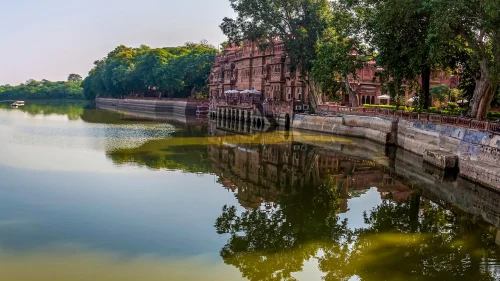
Gajner Wildlife Sanctuary is a protected wildlife area located near Bikaner, Rajasthan, India.
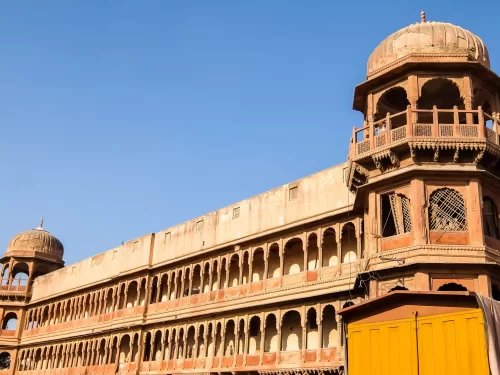
Prachina Museum Bikaner Cultural museum inside Junagarh Fort showcasing royal Bikaner heritage through costumes and art Rajasthan. Museum

Prachina Museum

Prachina Museum is a private museum in Bikaner showcasing a collection of artifacts, including sculptures, coins, and manuscripts from Rajasthan’s history.

Frequently Asked Questions About Ahhichatragarh Fort

Loved this place ? Let’s Plan Your Rajasthan Trip

Get customized Rajasthan tour planning designed around desert climate comfort, long-distance road travel flow, heritage exploration time, and realistic pacing between regions. Whether you are visiting for fort architecture, palace heritage, cultural exper

⚡ Quick Response | 💰 Free consultation | 🕒 24×7 expert support

×

Plan Your Trip