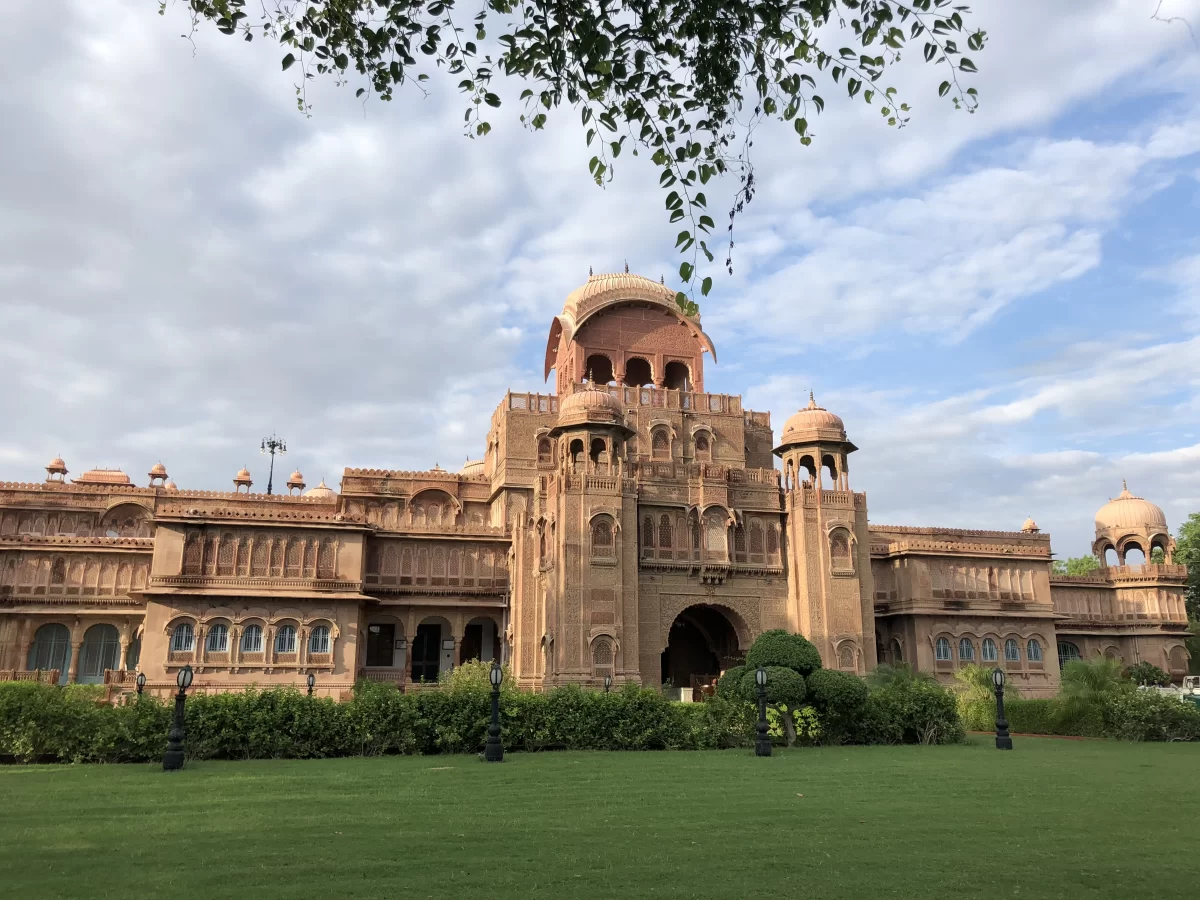
Lalgarh Palace Garden – Heritage Garden Area of Lalgarh Palace, Bikaner

Lalgarh Palace Garden , Bikaner
Tourists visit Lalgarh Palace Garden as part of the Lalgarh Palace complex to observe its landscaped grounds and colonial-era royal architecture surroundings. The garden area forms part of the larger palace estate built during the early 20th century under the Bikaner royal family.

Quick Facts About Lalgarh Palace Garden

Lalgarh Palace Garden, Rajasthan Quick Facts

Entry Fee No separate entry fee for garden area; access may be restricted depending on palace/hotel policies
Timings Generally open during daylight hours; timings may vary as the garden is part of the Lalgarh Palace complex
Altitude (m) Approximately 230 m above sea level
Ideal Visit Duration 30–60 minutes
Best Time of Day Morning or late afternoon for pleasant weather and photography
Crowd Level Low to moderate; may increase during tourist season in Bikaner
Distance from City Centre (km) Approximately 3 km from Bikaner city centre
Walking Difficulty Easy; mostly flat garden pathways
Parking Available Yes, parking available near Lalgarh Palace complex
Last Mile Access Direct motorable road access to palace complex followed by short walk to garden area
Suitable for Kids Yes
Suitable for Seniors Yes
Wheelchair Friendly Partially accessible; garden pathways are mostly flat but access depends on restricted palace areas

Why Visit Lalgarh Palace Garden, Rajasthan

Visitors come to Lalgarh Palace Garden in Bikaner to experience the landscaped grounds surrounding the Lalgarh Palace complex, known for its blend of Indo-Saracenic architecture and planned garden spaces. It is often included in heritage walks and palace visits within the city.

The on-ground atmosphere is structured and well-maintained, with shaded pathways, manicured lawns, and open courtyards adjoining the palace structure. The setting remains relatively calm, allowing visitors to explore the garden areas at a slow pace.

What makes Lalgarh Palace Garden distinct is its integration with an active palace complex rather than functioning as an isolated public park. The combination of heritage architecture and landscaped design offers a composed visual experience within Rajasthan’s desert city environment.

History of Lalgarh Palace Garden, Rajasthan

Lalgarh Palace Garden is part of the Lalgarh Palace complex in Bikaner, built in the early 20th century under Maharaja Ganga Singh of Bikaner. The palace was developed during the transition period of princely India, combining royal residential use with administrative functions.

The garden area was designed as part of the palace’s landscaped surroundings, reflecting Indo-European architectural influences that characterize the Lalgarh Palace complex. It served as a formal outdoor space connected to royal life within the palace precincts.

Today, Lalgarh Palace Garden remains associated with the heritage of the Bikaner royal family and forms part of the broader historical palace complex that represents early 20th-century princely architecture in Rajasthan.

Best Time to Visit Lalgarh Palace Garden, Rajasthan

Lalgarh Palace Garden in Bikaner is best visited during the cooler months when the landscaped Mughal-style gardens can be comfortably explored and the palace surroundings remain pleasant for walking and photography.
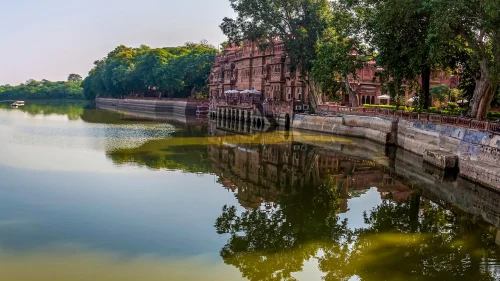
  • Ideal Months: October to March is the most suitable period for visiting Lalgarh Palace Garden and exploring the surrounding heritage complex.
  • Weather Conditions: These months typically offer mild daytime temperatures, cool mornings, and comfortable evenings, making it ideal for strolling through the gardens and enjoying the palace architecture.
  • Periods to Avoid: April to June should be avoided due to intense desert heat in Bikaner, which makes outdoor movement uncomfortable. The monsoon season (July to September) is relatively short but may bring humidity and occasional rainfall affecting outdoor comfort.

How to Reach Lalgarh Palace Garden, Rajasthan

  • By Air: The nearest airport is Nal Airport, Bikaner, located approximately 15–20 km from Lalgarh Palace Garden. It has limited regional connectivity. Jodhpur Airport, around 250 km away, is the nearest major airport with regular flights to major Indian cities. From either airport, taxis are available for onward travel to Bikaner city.
  • By Train: Bikaner Junction is the nearest railway station, situated about 2–3 km from Lalgarh Palace Garden. It is well connected to Delhi, Jaipur, Jodhpur, and other key cities in Rajasthan. Auto-rickshaws and taxis are readily available from the station for last-mile access to the palace area.
  • By Road: Lalgarh Palace Garden is located within Bikaner city and is easily accessible via well-maintained urban roads. Regular RSRTC buses, private coaches, taxis, and self-drive options connect Bikaner with major cities across Rajasthan and North India. Last-mile access is straightforward, though local traffic congestion can occur near central Bikaner during peak hours and tourist seasons.

What to Expect When You Visit Lalgarh Palace Garden, Rajasthan

  • Lalgarh Palace Garden is located within Bikaner city, set against a backdrop of Indo-Saracenic architecture, landscaped grounds, and the adjoining palace complex that reflects the region’s royal heritage.
  • The garden environment is well-maintained but relatively modest in scale, with pathways, green patches, and seating areas that are influenced by the dry desert climate of Bikaner.
  • Facilities around the palace complex include nearby hotels, cafés, parking areas, and basic tourist services, while amenities inside the garden itself are limited to seating and walking paths.
  • Accessibility is straightforward via city roads, with short walking distances required from parking or drop-off points. Movement inside the garden is generally easy but exposed to sun and heat for most of the year.
  • Visitor activity is usually calm to moderate, with guests exploring the garden alongside the palace exterior, photography, and short leisure walks rather than long-duration stays.
  • During peak tourist season or holiday periods, footfall may increase, but the site remains less crowded compared to major forts and palaces in Rajasthan.
  • Weather conditions strongly influence comfort levels, with high summer temperatures and strong sunlight making early morning or late afternoon visits more suitable, while winters are relatively pleasant for outdoor exploration.

Important Visitor Information for Lalgarh Palace Garden, Bikaner, Rajasthan

  • Lalgarh Palace Garden experiences steady tourist footfall as part of the Lalgarh Palace complex, with peak visitor activity during the winter season (October to March) when Bikaner’s desert climate is most comfortable for outdoor exploration.
  • Early morning and late afternoon hours are ideal for visiting the garden area, as midday temperatures in Bikaner can become extreme, especially during summer months.
  • The region has an arid desert climate with hot summers, dry winds, and strong sunlight, while winter mornings and evenings remain relatively pleasant for walking through landscaped sections.
  • No formal dress code applies, but light, breathable clothing, sun protection, and comfortable footwear are recommended due to open pathways and extended outdoor exposure.
  • Visitors should be cautious of direct sun exposure in open garden areas, as shaded seating is limited and heat intensity can rise quickly during daytime hours.
  • As the garden is part of an active palace complex, visitors should remain within designated visitor areas and follow signage restricting access to private or restricted sections.

Photography and Viewpoints at Lalgarh Palace Garden, Rajasthan

  • The most balanced photography viewpoint is from the central garden axis, where the Indo-Saracenic façade of Lalgarh Palace can be framed symmetrically with landscaped lawns and sandstone arches in the foreground.
  • Angles from the garden perimeter pathways allow wide shots of the palace wings, carved jharokhas, and latticework, with strong emphasis on the red sandstone detailing.
  • Early morning light provides soft illumination across the garden and palace façade, reducing harsh contrast and allowing clearer architectural detailing.
  • Late afternoon is ideal for warm-toned shots, as sunlight enhances the red sandstone texture and creates long shadows across the manicured garden lawns.
  • Photography is generally permitted in the garden areas, but access inside the palace interiors may be restricted or limited depending on administrative permissions.
  • Visitor movement is usually moderate, with higher activity during weekends and tourist seasons, which can affect clean framing near the central lawn area.
  • The garden layout allows easy access to multiple vantage points without elevation changes, making it suitable for wide-angle compositions of the palace exterior.

Near By Attraction

 Wildlife Sanctuary

Gajner Wildlife Sanctuary

Gajner Wildlife Sanctuary is a protected wildlife area located near Bikaner, Rajasthan, India.
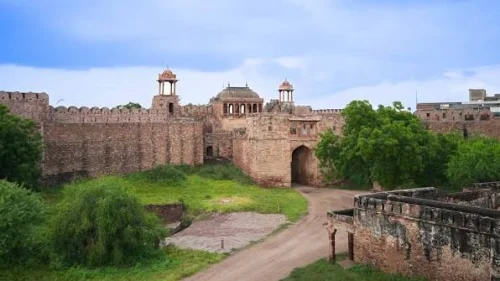
 Fort

Ahhichatragarh Fort

Ahhichatragarh Fort is a historic fort located in Nagaur, Rajasthan, India.
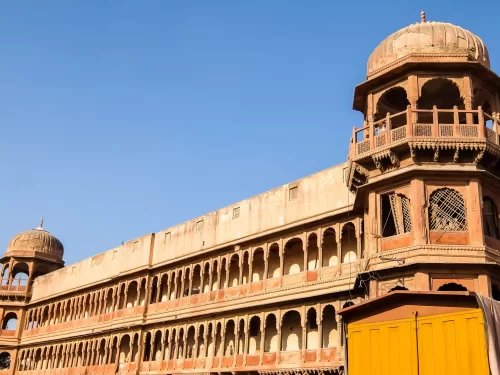
Prachina Museum Bikaner Cultural museum inside Junagarh Fort showcasing royal Bikaner heritage through costumes and art Rajasthan. Museum

Prachina Museum

Prachina Museum is a private museum in Bikaner showcasing a collection of artifacts, including sculptures, coins, and manuscripts from Rajasthan’s history.

Frequently Asked Questions About Lalgarh Palace Garden

Loved this place ? Let’s Plan Your Rajasthan Trip

Get customized Rajasthan tour planning designed around desert climate comfort, long-distance road travel flow, heritage exploration time, and realistic pacing between regions. Whether you are visiting for fort architecture, palace heritage, cultural exper

⚡ Quick Response | 💰 Free consultation | 🕒 24×7 expert support

×

Plan Your Trip