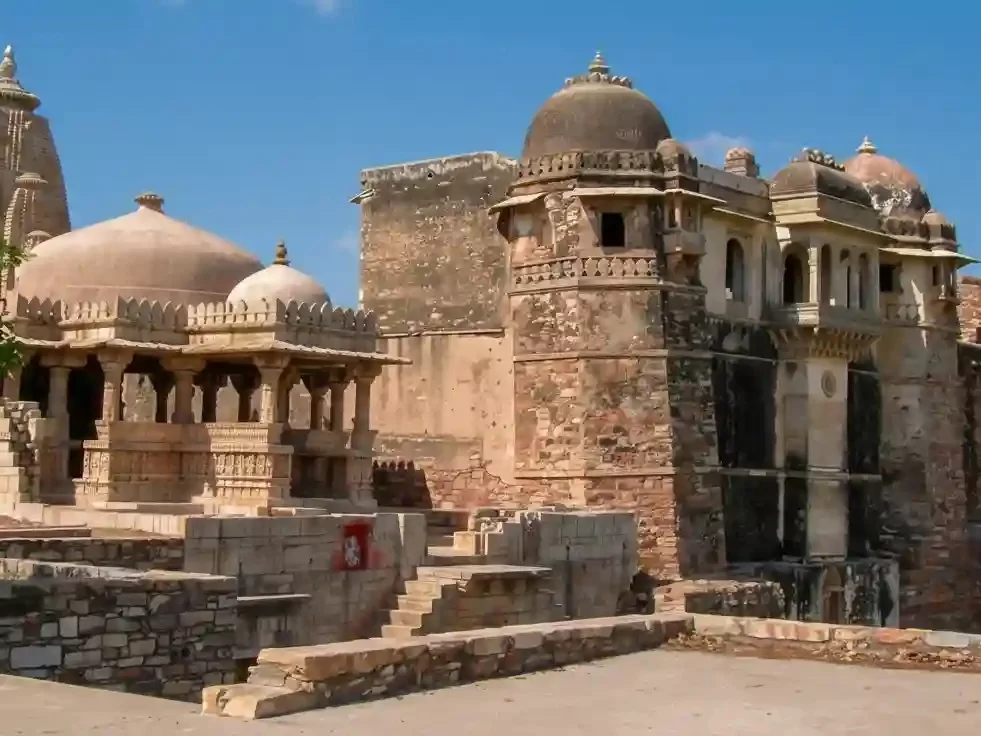
The Historical Royal Residence in Chittorgarh

Ratan Singh Palace , Chittorgarh
Built by Maharana Ratan Singh II between 1528 and 1531 AD, this palace is a robust example of Rajput military and residential architecture. Located along the banks of the Ratneshwar Talab, the structure features massive stone walls, grand arched gateways, and tiered courtyards. While much of the interior is now in ruins, the external facade and central dome remain largely intact. It offers a quieter alternative to the more crowded palaces within the fort, providing a raw and authentic glimpse into the lifestyle of the Sisodia dynasty before the capital shifted to Udaipur.

Quick Facts About Ratan Singh Palace

Entry Fee Included in Chittorgarh Fort ticket: 40 INR for Indians; 600 INR for Foreigners.
Timings 09:00 AM to 06:00 PM
Altitude (m) 395 meters
Ideal Visit Duration 30 to 45 minutes
Best Time of Day Early morning or 4:00 PM for lake reflections and softer light.
Crowd Level Low; significantly quieter than the main fort monuments.
Distance from City Centre (km) 6 km from Chittorgarh Railway Station.
Walking Difficulty Moderate; involves walking on uneven stone surfaces and climbing narrow stairs.
Parking Available Yes; designated parking areas are available within the fort complex near the palace.
Last Mile Access Accessible via the internal fort road by auto-rickshaw, taxi, or private vehicle.
Suitable for Kids Yes; however, constant supervision is required near the lake edge and low ruins.
Suitable for Seniors Moderate; manageable with slow walking, though some areas have steep steps.
Wheelchair Friendly No; the structure features high stone thresholds, steps, and unpaved terrain.

Why Visit Ratan Singh Palace: A Serene Escape from the Crowds

Located within the northern limits of the massive Chittorgarh Fort, the Ratan Singh Palace (also known as Ratan Singh Mahal) offers a stark contrast to the fort's more famous, battle-scarred monuments. Built in the 16th century, this palace was designed as a winter residence for the royal family. Travelers visit Ratan Singh Palace for its quiet, atmospheric charm and its picturesque location along the banks of the Ratneshwar Talab (lake). While the primary tourist circuit often rushes past this site toward Padmini Palace, Ratan Singh Palace provides a more intimate look at Rajput domestic architecture and the lifestyle of the Mewar royalty away from the front lines of defense.

History of Ratan Singh Palace

The Ratan Singh Palace was commissioned during the reign of Maharana Ratan Singh II, who ruled the kingdom of Mewar from 1528 to 1531 AD. As the son of Rana Sanga, Ratan Singh II oversaw the construction of this site as a secondary royal residence and winter palace rather than a primary defensive installation. Its location on the northern tip of the Chittorgarh Fort, adjacent to the Ratneshwar Talab, was strategically chosen to provide a cooler microclimate during the dry seasons.

Architecturally, the palace represents a critical bridge between the medieval Rajput style and the later, more ornamental designs found in Udaipur. Despite the historical turbulence and the eventual decline of Chittorgarh as the capital of Mewar, the palace has remained structurally intact compared to the earlier 15th-century ruins within the fort. It stands as a physical record of the short-lived period between the Battle of Khanwa and the rise of Maharana Udai Singh II, showcasing the resilience of Rajput masonry and civil engineering in the early 16th century.

Best Time to Visit Ratan Singh Palace

To experience Ratan Singh Palace without the taxing Rajasthani heat, timing is critical. Since the palace is located on the more exposed northern edge of the fort and sits adjacent to the Ratneshwar Talab, the local microclimate varies significantly across seasons. For the best balance of weather and photography conditions, the winter months are the undisputed choice for real travelers.

  • Peak Season (October to March): This is the ideal window. Daytime temperatures range from 15 degrees Celsius to 28 degrees Celsius, making the extensive walking required to reach this palace comfortable. The air is clear, providing the best visibility for the lakeside views.
  • Monsoon Greenery (July to September): While humidity is higher, the palace is most photogenic during or after the rains. The Ratneshwar Talab fills up, and the surrounding stone ruins are contrasted by vibrant moss and lush greenery, which is rare for the rest of the year.
  • Golden Hour Photography: Regardless of the season, the best time of day is between 8:00 AM and 10:00 AM. The soft morning light hits the east-facing main gate directly, and the palace reflections in the lake are clearest before the afternoon winds pick up.
  • Avoid Summer (April to June): Temperatures frequently exceed 40 degrees Celsius. The palace has many open courtyards with very little overhead shade, making mid-day visits physically draining and potentially dangerous due to heat exhaustion.

If you plan to visit during the winter, try to align your trip with the Jauhar Mela (usually in February or March). While the palace itself remains a quiet retreat, the cultural energy within the Chittorgarh Fort complex during this time is unmatched, offering a deeper look into the living history of the Mewar region.

How to Reach Ratan Singh Palace

Ratan Singh Palace is located within the northern part of the Chittorgarh Fort complex, situated near the Ratneshwar Talab. Unlike the main administrative areas of the fort, this palace is accessed via the internal fort roads after passing through the main seven gates. Visitors must first reach the hilltop fort complex before navigating to the palace entrance.

  • By Air: The nearest airport is Maharana Pratap Airport in Udaipur, located approximately 95 km away. From the airport, you can hire a private taxi or take a state-of-the-art bus to Chittorgarh city. The drive typically takes 2 hours via the NH27.
  • By Rail: Chittorgarh Junction is a major railway hub well-connected to Delhi, Mumbai, Jaipur, and Ahmedabad. From the railway station, the Ratan Singh Palace is about 7 km away. You can hire an auto-rickshaw or a local taxi to take you up the steep incline of the fort.
  • By Road: Chittorgarh is situated at the intersection of the Golden Quadrilateral and the East-West Corridor (NH76 and NH79). Frequent bus services are available from Udaipur, Ajmer, and Jaipur. Once you reach the Chittorgarh bus stand, local transport is required to reach the fort premises.
  • Internal Fort Access: Once inside the Chittorgarh Fort, the Ratan Singh Palace is located near the Lakhota Bari. Since the fort covers nearly 700 acres, it is highly recommended to keep your vehicle or hired auto-rickshaw with you to commute between the different monuments, as the distance from the Vijay Stambh to Ratan Singh Palace is significant for walking.
Transport Mode Key Connection Approximate Distance
Flight Udaipur (UDR) 95 km
Train Chittorgarh Junction 7 km
Bus Chittorgarh Central Bus Stand 6 km

What to Expect When You Visit Ratan Singh Palace

Visiting Ratan Singh Palace offers a transition from the grand, bustling monuments of the central fort to a more secluded and contemplative environment. You should expect a site that feels less like a museum and more like an authentic ruin, where the absence of large tour groups allows for a deeper connection with the history of the Mewar dynasty. The air here is typically cooler due to the proximity of the water, and the sounds of the fort fade into the background, replaced by the desert breeze and local birdlife.

  • Structural Decay and Authenticity: Expect a raw, unpolished experience. Many parts of the palace are in ruins, which provides a genuine sense of antiquity but requires caution when navigating crumbling staircases or uneven floors.
  • Visual Symmetry: The palace is noted for its beautiful balconies and arched windows that overlook the Ratneshwar Talab. When the water level is high, the reflection of the stone masonry creates one of the most photographed views in the fort.
  • Minimalist Royal Living: Unlike the ornate gold-leaf work of later Rajasthani palaces, expect to see the functional beauty of 16th-century Rajput design, focusing on stone carvings, internal courtyards, and strategic ventilation.
  • Spiritual Presence: The nearby Ratneshwar Mahadeva Temple remains a focal point. You can expect to see local devotees or small ritual offerings, adding a living cultural layer to the historical site.
  • Terrain and Accessibility: Be prepared for a walk. The path to the palace is dusty and rocky. There are no ramps, so it is not wheelchair accessible, and those with mobility issues may find the internal steps challenging.
  • Wildlife Encounters: The palace grounds are home to a significant population of langurs and macaques. While they add to the atmosphere, they are highly opportunistic regarding food and bags.
**Would you like me to generate the Meta Title, Keywords, and Description for this specific location next?**

Ratan Singh Palace Safety Notes

Navigating Ratan Singh Palace requires caution due to its age and the specific environment of the Chittorgarh Fort complex. Being an unrestored site, it presents different physical challenges compared to more manicured tourist attractions.

  • Structural Hazards: Many areas within the palace have crumbling masonry and low-hanging lintels. Stick to well-trodden paths and avoid leaning on balcony railings or aged stone walls.
  • Uneven Flooring: The stone floors and staircases are worn smooth and can be extremely slippery, especially if there is moss near the lake edge or if it has rained. High-grip footwear is essential.
  • Wildlife Warning: Large troops of Hanuman Langurs and Rhesus Macaques inhabit the ruins. They are habituated to humans; keep bags securely closed, hide all food items, and avoid direct eye contact to prevent aggressive behavior.
  • Water Safety: The Ratneshwar Talab (lake) is deep and the edges are not fenced. Do not attempt to climb down to the water level or sit on the edge of the embankment.
  • Heat and Sun: The stone walls radiate heat. Combined with the open layout, the risk of heat exhaustion is high between 12:00 PM and 3:00 PM. Always carry water, as there are no vendors inside this specific palace wing.

Ratan Singh Palace Photography and Viewpoint

Photography at Ratan Singh Palace is centered around the interplay between the massive stone architecture and the waters of Ratneshwar Talab. Unlike the dense, vertical structures of the main fort, this palace offers horizontal expanses that allow for better use of negative space. The sandstone takes on a deep ochre hue during the golden hour, making late afternoon the most productive time for professional-grade captures.
  • Ratneshwar Talab Reflection Point: Position yourself on the far western bank of the lake. This viewpoint allows you to capture the entire eastern facade of the palace mirrored in the water. It is the most iconic shot of the site, particularly effective during the winter mornings when the water is still.
  • Upper Level Chhatri Frames: The pillared pavilions (chhatris) on the upper terraces provide excellent framing opportunities. Use the stone columns to frame the distant Victory Tower (Vijay Stambha) or the sprawl of Chittor city below.
  • The Arched Corridor Depth: The ground-floor corridors feature a series of repeating arches. Using a wide-angle lens here creates a strong sense of depth and perspective, perfect for emphasizing the palace's 16th-century scale.
  • Ratneshwar Mahadeva Temple Facade: Located at the palace entrance, the temple carvings offer intricate detail work. Shoot from a low angle to include the temple shikhara (spire) against the backdrop of the palace walls.
  • Zenana Courtyard Textures: The inner courtyards contain weathered stone textures and jali (lattice) work. These are ideal for detail shots or for capturing high-contrast shadows created by the mid-afternoon sun.
  • Sunset at the North Wall: The northern perimeter of the palace offers an unobstructed view of the sunset over the Rajasthan plains. The elevation of the fort wall provides a dramatic drop-off that adds a sense of scale to landscape photos.

Near By Attraction

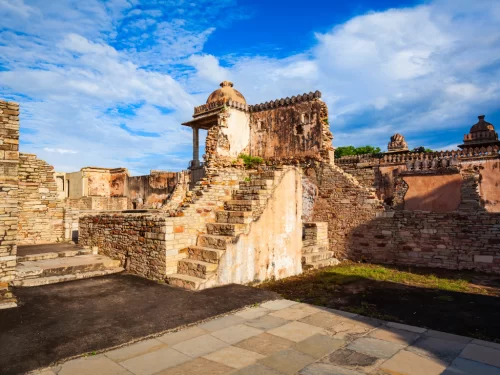
Side view of Rana Kumbha Palace ruins at Chittorgarh Fort in Rajasthan highlighting dome pavilion, stairs and weathered walls under partly cloudy sky, perfect Rajasthan tour package. Fort

Chittorgarh Fort

Chittorgarh Fort is a 7th-century hill fortress and UNESCO World Heritage site extending across 700 acres on a 180-meter high rocky plateau.
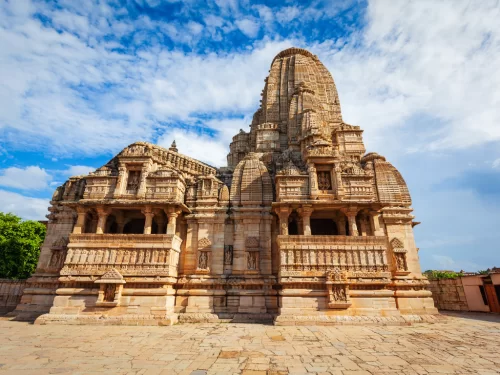
Kalika Mata Temple shikhara at Chittorgarh Fort in Rajasthan during sunny day, featuring intricate carvings and blue sky, perfect Rajasthan tour package. Temple

Kalika Mata Temple

Kalika Mata Temple is an 8th-century Hindu temple originally built as a Sun Temple before being converted to honor the goddess Kali in the 14th century.
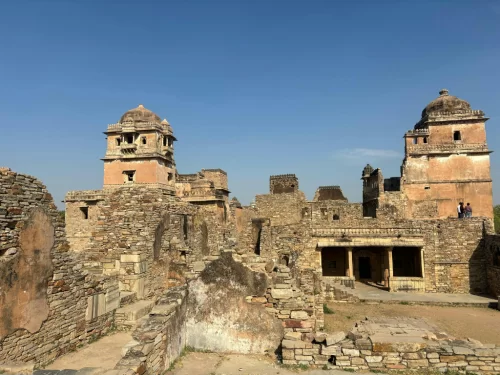
Rana Kumbha Palace ruins at Chittorgarh Fort in Rajasthan with pink sandstone towers, courtyards and walls under clear blue sky, perfect Rajasthan tour package. Palace

Rana Kumbha Palace

Rana Kumbha Palace is a 15th-century ruined royal residence and the oldest standing structure within the UNESCO-listed Chittorgarh Fort complex.

Frequently Asked Questions About Ratan Singh Palace

Ratan Singh Palace is located inside Chittorgarh Fort in Chittorgarh city, Rajasthan. The palace stands near Ratneshwar Talab within the fort complex.
Ratan Singh Palace is open from morning to evening as per Chittorgarh Fort visiting hours. Timings may vary slightly on public holidays.
There is no separate entry fee for Ratan Singh Palace, but visitors must purchase a Chittorgarh Fort entry ticket to access the site.
Around 30 to 45 minutes are sufficient to explore Ratan Singh Palace. Visitors covering the entire Chittorgarh Fort should plan several hours for sightseeing.
The best time to visit Ratan Singh Palace is between October and March when the weather in Rajasthan remains comfortable for fort exploration.
Ratan Singh Palace can be reached by road through Chittorgarh city. Visitors can drive or hire local transport up to Chittorgarh Fort and then proceed inside the complex.
Parking facilities are available near the entrance gates of Chittorgarh Fort. From there, visitors can move within the fort premises to reach Ratan Singh Palace.
Ratan Singh Palace is suitable for families and general visitors. Some walking across uneven pathways is required within the fort complex.
Visitors can see palace ruins, courtyards and scenic views around Ratneshwar Talab inside Ratan Singh Palace. The structure reflects Rajput architectural style within Rajasthan.
Ratan Singh Palace experiences higher footfall during peak tourist season and weekends. Weekday mornings usually provide a quieter experience.
Local guides are available at Chittorgarh Fort who can explain details about Ratan Singh Palace. Hiring a guide helps visitors understand the layout and historical context better.
Vijaya Stambha, Rana Kumbha Palace and Maharani Padmini Palace can be combined with a Ratan Singh Palace visit. These attractions are located within Chittorgarh Fort in Rajasthan.

Loved this place ? Let’s Plan Your Rajasthan Trip

Get customized Rajasthan tour planning designed around desert climate comfort, long-distance road travel flow, heritage exploration time, and realistic pacing between regions. Whether you are visiting for fort architecture, palace heritage, cultural exper

⚡ Quick Response | 💰 Free consultation | 🕒 24×7 expert support

×

Plan Your Trip