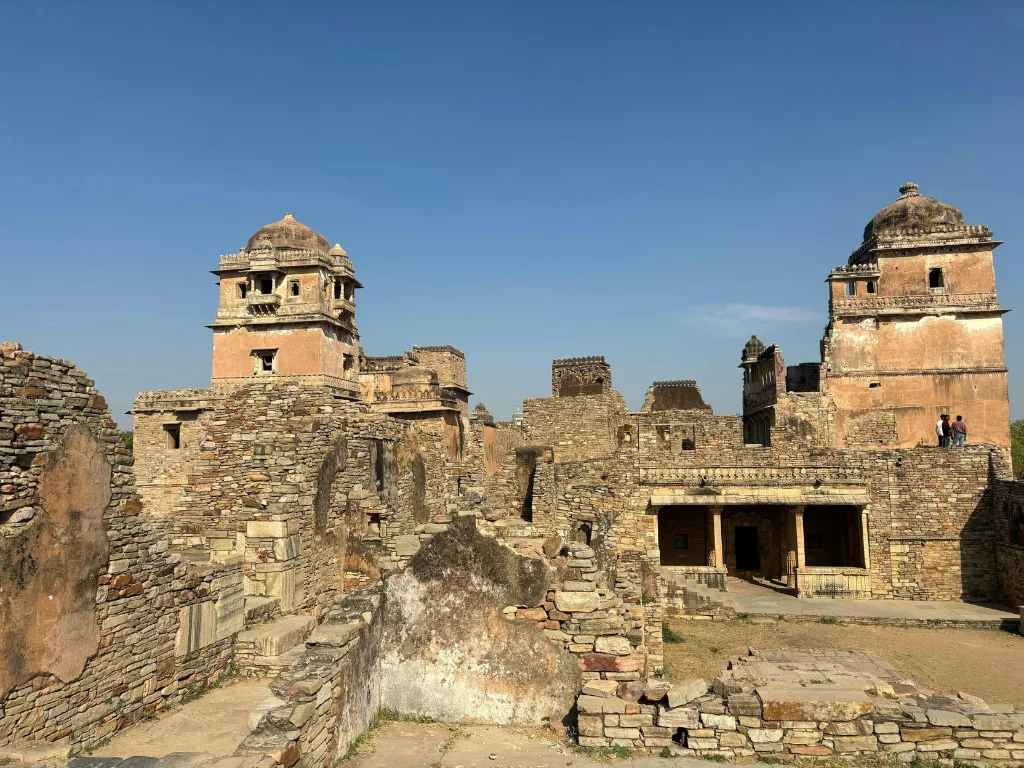
Visiting Rana Kumbha Palace in Chittorgarh Fort, Rajasthan, India

Rana Kumbha Palace , Chittorgarh
Tourists visit to observe the traditional Rajput structural design, including the elephant and horse stables, the Shiva temple, and the underground vaulted chambers. It is historically significant as the birthplace of Maharana Udai Singh and the site where Rani Padmini and Rani Meera Bai once resided.

Quick Facts About Rana Kumbha Palace

Quick Facts for Rana Kumbha Palace, Chittorgarh

Entry Fee ?40 for Indians; ?600 for Foreigners (Included in the Chittorgarh Fort composite ticket)
Timings 09:00 AM – 06:00 PM
Altitude (m) ~500 m (Fort elevation)
Ideal Visit Duration 45 to 60 minutes
Best Time of Day 09:00 AM – 11:00 AM (Lower temperatures for exploring ruins)
Crowd Level Moderate to High
Distance from City Centre (km) 6 km from Chittorgarh Railway Station
Walking Difficulty Moderate (Involves walking over uneven stone ruins and navigating small steps)
Parking Available Yes (Centralized parking near the main fort entrance and museum area)
Last Mile Access Auto-rickshaws, taxis, or private vehicles up to the palace entrance area
Suitable for Kids Yes (Large open spaces, but requires supervision around ruins)
Suitable for Seniors Moderate (Largely accessible but requires navigating some uneven surfaces)
Wheelchair Friendly No (Uneven stone terrain and historical architecture with narrow passages)

Why Visit Rana Kumbha Palace Chittorgarh: The Fort’s Architectural Foundation

Visitors come to Rana Kumbha Palace to explore the oldest and most expansive residential ruin within the Chittorgarh Fort complex. It is a primary destination for those seeking to understand 15th-century Rajput palace planning, featuring a massive layout of vaulted stables, secret underground cellars, and the remains of a grand Shiva temple that once served as the heart of the Mewar administration.

The on-ground atmosphere is heavy with the presence of weathered stone and vast open spaces that reveal the skeletal structure of a once-thriving royal court. Walking through the series of arched gateways and multi-storied balconies, travelers experience a rugged, unpolished environment where the scale of the crumbling masonry and the sound of nesting birds emphasize the site’s transition from a power center to a silent archaeological monument.

What makes this palace distinct is its pure Rajput architectural style, built entirely before the heavy influence of Mughal aesthetics seen in later Rajasthani structures. For travelers, it offers a unique, visceral exploration of fort life, where one can navigate the precise physical layers of royal apartments and zanana (women's) quarters, providing a tangible sense of the defensive and social hierarchy that governed the Maharana's primary residence.

Historical and Architectural Significance of the Rana Kumbha Palace Chittorgarh

The Rana Kumbha Palace is the oldest and most historically significant structure within the Chittorgarh Fort, serving as the residence of the Maharana Kumbha during his reign in the 15th century. Built using plastered stone, the palace is a premier example of Rajput civil architecture, featuring a series of vaulted chambers, stables for elephants and horses, and a grand entrance through the Suraj Pol. It is famously recognized as the birthplace of Maharana Udai Singh, the founder of Udaipur, and the site where Rani Padmini is believed to have performed the first Jauhar.

The ruins of the palace complex include a Shiva temple and a series of underground cellars where the royal women sought refuge during sieges. Architecturally, the palace exhibits the transition from traditional defensive layouts to more elaborate residential styles, with remnants of balconies and intricate stone carvings that demonstrate the prosperity of the Mewar kingdom. Its proximity to the Vijay Stambha and the archaeological museum makes it a central focal point for understanding the political and social hierarchy of medieval Rajasthan.

Best Time to Visit Rana Kumbha Palace in Chittorgarh

Exploring the oldest and largest structure within Chittorgarh Fort—the Rana Kumbha Palace—requires significant outdoor walking across uneven ruins and subterranean vaults, making temperature control the most critical factor for a viable visit. Since the palace is largely roofless and exposed to the elements, the transition between the dry winter and the early post-monsoon offers the only window where the stone surfaces are cool enough to navigate comfortably.

  • Ideal Months: October to March provide the most stable conditions, while late August and September offer a unique perspective as the surrounding scrubland turns green and the dust is settled by the rains.
  • Weather Conditions: Expect daytime temperatures ranging from 15°C to 27°C during winter; these mild conditions are essential for exploring the sprawling series of courtyards, stables, and the Shiva temple within the palace precinct without the risk of heatstroke.
  • Periods to Avoid: April to June should be strictly avoided, as the dark stone of the ruins absorbs heat, pushing surface temperatures well above 45°C and making the air within the enclosed courtyards stagnant and oppressive. Additionally, late evening visits during the peak of monsoon (July) can be difficult due to poor lighting and the increased presence of insects in the overgrown sections of the ruins.

How to Reach Rana Kumbha Palace Chittorgarh: Essential Travel Access

Rana Kumbha Palace is situated near the main entrance (Badi Pol) of the Chittorgarh Fort. As the oldest structure within the fort complex, it serves as the primary starting point for most historical circuits.
  • Nearest Airport: Maharana Pratap Airport (UDR) in Udaipur is the closest domestic airport, approximately 95 km away. Travelers can reach the palace in roughly 2 hours via the NH27 highway by hiring a private taxi or utilizing RSRTC bus services to the Chittorgarh city center.
  • Nearest Railway Station: Chittorgarh Junction (COR) is the major railhead, located about 6 km from the fort. It is well-connected to major Indian cities including Delhi, Mumbai, and Jaipur. Pre-paid taxis and auto-rickshaws are available at the station for the 15-minute drive to the fort's hilltop entrance.
  • Road Access: The palace is easily accessible via the Golden Quadrilateral (NH48). Visitors must drive through seven monumental gates to reach the summit. While the road is well-maintained, it is narrow and steep; private cars and small vans can drive directly to the designated parking area located within walking distance of the palace ruins.
  • Last-Mile Connectivity: Since Rana Kumbha Palace is located very close to the entry point of the fort complex, it is the most accessible monument for those on foot. However, for exploring the rest of the 13-km fort perimeter, it is advisable to retain your vehicle or hire an e-rickshaw available at the main gate.
  • Travel Conditions and Limitations: The palace ruins feature uneven stone flooring, dark underground cellars (where Jauhar was historically performed), and narrow passages. Travelers with claustrophobia or limited mobility should exercise caution. Visiting during early morning hours is recommended to avoid the intense midday heat and peak tourist crowds.

What to Expect When You Visit Rana Kumbha Palace, Chittorgarh

  • Structural Scale and Layout: As the largest and oldest structure within the fort, expect an expansive ruined complex consisting of multi-storied palaces, zanana (women's) quarters, and horse stables. The layout is a maze of interconnected courtyards and arched gateways (pol), which can be disorienting without a guide or map.
  • Atmospheric Ruin Experience: Unlike the preserved Fateh Prakash Palace, this site is largely in a state of stable ruin. Expect open-sky chambers, weathered stone walls, and vaulted ceilings that are home to large colonies of bats. The underground cellars, historically associated with the act of Jauhar, are often dimly lit and have a heavy, damp atmosphere.
  • Underfoot Conditions: The terrain is predominantly uneven stone flooring, loose gravel, and original steep stairways. Many areas lack modern handrails or safety barriers, requiring cautious movement, especially when exploring the upper ledge views or descending into the lower vaulted areas.
  • Flora and Fauna: The ruins are surrounded by wild vegetation and are a primary habitat for the fort's monkey population. Visitors should also be aware of green parrots nesting in the crevices of the stone walls. In the quieter, less-trodden corners of the palace, it is common to encounter peacocks.
  • Visitor Conditions: Positioned near the main entry gate of the fort, it is often the first stop for large tour groups. Expect significant noise and crowding in the main courtyards during peak hours (11:00 AM – 3:00 PM). The site offers very little shade, and the vast stone surfaces radiate heat, making it one of the most physically taxing parts of the fort to explore.
  • Evening Light and Sound Show: The palace serves as the backdrop for the fort's evening light and sound show. If visiting in the late afternoon, expect to see staff setting up equipment; however, the palace interior usually closes to general explorers shortly before sunset to prepare for the event.

Safety and Essential Visitor Information for Rana Kumbha Palace Chittorgarh

  • Peak vs. Quiet Hours: To explore the expansive ruins safely and comfortably, arrive at 8:00 AM. Between 11:30 AM and 4:00 PM, the lack of overhead cover makes the palace exceptionally hot, and the uneven terrain becomes more difficult to navigate as visitor density increases.
  • Structural Safety & Terrain: This is a ruined complex with many underground cellars and high walls. Do not climb on unstable masonry or enter cordoned-off vaulted chambers. The ground is composed of loose gravel and uneven ancient stone; wear sturdy, closed-toe hiking or walking shoes to prevent ankle injuries.
  • Underground Cautions: The palace is famous for its zanana (women's quarters) and basement chambers. These areas are poorly lit and have low ceilings. Use a torch or phone light to spot sudden drops in floor levels and be wary of bats or insects that frequent these dark, cooler recesses.
  • Wildlife Hazards: This section of the Fort has a high concentration of langurs. They are known to snatch sunglasses, cameras, and bags if they suspect food is inside. Maintain a firm grip on your belongings and avoid eating or displaying plastic packaging while walking through the ruins.
  • Sun Exposure: The palace footprint is large and entirely open to the elements. There is a high risk of heat exhaustion during the summer months; carry at least one liter of water per person and wear a hat, as the stone walls radiate heat long after the sun begins to set.

Capturing the Ruins of History: Photography at Rana Kumbha Palace, Chittorgarh

  • http://googleusercontent.com/map_location_reference/1
  • Dramatic Architectural Framing at the Suraj Pol: The [Rana Kumbha Palace](http://googleusercontent.com/map_location_reference/0) is the oldest and most massive structure in the fort. Use the stone archways of the Suraj Pol (Sun Gate) to frame the jagged silhouettes of the ruined vaulted chambers, creating a natural vignette that emphasizes the palace's age and scale.
  • High-Contrast Texture Shots in the Zenana Mahal: The interior ruins of the Queen's quarters offer exceptional opportunities for architectural photography. The crumbling stone walls and weathered balconies create dramatic light and shadow play, particularly during the mid-morning when the sun hits the stone at a 45-degree angle.
  • Panoramic Perspectives from the Palace Ramparts: For a wide-angle shot that captures the sheer size of the complex, climb to the elevated sections of the outer walls. This vantage point allows you to look down into the open courtyards and stable areas, providing a layout-style photograph of the entire 15th-century royal residence.
  • Lighting for the Jauhar Sthal: The historic underground cellars associated with the Jauhar are extremely dark and often have restricted access. If photographing the entrance to these areas, use a wide-aperture lens to capture the somber atmosphere without the need for artificial flash, which can flatten the ancient stone textures.
  • Managing the Monkey Population: Be aware that the ruins are home to a large number of langurs. While they can provide interesting wildlife subjects within the ruins, they are prone to snatching unsecured camera accessories like lens caps or straps. Keep your gear close to your body and avoid changing lenses in open areas.
  • Timing for Empty Ruins: To capture the palace without modern tourists cluttering the historical backdrop, prioritize this site first thing at the 9:00 AM opening. By noon, the open-air complex becomes quite hot and crowded, leading to harsh, vertical shadows that obscure the fine details of the Rajput masonry.

Near By Attraction

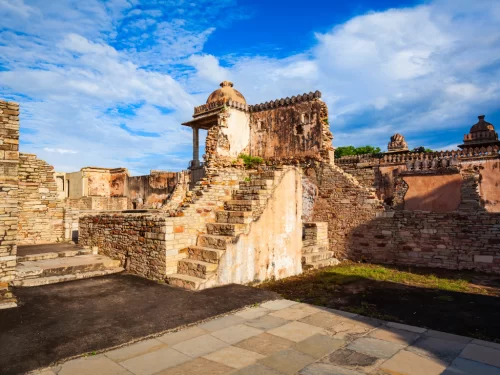
Side view of Rana Kumbha Palace ruins at Chittorgarh Fort in Rajasthan highlighting dome pavilion, stairs and weathered walls under partly cloudy sky, perfect Rajasthan tour package. Fort

Chittorgarh Fort

Chittorgarh Fort is a 7th-century hill fortress and UNESCO World Heritage site extending across 700 acres on a 180-meter high rocky plateau.
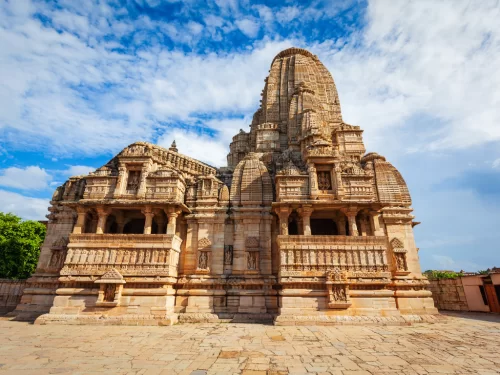
Kalika Mata Temple shikhara at Chittorgarh Fort in Rajasthan during sunny day, featuring intricate carvings and blue sky, perfect Rajasthan tour package. Temple

Kalika Mata Temple

Kalika Mata Temple is an 8th-century Hindu temple originally built as a Sun Temple before being converted to honor the goddess Kali in the 14th century.
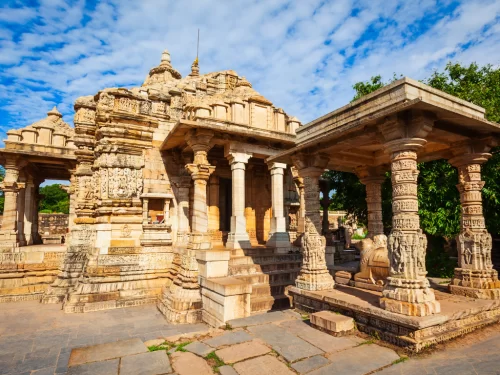
Meera Temple at Chittorgarh Fort in Rajasthan showcasing intricate Indo-Aryan carvings, pillars, and torana with trees, perfect Rajasthan tour package Temple

Meera Temple

Meera Temple is a 16th-century Hindu shrine dedicated to the mystic poet-saint Meera Bai, located within the larger Kumbha Shyam Temple complex.

Frequently Asked Questions About Rana Kumbha Palace

Rana Kumbha Palace is located inside Chittorgarh Fort in Chittorgarh city, Rajasthan. It is one of the major structures within the historic fort complex.
Rana Kumbha Palace is open from morning to evening as per Chittorgarh Fort visiting hours. Timings may vary slightly on public holidays.
There is no separate entry fee for Rana Kumbha Palace, but visitors must purchase a Chittorgarh Fort entry ticket to access the site.
Around 45 minutes to one hour is sufficient to explore Rana Kumbha Palace. Visitors exploring the entire Chittorgarh Fort should allocate several hours.
The best time to visit Rana Kumbha Palace is between October and March when the weather in Rajasthan remains comfortable for walking within the fort.
Rana Kumbha Palace can be reached by road through Chittorgarh city. Visitors can drive or hire local transport up to Chittorgarh Fort and then proceed inside the complex.
Parking facilities are available near the entrance gates of Chittorgarh Fort. From there, visitors can travel within the fort area to reach Rana Kumbha Palace.
Rana Kumbha Palace is suitable for families and history enthusiasts. However, uneven pathways and ruins require careful walking, especially for elderly visitors.
Visitors can see palace ruins, courtyards, underground chambers and historic architectural remains inside Rana Kumbha Palace. The structure offers insight into medieval Rajput architecture in Rajasthan.
Vijay Stambh, Kirti Stambh and Kalika Mata Temple can be combined with a Rana Kumbha Palace visit. All these attractions are located within Chittorgarh Fort in Rajasthan.
Rana Kumbha Palace experiences higher footfall during peak tourist season and weekends. Weekday mornings usually offer a quieter experience inside the fort.
Local guides are available at Chittorgarh Fort who can provide information about Rana Kumbha Palace. Hiring a guide helps visitors understand the layout and historical significance more clearly.

Loved this place ? Let’s Plan Your Rajasthan Trip

Get customized Rajasthan tour planning designed around desert climate comfort, long-distance road travel flow, heritage exploration time, and realistic pacing between regions. Whether you are visiting for fort architecture, palace heritage, cultural exper

⚡ Quick Response | 💰 Free consultation | 🕒 24×7 expert support

×

Plan Your Trip