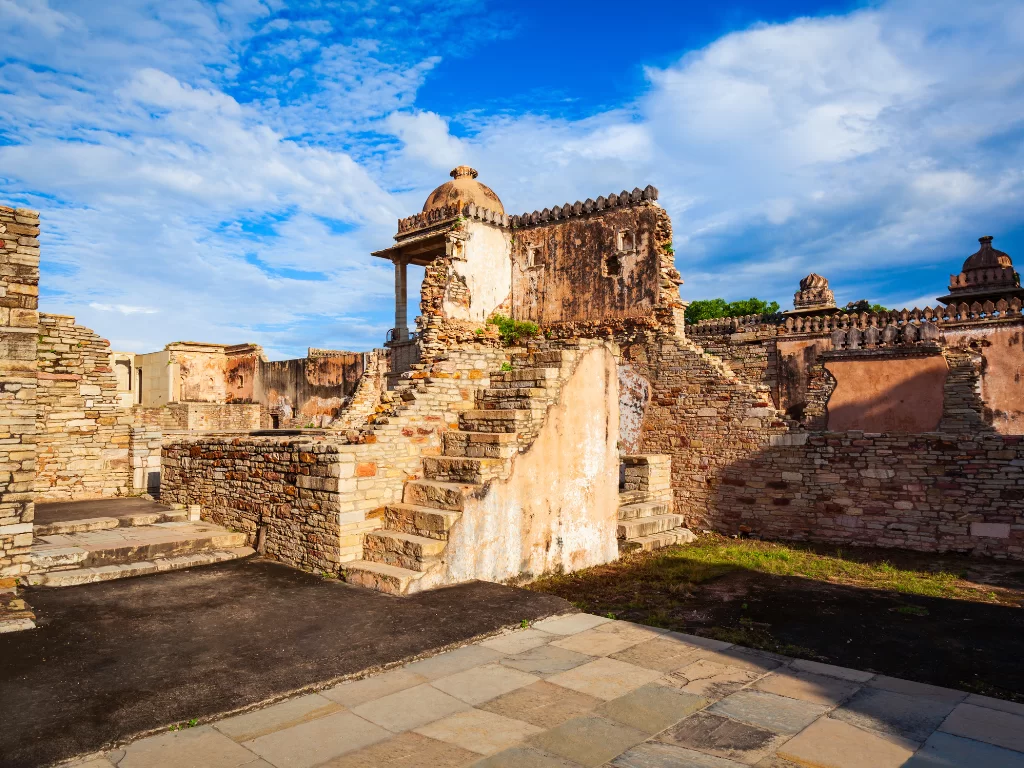
Visiting Chittorgarh Fort in Chittorgarh, Rajasthan, India

Chittorgarh Fort , Chittorgarh
Tourists visit to explore the largest fort complex in India, which contains 65 historic structures including Rajput palaces, victory towers, and functional water reservoirs. The site is a primary example of traditional Rajput military architecture, featuring seven massive stone gateways and perimeter walls spanning 13 kilometers.

Quick Facts About Chittorgarh Fort

Quick Facts for Chittorgarh Fort, Chittorgarh

Entry Fee ?40 for Indians; ?600 for Foreigners (Additional fees for Sound and Light Show)
Timings 09:00 AM – 06:00 PM
Altitude (m) Approx. 500 m (Situated on a 180 m high hill)
Ideal Visit Duration 4 to 6 hours
Best Time of Day 09:00 AM – 11:00 AM or 04:00 PM – 06:00 PM
Crowd Level High (Especially during winter months and weekends)
Distance from City Centre (km) 5 km to 6 km from Chittorgarh Railway Station
Walking Difficulty Moderate (The complex is vast; while roads connect major sites, exploring ruins requires walking)
Parking Available Yes (Multiple parking lots available near major monuments inside the fort)
Last Mile Access Auto-rickshaws, taxis, and private vehicles are allowed inside the fort gates
Suitable for Kids Yes (Open spaces; supervision required near steep walls and stepwells)
Suitable for Seniors Moderate (Accessible by vehicle to major points; minimal walking if using a taxi)
Wheelchair Friendly No (Uneven stone paths, steep slopes, and multiple steps at most monument entrances)

Why Visit Chittorgarh Fort: The Bastion of Rajput Valor

Visitors come to Chittorgarh Fort to explore the largest fort in India and a UNESCO World Heritage site that spans 700 acres atop a high rocky plateau. It is a premier destination for those seeking to witness an massive "living fort" containing 22 functional water bodies, towering victory monuments, and a complex network of palaces and temples that represent the pinnacle of Mewar resistance and architectural ambition.

The on-ground atmosphere is defined by a sense of immense scale and rugged permanence, where the wind sweeps across vast stone ramparts and through the ruins of ancient royal quarters. Travelers experience a unique blend of a historical monument and a functioning community, navigating seven massive limestone gateways where the sounds of local life in the fort’s village coexist with the quiet, sun-baked stillness of weathered sandstone ruins.

What makes this place distinct is its identity as a sprawling hilltop city rather than a single building, featuring a sophisticated medieval water harvesting system that once supported an army of 70,000. Unlike other forts that have been heavily modernized, Chittorgarh remains an unpolished and visceral site of historical memory, offering travelers the opportunity to walk through the physical layers of three major sieges while viewing some of the most intricate stone carvings in Rajasthan.

Historical and Strategic Context of Chittorgarh Fort

Chittorgarh Fort is one of the largest fort complexes in India and a UNESCO World Heritage Site, sprawling across a 180-meter-high hill over 691 acres. Originally constructed by the Maurya dynasty in the 7th century and later served as the capital of the Mewar Kingdom for over 800 years, the fort is a monumental symbol of Rajput resistance. It is historically defined by three major sieges—in 1303, 1535, and 1567—which resulted in the practice of Jauhar (mass self-immolation) by the royal women to preserve honor in the face of defeat.

The fort's architecture is a sophisticated blend of military defense and spiritual devotion, featuring seven massive gateways (Pols), 65 historic structures, and 22 functional water bodies. Originally containing 84 water reservoirs, the fort's hydraulic engineering allowed it to sustain a large population and military force during prolonged sieges. Within its walls lie significant Hindu and Jain temples, alongside victory towers and palaces, reflecting a cultural heritage where martial valor and religious architecture remained deeply intertwined for centuries.

Best Time to Visit Chittorgarh Fort: A Strategic Seasonal Guide

Exploring India’s largest fort complex requires traversing over 700 acres of exposed stone plateau, making temperature and sun exposure the most critical factors for a successful visit. To avoid physical exhaustion and ensure the best conditions for exploring the numerous temples, palaces, and commemorative towers, timing your visit to the winter months is essential.

  • Ideal Months: October to March is the peak window, with late October and November offering the most vibrant post-monsoon greenery and the clearest skies for photography.
  • Weather Conditions: Expect crisp, dry air and mild daytime temperatures ranging from 10°C to 28°C; these conditions are vital for the extensive walking and the 157-step interior climb of the Vijaya Stambha.
  • Periods to Avoid: April to June should be strictly avoided as temperatures regularly exceed 44°C, creating a "heat-trap" effect on the stone plateau that makes outdoor exploration dangerous. While the monsoon (July to September) brings scenic beauty, the sudden heavy downpours can make the ancient stone steps and uneven ramparts dangerously slippery.

How to Reach Chittorgarh Fort: Complete Access and Connectivity Guide

Chittorgarh Fort, the largest fort in India, is situated on a 180-meter high hill sprawling across 700 acres. Reaching this UNESCO World Heritage site requires traveling to Chittorgarh city and then making a 1-km ascent to the plateau.
  • Nearest Airport: Maharana Pratap Airport (UDR) in Udaipur is the closest air hub, located 95 km from the fort. From Udaipur, travelers can take a private taxi via the NH27 (a 2-hour drive) or use the RSRTC bus service that runs frequently between Udaipur and Chittorgarh.
  • Nearest Railway Station: Chittorgarh Junction (COR) is a major rail head located just 6 km from the fort entrance. It is well-connected to major Indian metros like Delhi, Mumbai, Ahmedabad, and Jaipur via several express and superfast trains. Prepaid auto-rickshaws and taxis are available directly outside the station.
  • Road Access and Entry: Chittorgarh is strategically located on the Golden Quadrilateral (NH48) and the East-West Corridor (NH27). The fort is accessed via a dedicated winding road that passes through seven monumental gates (Pols). While private cars and two-wheelers can drive up to the summit, large luxury coaches are often restricted due to narrow stone archways, requiring a transfer to smaller vehicles at the base.
  • Last-Mile Connectivity: The fort’s 13-km peripheral road connects various monuments. Walking the entire circuit is not feasible for most visitors; it is highly recommended to hire an auto-rickshaw or an e-rickshaw from the Badi Pol (Main Gate) for a 2-3 hour guided tour, or use your own vehicle to move between the scattered sites.
  • Travel Conditions and Limitations: The climb to the fort involves steep turns and can experience traffic bottlenecks during peak weekends. Since much of the exploration is outdoors on uneven stone terrain, visiting during the cooler months (October to March) is advised. Most monuments within the fort are open from sunrise to sunset.

What to Expect When You Visit Chittorgarh Fort, Chittorgarh

  • Scale and Transportation: Spanning approximately 700 acres atop a 180-meter-high hill, the fort is too large to explore entirely on foot. Expect a 13-kilometer perimeter road; while auto-rickshaws and cars are permitted inside, walking between major clusters of monuments (like Rana Kumbha Palace to Padmini Palace) is physically demanding and time-consuming.
  • Climate and Exposure: The fort is an open-air plateau with minimal tree cover. Expect intense solar radiation and dry heat, particularly from March to June. Most monuments are made of local sandstone that radiates heat; carrying a minimum of two liters of water and using high-SPF sun protection is a functional necessity.
  • Site Layout and Grouping: Monuments are not centralized. They are spread across the plateau, often separated by stretches of scrubland or residential village areas. You will encounter the "Fort Village" within the walls, where locals live; expect to share the roads with livestock, motorbikes, and school children alongside tourist traffic.
  • Physical Accessibility: While the main roads are paved, the transition to individual monuments involves uneven stone steps, high thresholds, and gravel paths. Very few structures are wheelchair accessible, and reaching the top of towers or descending to the water reservoirs (kunds) requires significant mobility and balance.
  • Water Bodies and Safety: The fort contains 22 active functional water bodies (out of an original 84). Expect steep, unprotected stone steps leading down to reservoirs like Gaumukh Kund. Surfaces near the water are often slippery due to moss or bird droppings, and safety railings are inconsistent or absent.
  • Monetary and Entry Logistics: A single entry ticket (valid for one day) covers the entire complex, but you must keep it physically accessible as it is scanned at multiple internal checkpoints (e.g., Vijaya Stambha and the Museum). Be prepared for additional small fees for vehicle entry and professional camera equipment.

Safety and Essential Visitor Information for Chittorgarh Fort

  • Scale and Navigation Safety: Covering nearly 700 acres, this fort is far too expansive to traverse entirely on foot. Navigating between monuments like the Vijay Stambha and Padmini Palace requires a vehicle; attempting to walk the full circuit under the sun can lead to rapid physical exhaustion and dehydration.
  • Peak vs. Quiet Hours: The gates open at 9:00 AM, which is the optimal time to explore before the arrival of large tour buses around 11:30 AM. Sunset offers the best views from the cliff edges, but the fort roads are poorly lit after dark, making navigation back to the town gates hazardous.
  • Weather & Exposure: The fort plateau is a high-exposure zone with minimal tree cover. Stone structures radiate intense heat, and temperatures often feel several degrees higher than the official forecast. Carrying a high-capacity water bottle and wearing a hat is a non-negotiable safety requirement for all visitors.
  • Structural Cautions: Many of the ruins, including the Rana Kumbha Palace, feature unfenced drops, dark underground chambers, and crumbling stone steps. Always stay on marked paths, avoid leaning on ancient parapets, and use a flashlight if entering any of the dimly lit vaulted areas.
  • Wildlife & Personal Safety: Large troupes of langurs and macaques are highly active near the Gaumukh Reservoir and temple complexes. To avoid aggressive encounters, do not carry visible food, plastic bags, or loose accessories like sunglasses, and avoid feeding the animals under any circumstances.

The Pride of Rajasthan: Photography and Viewpoints at Chittorgarh Fort

  • http://googleusercontent.com/map_location_reference/1
  • Epic Scale from the Gaumukh Reservoir: For a shot that perfectly illustrates the fort's nickname as the "Greatest Fort of Rajasthan," head to the [Chittorgarh Fort](http://googleusercontent.com/map_location_reference/0) edge near the Gaumukh Reservoir. This location offers a dramatic perspective of the cliffside fortifications dropping into the valley below, best captured in the late afternoon when the stone glows gold.
  • Symmetrical Vistas of the Tower of Victory: Position yourself at the base of the tower during the first hour of light. The sunrise illuminates the west-facing sculptures of the nine-story monument, providing enough natural contrast to reveal the intricate Vedic iconography without the harsh shadows of midday.
  • The Floating Palace Reflection: To capture the summer palace mirrored in the Padmini Lake, shoot from the shaded pavilions on the northern bank. The water is typically calmest before 9:00 AM, ensuring a crisp, glass-like reflection of the white architecture against the blue water.
  • Rules and Restricted Zones: While photography of the landscape and temple exteriors is encouraged, be mindful that tripod use is generally prohibited near the Victory and Fame towers to prevent pedestrian blockages. Drone photography is strictly banned across the entire 700-acre fort complex due to Archaeological Survey of India (ASI) regulations.
  • Managing the Afternoon Haze: From March to June, heat haze can significantly reduce the clarity of panoramic shots overlooking the modern town. For the sharpest landscape photography, focus your session between 6:30 AM and 10:00 AM when the air is clearer and the temperatures are manageable for traversing the 13km perimeter.
  • Lighting for Intricate Stone Latticework: The Jain temples within the fort feature dense, delicate carvings. Use a wide-aperture lens to handle the lower light levels within the temple courtyards, as flash photography is often restricted to preserve the ancient stone surfaces from light-sensitive degradation.

Near By Attraction

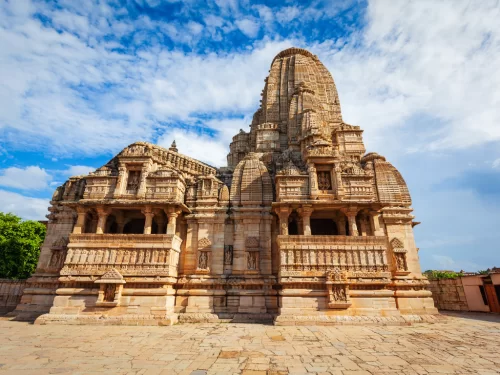
Kalika Mata Temple shikhara at Chittorgarh Fort in Rajasthan during sunny day, featuring intricate carvings and blue sky, perfect Rajasthan tour package. Temple

Kalika Mata Temple

Kalika Mata Temple is an 8th-century Hindu temple originally built as a Sun Temple before being converted to honor the goddess Kali in the 14th century.
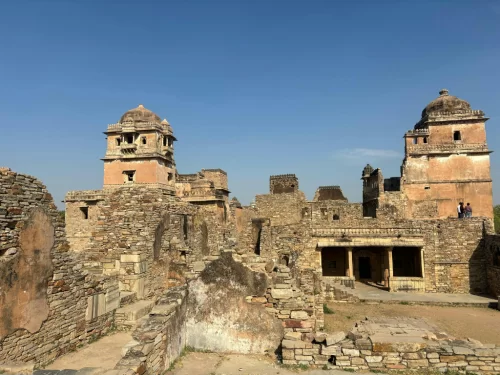
Rana Kumbha Palace ruins at Chittorgarh Fort in Rajasthan with pink sandstone towers, courtyards and walls under clear blue sky, perfect Rajasthan tour package. Palace

Rana Kumbha Palace

Rana Kumbha Palace is a 15th-century ruined royal residence and the oldest standing structure within the UNESCO-listed Chittorgarh Fort complex.
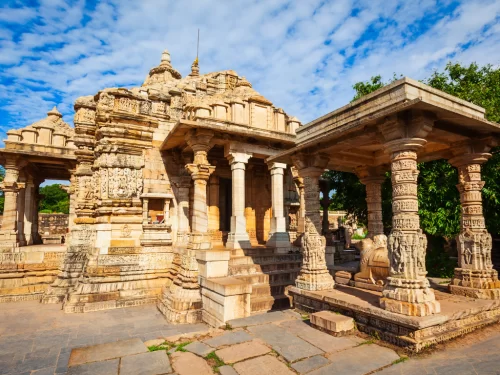
Meera Temple at Chittorgarh Fort in Rajasthan showcasing intricate Indo-Aryan carvings, pillars, and torana with trees, perfect Rajasthan tour package Temple

Meera Temple

Meera Temple is a 16th-century Hindu shrine dedicated to the mystic poet-saint Meera Bai, located within the larger Kumbha Shyam Temple complex.

Frequently Asked Questions About Chittorgarh Fort

Chittorgarh Fort is located in Chittorgarh city of Rajasthan. It stands on a large hilltop and overlooks the surrounding plains of the region.
Chittorgarh Fort is generally open from morning to evening for visitors. Timings may vary slightly on public holidays, so checking locally before planning is recommended.
An entry ticket is required to visit Chittorgarh Fort. Ticket prices differ for Indian and foreign visitors as per Archaeological Survey of India guidelines.
At least three to four hours are required to explore Chittorgarh Fort properly. The fort complex is vast and includes multiple palaces, towers and temples spread across a large area.
The best time to visit Chittorgarh Fort is between October and March when the weather in Rajasthan remains comfortable for sightseeing. Summers can be very hot during daytime exploration.
Chittorgarh Fort can be reached easily by road from Chittorgarh city. Chittorgarh Railway Station provides good connectivity, and Udaipur Airport in Rajasthan is the nearest airport.
Parking facilities are available near the entrance gates of Chittorgarh Fort. Visitors arriving by private vehicles can park before entering the fort complex.
Visitors are allowed to take vehicles inside Chittorgarh Fort as the complex is spread across a large plateau. Driving helps cover major points more comfortably.
Chittorgarh Fort is suitable for families and history enthusiasts. The open spaces and multiple viewpoints make it manageable for visitors of different age groups.
Major attractions inside Chittorgarh Fort include Vijay Stambh, Kirti Stambh, Rana Kumbha Palace and Padmini Palace. These landmarks are located within the main fort complex in Rajasthan.
Chittorgarh Fort experiences higher footfall during weekends and tourist season. Visiting on weekday mornings usually offers a more relaxed experience.
Udaipur, Kumbhalgarh and Nathdwara can be combined with a Chittorgarh Fort visit. These destinations in Rajasthan are within driving distance and fit well into a regional itinerary.

Loved this place ? Let’s Plan Your Rajasthan Trip

Get customized Rajasthan tour planning designed around desert climate comfort, long-distance road travel flow, heritage exploration time, and realistic pacing between regions. Whether you are visiting for fort architecture, palace heritage, cultural exper

⚑ Quick Response | πŸ’° Free consultation | πŸ•’ 24Γ—7 expert support

×

Plan Your Trip