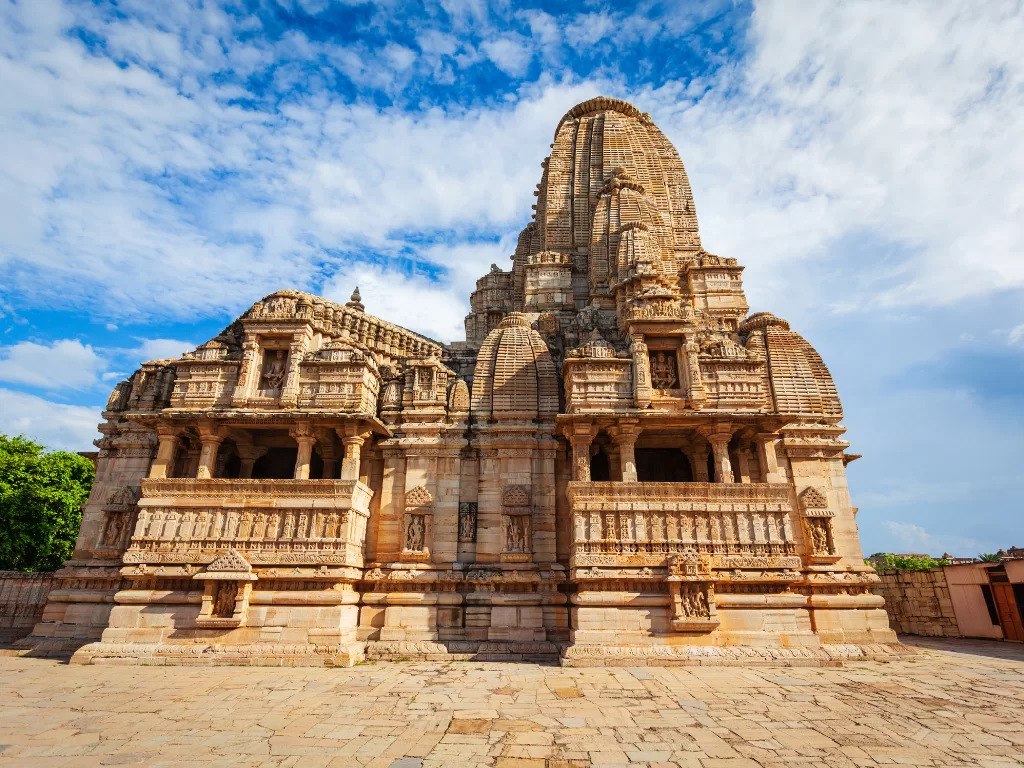
Visiting Kalika Mata Temple in Chittorgarh Fort, Rajasthan, India

Kalika Mata Temple , Chittorgarh
Tourists visit to examine the intricate Pratihara-style stone carvings, including depictions of the twelve Adityas (sun deities) and mythological scenes on the ceilings and pillars. The temple is located between the Padmini Palace and the Victory Tower, serving as a primary site for Navaratri celebrations and religious architecture studies.

Quick Facts About Kalika Mata Temple

Quick Facts for Kalika Mata Temple, Chittorgarh

Entry Fee ?40 for Indians; ?600 for Foreigners (Included in the Chittorgarh Fort composite ticket)
Timings 09:00 AM – 06:00 PM
Altitude (m) ~500 m (Fort elevation)
Ideal Visit Duration 20 to 30 minutes
Best Time of Day 09:00 AM – 10:30 AM (For morning rituals) or 05:00 PM (Sunset views)
Crowd Level Moderate (High during Navratri and festivals)
Distance from City Centre (km) 7 km from Chittorgarh Railway Station
Walking Difficulty Easy to Moderate (Short walk from the road; involves climbing temple steps)
Parking Available Yes (Parking available in designated areas nearby within the fort)
Last Mile Access Auto-rickshaws, taxis, or private vehicles via the fort's motorable road
Suitable for Kids Yes
Suitable for Seniors Moderate (Requires climbing a short flight of stone stairs to reach the platform)
Wheelchair Friendly No (Access to the main temple sanctum involves multiple stone steps)

Why Visit Kalika Mata Temple Chittorgarh: An Architectural Transition

Visitors come to the Kalika Mata Temple to witness a rare 8th-century structure that showcases a significant religious and architectural evolution within the Chittorgarh Fort. Originally built as a Sun Temple, it was later repurposed to honor the goddess Kali, attracting travelers who want to study the transition of Vedic iconography into later medieval Hindu practices through its preserved ceiling and pillar carvings.

The on-ground atmosphere is defined by its elevated position atop a high plinth, offering a breezy, open-air environment that contrasts with the dense stone corridors of the temple’s interior. The air is often filled with the scent of fresh marigolds and incense as local devotees continue to use the site for daily worship, creating a living cultural experience where the sound of temple bells resonates against the backdrop of ancient, sun-weathered sandstone.

What makes this temple distinct for travelers is its exceptional Pratihara-style architecture, featuring a mandapa (hall) and sanctum adorned with intricate relief work that predates many of the surrounding fort structures. Unlike the more martial monuments in the complex, this site stands out for its delicate artistry, specifically the detailed carvings of planetary deities and floral motifs on the doorframes that highlight the sophisticated craftsmanship of early medieval Rajasthan.

Historical and Religious Significance of the Kalika Mata Temple Chittorgarh

The Kalika Mata Temple is an 8th-century structure originally built as a Sun Temple (Surya Mandir) during the Pratihara period. Following the destruction of the original idol during a 14th-century invasion, the temple was reconstructed and rededicated to Goddess Kali, a fierce manifestation of Shakti, in the 16th century. This transition is evident in the temple's architectural layout and the remaining solar motifs, including carvings of Surya and his chariot, which coexist with current Shaktism practices.

Architecturally, the temple is a prime example of the Pratihara style, featuring a raised plinth (jagati) and intricate carvings on the pillars, ceilings, and entryways. The sanctum houses a revered idol of Goddess Kali, attracting thousands of pilgrims, particularly during the Navratri festival when the temple serves as a central hub for religious rituals within the Chittorgarh Fort. Its position atop a high platform provides a clear view of the surrounding fort complex, emphasizing its historical role as a site of both royal patronage and public devotion.

Best Time to Visit Kalika Mata Temple in Chittorgarh Fort

The spiritual and architectural essence of Kalika Mata Temple—an 8th-century structure originally built for the Sun God—is most accessible during the cooler, dry months when the temple's elevated courtyard is thermally comfortable for extended observation and ritual participation. Because the temple requires barefoot entry and sits atop an exposed section of the fort, timing your visit to avoid the radiant heat of the stone flooring is the primary logistical concern.

  • Ideal Months: October to March, with a significant cultural peak during the Navratri festivals (typically October and March/April), when the temple hosts vibrant religious ceremonies and traditional "Ratri Jagrans."
  • Weather Conditions: During the winter peak, daytime temperatures range from 11°C to 28°C, providing clear skies and soft lighting that highlight the intricate 14th-century carvings of the mandap and pillars without the haze of summer dust.
  • Periods to Avoid: April to June should be avoided as daytime highs frequently reach 44°C; the unshaded stone podium and steps leading to the temple can become excessively hot, making the mandatory barefoot walk painful. While the monsoon (July to September) offers lush green views of the fort, sudden heavy downpours can make the ancient, uneven stone approaches slippery and the interior chambers humid.

How to Reach Kalika Mata Temple Chittorgarh: Essential Access Guide

http://googleusercontent.com/map_location_reference/1

The [Kalika Mata Temple](http://googleusercontent.com/map_location_reference/0), an 8th-century architectural marvel, is located in the southern part of the Chittorgarh Fort complex, near the Padmini Palace. Accessing this hilltop shrine requires traveling to Chittorgarh and navigating the fort's internal roads.

  • Nearest Airport: Maharana Pratap Airport (UDR) in Udaipur is the closest airport, approximately 95 km away. From the airport, travelers can hire private taxis for a 2-hour drive via NH27 to reach the base of the fort.
  • Nearest Railway Station: Chittorgarh Junction (COR) is the primary railhead, located about 8 km from the temple. It is well-connected to major cities like Delhi, Mumbai, and Jaipur. Local taxis and auto-rickshaws are available at the station to take you up to the fort's summit.
  • Road Access and Fort Entry: Chittorgarh is a major junction on the Golden Quadrilateral (NH48). To reach the temple, vehicles must ascend the hill through seven massive fortified gates (Pols). The road is paved but narrow and winding; smaller private vehicles can drive close to the temple parking area, while larger buses may park further away.
  • Last-Mile Connectivity: Within the fort complex, the temple is situated on a slightly elevated platform. While e-rickshaws and auto-rickshaws can drop you near the entrance, the final approach involves walking through the temple courtyard. For those visiting multiple sites, it is recommended to hire a vehicle for the entire 13-km fort circuit.
  • Travel Conditions and Limitations: As an active religious site, the temple can be very crowded during festivals like Navratri. The stone pathways and temple steps may be slippery during the monsoon and can become very hot during summer afternoons, so wearing socks or comfortable footwear is advised.

Traveler's Note: The temple is best visited in the early morning or late afternoon to enjoy the panoramic views of the fort and to avoid the peak heat of the day.
What to Expect When You Visit Kalika Mata Temple, Chittorgarh

  • Architectural Transition: Originally built as a Sun Temple in the 8th century and later converted into a temple for Goddess Kali, the structure features a unique blend of early Pratihara architecture. Expect to see solar motifs and carvings related to the Sun God (Surya) alongside the primary deity of Goddess Kali.
  • Elevated Position and Heat: The temple is situated on a high, massive stone plinth. While this provides excellent vantage points of the surrounding fort complex, the entire area is exposed to direct sunlight. The stone platform absorbs significant heat, making the required barefoot walk from the steps to the inner sanctum uncomfortable during midday.
  • Active Worship Environment: This is a major living shrine and a focal point for local pilgrims. Expect a high-energy atmosphere with the ringing of bells, chanting, and traditional rituals. During festivals like Navratri, the temple becomes exceptionally crowded with long, slow-moving queues and intense sensory input from incense and flowers.
  • Interior Navigation: The temple consists of a mandapa (hall), a vestibule, and a small, dark garbhagriha (sanctum). The interior is cramped and often humid due to the number of devotees and burning oil lamps. Space for quiet contemplation is limited inside the main structure during peak visiting hours.
  • Safety and Monkeys: The temple area is heavily populated by macaques and langurs attracted by ritual offerings. Visitors must be extremely cautious with handbags, cameras, and food items; it is advised not to carry any visible plastic bags or food as the monkeys can be aggressive in their attempts to snatch them.
  • Maintenance and Conservation: As an ASI-protected site that remains in active use, you may encounter areas where stone surfaces are worn smooth by centuries of foot traffic. Some carvings may be obscured by layers of vermilion or soot from lamps, reflecting the temple's continuous spiritual history rather than a museum-like preservation.

Safety and Essential Visitor Information for Kalika Mata Temple Chittorgarh

  • Peak vs. Quiet Hours: To witness the spiritual rituals without extreme congestion, arrive for the morning Aarti at 6:00 AM. The temple becomes densely packed on Tuesdays and during the Navratri festival, where wait times to enter the inner sanctum can exceed two hours in cramped conditions.
  • Floor Surface Safety: Footwear is prohibited inside the temple complex. The stone courtyard becomes dangerously hot by 11:00 AM in summer and can be extremely slick during the monsoon rains. Utilize the narrow strips of jute matting provided to navigate the perimeter safely without slipping or burning your feet.
  • Dress Code: This is a highly conservative and active place of worship. All visitors must dress modestly; shoulders, chest, and knees must be covered. Head coverings are not strictly required but are considered a sign of respect. Avoid wearing leather items (belts or bags) inside the main shrine.
  • Wildlife Warning: The area surrounding this temple is a primary habitat for aggressive macaques due to the frequent offering of Prasad (devotional food). Do not carry food, flowers, or plastic bags in your hands, and avoid direct eye contact with the monkeys to prevent physical encounters.
  • Crowd Dynamics & Entry: The entrance and interior passageways of this 8th-century structure are narrow and involve high stone steps. If you are prone to claustrophobia, remain in the open courtyard area. During peak hours, be vigilant of your personal belongings as the "push and pull" of the crowd increases the risk of pickpocketing.

Divine Geometry and Golden Light: Photography at Kalika Mata Temple, Chittorgarh

  • The East-Facing Entrance at Sunrise: As an 8th-century structure originally built as a Sun Temple, the main gate faces east. Arrive at dawn to capture the first rays of light illuminating the entrance porch and the intricate Surya (Sun God) carvings on the lintels. This early hour also provides the softest light for the temple's elevated podium and its weathered sandstone textures.
  • Architectural Symmetry from the Courtyard: The vast empty space in front of the temple, used for 'Ratri Jagrans,' offers an unobstructed wide-angle view. Position your camera here to capture the full Pratihara-style silhouette, including the ornate pillars and the Mandap, framed against the backdrop of the Aravalli hills.
  • Detailing of the Inner Sanctum Doorframe: The doorframe leading to the deity is a masterpiece of early medieval art, featuring four ornamental bands and figures of celestial beings. While photography of the main idol is strictly prohibited, you can often capture the exquisite surrounding stone panels from the threshold using a medium telephoto lens to respect the sacred space.
  • Strict Interior Photography Restrictions: In accordance with religious customs, photography and videography are strictly forbidden inside the garbha-griha (inner sanctum). Always look for signage and seek verbal confirmation from the attending priests before using a camera within the temple’s shaded corridors.
  • Panoramic Vistas from the Temple Hillock: Because the temple is built on a small rock elevation between the Victory Tower and Padmini Palace, the perimeter walls of the complex serve as a natural observation deck. This is an ideal spot for panoramic shots of the Chittorgarh Fort sprawling toward the horizon, particularly effective during the late afternoon.
  • Crowd Factors During Navratri: This temple is a major pilgrimage site for the Panwar clan and local devotees. During the nine days of Navratri, the temple becomes exceptionally crowded with worshippers and 'Ratri Jagran' participants. For architectural photography without human interference, avoid these festival dates and aim for weekday mornings between 6:00 AM and 9:00 AM.

Near By Attraction

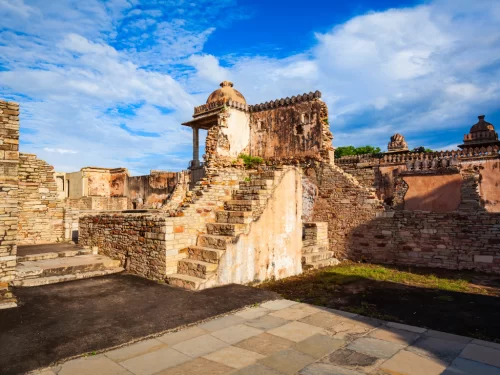
Side view of Rana Kumbha Palace ruins at Chittorgarh Fort in Rajasthan highlighting dome pavilion, stairs and weathered walls under partly cloudy sky, perfect Rajasthan tour package. Fort

Chittorgarh Fort

Chittorgarh Fort is a 7th-century hill fortress and UNESCO World Heritage site extending across 700 acres on a 180-meter high rocky plateau.
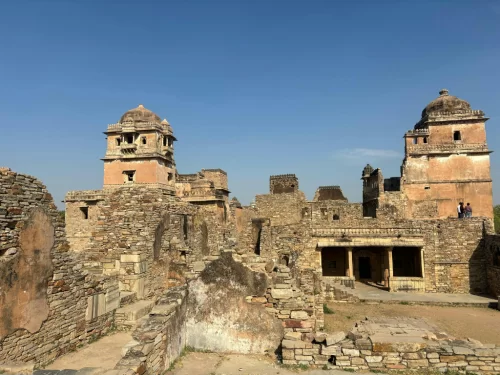
Rana Kumbha Palace ruins at Chittorgarh Fort in Rajasthan with pink sandstone towers, courtyards and walls under clear blue sky, perfect Rajasthan tour package. Palace

Rana Kumbha Palace

Rana Kumbha Palace is a 15th-century ruined royal residence and the oldest standing structure within the UNESCO-listed Chittorgarh Fort complex.
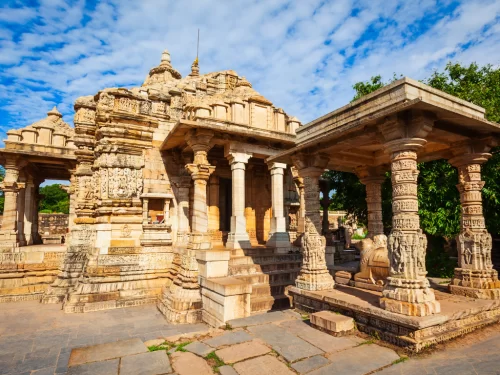
Meera Temple at Chittorgarh Fort in Rajasthan showcasing intricate Indo-Aryan carvings, pillars, and torana with trees, perfect Rajasthan tour package Temple

Meera Temple

Meera Temple is a 16th-century Hindu shrine dedicated to the mystic poet-saint Meera Bai, located within the larger Kumbha Shyam Temple complex.

Frequently Asked Questions About Kalika Mata Temple

Kalika Mata Temple is located inside Chittorgarh Fort in Chittorgarh city, Rajasthan. The temple stands on a hilltop within the historic fort complex.
Kalika Mata Temple is generally open from early morning to evening for devotees and tourists. Timings may vary slightly during special religious occasions.
There is no separate entry fee for Kalika Mata Temple, but visitors must purchase a Chittorgarh Fort entry ticket to access the temple ?????.
Kalika Mata Temple can be reached by road through Chittorgarh city. Visitors can drive or hire local transport up to Chittorgarh Fort and then walk to the temple.
The best time to visit Kalika Mata Temple is between October and March when the weather in Rajasthan is pleasant for sightseeing inside the fort area.
Around 30 to 60 minutes are sufficient to visit Kalika Mata Temple comfortably. Visitors exploring the entire Chittorgarh Fort may plan for several hours.
Parking facilities are available near the entrance gates of Chittorgarh Fort. From there, visitors can proceed towards Kalika Mata Temple within the fort complex.
Kalika Mata Temple is accessible for most visitors, but some walking is required within the fort premises. Elderly visitors should move carefully on uneven pathways.
Kalika Mata Temple experiences high footfall during Navratri and other Hindu festivals. Visiting on weekdays usually offers a more peaceful darshan experience.
Vijay Stambh, Rana Kumbha Palace and Padmini Palace inside Chittorgarh Fort can be combined with a Kalika Mata Temple visit. These attractions are located within the same fort complex in Rajasthan.

Loved this place ? Let’s Plan Your Rajasthan Trip

Get customized Rajasthan tour planning designed around desert climate comfort, long-distance road travel flow, heritage exploration time, and realistic pacing between regions. Whether you are visiting for fort architecture, palace heritage, cultural exper

⚡ Quick Response | 💰 Free consultation | 🕒 24×7 expert support

×

Plan Your Trip