Quick Facts About Rampuria Haveli
Rampuria Haveli, Bikaner – Quick Facts
| Entry Fee | No entry fee (viewable from outside only) |
| Timings | Exterior viewing possible daily during daylight hours |
| Altitude (m) | Approx. 225 m |
| Ideal Visit Duration | 15–25 minutes |
| Best Time of Day | Morning or late afternoon for light and photography |
| Crowd Level | Low to moderate |
| Distance from City Centre (km) | Approx. 1 km from Junagarh Fort area |
| Walking Difficulty | Easy |
| Parking Available | No dedicated parking; roadside parking nearby |
| Last Mile Access | Narrow lanes; accessible on foot or by auto-rickshaw |
| Suitable for Kids | Yes (exterior viewing) |
| Suitable for Seniors | Yes, if comfortable walking short distances |
| Wheelchair Friendly | No |
Why Visit Rampuria Haveli, Bikaner, Rajasthan
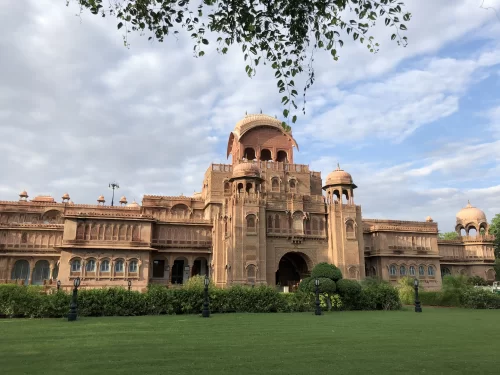
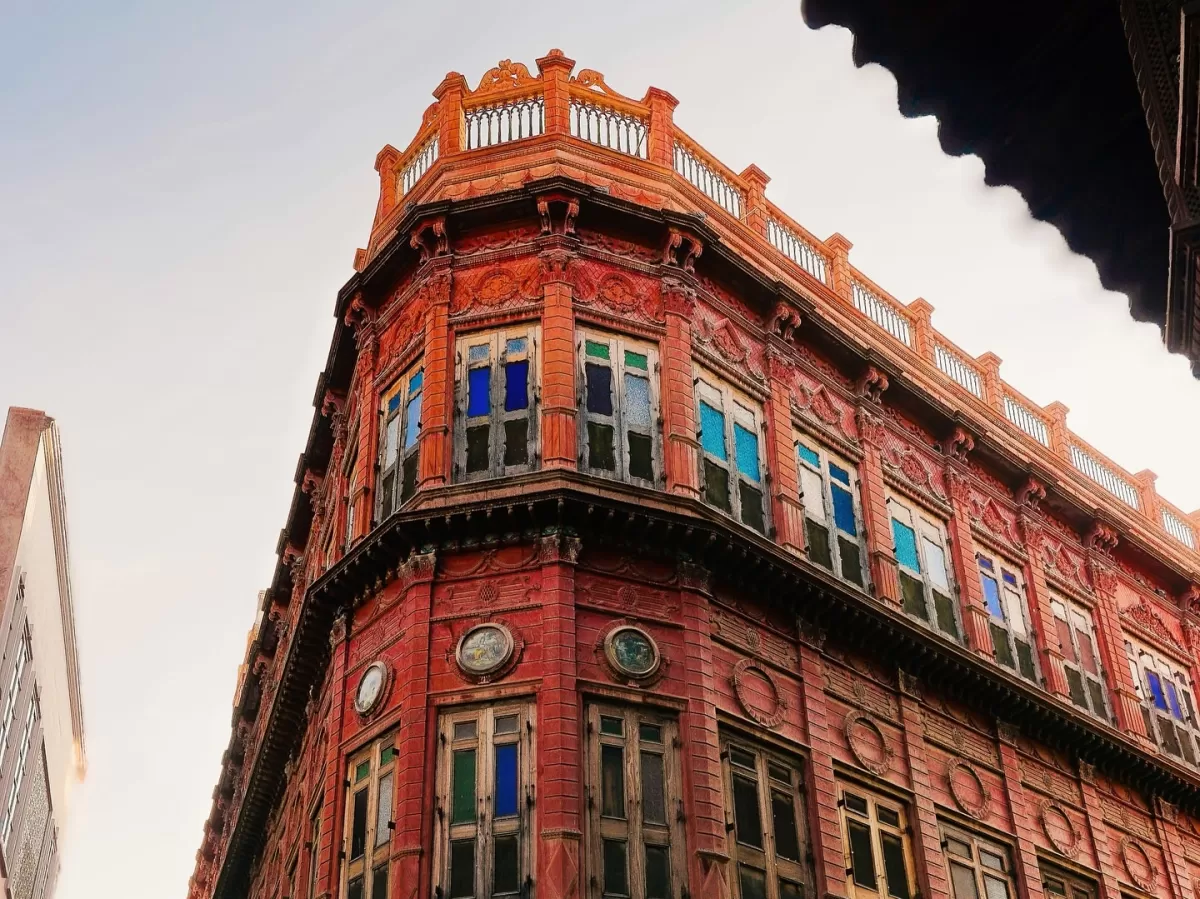
Visitors come to Rampuria Haveli to see some of Bikaner’s most detailed merchant-era façades, known for carved red sandstone balconies, jharokhas, and lattice windows visible from the street.
The area feels like a working old-city neighborhood, with narrow lanes, residential activity, and daily commerce continuing around the buildings rather than a controlled tourist complex.
What makes Rampuria Haveli distinct is the concentration of multiple havelis in one street, allowing travelers to compare architectural styles and craftsmanship without entering a museum or ticketed site.
History of Rampuria Haveli, Bikaner, Rajasthan
Rampuria Haveli is a group of mansions built between the late 19th and early 20th centuries by the Rampuria family, a prominent merchant community in Bikaner.
The havelis were constructed using red sandstone sourced locally and designed by craftsmen from Shekhawati and nearby regions, reflecting the residential architecture of wealthy trading families.
Today, most of the havelis remain privately owned and are viewed from the street, preserving their original external character within Bikaner’s old city fabric.
Best Time to Visit Rampuria Haveli, Bikaner, Rajasthan
Rampuria Haveli is best visited during cooler months, as it is explored on foot in open streets with no indoor visitor facilities.
- Ideal months: October to March
- Weather conditions: Mild daytime temperatures suitable for walking and outdoor photography
- Periods to avoid: April to June due to extreme heat; July to September due to humidity and occasional street flooding
How to Reach Rampuria Haveli, Bikaner, Rajasthan
- Nearest airport: Nal Airport, Bikaner (approx. 17 km); limited commercial flight connectivity, taxis available on arrival.
- Nearest railway station: Bikaner Junction (approx. 2 km); easily reachable by auto-rickshaw or taxi.
- Road access: Located in Bikaner old city near Junagarh Fort; narrow lanes restrict car entry, last access is usually on foot or by auto-rickshaw.
What to Expect When You Visit Rampuria Haveli, Bikaner, Rajasthan
- Environment: Located in a dense old-city lane with residential homes, shops, and regular local traffic.
- Facilities: No ticket counter, restrooms, seating areas, or visitor amenities, as the buildings are privately owned.
- Accessibility: Viewing is from street level only; lanes are narrow and uneven, with limited space for vehicles.
- Visitor conditions: Visitors usually stop briefly for photography; respectful behavior is expected as residents live nearby.
Important Visitor Information for Rampuria Haveli, Bikaner, Rajasthan
- Crowds are generally low; brief congestion can occur in lanes during local shopping hours (late morning and evening).
- Best visiting hours are early morning or late afternoon for easier walking and softer light; midday heat is significant in summer.
- No formal dress code, but modest clothing is appropriate as the havelis are in an active residential area.
- Watch for uneven paving, two-wheelers, and handcarts in narrow lanes; personal belongings should be kept secure.
Photography and Viewpoints at Rampuria Haveli, Bikaner, Rajasthan
- Best angles are from the narrow street opposite the main façades, capturing carved balconies and jharokhas in a straight-on frame.
- Early morning and late afternoon provide softer light on the red sandstone and reduce harsh shadows from close-set buildings.
- Photography is allowed from public areas; interiors are private and not accessible for photography.
- Passing vehicles and pedestrians in the lanes can interrupt shots, especially during late morning and evening hours.