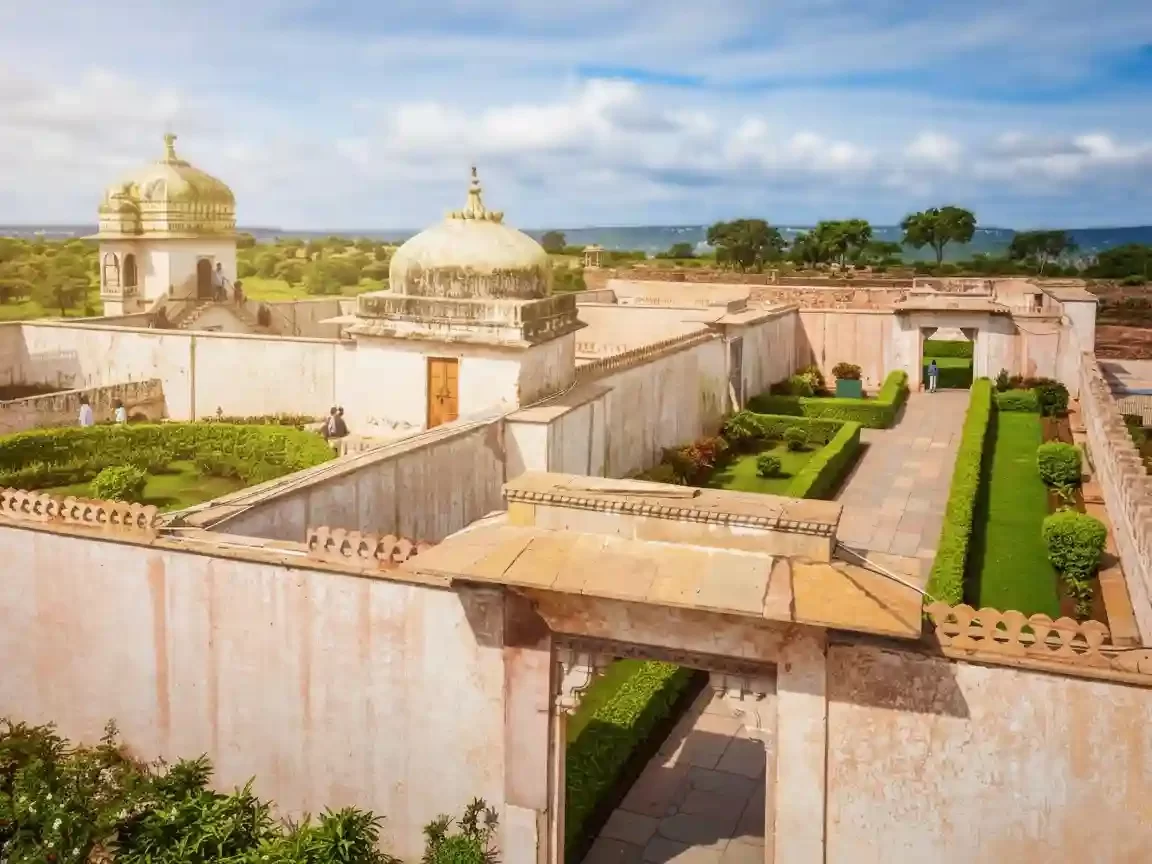
Visiting Maharani Padmini Palace in Chittorgarh Fort, Rajasthan, India

Maharani Padmini Palace , Chittorgarh
Tourists visit to see the \"Jal Mahal\" (water palace) style architecture and the site traditionally associated with the 1303 siege by Alauddin Khilji. The complex features Rajput-style pavilions, a central water tank designed for climate control, and views of the surrounding fort village and reservoir.

Quick Facts About Maharani Padmini Palace

Quick Facts for Maharani Padmini Palace, Chittorgarh

Entry Fee ?40 for Indians; ?600 for Foreigners (Included in the Chittorgarh Fort composite ticket)
Timings 09:00 AM – 06:00 PM
Altitude (m) ~500 m (Fort elevation)
Ideal Visit Duration 45 to 60 minutes
Best Time of Day Morning (09:30 AM – 11:00 AM) or late afternoon for photography of the water palace
Crowd Level High (One of the most popular spots within the fort complex)
Distance from City Centre (km) 7.5 km from Chittorgarh Railway Station
Walking Difficulty Easy to Moderate (Flat walking paths, but the complex is spread out)
Parking Available Yes (Designated parking area available near the palace entrance inside the fort)
Last Mile Access Accessible by auto-rickshaws, taxis, or private vehicles via the fort's internal roads
Suitable for Kids Yes (Large open courtyards and garden areas)
Suitable for Seniors Yes (Mostly flat terrain; minimal climbing required to view the main structures)
Wheelchair Friendly Partial (The outer gardens and base are accessible, but the interior palace island is not)

Why Visit Maharani Padmini Palace Chittorgarh: The Architectural Jewel of the Lake

Visitors are drawn to Maharani Padmini Palace to witness a rare example of a "jal mahal" (water palace) design situated within the arid landscape of the Chittorgarh Fort. Travelers come to observe the three-story white structure rising directly from the lotus-filled waters of a central tank, a visual centerpiece that has inspired North Indian architectural aesthetics and local folklore for centuries.

The on-ground atmosphere is noticeably cooler and more tranquil than the surrounding fort ramparts, tempered by the evaporative breeze from the water. The site is characterized by its symmetrical stone pavilions and the soft play of light reflecting off the pond, providing a quiet, picturesque environment where the sound of wind through the arched windows replaces the typical bustle of the fort's main gates.

What makes this palace distinct is its unique placement and strategic use of reflection; the building was specifically designed to be viewed across the water, emphasizing a blend of security and elegance. For travelers, it stands out as the most feminine and delicate structure within a fortress otherwise defined by massive stone walls and military might, offering a specialized look at the residential and aesthetic preferences of the Mewar royalty.

Historical and Cultural Context of Maharani Padmini Palace Chittorgarh

Located within the southern part of the Chittorgarh Fort, Maharani Padmini Palace is a three-story white structure surrounded by a water moat. The palace is central to the historical narrative of the 1303 CE siege of Chittorgarh by Alauddin Khalji, the Sultan of Delhi. It serves as a physical site associated with the legend of Rani Padmini, whose bravery and subsequent act of Jauhar (self-immolation) to protect her honor remain a defining element of Rajput cultural identity and local folklore.

Architecturally, the palace showcases the Rajput style of water palaces, designed to provide natural cooling during the intense Rajasthani summers. The complex includes the Jal Mahal, a pavilion situated directly in the middle of the lotus pool, which was historically accessible only by boat. While the structure underwent renovations during the 19th century under Maharana Sajjan Singh, it retains its original defensive layout and remains a primary pilgrimage site for those studying the chivalric traditions of the Mewar region.

Best Time to Visit Maharani Padmini Palace in Chittorgarh

The experience of Padmini Palace is defined by its unique water-surrounded architecture, making the visual clarity of the reflections and the ambient temperature of the surrounding plateau the primary factors for a successful visit. To appreciate the legendary mirror-work and the island-palace aesthetics without the interference of haze or heat exhaustion, timing your visit during the post-monsoon or winter season is essential.

  • Ideal Months: September to March; specifically, late September and October offer the best visual experience as the surrounding Jal Mahal pond is full from the rains, creating the iconic reflections of the palace structure.
  • Weather Conditions: Expect crisp, dry weather with daytime temperatures between 18°C and 26°C. These conditions are necessary for comfortably traversing the open walkways and garden areas that lead to the viewing pavilions overlooking the water.
  • Periods to Avoid: May and June are particularly brutal, as the shallow water surrounding the palace can recede or become stagnant, and the lack of shade on the approach paths leads to extreme sun exposure in 40°C+ heat. Mid-monsoon (July/August) can also be problematic as heavy downpours may restrict access to the best vantage points for viewing the central water palace.

How to Reach Maharani Padmini Palace Chittorgarh: Access and Transit Guide

Maharani Padmini Palace is situated in the southern part of the Chittorgarh Fort complex, overlooking a lotus pool. As a major landmark within the UNESCO site, reaching it requires navigating the fort's internal circuit after ascending the hill.

  • Nearest Airport: Maharana Pratap Airport (UDR) in Udaipur is the closest airport, approximately 95 km away. Travelers typically take a private taxi or a pre-booked car from the airport to Chittorgarh, which takes about 2 hours via the Udaipur-Chittorgarh Highway (NH27).
  • Nearest Railway Station: Chittorgarh Junction (COR) is the central rail link, located about 8 km from the palace. The station serves several express trains from Delhi, Jaipur, and Mumbai. Auto-rickshaws and taxis are readily available at the station to ferry tourists up to the fort.
  • Road Access and Fort Entry: Chittorgarh is well-connected by NH48 and NH27. Access to the palace involves driving up the 1-km hill road through the seven monumental gates. While private cars can reach the parking area near the palace, heavy vehicles may face restrictions due to the sharp turns and narrow archways of the historic gates.
  • Last-Mile Connectivity: Within the fort, Padmini Palace is located approximately 2.5 km from the main entrance (Badi Pol). Since the fort covers nearly 700 acres, it is highly recommended to use an auto-rickshaw or a private vehicle to move between the Vijaya Stambha and Padmini Palace, as walking the entire loop is exhausting in the Rajasthani heat.
  • Travel Conditions and Restrictions: The palace is surrounded by a water moat; for structural preservation and safety, visitors are generally permitted to view the palace from the outer pavilion and the surrounding gardens rather than entering the water-bound structure itself. Expect crowded conditions during the winter peak season and restricted movement during the annual Jauhar Mela.

Note: Visitors must purchase a centralized entry ticket for the Chittorgarh Fort at the ASI booth near the first gate, as there are no separate ticket counters at Padmini Palace itself.
What to Expect When You Visit Maharani Padmini Palace, Chittorgarh

  • Geographic Layout and Water Feature: The site is a compact, three-story palace complex uniquely situated at the edge of a large water reservoir. A separate, smaller pavilion (the Jal Mahal) is positioned in the center of the water; however, public access is restricted to the mainland palace structures, and the central pavilion is only viewable from the shore.
  • Surrounding Landscape and Heat: The area around the palace consists of manicured gardens and open stone walkways. Due to the proximity of the water and lack of overhead tree canopy, humidity levels can feel higher than the rest of the fort, and the glare from the sun reflecting off the reservoir is intense during midday.
  • Restricted Structural Access: Unlike other palaces in the fort, interior access is limited. Visitors can explore the external courtyards and specific viewing chambers, but upper floors and internal rooms are frequently closed to the public to preserve the structural integrity and historical frescoes.
  • Historical Context and Signage: Expect minimal interactive media. Information is primarily conveyed through standard ASI (Archaeological Survey of India) stone plaques. Visitors should note that the famous "mirror legend" associated with the palace has been officially debunked by historians and the mirrors have been removed or covered to comply with factual historical narratives.
  • Foot Traffic and Congestion: The palace is one of the most frequented spots in the fort. The narrow viewing galleries overlooking the water reservoir often become bottlenecked with tour groups, particularly during the winter peak season (November to February).
  • Wildlife Presence: The surrounding gardens and water edges are home to a significant population of langurs and macaques. Visitors are advised to secure personal belongings and avoid carrying food, as the monkeys can be aggressive when seeking handouts.
http://googleusercontent.com/map_location_reference/1

Safety and Essential Visitor Information for [Maharani Padmini Palace](http://googleusercontent.com/map_location_reference/0)

  • Peak vs. Quiet Hours: To view the palace mirrors and the surrounding lotus pool without heavy reflection glare or crowds, visit between 9:30 AM and 11:00 AM. Avoid the 2:00 PM to 4:00 PM window when sunlight intensity is highest and large tour groups frequently congregate in the narrow viewing corridors.
  • Structural Safety: The palace is surrounded by a water moat; remain behind the designated stone barriers at all times as algae can make the edges extremely slippery. Within the palace, be cautious of low doorways and steep stone steps that have been worn smooth by centuries of use.
  • Crowd Management: Access to the specific chambers known for the mirror legend is limited. During peak periods, security may enforce a strict one-way flow; follow these directions closely to avoid being trapped in bottlenecks within the small interior rooms.
  • Environmental Cautions: The area around the palace is highly exposed with significant heat radiation from the water and stone. Wear a wide-brimmed hat and use high-SPF sunscreen. Carry sufficient water, as there are no vendor facilities allowed within the immediate vicinity of the palace structure.
  • Wildlife & Personal Safety: Keep all bags zipped and avoid carrying food, as the palace gardens are a high-activity zone for local macaques. While the site is generally safe, ensure any guide you hire is officially licensed by Rajasthan Tourism to avoid misinformation and aggressive solicitation.

Capturing the Reflection: Photography Guide for Maharani Padmini Palace, Chittorgarh

  • The Reflection Shot from the Jal Mahal Pavilion: To capture the iconic image of the white summer palace reflected in the surrounding lotus pool, position yourself at the northern edge of the water tank. The best reflections occur during the early morning when the water is still and the sun illuminates the facade from the east.
  • Symmetry and Framing from the Surrounding Garden: Use the arched windows and entryways of the main palace complex on the bank to frame the water-bound structure. This provides a sense of depth and scale, emphasizing the "floating" nature of the central pavilion.
  • Midday Lighting and Heat Haze: Avoid photography between 12:00 PM and 3:00 PM; the harsh overhead sun flattens the architectural details of the white plaster and can create significant glare off the water surface. Additionally, heat haze during summer months can soften the clarity of long-distance shots across the reservoir.
  • Restricted Access to the Central Pavilion: Visitors are generally not allowed inside the water-bound palace itself. Photography must be conducted from the banks or the surrounding palace walls. Zoom lenses (70-200mm) are essential for capturing the intricate stone carvings on the central structure from across the water.
  • The Mirror Legend and Historical Sensitivity: While the famous story of Alauddin Khalji seeing Padmini’s reflection in a mirror is a major draw, the mirrors currently inside the palace are modern additions. Focus your photography on the authentic Rajput architecture and the water-cooled design rather than the anecdotal mirror placements.
  • Crowd Flow and Sightlines: The viewing platform for the reflection is a primary stop for guided tours. To avoid crowds in your frame, arrive at the palace by 8:00 AM. If visiting during peak hours, use the elevated walkways of the main building to find a higher vantage point that looks down onto the Jal Mahal, clearing the heads of tourists at the water's edge.

Near By Attraction

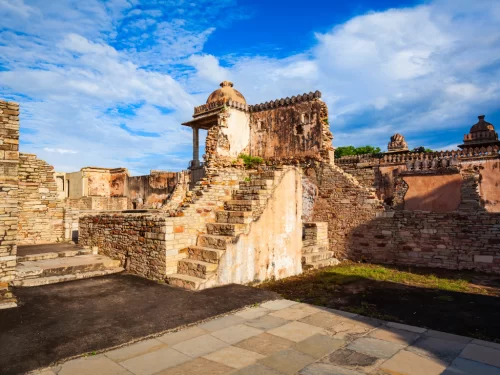
Side view of Rana Kumbha Palace ruins at Chittorgarh Fort in Rajasthan highlighting dome pavilion, stairs and weathered walls under partly cloudy sky, perfect Rajasthan tour package. Fort

Chittorgarh Fort

Chittorgarh Fort is a 7th-century hill fortress and UNESCO World Heritage site extending across 700 acres on a 180-meter high rocky plateau.
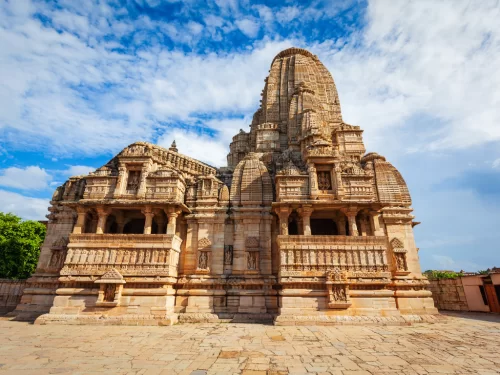
Kalika Mata Temple shikhara at Chittorgarh Fort in Rajasthan during sunny day, featuring intricate carvings and blue sky, perfect Rajasthan tour package. Temple

Kalika Mata Temple

Kalika Mata Temple is an 8th-century Hindu temple originally built as a Sun Temple before being converted to honor the goddess Kali in the 14th century.
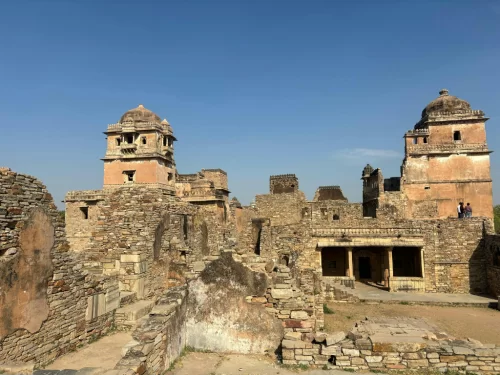
Rana Kumbha Palace ruins at Chittorgarh Fort in Rajasthan with pink sandstone towers, courtyards and walls under clear blue sky, perfect Rajasthan tour package. Palace

Rana Kumbha Palace

Rana Kumbha Palace is a 15th-century ruined royal residence and the oldest standing structure within the UNESCO-listed Chittorgarh Fort complex.

Frequently Asked Questions About Maharani Padmini Palace

Maharani Padmini Palace is located inside Chittorgarh Fort in Chittorgarh city, Rajasthan. The palace stands near a lotus pool within the fort complex.
Maharani Padmini Palace is open from morning to evening as per Chittorgarh Fort visiting hours. Timings may vary slightly on public holidays.
There is no separate entry fee for Maharani Padmini Palace, but visitors must purchase a Chittorgarh Fort entry ticket to access the site.
Around 30 to 45 minutes are sufficient to explore Maharani Padmini Palace. Visitors touring the entire Chittorgarh Fort should plan several hours for sightseeing.
The best time to visit Maharani Padmini Palace is between October and March when the weather in Rajasthan remains pleasant for walking within the fort.
Maharani Padmini Palace can be reached by road through Chittorgarh city. Visitors can drive or hire local transport up to Chittorgarh Fort and then proceed to the palace area.
Parking facilities are available near the entrance gates of Chittorgarh Fort. From there, visitors can move within the fort premises to reach Maharani Padmini Palace.
Maharani Padmini Palace is suitable for families and general visitors. Some walking is required, so comfortable footwear is recommended inside the fort complex.
Visitors can see the palace structure, surrounding water pool and viewpoints inside Maharani Padmini Palace. The setting provides scenic views of the fort surroundings in Rajasthan.
Maharani Padmini Palace experiences higher footfall during peak tourist season and weekends. Weekday mornings usually offer a more relaxed experience.
Local guides are available at Chittorgarh Fort who can provide information about Maharani Padmini Palace. Hiring a guide helps visitors understand the layout and context of the palace.
Rana Kumbha Palace, Vijay Stambh and Meera Temple can be combined with a Maharani Padmini Palace visit. All these attractions are located within Chittorgarh Fort in Rajasthan.

Loved this place ? Let’s Plan Your Rajasthan Trip

Get customized Rajasthan tour planning designed around desert climate comfort, long-distance road travel flow, heritage exploration time, and realistic pacing between regions. Whether you are visiting for fort architecture, palace heritage, cultural exper

⚡ Quick Response | 💰 Free consultation | 🕒 24×7 expert support

×

Plan Your Trip