Jantar Mantar Jaipur – Astronomical Observatory and Heritage Landmark

Jantar Mantar Jaipur , Jaipur
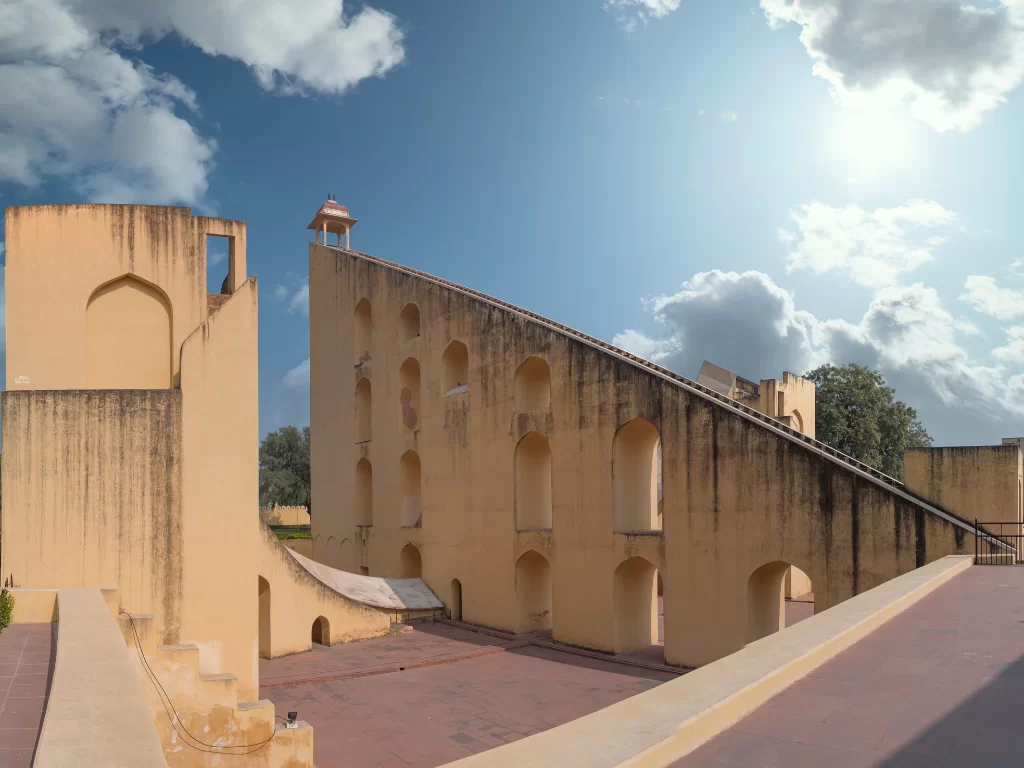
Built in the early 18th century by Maharaja Sawai Jai Singh II, Jantar Mantar in Jaipur is a UNESCO World Heritage site that houses the world’s largest stone sundial and various architectural astronomical instruments. The observatory was constructed to measure time, predict eclipses, track stars, and observe planetary movements with remarkable accuracy. Its impressive geometric structures and scientific significance make it a unique blend of history, science, and architecture. Visitors can explore the open-air instruments, learn about ancient Indian astronomy, and capture striking photographs of the monumental stone structures.

Quick Facts About Jantar Mantar Jaipur

Quick Facts About Jantar Mantar Jaipur

Entry Fee 200 for Indian adults, 100 for children (5–15 years), 500 for foreign tourists. Free for children below 5 years.
Timings Daily from 9:00AM to 5:00PM.
Altitude (m) ~431m above sea level.
Ideal Visit Duration 1–2 hours to explore all instruments and take photographs.
Best Time of Day Early morning or late afternoon for cooler temperatures and better lighting for photography.
Crowd Level Moderate on weekdays, high on weekends and public holidays.
Distance from City Centre (km) About 1km from Jaipur city center (City Palace area).
Walking Difficulty Easy — open-air observatory with flat pathways.
Parking Available Limited paid parking near City Palace; nearby streets may have available spaces.
Last Mile Access Accessible via auto-rickshaw, taxi, or walking from nearby parking areas.
Suitable for Kids Yes — educational and interactive for school-age children.
Suitable for Seniors Yes — mostly flat terrain, easy to explore.
Wheelchair Friendly Partially — flat paths accessible, but some instruments may require stepping around obstacles.

Why Visit Jantar Mantar Jaipur

Jantar Mantar in Jaipur is a remarkable blend of science, architecture, and history, offering a glimpse into India’s advanced astronomical knowledge during the 18th century. The open-air observatory features massive instruments like the world’s largest stone sundial, designed for precise measurement of time, tracking celestial bodies, and predicting eclipses. Visitors can experience the unique geometric structures up close, appreciate their engineering brilliance, and learn about the astronomical methods used centuries ago. The serene atmosphere and expansive layout make it an engaging and educational experience, perfect for history buffs, science enthusiasts, and photographers seeking striking architectural shots.

History of Jantar Mantar Jaipur

Jantar Mantar was constructed between 1727 and 1734 by Maharaja Sawai Jai Singh II, the founder of Jaipur, as part of his efforts to improve astronomical observations in India. The observatory consists of a collection of nineteen large architectural instruments, including the Samrat Yantra, the world’s largest stone sundial, designed to measure time, track celestial positions, and predict eclipses with remarkable accuracy. Jantar Mantar reflects the scientific ingenuity of the period and showcases a unique blend of architecture and astronomy. Today, it stands as a UNESCO World Heritage site and remains an important symbol of India’s rich scientific heritage.

Best Time to Visit Jantar Mantar Jaipur

The best time to visit Jantar Mantar is during the cooler months from October to March, when Jaipur experiences pleasant weather suitable for exploring outdoor monuments. Early mornings and late afternoons offer comfortable temperatures and soft natural light, ideal for photography and observing the astronomical instruments in detail.
  • October to March: Comfortable temperatures and clear skies, ideal for sightseeing and photography.
  • Early Morning (9:00–11:00?AM): Fewer crowds and softer light for photographing instruments.
  • Late Afternoon (3:00–5:00?PM): Golden hour enhances the textures and shadows of the stone structures.
  • Weekdays: Less crowded than weekends, allowing a more relaxed and educational visit.
  • Avoid April to June: Extreme heat makes outdoor exploration uncomfortable.

How to Reach Jantar Mantar Jaipur

  • By Air: Jaipur International Airport is about 13?km from Jantar Mantar. Taxis and app-based cabs take around 30–40 minutes to reach the site.
  • By Train: Jaipur Junction railway station is approximately 5?km away. Auto-rickshaws, taxis, and local buses provide convenient last-mile access.
  • By Bus: Jaipur City Transport and private buses connect major city points to the City Palace area, within walking distance of Jantar Mantar.
  • By Car/Taxi: Easily accessible via central city roads. Paid parking is available nearby; taxis and rickshaws can drop visitors at the entrance.
  • Walking: From nearby hotels and attractions like City Palace or Hawa Mahal, the observatory is reachable on foot with scenic city views along the way.

What to Expect When You Visit Jantar Mantar Jaipur

  • Architectural Marvels: Explore a collection of 19 massive astronomical instruments, including the world’s largest stone sundial, Samrat Yantra.
  • Educational Experience: Learn about ancient Indian astronomy, celestial measurements, and the scientific methods used for tracking stars and predicting eclipses.
  • Interactive Exploration: Visitors can walk around and inside the open-air instruments to observe their functionality and geometric precision.
  • Photography Opportunities: Capture unique stone structures, shadows, and intricate markings, especially during early morning or late afternoon light.
  • Serene Environment: Despite being in the heart of Jaipur, the observatory offers a calm and spacious setting for leisurely exploration.
  • Visitor Amenities: Information boards explain the purpose of each instrument, helping both children and adults understand the scientific significance.
  • Moderate Walking: Mostly flat terrain makes it easy for families and seniors to navigate, though some instruments require careful stepping around edges.

Important Visitor Information

  • Crowd & Weather Notes: The observatory is moderately busy on weekdays and heavily visited on weekends and public holidays. Best time to visit is October to March when the weather is pleasant and cool.
  • Peak / Quiet Hours: Peak hours are 11:00?AM–3:00?PM. Early morning (9:00–11:00?AM) and late afternoon (3:00–5:00?PM) are quieter and ideal for photography and detailed exploration.
  • Dress Code: Comfortable clothing and shoes are recommended for walking and climbing around the instruments. Modest attire is suggested due to the cultural context of Jaipur.
  • Safety Notes: Stay on designated pathways, supervise children, and avoid climbing on instruments. Follow all signage and guidelines to prevent accidents, especially during peak hours.

Photography and Viewpoint

  • Architectural Shots: Capture the geometric precision and massive scale of instruments like the Samrat Yantra, Jai Prakash Yantra, and Misra Yantra.
  • Golden Hour Photography: Early morning or late afternoon light casts dramatic shadows, highlighting the contours and inscriptions on the stone instruments.
  • Wide-Angle Perspectives: Use wide-angle lenses to capture entire instruments or groupings of multiple structures for a full view of the observatory’s layout.
  • Close-Up Details: Zoom in on engraved markings, angular slopes, and measurement scales to showcase the scientific intricacies of each instrument.
  • Panoramic Shots: Elevated viewpoints from surrounding walls or nearby terraces provide sweeping views of the observatory against Jaipur city’s backdrop.
  • Minimal Crowds Tips: Visit on weekdays or early mornings for unobstructed shots and to photograph without too many visitors in the frame.
  • Interactive Photography: Walking around the instruments allows for creative angles, reflections, and symmetry shots that highlight both science and architecture.

Near By Attraction

Shri Khole Ke Hanuman Ji Temple Jaipur Massive 1960s hillside shrine dedicated to Lord Hanuman featuring white marble architecture and scenic valley views Rajasthan. Temple

Shri Khole Ke Hanuman Ji Temple

Shri Khole Ke Hanuman Ji Temple is a prominent Hindu temple complex situated on a hillside in the Laxman Dungri area.

Moti Doongri Ganeshji Temple Jaipur Ancient Hindu shrine dedicated to Lord Ganesha with a gold seated idol Rajasthan. Temple

Moti Dungri Ganesh Ji Temple jaipur

Moti Dungri Ganesh Ji Temple is an 18th-century Hindu place of worship dedicated to Lord Ganesha, located at the foot of the Moti Dungri hill.

BAPS Shri Swaminarayan Akshardham Mandir aerial view of the intricate stone carvings and domes in Jaipur, Rajasthan. Temple

BAPS Shri Swaminarayan Akshardham Mandir

BAPS Shri Swaminarayan Akshardham is a modern Hindu temple complex dedicated to Bhagwan Swaminarayan, constructed using traditional Vedic architectural principles.

Frequently Asked Questions About Jantar Mantar Jaipur

Jantar Mantar Jaipur is located in the old city area near City Palace in Jaipur, Rajasthan. It is a UNESCO World Heritage Site in the heart of the city.
Jantar Mantar Jaipur is generally open from morning to evening for visitors. Timings may vary slightly on public holidays.
An entry ticket is required to visit Jantar Mantar Jaipur. Ticket prices differ for Indian and foreign visitors as per official guidelines.
Jantar Mantar Jaipur can be reached easily by taxi, auto or private vehicle within Jaipur city. It is situated near City Palace and Hawa Mahal.
The best time to visit Jantar Mantar Jaipur is between October and March when the weather remains pleasant for outdoor exploration.
Around one to two hours are sufficient to explore Jantar Mantar Jaipur comfortably. Visitors interested in astronomy may spend additional time.
Limited parking is available in the old city area near Jantar Mantar Jaipur. Visitors may need to use designated parking zones and walk to the monument.
Jantar Mantar Jaipur is suitable for families, students and history enthusiasts. The open courtyard layout allows comfortable movement.
Visitors can see large astronomical instruments such as the Samrat Yantra, Jai Prakash Yantra and other devices used for measuring time and celestial positions inside Jantar Mantar Jaipur.
Jantar Mantar Jaipur experiences high footfall during peak tourist season and weekends. Early morning visits usually offer a more relaxed experience.
Authorized guides are available at Jantar Mantar Jaipur to explain the purpose and functioning of the astronomical instruments.
City Palace, Hawa Mahal and Tripolia Gate can be combined with a Jantar Mantar Jaipur visit. These attractions are located within Jaipur in Rajasthan.

Loved this place ? Let’s Plan Your Rajasthan Trip

Get customized Rajasthan tour planning designed around desert climate comfort, long-distance road travel flow, heritage exploration time, and realistic pacing between regions. Whether you are visiting for fort architecture, palace heritage, cultural exper

⚡ Quick Response | 💰 Free consultation | 🕒 24×7 expert support

×

Plan Your Trip