Shri Khole Ke Hanuman Ji Temple: Jaipur, Rajasthan, India

Shri Khole Ke Hanuman Ji Temple , Jaipur
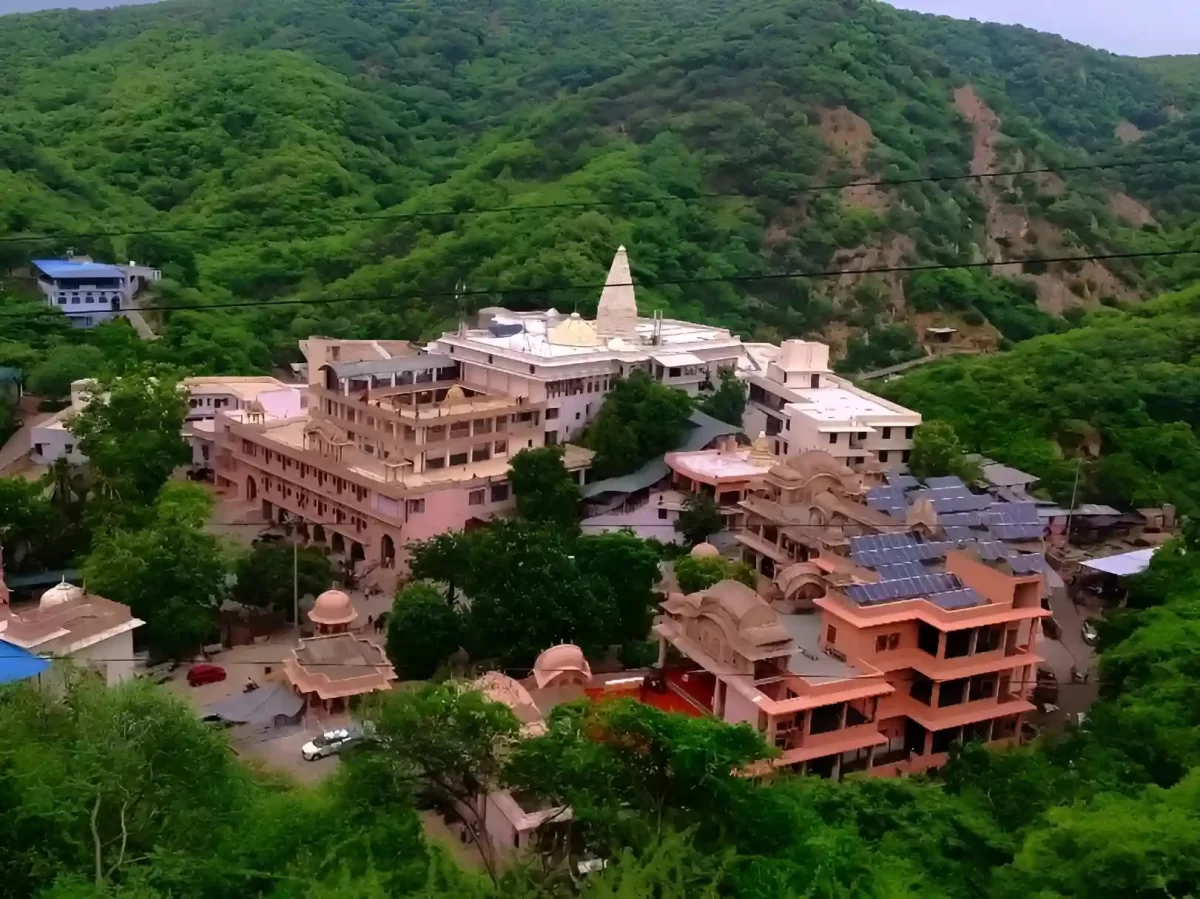
Visitors frequent the site to see the large sanctum dedicated to Lord Hanuman and to experience the panoramic views of the surrounding Aravalli hills from its elevated terraces. The complex is known for its multiple levels of architecture and its capacity to host large-scale traditional community feasts known as Gotts.

Quick Facts About Shri Khole Ke Hanuman Ji Temple

Quick Facts: Shri Khole Ke Hanuman Ji Temple

Entry Fee Free
Timings 05:00 – 21:00 (Daily)
Altitude (m) 445 m
Ideal Visit Duration 1 to 2 hours
Best Time of Day Early morning or evening Aarti; Tuesdays and Saturdays are religiously significant
Crowd Level High on weekends, Tuesdays, and Saturdays; moderate on weekdays
Distance from City Centre (km) 8 km from Jaipur City Centre
Walking Difficulty Moderate (Significant number of steps to reach the main sanctum)
Parking Available Yes (Ample parking space at the base of the temple hill)
Last Mile Access Taxi or auto-rickshaw via Delhi Road/Galta Road
Suitable for Kids Yes
Suitable for Seniors Moderate (Physical exertion required for climbing steps; lift facilities are limited)
Wheelchair Friendly No (Multi-level structure with numerous stairs)

Why Visit Shri Khole Ke Hanuman Ji Temple: A Spiritual Gateway in the Aravalli Hills

Devotees and travelers visit Shri Khole Ke Hanuman Ji to witness one of Jaipur’s most significant religious landmarks, situated within a dramatic valley of the Aravalli Range. The site is a primary destination for those seeking to see the ancient idol of Lord Hanuman, which was discovered in a natural cave, and to participate in the traditional 'Sawamani' feasts—a unique culinary and cultural ritual where massive quantities of food are prepared in communal kitchens and offered to the deity.

The on-ground atmosphere is a blend of rhythmic devotion and high-altitude serenity, characterized by the echoes of Vedic chants and temple bells bouncing off the surrounding cliff faces. Unlike the crowded urban shrines, the air here is cooler and carries the scent of incense and woodsmoke, while the presence of playful macaque monkeys and the steady climb up marble stairs provide a physical sense of pilgrimage that culminates in panoramic views of the Pink City's eastern edge.

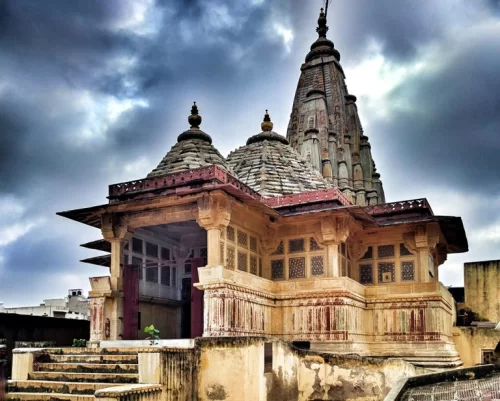
What makes this temple distinct for travelers is its sophisticated multi-level architecture that utilizes the natural incline of the gorge, featuring intricate Rajput-style domes and expansive courtyards that serve as vantage points. It offers a rare look at a "living" temple complex where traditional Hindu engineering allows for large-scale community gatherings in a rugged landscape, providing a spiritual experience that is deeply integrated into the local topography rather than standing apart from it.

Exploring the History and Spiritual Heritage of Shri Khole Ke Hanuman Ji Temple Jaipur

Shri Khole Ke Hanuman Ji Temple is a significant architectural and religious site situated on the Laxman Dungri hills of Jaipur. Established in the 1960s by Pandit Radheylal Choubey, the temple was built on the spot where a natural stream (khol) once flowed, transforming a deserted valley into a multi-level complex. The temple is renowned for its large sanctum and a dedicated prayer hall that can accommodate thousands of devotees, making it one of the most prominent Hanuman shrines in Rajasthan.

The temple holds deep cultural importance as a site for "Sawamani" feasts, where devotees offer 50 kg of food in gratitude for fulfilled vows. Architecturally, the complex features a blend of traditional Rajput and classical styles, offering panoramic views of the surrounding Aravalli hills. Its unique position within a valley and the preservation of its peaceful, natural surroundings make it a primary destination for both pilgrims seeking religious merit and tourists interested in the local heritage of the Pink City.

The Best Time to Visit Shri Khole Ke Hanuman Ji Temple Jaipur

For a fulfilling visit to this valley-nestled shrine, the cooler window between October and March is paramount, as the temple's expansive outdoor layout and the walk from the parking area are exposed to the elements. While the spiritual energy is constant, the physical experience varies significantly depending on your ability to navigate the local crowds that surge on specific auspicious days.

  • Ideal Months: November to February offer the most pleasant conditions for exploring the multi-story complex and utilizing the ropeway for panoramic views of the Aravalli Hills.
  • Weather Conditions: During the winter peak, daytime temperatures hover between 15°C and 25°C with minimal humidity, allowing for a comfortable climb to the upper sanctums and extended time in the open courtyards during the morning and evening aartis.
  • Periods to Avoid: Tuesdays and Saturdays should be avoided by those seeking a quiet retreat, as footfall often exceeds 50,000 devotees, leading to significant traffic congestion on the Delhi-Jaipur highway approach. Additionally, summer afternoons (April to June) are physically punishing, with temperatures frequently crossing 40°C, making the stone pathways and steps uncomfortably hot for barefoot circumambulation.

How to Reach Shri Khole Ke Hanuman Ji Temple, Jaipur: Travel Guide

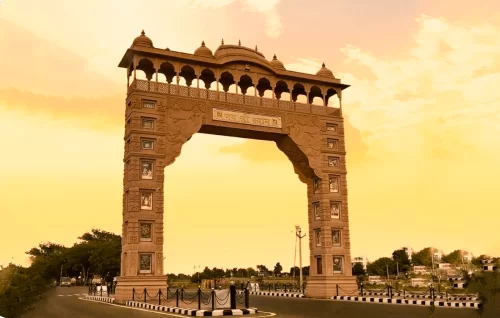
Shri Khole Ke Hanuman Ji Temple is situated on a hillock in the Lakshman Dungri area on the Jaipur-Delhi Highway (NH21). Known for its panoramic views and sprawling complex, the temple is located approximately 12 km from the Jaipur city center.
  • By Air: The Jaipur International Airport (JAI) is the nearest airport, located about 18 km away. The drive typically takes 45 to 60 minutes via the Jawahar Lal Nehru Marg and the Jaipur-Agra road. Taxis and app-based ride services (Uber/Ola) are the most reliable options for direct access.
  • By Rail: Jaipur Junction (JP) is the primary railway station, situated roughly 13 km from the temple. While the city's suburban stations are closer, Jaipur Junction provides better access to pre-paid taxis and auto-rickshaws. From the station, the journey follows the route through the old city or the bypass road.
  • Road Access and Connectivity: The temple is located off the Delhi-Jaipur Highway near the Galta Gate area. It is well-connected by road, and private vehicles can drive up to the designated parking areas. While local JCTSL buses operate along the main highway, they drop passengers at the base, requiring a further commute to the temple entrance.
  • Last-Mile Connectivity: From the main road/highway drop-off point, the temple entrance is approximately 1.5 to 2 km uphill. E-rickshaws and auto-rickshaws are available at the base to ferry pilgrims to the main gate. The temple complex itself is large, and walking is required between the various shrines.
  • Travel Conditions & Limitations: The approach road can be highly congested on Tuesdays and Saturdays, which are considered auspicious days for the deity. During the monsoon, the hillside terrain is scenic but requires cautious driving. Visitors should note that while vehicles reach the base, significant walking and climbing of stairs are necessary to reach the inner sanctum.

What to Expect When You Visit Shri Khole Ke Hanuman Ji Temple Jaipur

  • Environment and Surroundings: The temple is situated in a valley within the Laxman Dungri hills on the outskirts of Jaipur. The complex is expansive, featuring multiple levels of tiered architecture built into the hillside. While the primary sanctum is dedicated to Lord Hanuman, the site houses various smaller shrines dedicated to Ganesha, Shiva, and Durga. The atmosphere is deeply devotional, but the physical environment is rugged, with a significant presence of wild macaques and langurs that are accustomed to human presence and often aggressive if food is visible.
  • Facilities and Amenities: This temple is well-known for its large-scale "Sawamani" (communal feast) facilities; you will encounter many large dining halls and kitchens where traditional food is prepared in bulk. Public toilet facilities are available but are heavily used and basic in nature. There are dedicated areas for shoe storage and several vendors selling offerings (Prasad) and ritual items at the base. Drinking water stations are located at intervals, though bottled water is advised for international travelers.
  • Accessibility and Movement: Navigating this site is physically demanding. Reaching the main temple requires ascending a long, steep ramp and multiple flights of stairs. While a vehicle road leads close to the mid-level, the final approach still involves significant climbing. The floor surfaces are often polished marble or stone, which can become extremely slippery during the monsoon or when wet from cleaning. It is not recommended for individuals with severe mobility issues or respiratory concerns due to the incline.
  • Typical Visitor Behavior and Conditions: Crowds peak significantly on Tuesdays and Saturdays, as well as during Hanuman Jayanti. During these times, expect long queues and a high-decibel environment due to chants and bells. It is customary to receive "Prasad" while sitting on the floor in the dining halls. Visitors are expected to dress modestly and remove footwear before entering any of the elevated temple platforms. Security personnel are present but primarily focus on managing the flow of the crowd during peak hours.

Essential Visitor Information for Shri Khole Ke Hanuman Ji Temple

  • Crowd Dynamics & Weekly Peaks: Tuesdays and Saturdays are the most significant days for devotees, often seeing crowds exceeding 50,000 people. On these days, the temple remains open until midnight. For a tranquil experience with unobstructed views of the Aravalli hills, visit on a weekday morning around 10:00 AM.
  • Visiting Hours & Aarti: The temple typically opens at 5:00 AM and closes at 9:00 PM (extended on peak days). The evening Aarti at 7:00 PM is a major highlight, offering a powerful spiritual atmosphere with rhythmic bells and chanting.
  • Accessibility & Ropeway: While the temple is perched on a hillock, you can choose between a 1 km uphill walk or using the modern ropeway (9:30 AM to sunset). The ropeway is particularly useful for senior citizens and children, providing a 4-minute scenic journey to the Vaishno Devi temple on the hilltop. Free battery-operated vehicles are also available at the base for those with limited mobility.
  • Dress Code & Temple Etiquette: As a traditional place of worship, modest clothing that covers shoulders and knees is required. You must remove your footwear at the designated stands before entering the main sanctum. Photography is generally permitted in the courtyards and for panoramic city views, but strictly prohibited inside the inner sanctum.
  • Wildlife & Safety: The temple is home to a significant population of macaques and langurs. Avoid carrying visible food, plastic bags, or shiny objects, as the monkeys can be aggressive in their attempts to grab them. Keep your phone and camera straps securely around your neck or wrist.
  • Practical Facilities & "Sawamani": The complex is famous for its massive community kitchens. You may witness "Sawamani" rituals where devotees offer 51kg of Dal-Bati-Churma to be shared. There are ample parking spaces, clean restrooms, and drinking water facilities, but it is advisable to carry your own water bottle during the hot summer months (April–June).

Spiritual Vistas: Photography and Viewpoints at Shri Khole Ke Hanuman Ji Temple Jaipur

  • The Panoramic Terrace View: The most significant vantage point is located on the upper levels of the temple complex. From here, you can capture a wide-angle panorama of the Laxmi Narayan and Ganesh temples nestled within the Aravalli valley, especially striking when the evening lights begin to flicker against the darkening hills.
  • Architecture and Depth: To showcase the temple's multi-level Nagara-style architecture, shoot from the base of the main stairs looking upward. This angle emphasizes the cascading domes and the dramatic elevation of the site; use a wide-angle lens to include the surrounding rock faces that frame the structure.
  • Lighting and Golden Hour: As the temple faces east into the valley, the early morning light (06:00–08:00) is ideal for illuminating the intricate facade and stone carvings. Conversely, the "Blue Hour" after sunset provides a serene atmosphere for long-exposure shots of the illuminated temple spires.
  • Photography Restrictions: Photography and videography are strictly prohibited inside the inner sanctums (Garbhagriha) where the deities are installed. Security personnel monitor these areas closely; ensure your camera is pointed toward the architectural features or the valley views rather than the idols.
  • Crowd Management: On Tuesdays and Saturdays, the temple experiences high volumes of devotees, making the use of tripods in corridors and on stairways impractical and often restricted. For architectural photography without human interference, visit on a weekday afternoon between 13:00 and 15:00.
  • Aerial Perspectives: For those interested in the geographic scale of the "Khole" (valley), the winding road leading up to the temple offers several pull-off points. These spots provide an unobstructed view of the entire complex integrated into the mountain cleft, ideal for landscape-oriented photography.

Near By Attraction

Moti Doongri Ganeshji Temple Jaipur Ancient Hindu shrine dedicated to Lord Ganesha with a gold seated idol Rajasthan. Temple

Moti Dungri Ganesh Ji Temple jaipur

Moti Dungri Ganesh Ji Temple is an 18th-century Hindu place of worship dedicated to Lord Ganesha, located at the foot of the Moti Dungri hill.

BAPS Shri Swaminarayan Akshardham Mandir aerial view of the intricate stone carvings and domes in Jaipur, Rajasthan. Temple

BAPS Shri Swaminarayan Akshardham Mandir

BAPS Shri Swaminarayan Akshardham is a modern Hindu temple complex dedicated to Bhagwan Swaminarayan, constructed using traditional Vedic architectural principles.

Gurudwara Sri Guru Singh Sabha magnificent white marble Sikh temple featuring a central dome and traditional architecture in the heart of Udaipur Rajasthan. Gurudwara

Gurudwara Sri Guru Singh Sabha

Gurudwara Sri Guru Singh Sabha in Jaipur is a major Sikh religious center known for its spiritual atmosphere.

Frequently Asked Questions About Shri Khole Ke Hanuman Ji Temple

Shri Khole Ke Hanuman Ji Temple is located on the outskirts of Jaipur and is accessible by road followed by a short climb.
Shri Khole Ke Hanuman Ji Temple is generally open from early morning to late evening, with peak visits during prayer times.
There is no entry fee to visit Shri Khole Ke Hanuman Ji Temple, though donations are welcomed inside the premises.
The best time to visit Shri Khole Ke Hanuman Ji Temple is between October and March when the weather is pleasant for climbing and sightseeing.
Travelers can reach Shri Khole Ke Hanuman Ji Temple by taxi, auto rickshaw, or private vehicle to the base area.
Most visitors spend around 45 minutes to 1 hour at Shri Khole Ke Hanuman Ji Temple including darshan and exploring the surroundings.
Shri Khole Ke Hanuman Ji Temple requires visitors to climb a series of steps to reach the main shrine area.
Photography inside Shri Khole Ke Hanuman Ji Temple may be restricted in certain areas, and visitors should follow on site guidelines.
Shri Khole Ke Hanuman Ji Temple is suitable for family visits, though elderly visitors should take care while climbing steps.
Shri Khole Ke Hanuman Ji Temple can easily be included in a one day sightseeing itinerary along with other nearby attractions.

Loved this place ? Let’s Plan Your Rajasthan Trip

Get customized Rajasthan tour planning designed around desert climate comfort, long-distance road travel flow, heritage exploration time, and realistic pacing between regions. Whether you are visiting for fort architecture, palace heritage, cultural exper

⚑ Quick Response | πŸ’° Free consultation | πŸ•’ 24Γ—7 expert support

×

Plan Your Trip