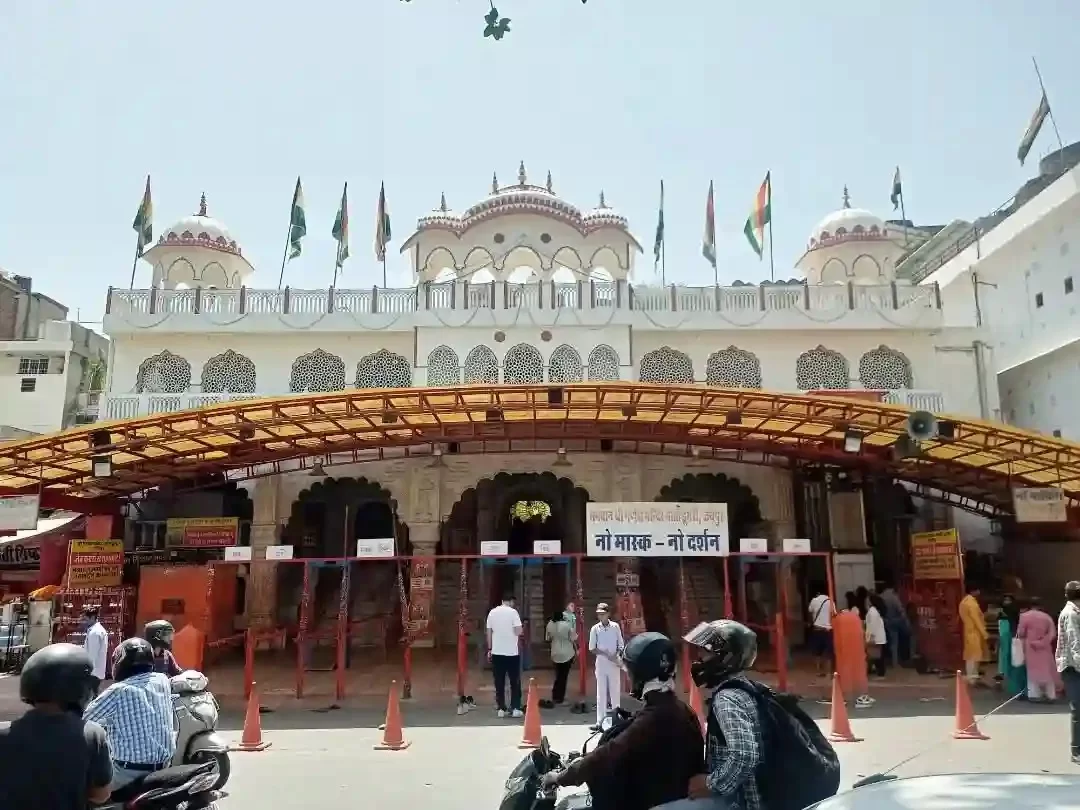
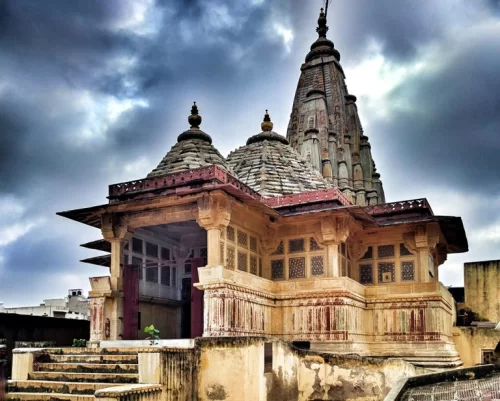
Moti Dungri Ganesh Ji Temple: Jaipur, Rajasthan, India

Moti Dungri Ganesh Ji Temple jaipur , Jaipur
Tourists and pilgrims visit to view the orange-colored Ganesha idol, which was brought from Gujarat in 1761, and to observe the temple\'s fusion of Indian, Islamic, and European architectural elements. The site is a primary religious landmark in Jaipur, particularly active during Wednesday prayer sessions and the Ganesh Chaturthi festival.

Quick Facts About Moti Dungri Ganesh Ji Temple jaipur

Quick Facts: Moti Dungri Ganesh Ji Temple

Entry Fee Free
Timings 05:30 – 13:30 and 16:30 – 21:00 (Daily)
Altitude (m) Approx. 440 m
Ideal Visit Duration 30 to 45 minutes
Best Time of Day Early morning for Aarti or late evening; Wednesdays are most crowded
Crowd Level Moderate to High; extremely crowded on Wednesdays and festival days
Distance from City Centre (km) 4 km from Jaipur City Centre (Johari Bazaar area)
Walking Difficulty Easy (Paved path/steps from the entrance to the sanctum)
Parking Available Yes (Limited roadside parking and designated areas nearby)
Last Mile Access Auto-rickshaw, taxi, or local bus to Moti Dungri Road
Suitable for Kids Yes
Suitable for Seniors Yes (Short walking distance from the gate)
Wheelchair Friendly Partial (Ramps available, but peak crowds may restrict movement)
Why Visit Moti Dungri Ganesh Ji Temple Jaipur

Travelers visit the Moti Dungri Ganesh Ji Temple to experience the spiritual heart of Jaipur, where a 500-year-old vermilion-colored idol of Lord Ganesha is the focal point of local devotion. As the "Prathama Pujya" or first-worshipped deity of the city, the temple is the primary destination for those seeking to witness authentic Hindu traditions, such as the blessing of new vehicles and the delivery of the first wedding invitations to the god.

The on-ground atmosphere is a high-energy blend of chaotic devotion and deep-rooted faith, particularly on Wednesdays when the temple hosts a vibrant local fair. Visitors move through a sensory landscape filled with the fragrance of fresh marigolds and "Besan Ladoo" offerings, set against the backdrop of a private, Scottish-style castle perched on the hill above, creating a unique visual juxtaposition found nowhere else in the Pink City.

What makes this temple distinct for travelers is its architectural fusion, featuring three prominent domes that symbolize the religious harmony of India through Rajput, Islamic, and European design elements. Situated adjacent to the white marble Birla Mandir, the temple offers an experience-based look at the "living" heritage of Rajasthan, where the spiritual rituals of the local population take precedence over the museum-like silence of the city's more commercialized historic forts.

Exploring the Historical and Cultural Significance of Moti Dungri Ganesh Ji Temple

Moti Dungri Ganesh Ji Temple is a primary historical landmark in Jaipur, established in 1761 to house an ancient Ganesha idol brought from Gujarat by Maharaja Madho Singh I. The temple's structure is a notable example of 18th-century architecture, featuring three grand domes and intricate stone carvings that demonstrate a fusion of Rajput and Mughal design elements.

Culturally, the temple serves as the spiritual heart of the city, particularly during the Wednesday Mela which draws thousands of devotees. Located at the base of the Moti Dungri hill, the site is central to local traditions where it is customary for residents to seek blessings for new beginnings and life milestones, reinforcing its role as a sacred protector of the region.

The Best Time to Visit Moti Dungri Ganesh Ji Temple

For a visit that balances spiritual immersion with physical comfort, the winter window is the definitive choice for navigating this hilltop shrine. While the temple is accessible year-round, its position at the base of Moti Dungri hill means that outdoor queues and the open-air layout are heavily influenced by Jaipur’s sharp seasonal temperature shifts.

  • Ideal Months: October to March provide the most temperate climate, though visiting during the Ganesh Chaturthi festival (typically August or September) offers the most significant cultural experience despite the monsoon humidity.
  • Weather Conditions: Expect clear skies and cool, pleasant temperatures ranging from 10°C to 25°C during the peak winter months, making the early morning "Mangla Aarti" and evening "Sandhya Aarti" exceptionally atmospheric without the oppressive Rajasthan heat.
  • Periods to Avoid: Every Wednesday should be approached with caution, as it is the deity's designated day, resulting in extreme local congestion, barricaded vehicle access, and wait times that can triple. Additionally, the midday slot (1:30 PM to 4:30 PM) must be avoided daily as the temple doors are closed for the deity's rest.

How to Reach Moti Dungri Ganesh Ji Temple: A Practical Traveler's Guide

Located in the heart of Jaipur at the base of the Moti Dungri hill, this revered temple is one of the most accessible spiritual landmarks in the Pink City. It sits adjacent to the famous Birla Mandir on Jawahar Lal Nehru (JLN) Marg, making it a staple on most Jaipur sightseeing itineraries.
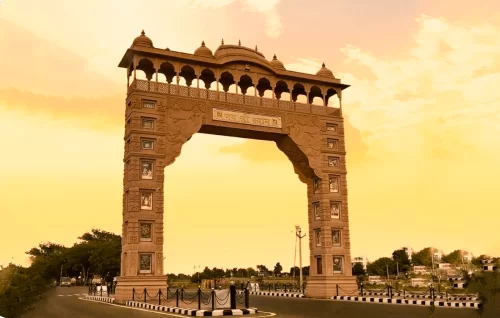
  • By Air: The Jaipur International Airport (JAI) is approximately 8 to 10 km away. Travelers can easily reach the temple in 20–30 minutes via taxi or app-based ride-sharing services like Uber and Ola, primarily following the JLN Marg route.
  • By Rail: The Jaipur Junction Railway Station (JP) is the primary railhead, located about 6 km from the temple. For those on local trains, Gandhi Nagar Railway Station is a closer alternative at just 4 km away. Auto-rickshaws and E-rickshaws are readily available from both stations.
  • Road Access & Connectivity: The temple is situated on Jawahar Lal Nehru Marg, a major arterial road. It is well-serviced by Jaipur City Transport Services Limited (JCTSL) buses. If you are arriving from the Sindhi Camp Inter-State Bus Terminal, the temple is roughly 6 km away and accessible via local bus or private cab.
  • Last-Mile Connectivity: E-rickshaws are the most efficient way to navigate the final stretch, especially given the temple's proximity to other landmarks like the Albert Hall Museum. Most tourists opt to walk the short 500-meter distance if they are already visiting the neighboring Birla Mandir.
  • Realistic Travel Conditions: While accessible year-round, Wednesdays and the festival of Ganesh Chaturthi see massive surges in local devotees, leading to significant traffic congestion on JLN Marg and long queues for darshan. Parking near the temple is extremely limited; travelers are advised to use public transport or drop-off services during peak hours.

What to Expect When You Visit Moti Dungri Ganesh Ji Temple

  • Environment and Surroundings: The temple is situated at the base of a small hill crowned by the Moti Dungri Fort, a private royal residence that resembles a Scottish castle and is closed to the public. While the temple offers a spiritual atmosphere with white marble architecture and three distinct domes, the immediate exterior is a high-traffic urban zone along JLN Marg. On Wednesdays, the quietude is replaced by a vibrant weekly fair featuring stalls selling toys, traditional sweets (laddoos), and religious offerings.
  • Facilities and Amenities: Basic visitor infrastructure includes rows of water taps for drinking at the base of the entrance stairs and a dedicated shoe-storage area. While public restrooms are available, they are basic. Multiple shops line the approach road selling garlands and "Prasad," but most vendors operate in cash only. Visitors should note the temple strictly closes for mid-afternoon rituals between 1:30 PM and 4:30 PM daily.
  • Accessibility and Movement: The temple is located on slightly elevated ground and requires climbing a short flight of wide stone stairs to reach the main sanctum. While some areas are wheelchair accessible, the presence of stairs and heavy pedestrian flow can make independent movement difficult for those with significant mobility issues. During peak festival times or Wednesdays, barricades are erected, and vehicles are restricted from reaching the main gate, requiring a walk from the designated parking areas.
  • Visitor Behavior and Conditions: Expect high levels of congestion, especially during the morning and evening "Aarti" (prayer) ceremonies. It is a local tradition to sit on the temple ledges for a few minutes after prayers; tourists should respect this quiet space. Photography is strictly prohibited inside the inner sanctum where the 500-year-old vermillion-covered deity resides, though capturing the exterior architecture is generally permitted. Modest dress is essential, and leather items (belts, wallets, bags) are traditionally discouraged within the sacred precinct.

Essential Visitor Information for Moti Dungri Ganesh Ji Temple

  • Crowd Dynamics & Wednesday Fair: While the temple is a daily spiritual hub, Wednesdays are exceptionally crowded due to a weekly fair and the belief that Wednesday is dedicated to Lord Ganesha. Avoid this day if you prefer a quiet experience, as barricades often restrict vehicle access and queues can extend for hours.
  • Visiting Hours & Midday Closure: The temple typically operates in two shifts: 5:30 AM to 1:30 PM and 4:30 PM to 9:00 PM. It is strictly closed to the public during the afternoon (1:30 PM – 4:30 PM). Arriving for the Mangala Aarti (around 5:00 AM) or late evening (after 8:00 PM) offers the most serene atmosphere.
  • Dress Code & Entry Protocol: Modest attire is required; avoid shorts, sleeveless tops, or revealing clothing. You must remove all footwear before entering the temple complex. It is recommended to use the designated shoe-keeping stands to avoid losing your footwear in the crowded entrance area.
  • Weather Considerations: Jaipur’s summer (April–June) is intense, with temperatures often exceeding 40°C. Since much of the queueing area is outdoors, visit during the early morning hours to avoid the midday heat. The peak tourist season is October to March when the weather is mild and pleasant.
  • Safety & Local Nuisances: Be vigilant about your personal belongings and pockets, especially during the high-density Wednesday crowds. Additionally, be mindful of the numerous monkeys around the hillock and fort area; avoid carrying visible food items or plastic bags that might attract them.
  • Vehicle Rituals: It is a local tradition to bring newly purchased vehicles here for a "Puja" to seek protection. If you are driving a rental, be aware that the area immediately in front of the temple may be congested with vehicles undergoing these blessing rituals.

Capturing Devotion: Photography and Viewpoints at Moti Dungri Ganesh Ji Temple

  • The Main Mandapa Perspective: Photography of the Ganesha idol (deity) is strictly prohibited inside the inner sanctum. For the most evocative shots of the temple’s Nagara-style architecture, position yourself in the outer courtyard to capture the intricate stone carvings and the three entry domes against the backdrop of the Moti Dungri Fort.
  • Golden Hour Alignment: The temple is best photographed during the late afternoon (16:00–17:30). The setting sun illuminates the Scottish castle-style Moti Dungri Fort perched on the hill behind the temple, providing a dramatic vertical contrast between the white marble of the temple and the dark stone of the fortress.
  • Wednesday Crowd Dynamics: As Wednesday is the primary day of worship, the temple experiences extreme footfall. Photographers should arrive during the 05:30 Aarti for atmospheric shots of rituals and oil lamps, as mid-day crowds make tripod use or static positioning impossible in the narrow corridors.
  • Restricted Areas and Equipment: Professional DSLR kits and tripods often require verbal permission from the temple trust office located near the entrance. While casual smartphone photography of the architecture is generally permitted, filming the devotees during prayer is considered disrespectful and may be stopped by temple guards.
  • Birla Mandir Elevation: For a wide-angle panoramic view that includes the Moti Dungri temple complex and the fort together, walk to the elevated gardens of the adjacent Birla Mandir. This vantage point provides the necessary distance to capture the scale of the hill and the temple’s integration into the Jaipur skyline.

Near By Attraction

Shri Khole Ke Hanuman Ji Temple Jaipur Massive 1960s hillside shrine dedicated to Lord Hanuman featuring white marble architecture and scenic valley views Rajasthan. Temple

Shri Khole Ke Hanuman Ji Temple

Shri Khole Ke Hanuman Ji Temple is a prominent Hindu temple complex situated on a hillside in the Laxman Dungri area.

BAPS Shri Swaminarayan Akshardham Mandir aerial view of the intricate stone carvings and domes in Jaipur, Rajasthan. Temple

BAPS Shri Swaminarayan Akshardham Mandir

BAPS Shri Swaminarayan Akshardham is a modern Hindu temple complex dedicated to Bhagwan Swaminarayan, constructed using traditional Vedic architectural principles.

Gurudwara Sri Guru Singh Sabha magnificent white marble Sikh temple featuring a central dome and traditional architecture in the heart of Udaipur Rajasthan. Gurudwara

Gurudwara Sri Guru Singh Sabha

Gurudwara Sri Guru Singh Sabha in Jaipur is a major Sikh religious center known for its spiritual atmosphere.

Frequently Asked Questions About Moti Dungri Ganesh Ji Temple jaipur

Moti Dungri Ganesh Ji Temple is located in Jaipur at the foothills of Moti Dungri Hill and is easily accessible by road.
Moti Dungri Ganesh Ji Temple is generally open from early morning to late evening, with peak visits during prayer times.
There is no entry fee to visit Moti Dungri Ganesh Ji Temple, though donations are welcomed inside the temple premises.
The best time to visit Moti Dungri Ganesh Ji Temple is between October and March when the weather is pleasant for sightseeing.
Travelers can reach Moti Dungri Ganesh Ji Temple by taxi, auto rickshaw, or private vehicle from the main city area.
Most visitors spend around 30 to 60 minutes at Moti Dungri Ganesh Ji Temple depending on crowd levels and darshan time.
Visitors are expected to dress modestly at Moti Dungri Ganesh Ji Temple and remove footwear before entering the shrine area.
Photography inside Moti Dungri Ganesh Ji Temple may be restricted near the main sanctum, and visitors should follow on site guidelines.
Moti Dungri Ganesh Ji Temple is suitable for family visits, though visitors should be prepared for crowds during festivals.
Moti Dungri Ganesh Ji Temple can easily be included in a one day sightseeing itinerary along with other nearby attractions.

Loved this place ? Let’s Plan Your Rajasthan Trip

Get customized Rajasthan tour planning designed around desert climate comfort, long-distance road travel flow, heritage exploration time, and realistic pacing between regions. Whether you are visiting for fort architecture, palace heritage, cultural exper

⚑ Quick Response | πŸ’° Free consultation | πŸ•’ 24Γ—7 expert support

×

Plan Your Trip