Visiting BAPS Shri Swaminarayan Akshardham Mandir in Jaipur, Rajasthan, India

BAPS Shri Swaminarayan Akshardham Mandir , Jaipur
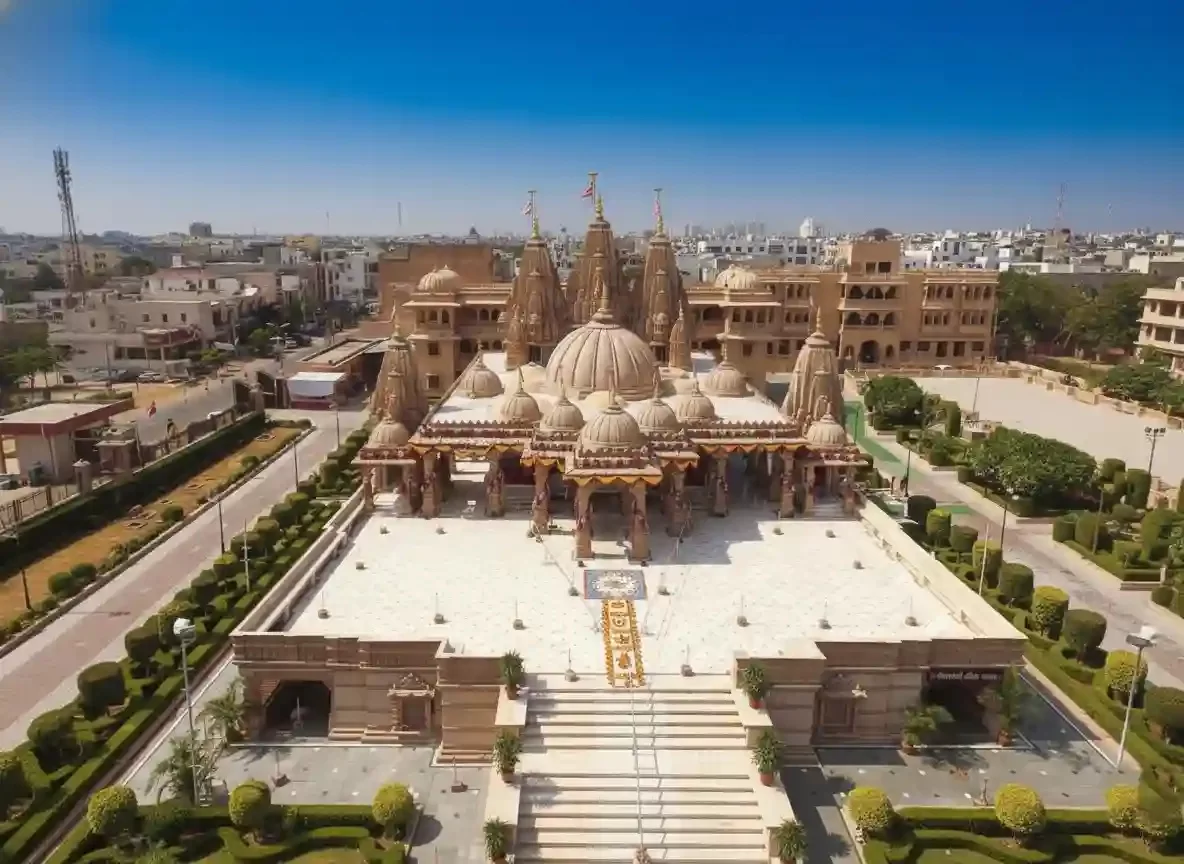
Visitors come to view the intricate stone carvings, lush landscaped gardens, and the central sanctum featuring gold-leafed idols and white marble sculptures. The site serves as a cultural center in the Vaishali Nagar area, offering a quiet environment for prayer and a display of traditional Indian craftsmanship.

Quick Facts About BAPS Shri Swaminarayan Akshardham Mandir

Quick Facts for BAPS Shri Swaminarayan Akshardham Mandir, Jaipur

Entry Fee Free
Timings 07:30 AM – 12:00 PM and 04:00 PM – 08:15 PM (Closed on Mondays)
Altitude (m) 431 m
Ideal Visit Duration 45 to 60 minutes
Best Time of Day 06:30 PM – 08:00 PM (To see the temple illuminated)
Crowd Level Moderate (High on weekends and during evening Aarti)
Distance from City Centre (km) 8 km from Jaipur Railway Station (Located in Vaishali Nagar)
Walking Difficulty Easy (Flat paved surfaces throughout the complex)
Parking Available Yes (Dedicated parking space available outside the main gate)
Last Mile Access Taxis, auto-rickshaws, and e-rickshaws provide direct access to the entrance
Suitable for Kids Yes (Spacious gardens and clean environment)
Suitable for Seniors Yes (Minimal walking and seating areas available)
Wheelchair Friendly Yes (Ramps are provided for access to the main temple platform)

Why Visit BAPS Shri Swaminarayan Akshardham Mandir Jaipur: A Modern Architectural Marvel

Visitors come to this temple to witness one of Jaipur’s most striking examples of modern Hindu architecture and stone craftsmanship. The complex serves as a peaceful retreat from the city’s busy streets, drawing travelers who wish to admire the intricately carved pink sandstone and white marble structures that honor the traditions of the Swaminarayan sect through detailed relief work and grand domes.

The on-ground atmosphere is characterized by a profound sense of order and quietude, maintained by the temple’s lush, manicured gardens and spotless stone walkways. Visitors experience a transition from the urban noise of Jaipur to a meditative environment where the air is often filled with light devotional music and the scent of fresh flowers, providing a calm space for reflection under the temple’s vast, soaring ceilings.

What makes this temple distinct for travelers is its focus on "living heritage," where ancient Vedic architectural principles are applied using contemporary precision. Unlike the weathered historical ruins of nearby forts, this site offers a vibrant, perfectly preserved look at Indian spiritual artistry, featuring a unique blend of lush landscaping and a central monument that becomes a luminous landmark when illuminated after sunset.

History and Cultural Heritage of BAPS Shri Swaminarayan Akshardham Mandir Jaipur

The history of the BAPS Shri Swaminarayan Akshardham Mandir in Jaipur began with its inauguration in 2005, established as part of a global initiative by the BAPS Swaminarayan Sanstha to preserve and showcase Vedic culture. Constructed using traditional pink sandstone and white marble, the temple was designed to reflect the architectural history of Rajasthan while adhering to the ancient principles of the Shilpa Shastras. It stands as a modern testament to the centuries-old Nagara style of temple building, integrating historical stone-carving techniques with contemporary spiritual needs.

The cultural significance of the temple is rooted in the teachings of Bhagwan Swaminarayan, whose 18th-century reform movement shaped the spiritual history of the region. The mandir serves as a living museum of Indian heritage, featuring three distinct halls—the Hari Mandapam, Vibhuti Mandapam, and Prasadi Mandapam—which house historical relics and artistic depictions of Hindu deities. Through its daily rituals and educational displays, the temple continues to document and transmit the moral and cultural values of the Swaminarayan Sampraday to modern visitors.

Best Time to Visit BAPS Shri Swaminarayan Akshardham Mandir, Jaipur

http://googleusercontent.com/map_location_reference/1 The experience of visiting [BAPS Shri Swaminarayan Akshardham Mandir, Jaipur](http://googleusercontent.com/map_location_reference/0) is defined by the appreciation of its intricate stone carvings and peaceful gardens, which are best explored when the Rajasthani sun is mild. Since much of the temple's beauty lies in its exterior architecture and lush landscaping, timing your visit to avoid the midday heat and the summer peaks is essential for a comfortable spiritual and cultural experience.

  • Ideal Months: October to March is the peak window, offering the most pleasant environment for walking through the gardens; visiting during the Diwali or Janmashtami festivals provides a unique opportunity to see the temple spectacularly illuminated.
  • Weather Conditions: You can expect cool, clear days with temperatures between 10°C and 25°C, ensuring the white marble and pink sandstone surfaces remain cool enough for barefoot movement in designated areas.
  • Periods to Avoid: April to June should be avoided due to scorching temperatures often exceeding 40°C, which makes the unshaded marble walkways extremely hot. Additionally, note that the temple complex is traditionally closed on Mondays, so midweek planning is necessary to avoid a wasted trip.

How to Reach BAPS Shri Swaminarayan Akshardham Mandir Jaipur: Detailed Transit Guide

Located in the affluent Vaishali Nagar area (Chitrakoot), the BAPS Shri Swaminarayan Akshardham Mandir is one of Jaipur's most accessible spiritual landmarks, situated approximately 10 km west of the old Pink City.

  • By Air: Jaipur International Airport (JAI) is the nearest airport, located roughly 14 km away. A taxi or app-based cab (Uber/Ola) from the airport typically takes 30–40 minutes via Jawahar Lal Nehru Marg and Ajmer Road, depending on city traffic.
  • By Rail: Jaipur Junction (COR) is the primary railway station, situated just 7–9 km from the temple. From the station, you can easily find auto-rickshaws, e-rickshaws, or taxis. The drive usually takes about 20 minutes via the Civil Lines or Hawa Sadak routes.
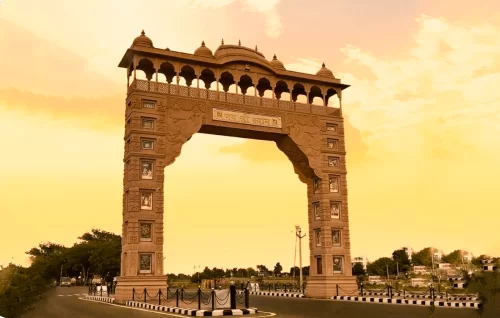
  • Road Access: The temple is well-connected to NH48 (Delhi-Ajmer Highway). If driving from Delhi or Ajmer, take the exit toward Vaishali Nagar/Chitrakoot. The temple is located on Akshardham Marg, which features wide, well-paved roads suitable for all vehicle types, including large tourist Volvo buses.
  • Last-Mile Connectivity: The New Aatish Market Metro Station (Pink Line) is the closest metro link, located about 3 km away. From the metro station, shared or private auto-rickshaws are the most frequent and economical way to reach the temple gates.
  • Travel Conditions and Limitations: The temple complex offers ample free parking for private cars and bikes, though it can become congested on Sunday evenings and during festivals like Diwali. Note that photography is strictly prohibited inside the main sanctum, and visitors are required to deposit mobile phones and cameras at the secure cloakroom near the entrance.

Traveler's Tip: While the temple is open throughout the day, the evening hours are best for a visit to witness the beautifully illuminated stone carvings and participate in the 7:00 PM Sandhya Aarti.
What to Expect When You Visit BAPS Shri Swaminarayan Akshardham Mandir, Jaipur

  • Atmosphere and Surroundings: Located in the residential Chitrakoot area of Vaishali Nagar, the temple offers a quiet, manicured retreat far removed from the noise of central Jaipur. The complex is characterized by vast green lawns, structured stone pathways, and a pervasive sense of order and cleanliness.
  • Spiritual Conduct and Dress Code: This is a strictly active place of worship. Visitors must dress modestly; shoulders, chest, and knees must be covered. Expect to remove all footwear at a designated counter before entering the main stone plinth. Silence is strictly enforced within the inner sanctum to maintain the meditative environment.
  • Photography and Technology Restrictions: While the outer gardens are often accessible for casual photography, cameras and mobile phones are strictly prohibited inside the main temple building. Security personnel are vigilant, and visitors are expected to keep devices silenced or stored in the free cloakroom provided at the entrance.
  • Physical Accessibility: The temple is highly accessible compared to older Jaipur landmarks, featuring wide, smooth paved paths and ramps for wheelchair users and senior citizens. However, reaching the main idol (Murti) involves a flight of wide stone stairs; those with mobility issues should check for the available side ramp access.
  • Facilities and Amenities: The complex includes a clean, budget-friendly vegetarian canteen (Food Hut) and a souvenir shop. Restrooms are well-maintained and located near the entrance. Note that while entry is free, the temple typically closes for a mid-day break (around 12:00 PM to 4:00 PM) and is closed to the public every Monday.
  • Evening Conditions: The temple is at its most crowded during the evening Sandhya Aarti (around 7:00 PM). During this time, the structure is illuminated with soft spotlights, and the temperature on the open stone courtyard becomes significantly more pleasant than during the daylight hours.

Safety and Essential Visitor Information for BAPS Shri Swaminarayan Akshardham Mandir Jaipur

  • Peak vs. Quiet Hours: Visit during the early morning session (7:30 AM – 9:00 AM) for a peaceful experience. The temple becomes extremely crowded on Sunday evenings and during Hindu festivals, resulting in significant congestion and long wait times for the inner sanctum.
  • Strict Dress Code: This is a traditional place of worship with a mandatory dress code. Both men and women must cover their shoulders, chest, and knees. Sleeveless shirts, shorts, and skirts above the knee are strictly prohibited; visitors not meeting these standards will be denied entry.
  • Security & Electronic Restrictions: Security screening is intensive. To maintain the sanctity of the shrine, mobile phones and cameras are strictly forbidden inside the temple building. All electronics, large bags, and tobacco products must be stored in the external cloakroom or left in your vehicle.
  • Floor Surface Safety: Footwear must be removed before entering the temple grounds. In summer months (April–June), the marble flooring can reach temperatures high enough to cause discomfort or burns; use the provided mats where available. During the monsoon, these surfaces become dangerously slick.
  • Crowd Safety & Etiquette: During busy periods, follow the organized queue lines to avoid bottlenecks at narrow entrance gates. Keep children close at all times in the large garden areas and be vigilant with your personal belongings, as the high density of visitors can attract opportunistic theft.

Capturing Divine Artistry: Photography at BAPS Shri Swaminarayan Akshardham, Jaipur

  • The Grand Facade from the Garden Pathways: The most comprehensive architectural shot is captured from the central walkway of the landscaped gardens. Position your camera to align the pink sandstone shikharas (spires) with the surrounding greenery, using the fountains in the foreground to add a dynamic element to the frame.
  • Golden Hour and Evening Illumination: The temple is exceptionally photogenic during the late afternoon when the setting sun deepens the hue of the pink sandstone. After dusk, the entire complex is bathed in soft artificial lighting, making it a prime location for tripod-free low-light photography of the exterior glow.
  • Strict Prohibition on Interior Photography: Photography, videography, and the use of mobile phone cameras are strictly prohibited inside the main temple building, the Hari Mandapam, and the exhibition galleries. You are required to deposit cameras and electronic devices in the designated cloakroom or keep them securely tucked away while inside the sanctum.
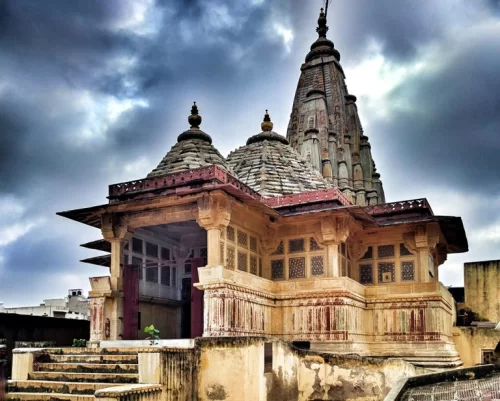
  • Architectural Details of the Outer Verandas: While the inner shrine is off-limits, photography is generally permitted in the outer courtyards and verandas. Focus on the intricately carved pillars and the traditional Rajasthani motifs on the exterior walls, which provide excellent textures for close-up shots.
  • Crowd Management and Mondays: The temple remains closed to the public every Monday for maintenance. To capture the gardens and architecture without large crowds, aim for a weekday visit shortly after the 7:30 AM opening or during the mid-afternoon reopening at 4:00 PM.
  • Respectful Conduct and Dress Code: As an active place of worship, photographers must adhere to a strict dress code (shoulders and knees covered). Avoid obstructing the paths of devotees during "Aarti" timings, and ensure all photography is conducted from ground level as climbing on railings or carvings is strictly forbidden.

Near By Attraction

Shri Khole Ke Hanuman Ji Temple Jaipur Massive 1960s hillside shrine dedicated to Lord Hanuman featuring white marble architecture and scenic valley views Rajasthan. Temple

Shri Khole Ke Hanuman Ji Temple

Shri Khole Ke Hanuman Ji Temple is a prominent Hindu temple complex situated on a hillside in the Laxman Dungri area.

Moti Doongri Ganeshji Temple Jaipur Ancient Hindu shrine dedicated to Lord Ganesha with a gold seated idol Rajasthan. Temple

Moti Dungri Ganesh Ji Temple jaipur

Moti Dungri Ganesh Ji Temple is an 18th-century Hindu place of worship dedicated to Lord Ganesha, located at the foot of the Moti Dungri hill.

Gurudwara Sri Guru Singh Sabha magnificent white marble Sikh temple featuring a central dome and traditional architecture in the heart of Udaipur Rajasthan. Gurudwara

Gurudwara Sri Guru Singh Sabha

Gurudwara Sri Guru Singh Sabha in Jaipur is a major Sikh religious center known for its spiritual atmosphere.

Frequently Asked Questions About BAPS Shri Swaminarayan Akshardham Mandir

BAPS Shri Swaminarayan Akshardham Mandir is located in Vaishali Nagar, Jaipur, Rajasthan. It is well connected to major areas of Jaipur city by road.
BAPS Shri Swaminarayan Akshardham Mandir is generally open from morning to evening with a short afternoon break. Timings may change on special occasions, so confirming before visiting is advisable.
There is no entry fee to visit BAPS Shri Swaminarayan Akshardham Mandir. Visitors can enter the temple premises free of cost in Jaipur, Rajasthan.
The best time to visit BAPS Shri Swaminarayan Akshardham Mandir is between October and March when Jaipur weather remains pleasant. Evening hours are also comfortable for darshan and peaceful visits.
BAPS Shri Swaminarayan Akshardham Mandir can be reached easily by taxi, auto or local bus within Jaipur. Jaipur International Airport and Jaipur Junction railway station provide convenient connectivity.
Mobile phones may be restricted inside the main temple area of BAPS Shri Swaminarayan Akshardham Mandir. Visitors are usually required to deposit electronic items at designated counters.
Parking facilities are available near BAPS Shri Swaminarayan Akshardham Mandir for visitors arriving by private vehicle. Dedicated parking space helps manage regular footfall in Jaipur.
Around one to two hours are sufficient to explore BAPS Shri Swaminarayan Akshardham Mandir peacefully. Visitors may spend additional time attending prayer sessions or walking around the campus.
BAPS Shri Swaminarayan Akshardham Mandir is suitable for families and senior citizens. The well maintained campus in Jaipur offers a calm and organized environment for all age groups.
Vaishali Nagar market areas and central Jaipur attractions like City Palace and Hawa Mahal can be combined with BAPS Shri Swaminarayan Akshardham Mandir visit. These places are within driving distance in Rajasthan.
Visitors are expected to wear modest and respectful clothing at BAPS Shri Swaminarayan Akshardham Mandir. Proper attire helps maintain temple decorum in Jaipur, Rajasthan.
BAPS Shri Swaminarayan Akshardham Mandir experiences higher footfall during weekends and Hindu festivals. Visiting on weekday mornings is usually more peaceful in Jaipur.

Loved this place ? Let’s Plan Your Rajasthan Trip

Get customized Rajasthan tour planning designed around desert climate comfort, long-distance road travel flow, heritage exploration time, and realistic pacing between regions. Whether you are visiting for fort architecture, palace heritage, cultural exper

⚑ Quick Response | πŸ’° Free consultation | πŸ•’ 24Γ—7 expert support

×

Plan Your Trip