Quick Facts About Toranas
Quick Facts – Toranas, Sanchi
| Entry Fee | Covered under Sanchi Monuments ASI ticket (Indians: 40, Foreigners: 600; combined complex ticket) |
| Timings | 08:30 AM – 05:30 PM (same as Sanchi Stupa complex hours) |
| Altitude (m) | Approx. 427 m above sea level |
| Ideal Visit Duration | 15–30 minutes (as part of Sanchi Stupa complex visit) |
| Best Time of Day | Morning hours for clearer visibility and lower crowd density |
| Crowd Level | Moderate to high during peak season and holidays |
| Distance from City Centre (km) | Approx. 1 km from Sanchi town centre |
| Walking Difficulty | Easy; stone pathways with some steps within the complex |
| Parking Available | Yes, at the main Sanchi monument parking area |
| Last Mile Access | On foot from Sanchi Stupa complex entrance |
| Suitable for Kids | Yes, with supervision |
| Suitable for Seniors | Yes, but uneven stone paths and steps may require assistance |
| Wheelchair Friendly | No; steps and uneven surfaces limit wheelchair access |
Why Visit Toranas of Sanchi
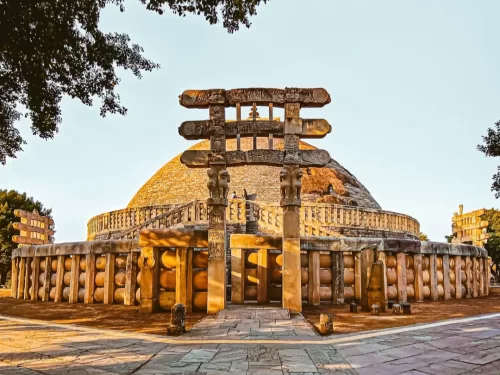
Visitors come to the Toranas of Sanchi to see the carved stone gateways that frame the Great Stupa and structure the main movement routes inside the monument complex.
On the ground, the area feels open and orderly, with wide stone pathways, visible carvings at close range, and constant foot movement as visitors circulate around the stupa.
What makes the Toranas distinct for travelers is their position as functional architectural gateways that guide entry and movement rather than stand-alone monuments, making them an integral part of how the Sanchi complex is experienced.
History of Toranas of Sanchi
The Toranas of Sanchi were constructed during the Shunga period, around the 1st century BCE, as part of the architectural development of the Great Stupa complex.
These stone gateways were added to mark the cardinal directions and regulate ritual movement around the stupa, forming structured entry and circulation points within the monument layout.
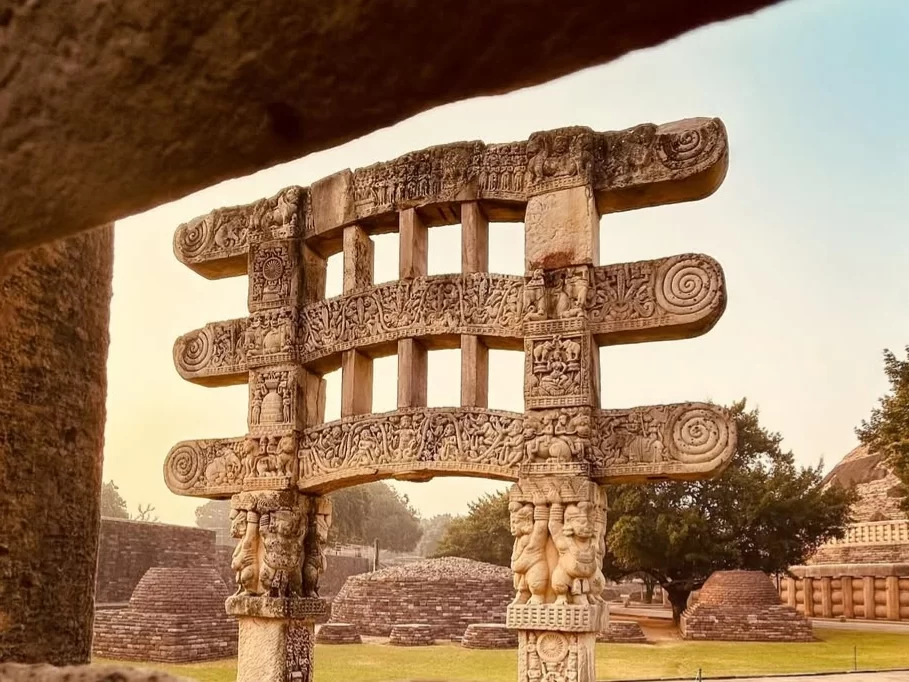
Their carved surfaces depict narrative scenes and symbolic motifs connected to early Buddhist traditions, making them historically significant elements of the Sanchi archaeological site rather than independent structures.
Best Time to Visit Toranas of Sanchi
The Toranas of Sanchi are best visited during cooler, dry months when walking around the open archaeological complex is comfortable and visibility of stone carvings is clear.
- Ideal months: October to March for stable weather and comfortable exploration of the stupa ?????
- Weather conditions: Mild winter temperatures with low humidity, clear skies, and good daylight for site walking and viewing details
- Periods to avoid: April to June due to extreme heat on exposed stone pathways, and July to September because monsoon rain makes surfaces slippery and reduces visibility
How to Reach Sanchi Toranas
- Nearest airport: Raja Bhoj Airport, Bhopal, located about 50 km away; from the airport, taxis and private vehicles are available for direct road travel to Sanchi
- Nearest railway station: Sanchi Railway Station, located close to the monument area; Bhopal Junction is the major rail hub with wider connectivity, followed by train or road travel to Sanchi
- Road access and last-mile connectivity: Sanchi is connected by state highways and local roads from Bhopal and Vidisha; the final access involves short walking distances within the monument complex on paved paths, with restricted vehicle movement near protected structures
What to Expect When You Visit Sanchi Toranas
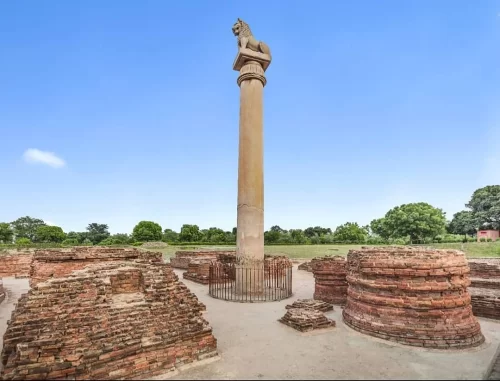
- Environment and surroundings: Open archaeological complex with stone pathways, grassy areas, and exposed monuments, including stupas, pillars, and carved gateways set on a hilltop plateau
- Facilities and amenities: Basic visitor facilities such as ticket counters, toilets, drinking water points, and a small museum within the ASI-managed complex; limited shade in open areas
- Accessibility and movement: Movement involves walking on paved and uneven stone paths, gentle slopes, and steps within the complex; vehicle access is restricted near core monument zones
- Typical visitor behavior and conditions: Visitors move slowly through monument areas, take photographs, and follow marked paths; crowd levels increase during weekends, school trips, and peak tourist seasons
Important Visitor Information for Sanchi Toranas
- Crowd and weather notes: Visitor numbers increase during winter months and school holidays; summer heat can be intense due to open terrain with limited shade
- Peak and quiet visiting hours: Late mornings and midday are usually busiest; early mornings offer quieter conditions and easier movement around the gateways
- Dress code: No formal dress code, but modest clothing is appropriate within the religious and archaeological complex
- Safety notes and practical cautions: Stone pathways and steps can become slippery during monsoon; visitors should stay on marked paths and avoid climbing on protected structures
Photography and Viewpoints at Sanchi Toranas
- Best viewpoints or angles for photography: Frontal views of the eastern torana aligned with the Great Stupa, side angles capturing carved panels in profile, and wide shots from slightly elevated points within the complex showing toranas with surrounding monuments
- Lighting conditions and time-of-day considerations: Early morning light highlights stone carvings and relief details; afternoon light creates strong shadows on sculpted surfaces and contrast on the gateways
- Rules or restrictions on photography: Photography is permitted within the ASI complex; use of tripods or professional equipment may require prior permission from site authorities
- Crowd or access factors that affect photography: Narrow pathways around the toranas and visitor movement during peak hours can limit framing options, making early morning the most practical time for clear views