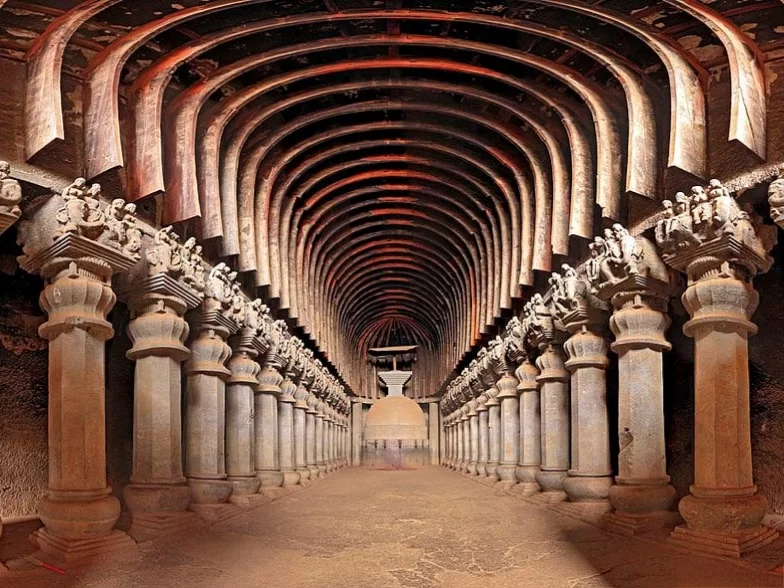
Chaitya Halls India ancient Buddhist rock cut prayer halls

Chaitya Halls , Sanchi
Tourists visit Chaitya Halls to see early Buddhist architecture sacred prayer spaces and historical carvings They offer insight into monastic life religious rituals and rock cut construction methods from early Indian history

Quick Facts About Chaitya Halls

Quick Facts About Chaitya Halls Sanchi

Entry Fee Included in Sanchi Stupa complex ticket (ASI ticket; separate entry not issued)
Timings Daily, approximately sunrise to sunset (generally 6:00 AM to 6:00 PM; may vary seasonally)
Altitude (m) Approximately 427 m above sea level
Ideal Visit Duration 15 to 25 minutes (as part of the Sanchi complex walk)
Best Time of Day Morning hours for comfortable walking and clear visibility of structures
Crowd Level Low to moderate; lower than main stupas and toranas
Distance from City Centre (km) Approx. 1 km from Sanchi town centre
Walking Difficulty Easy to moderate; stone pathways and uneven ground
Parking Available Yes, at designated parking area near Sanchi complex entrance
Last Mile Access On foot from Sanchi complex pathways; no vehicle access to the structure
Suitable for Kids Yes, with supervision due to uneven stone surfaces
Suitable for Seniors Yes, but requires slow walking and rest breaks
Wheelchair Friendly No; uneven terrain and steps limit wheelchair access

Why Visit Chaitya Halls Sanchi

Visitors come to Chaitya Halls Sanchi to see some of the earliest surviving Buddhist prayer hall structures within the Sanchi archaeological complex, offering a quieter and more focused experience away from the main stupas.

The on-ground atmosphere is calm and open, with stone pathways, scattered ruins, and clear views across the hilltop complex, making it a peaceful walking area rather than a crowded stop.

What makes this site distinct for travelers is its simple architectural layout and physical integration into the larger Sanchi complex, allowing visitors to understand early monastic spaces as part of a continuous, walkable heritage landscape.

History of Chaitya Halls Sanchi

The Chaitya Halls at Sanchi date to the early Buddhist period, when the Sanchi hill functioned as a major monastic and ritual centre. These structures were used as prayer halls for monks and lay followers, forming part of the wider religious complex that developed around the stupas.

Archaeological evidence shows that the chaitya spaces were integrated into daily monastic life, serving as functional worship areas rather than monumental structures. Their remains reflect early Buddhist architectural planning focused on communal prayer and meditation within the Sanchi complex.

Best Time to Visit Chaitya Halls Sanchi

The Chaitya Halls at Sanchi are best visited during the cooler, dry months when walking between monuments and exploring the hill complex is physically comfortable and visibility across the site is clear.
  • Ideal months: October to March
  • Weather conditions during the best season: Mild temperatures, dry conditions, suitable for walking across the Sanchi hill complex
  • Periods to avoid: April to June due to high daytime heat; July to September because of monsoon rain causing slippery stone paths and reduced site accessibility

How to Reach Sanchi

  • Nearest airport: Raja Bhoj Airport, Bhopal, about 50 km from Sanchi; taxis and private vehicles are available for direct road travel
  • Nearest railway station: Sanchi Railway Station, located near the town; Bhopal Junction is the main rail hub with wider connectivity, followed by train or road travel to Sanchi
  • Road access and last-mile connectivity: Sanchi is connected by state highways and local roads from Bhopal and Vidisha; the final access to the monument complex involves short walking distances on paved paths, with vehicle movement restricted near protected areas

What to Expect When You Visit Chaitya Halls

  • Environment and surroundings: Stone carved interiors with prayer halls, pillars, and central stupas, usually set within hill slopes, cliffs, or forested cave complexes with natural light entering through cave openings
  • Facilities and amenities: Basic facilities at major cave sites only; limited seating, minimal signage, and no food or water stalls inside cave areas at most locations
  • Accessibility and movement: Walking on uneven stone floors, steps, and narrow passages is common; some halls require short climbs and movement through low lit interiors
  • Typical visitor behavior and conditions: Visitors usually move slowly, maintain quiet inside halls, and respect religious spaces; footwear removal may be required at some sites

Important Visitor Information for Chaitya Halls

  • Crowd and weather notes: Visitor volume varies by cave complex and season; monsoon months can create damp interiors, water seepage, and slippery stone surfaces inside and around the halls
  • Peak and quiet visiting hours: Late mornings, weekends, and public holidays are busier at well known cave sites; early mornings are usually quieter with easier movement inside the halls
  • Dress code: Modest clothing is appropriate as these are active or historically sacred Buddhist prayer spaces at several locations
  • Safety notes and practical cautions: Uneven floors, low lighting, narrow passages, and stone steps require careful walking; touching carvings, stupas, or walls is restricted at protected sites to prevent damage

Photography and Viewpoints at Chaitya Halls

  • Best viewpoints or angles for photography: Central aisle views facing the stupa, side angles of stone pillars, and entrance perspectives where cave openings frame interior architecture and natural light
  • Lighting conditions and time of day considerations: Morning hours provide better natural light inside the halls; interiors remain dim throughout the day, with strong contrast between cave entrances and inner chambers
  • Rules or restrictions on photography: Photography policies vary by site; some protected monuments restrict flash, tripods, or interior photography, and a few caves may prohibit photography entirely
  • Crowd or access factors affecting photography: Narrow passages and confined interiors limit movement and camera angles during busy hours, making early mornings the most practical time for clear shots

Near By Attraction

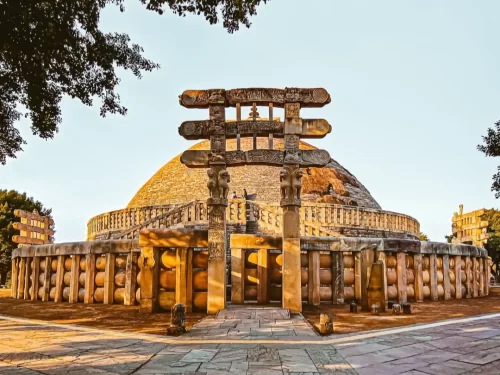
Sanchi Stupa in Sanchi, Madhya Pradesh with carved stone torana gateway and ancient Buddhist dome, featured in Madhya Pradesh tour packages Stupa

Sanchi Stupa

Sanchi Stupa is a major Buddhist monument located in Sanchi, Madhya Pradesh, within a protected archaeological complex
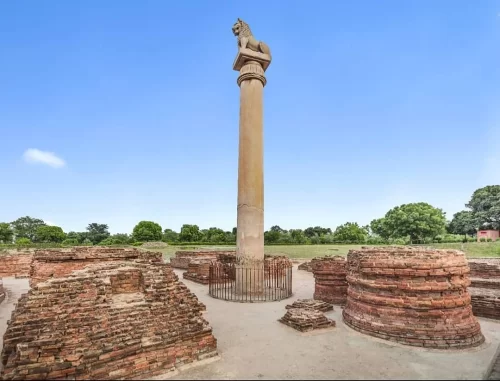
Ashoka Pillar with horse capital at Sanchi during clear afternoon, featuring monolithic shaft amid ancient ruins, perfect heritage experience in Madhya Pradesh tour package. Monument

Ashokan Pillar Sanchi

The Ashokan Pillar at Sanchi is a stone column from the Mauryan period located within the Sanchi archaeological complex in Madhya Pradesh
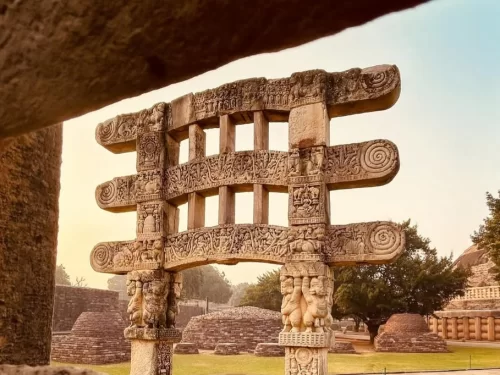
Carved stone toranas at Sanchi Stupa in Sanchi, Madhya Pradesh showcasing intricate Buddhist reliefs, featured in Madhya Pradesh tour packages Historical Site

Toranas

Toranas are traditional carved gateways found at temples and sacred sites across India

Frequently Asked Questions About Chaitya Halls

Chaitya Halls are located within the Sanchi Stupa complex in Raisen district of Madhya Pradesh. They form part of the ancient Buddhist architectural remains on the hilltop site.
Chaitya Halls can be visited during the official opening hours of the Sanchi monument complex, typically from sunrise to sunset. Timings may vary slightly depending on season.
There is no separate entry fee specifically for Chaitya Halls, but visitors must purchase a ticket for entry to the Sanchi monument complex maintained by the Archaeological Survey of India.
Visitors can reach Chaitya Halls by road from Bhopal or Vidisha. The nearest railway station is Vidisha, which is well connected within Madhya Pradesh.
Parking is available near the entrance of the Sanchi monument complex. From the parking area, visitors can walk uphill to access the Chaitya Halls.
The best time to visit Chaitya Halls is between October and March when the weather remains pleasant for outdoor exploration in Madhya Pradesh.
Most travelers spend about 20 to 40 minutes exploring Chaitya Halls as part of their visit to the larger Sanchi complex. Duration depends on interest in architectural details.
Chaitya Halls are suitable for family visits and can be explored along with other monuments in the complex. Visitors should be prepared for moderate walking on stone pathways.
Photography is allowed at Chaitya Halls for personal use. Tripods or professional equipment may require special permission from site authorities.
Basic restroom facilities are available near the entrance of the Sanchi complex. Food options can be found in the nearby Sanchi town area.

Loved this place ? Let’s Plan Your Madhya Pradesh Trip

Get customized Madhya Pradesh tour planning designed around safari seasons, road travel distances, heritage site exploration time, and comfortable pacing across regions. Whether you are visiting for wildlife safaris, temple architecture, historical monume

⚡ Quick Response | 💰 Free consultation | 🕒 24×7 expert support

×

Plan Your Trip