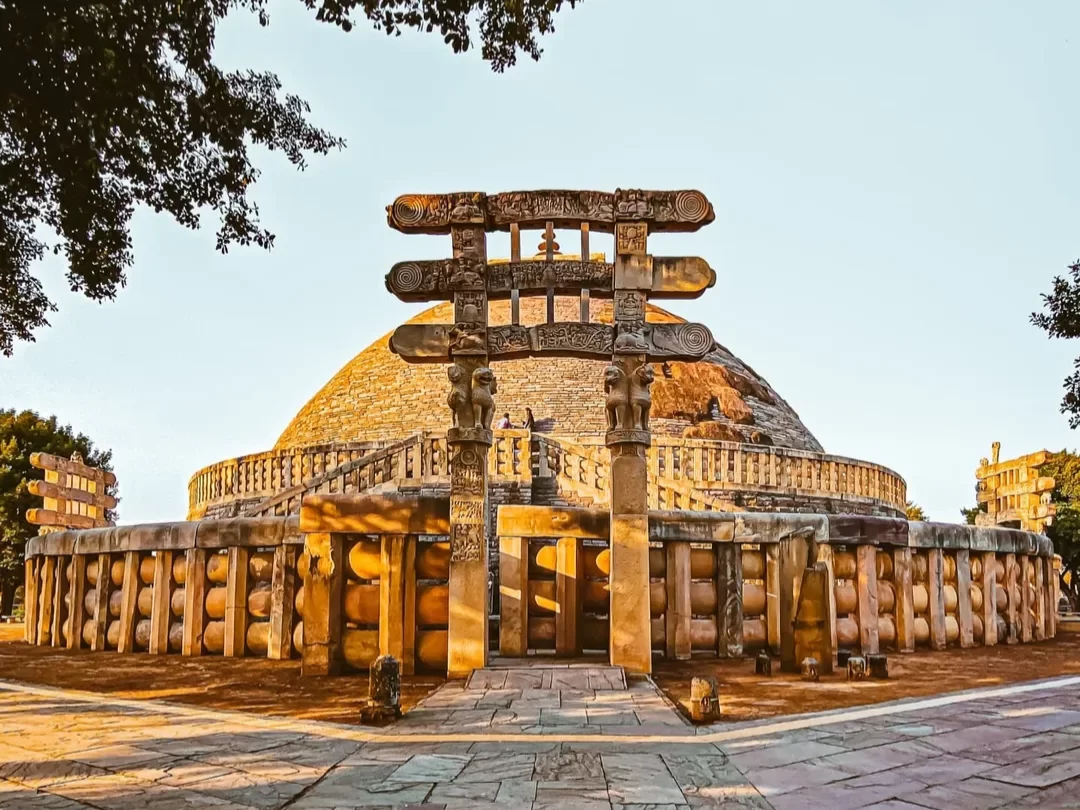
Sanchi Stupa Madhya Pradesh India

Sanchi Stupa , Sanchi
Tourists visit Sanchi Stupa to see one of the oldest surviving stone stupas in India, along with its carved gateways, stone railings, and surrounding Buddhist structures The site allows visitors to experience early Buddhist architecture, ritual pathways, and monument layout within a well preserved heritage landscape

Quick Facts About Sanchi Stupa

Sanchi Stupa Quick Facts

Entry Fee Indians 40; Foreign nationals 600; free for children below 15 years (ASI ticket)
Timings 08:00 AM to 05:00 PM daily
Altitude (m) Approx. 427 m above sea level
Ideal Visit Duration 1.5 to 2 hours
Best Time of Day Morning hours for lower heat and clearer visibility
Crowd Level Moderate; higher during winter months and weekends
Distance from City Centre (km) Approx. 0.5 km from Sanchi town centre
Walking Difficulty Easy to moderate; stone pathways and gentle slopes
Parking Available Yes, designated parking area near the complex entrance
Last Mile Access Walkable from town; auto rickshaws and local taxis available
Suitable for Kids Yes
Suitable for Seniors Yes, with rest stops; some uneven stone paths
Wheelchair Friendly Limited; partial access due to steps and uneven surfaces

Why Visit Sanchi Stupa

Visitors come to Sanchi Stupa to experience one of India’s most important Buddhist monuments, known for its preserved stone structures, carved gateways, and the calm setting of the hilltop complex.

The on-ground atmosphere is quiet and contemplative, with open pathways, landscaped surroundings, and wide views over the surrounding countryside, making the site feel spacious rather than crowded even during busy seasons.

What makes Sanchi Stupa distinct for travelers is the combination of multiple stupas, monasteries, and pillars within a single walkable complex, allowing visitors to explore architecture, carvings, and viewpoints in one continuous visit.

History of Sanchi Stupa

Sanchi Stupa was originally commissioned in the 3rd century BCE by Emperor Ashoka as a Buddhist monument to enshrine sacred relics and establish Sanchi as an important center of Buddhist practice.

Over the following centuries, the site expanded with the construction of additional stupas, monasteries, temples, and the famous stone gateways, reflecting continued patronage during the Shunga, Satavahana, and Gupta periods.

The complex declined after the spread of other religious centers in central India and was later rediscovered in the 19th century, leading to conservation efforts that preserved Sanchi Stupa as a protected archaeological and heritage site.

Best Time to Visit Sanchi Stupa

Sanchi Stupa is best visited during the cooler, dry months when walking around the hilltop complex and exploring the monuments is comfortable and visibility is clear for viewing the structures and landscape.
  • Ideal months: October to March, when temperatures are moderate and conditions are suitable for outdoor exploration.
  • Weather conditions: Pleasant winters with cool mornings and mild afternoons; minimal rainfall and clear skies.
  • Periods to avoid: April to June due to extreme heat, and peak monsoon months (July–August) when humidity and slippery pathways can affect movement around the site.

How to Reach Sanchi Stupa

  • Nearest airport: Raja Bhoj Airport, Bhopal (approx. 50 km). From the airport, taxis and app-based cabs are available to Sanchi, with a travel time of about 1.5–2 hours depending on traffic.
  • Nearest railway station: Sanchi Railway Station (approx. 1 km). It is a small station with limited train connectivity; Vidisha Junction (approx. 10 km) is the more practical rail hub with better train frequency.
  • Road access and last-mile connectivity: Sanchi is well connected by road from Bhopal and Vidisha. State highways provide smooth access, but the final approach road is narrow in parts. Auto-rickshaws, local taxis, and private vehicles are used for the short uphill approach to the stupa complex.

What to Expect When You Visit Sanchi Stupa

  • Environment and surroundings: The stupa complex is located on a hilltop with open spaces, stone pathways, and landscaped lawns, surrounded by rural villages and agricultural land rather than an urban setting.
  • Facilities and amenities: Basic facilities include ticket counters, clean pathways, signage, drinking water points, toilets, and a small museum complex nearby; food options inside the site are limited, with small eateries available in the village area.
  • Accessibility and movement: Visitors move through a large open complex with uneven stone paths and steps; some areas require moderate walking uphill, and shaded resting points are limited during hot hours.
  • Typical visitor behavior and conditions: The site is generally calm and quiet, with school groups, domestic tourists, and occasional international visitors; crowd density increases during weekends, holidays, and winter tourist season.

Important Visitor Information for Sanchi Stupa

  • Crowd and weather notes: Visitor numbers rise during winter months (October–February) and on weekends and public holidays; summers can be extremely hot with limited shaded areas across the hilltop complex.
  • Peak and quiet visiting hours: Peak hours are typically 10:30 am to 3:00 pm; early mornings and late afternoons are quieter and more comfortable for walking the site.
  • Dress code: No formal dress code is enforced, but modest clothing is expected due to the religious and archaeological significance of the site.
  • Safety notes and practical cautions: Stone pathways and steps can be uneven and slippery after rain; visitors should wear stable footwear and carry water, as shops and shade are limited within the monument ?????.

Photography and Viewpoints at Sanchi Stupa

  • Best viewpoints: The circumambulatory path around the Great Stupa (Stupa No. 1) provides multiple close-range angles of the stone gateways (toranas), while the western side of the hill offers open views across the Sanchi plains and surrounding countryside.
  • Lighting and time of day: Early morning and late afternoon provide softer light on the stone carvings and better contrast on the hemispherical dome; midday light is harsh and flattens surface details.
  • Photography rules: General photography is permitted in the open monument complex; restrictions may apply inside the Sanchi Museum and any enclosed protected structures.
  • Crowd and access factors: The main torana gateways and the central stupa platform become congested during peak hours, limiting clear framing; early entry or late-day visits allow better movement and unobstructed views.

Near By Attraction

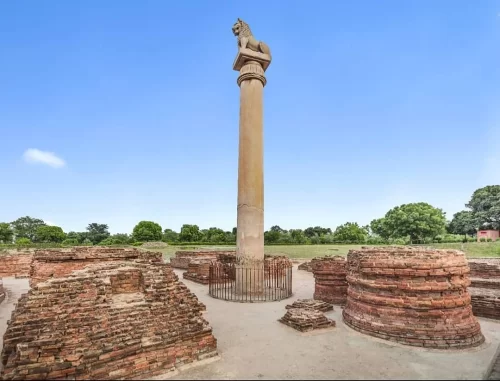
Ashoka Pillar with horse capital at Sanchi during clear afternoon, featuring monolithic shaft amid ancient ruins, perfect heritage experience in Madhya Pradesh tour package. Monument

Ashokan Pillar Sanchi

The Ashokan Pillar at Sanchi is a stone column from the Mauryan period located within the Sanchi archaeological complex in Madhya Pradesh
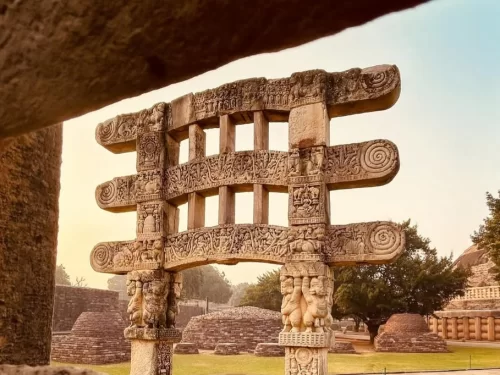
Carved stone toranas at Sanchi Stupa in Sanchi, Madhya Pradesh showcasing intricate Buddhist reliefs, featured in Madhya Pradesh tour packages Historical Site

Toranas

Toranas are traditional carved gateways found at temples and sacred sites across India
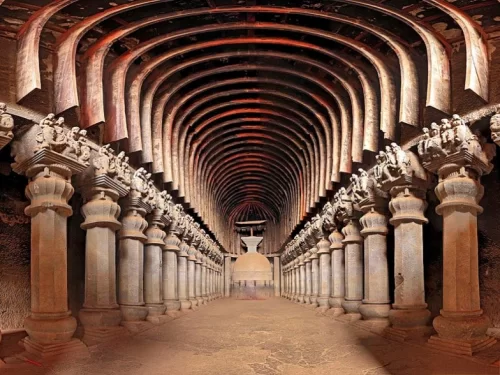
Chaitya Halls Sanchi ancient Buddhist prayer hall architecture in Madhya Pradesh tour packages Historical Site

Chaitya Halls

Chaitya Halls are ancient Buddhist worship spaces carved into rock across different regions of India

Frequently Asked Questions About Sanchi Stupa

Sanchi Stupa is located in Raisen district of Madhya Pradesh, about 50 km from Bhopal. It is a UNESCO World Heritage Site situated on a hilltop.
Sanchi Stupa is generally open from sunrise to sunset, typically between 6:30 AM and 6:30 PM. Timings may vary slightly depending on season.
There is an entry fee to visit Sanchi Stupa as it is maintained by the Archaeological Survey of India. Ticket prices differ for Indian and foreign visitors.
Visitors can reach Sanchi Stupa by road from Bhopal or Vidisha. The nearest railway station is Vidisha, which is well connected within Madhya Pradesh.
Parking is available near the entrance area of Sanchi Stupa. From the parking zone, visitors can walk up to the monument complex.
The best time to visit Sanchi Stupa is between October and March when the weather in Madhya Pradesh remains pleasant for outdoor exploration.
Most travelers spend about 1 to 2 hours exploring Sanchi Stupa and the surrounding archaeological structures. Additional time may be needed for detailed exploration.
Sanchi Stupa is suitable for family visits and offers open spaces for walking. Visitors should be prepared for some uphill walking within the complex.
Photography is allowed at Sanchi Stupa for personal use. Tripods or professional equipment may require special permission.
Basic restroom facilities are available near the entrance of Sanchi Stupa. Food stalls and restaurants can be found in the nearby town area.

Loved this place ? Let’s Plan Your Madhya Pradesh Trip

Get customized Madhya Pradesh tour planning designed around safari seasons, road travel distances, heritage site exploration time, and comfortable pacing across regions. Whether you are visiting for wildlife safaris, temple architecture, historical monume

⚡ Quick Response | 💰 Free consultation | 🕒 24×7 expert support

×

Plan Your Trip