Quick Facts About Temple 17
Quick Facts About Temple 17 Sanchi
| Entry Fee | INR 40 for Indian adults, INR 500 for foreign nationals (Sanchi Archaeological Site ticket) |
| Timings | Sunrise to Sunset, 6:00 AM – 6:00 PM |
| Altitude (m) | 435 |
| Ideal Visit Duration | 30–45 minutes |
| Best Time of Day | Morning or late afternoon for lighting and fewer crowds |
| Crowd Level | Moderate, increases during weekends and festivals |
| Distance from City Centre (km) | 46 km from Raisen; 1 km from Sanchi town center |
| Walking Difficulty | Easy, mostly flat paths with some stone steps |
| Parking Available | Yes, at Sanchi complex main parking area |
| Last Mile Access | Short walk from main parking, accessible via paved pathways |
| Suitable for Kids | Yes, with supervision |
| Suitable for Seniors | Yes, though some stone paths may be uneven |
| Wheelchair Friendly | Limited; not fully accessible due to uneven steps |
Why Visit Temple 17 Sanchi
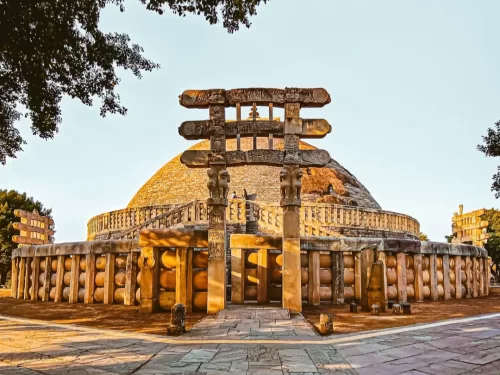
Visitors come to Temple 17 at Sanchi for its architectural detail and serene setting within the UNESCO World Heritage Sanchi complex.
The atmosphere is peaceful, with stone pathways, open courtyards, and minimal commercial activity, allowing for quiet exploration and reflection.
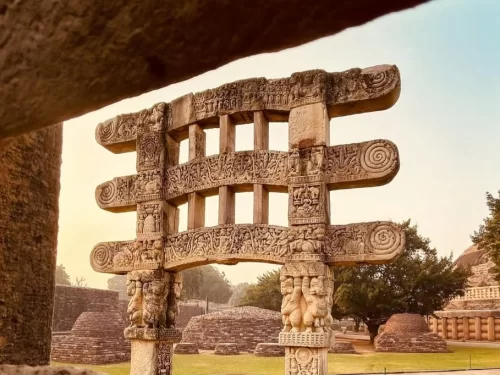
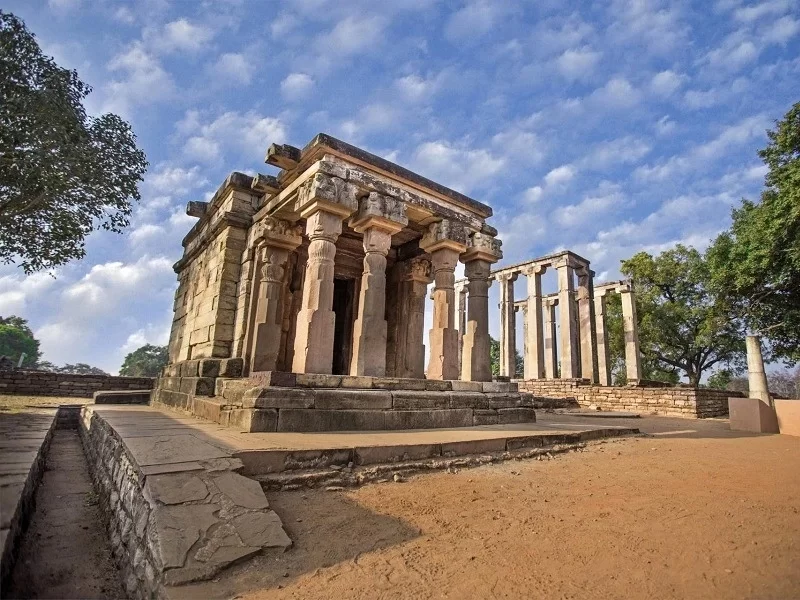
Temple 17 stands out for its compact structure, well-preserved carvings, and proximity to other smaller stupas, offering a unique insight into Buddhist temple design.
History of Temple 17 Sanchi
Temple 17 at Sanchi is a small Buddhist temple built during the late 1st century BCE to 1st century CE, representing early post-Mauryan architecture.
It holds religious significance as part of the Sanchi complex, which was a key site for Buddhist worship, rituals, and monastic activities in ancient India.
Best Time to Visit Temple 17 Sanchi
The best time to visit Temple 17 Sanchi is during the cooler months, offering comfortable conditions for exploring the site.
- Ideal months: October to March
- Weather conditions: Mild temperatures ranging from 15°C to 28°C, low humidity, clear skies
- Periods to avoid: Summer months (April to June) due to high heat and monsoon season (July to September) causing slippery paths and limited accessibility
How to Reach Temple 17 Sanchi
- Nearest airport: Raja Bhoj Airport, Bhopal, approximately 46 km from Sanchi
- Nearest railway station: Sanchi Railway Station, about 1 km from the temple complex
- Road access and last-mile connectivity: Well-connected via Bhopal–Sanchi Road; local taxis and auto-rickshaws available for final access
What to Expect When You Visit Temple 17 Sanchi
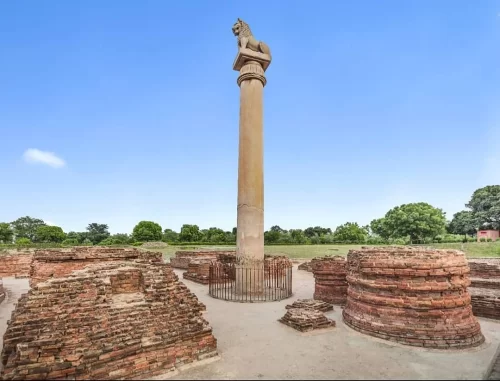
- Environment and surroundings: Located within the Sanchi complex, surrounded by other ancient stupas and archaeological structures; open-air setting with stone pathways.
- Facilities and amenities: Basic seating and shade available; onsite signage provides historical context; no large food outlets within immediate vicinity.
- Accessibility and movement: Moderate walking required on uneven stone surfaces; paths may be narrow near the stupa; suitable for visitors with average mobility.
- Typical visitor behavior and conditions: Quiet and respectful atmosphere; peak hours in late morning and afternoon; moderate crowd levels with guided tours common.
Important Visitor Information for Temple 17 Sanchi
- Crowd and weather notes: Moderate visitor flow; exposed location can be hot in summer and dusty during dry season.
- Peak and quiet visiting hours: Best visited early morning or late afternoon to avoid the largest crowds.
- Dress code: Modest attire recommended; comfortable walking shoes advised due to uneven surfaces.
- Safety notes and practical cautions: Watch footing on stone paths; no climbing on the stupa; carry water during hot months.
Photography and Viewpoints at Temple 17 Sanchi
- Best viewpoints or angles: Elevated paths around the stupa provide full-frame shots; side angles capture carvings in detail.
- Lighting conditions and time-of-day: Early morning and late afternoon offer softer light and fewer shadows for clearer photography.
- Rules or restrictions on photography: Flash photography is discouraged inside any small shrines; drones are not permitted.
- Crowd or access factors: Midday sees higher visitor density, limiting unobstructed shots; stone paths require careful footing when framing shots.