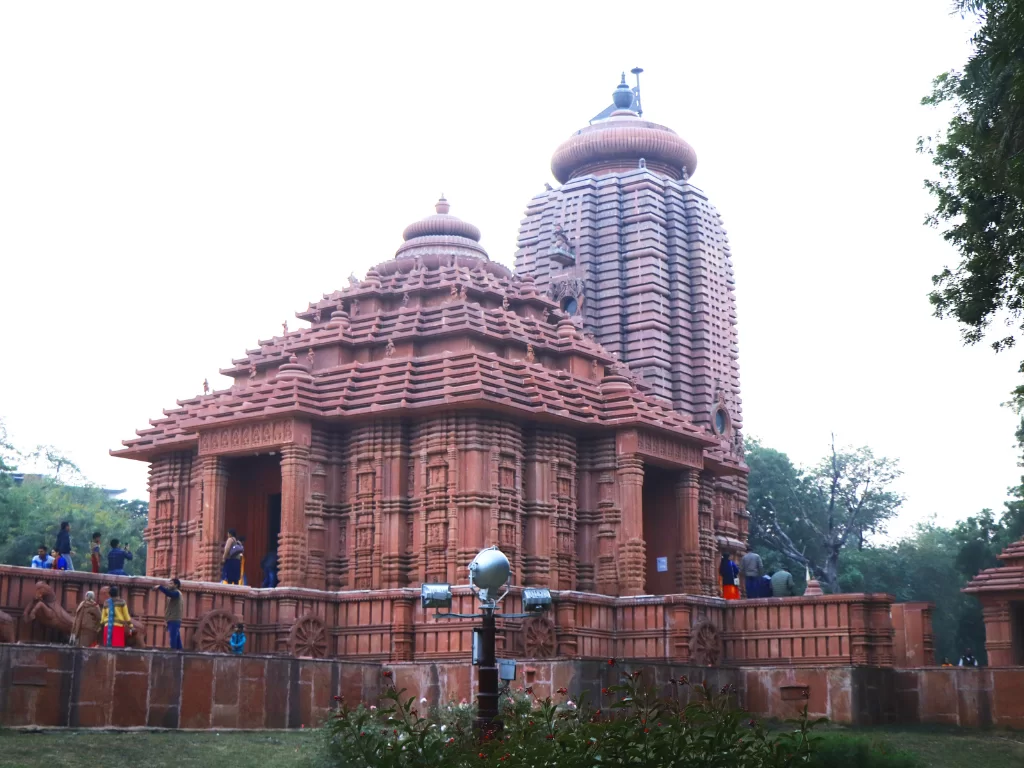
Sun Temple in Gwalior, Madhya Pradesh, India

Sun Temple Gwalior , Gwalior
Tourists visit for its distinctive red sandstone-style design, well-kept temple complex, and peaceful setting within the city. It is also visited during morning and evening prayer times.

Quick Facts About Sun Temple Gwalior

Quick Facts for Sun Temple, Gwalior

Entry Fee Free
Timings 6:00 AM - 6:00 PM (timings may vary on special religious days)
Altitude (m) Approx. 220 m
Ideal Visit Duration 45 minutes to 1.5 hours
Best Time of Day Morning (quieter and better for photography)
Crowd Level Moderate; higher on Sundays and major Hindu festivals
Distance from City Centre (km) Approx. 6 km from Gwalior Railway Station
Walking Difficulty Easy (short walk within temple complex)
Parking Available Yes (parking area near the entrance)
Last Mile Access Car/auto accessible up to the main gate; short walk to temple
Suitable for Kids Yes
Suitable for Seniors Yes
Wheelchair Friendly Partially (main pathways are mostly level; inner areas may have steps)

Why Visit Sun Temple Gwalior

Visitors come to Sun Temple Gwalior to see its striking red sandstone structure inspired by the famous Konark Sun Temple. Built in the late 20th century by the Birla family, the temple stands out for its detailed carvings and chariot-style design dedicated to Surya, the Sun God. It attracts both devotees and travelers interested in contemporary temple architecture.

The on-ground atmosphere is orderly and peaceful, with landscaped gardens surrounding the temple complex. Visitors remove their shoes before entering, and the inner sanctum maintains a quiet, respectful tone while families and small groups explore the outer courtyards. The clean pathways and open space make it comfortable to walk around at a relaxed pace.

What makes Sun Temple Gwalior distinct for travelers is its architectural homage to Konark set within a modern, well-maintained urban setting. Unlike ancient temples within the fort, this site offers a structured layout and easy access without steep climbs. It provides a visually impressive stop that blends devotional space with architectural replication.

History of Sun Temple Gwalior

The Sun Temple in Gwalior is a modern landmark built in 1988 by the Birla family, known for supporting major temple projects across India. Unlike Gwalior’s older fort-era monuments, this temple was constructed in the late 20th century and is dedicated to Surya, the Hindu Sun God.

The temple’s design was inspired by the famous Sun Temple at Konark in Odisha, with carved red sandstone-style architecture and a landscaped setting that was planned to create a calm space for worship. Its construction added a prominent contemporary religious site to Gwalior’s list of visitor attractions.

Today, the Sun Temple is widely visited for its architecture, peaceful grounds, and evening lighting, making it a popular stop for tourists looking to experience a modern temple alongside Gwalior’s historic fort and palaces.

Best Time to Visit Sun Temple, Gwalior

The best time to visit the Sun Temple in Gwalior is from October to March, when the cooler weather makes it comfortable to explore the temple complex, enjoy the gardens, and spend time outdoors without the intense heat common in the region.

  • Ideal months: October to March, with November to February being the most comfortable for daytime visits and sunset photography.
  • Weather conditions during the best season: Expect mostly dry days with temperatures typically between 12°C and 25°C, ideal for walking around the temple grounds and enjoying the architecture in clear light.
  • Periods to avoid: April to June due to extreme heat in Gwalior (often above 40°C), which can make outdoor exploration uncomfortable; July to September can be humid with monsoon showers that may affect movement around the gardens and open areas.

How to Reach Sun Temple Gwalior

  • Nearest Airport: Gwalior Airport (GWL) is the nearest airport, located approximately 15 km from Sun Temple Gwalior. The airport has regular domestic flights to Delhi and select major cities. Taxis and app-based cabs are available outside the terminal, with an average travel time of 30–40 minutes depending on traffic conditions.
  • Nearest Railway Station: Gwalior Junction (GWL) is about 7–8 km from the Sun Temple. It is a major station on the Delhi–Mumbai route with frequent superfast and express trains from Delhi, Agra, Jhansi, Bhopal, and Mumbai. Auto-rickshaws and taxis are easily available for a 15–20 minute ride.
  • Road Access: The Sun Temple is located in the Morar area of Gwalior and is accessible via well-maintained city roads. Gwalior is connected by NH 44, making road travel from Agra (approx. 120 km) and Jhansi (approx. 100 km) convenient. Expect moderate city traffic during peak hours.
  • Last-Mile Connectivity: Taxis, auto-rickshaws, and local city buses operate in the Morar area. Visitors can be dropped directly near the temple entrance, where limited parking is available. The temple complex is easily accessible with a short walk from the main gate.

What to Expect When You Visit Sun Temple Gwalior

Sun Temple (Surya Mandir) in Gwalior is a modern temple complex inspired by the Konark Sun Temple of Odisha. Built in red sandstone, it functions as an active place of worship and a quiet architectural landmark rather than a large pilgrimage center.

  • Environment and surroundings: The temple stands within a landscaped compound in a residential area of Morar, away from the busy fort circuit. The structure is symmetrical and cleanly maintained, with carved stone panels and open courtyards. The atmosphere is generally calm, though you may hear city traffic outside the boundary walls. Summers in Gwalior are extremely hot, and the stone surfaces can become very warm during midday.
  • Facilities and amenities: Facilities are simple and functional. Expect shoe storage near the entrance, basic washrooms, and limited seating within the compound. There are usually small stalls outside selling flowers and offerings, but no developed food courts or large commercial outlets within the premises. Drinking water may be available, but it is advisable to carry your own.
  • Accessibility and movement: The temple is accessible by road, and vehicles can reach close to the entrance. The main complex is relatively easy to navigate, with open walkways and moderate steps leading into the prayer areas. While most of the grounds are flat, certain sections involve stairs, which may pose difficulty for visitors with mobility limitations. The layout allows for smooth movement even when moderately crowded.
  • Typical visitor behavior and conditions: Visitors include local devotees and tourists interested in architecture. The atmosphere inside the prayer area is quiet and respectful. Photography is generally permitted in outdoor areas but may be restricted inside the sanctum. Crowds are manageable on regular weekdays but increase during Sundays and Hindu festivals, when darshan queues may form briefly.

Important Visitor Information for Sun Temple Gwalior

  • Crowd and Weather Notes: Sun Temple in Gwalior is a popular city attraction and tends to be busiest on weekends, public holidays, and during winter months when sightseeing conditions are most comfortable. Summers in Gwalior are extremely hot, and the open temple grounds can feel harsher due to reflected heat from stone surfaces. Monsoon season brings short heavy showers, and the walkways around the temple can become slick in patches.
  • Peak and Quiet Visiting Hours: The most crowded period is usually late morning through early evening, especially from 11:00 AM to 4:00 PM. For a quieter visit with better light for viewing and photography, arrive in the early morning or in the last hour before closing, when tour groups thin out.
  • Dress Code: There is no strict dress code, but as Sun Temple is a place of worship, modest clothing is appropriate. Light cotton clothing is practical in summer due to Gwalior’s heat. Footwear may need to be removed in inner worship areas, so wear shoes that are easy to take off.
  • Safety Notes and Practical Cautions: The temple complex is generally safe and well-managed, but visitors should watch their footing on stone steps and polished surfaces, especially after rain. Carry water in summer months, as the heat can be intense during mid-day. Keep personal belongings secure during peak visiting hours, particularly near entrances and crowded photo spots.

Photography and Viewpoints in Sun Temple Gwalior

Sun Temple (Surya Mandir) in Gwalior is a striking red sandstone temple inspired by the Konark Sun Temple in Odisha. Set within a landscaped garden complex, its elevated plinth, carved pillars, and stepped approach create strong architectural lines that work well for structured, symmetrical compositions.
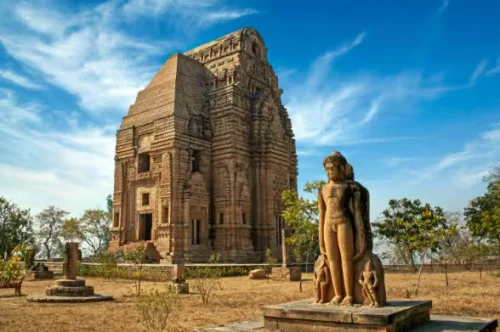
  • Best Viewpoints for Photography: The most balanced façade shot is from the central pathway in the garden, directly aligned with the temple entrance to emphasize symmetry. A slightly lower angle from the base of the steps enhances the height of the shikhara and carved exterior walls. Side angles along the boundary pathway highlight the depth of carvings and repeating pillars. For contextual frames, include the manicured lawns in the foreground to contrast with the rich red stone structure.
  • Lighting Conditions and Time-of-Day Considerations: Early morning light enhances the warm tones of the sandstone and produces softer shadows along the carvings. Late afternoon works well for textured side-light on the temple walls. Midday sunlight can be harsh, flattening details and creating strong glare on the lighter stone sections and open courtyard surfaces.
  • Rules and Restrictions: Photography is generally permitted in the outdoor areas of the temple complex. Inside the sanctum, photography may be restricted, especially during prayer times. Flash photography is inappropriate in religious spaces. Tripods and professional equipment may attract attention and could require prior permission during busy periods.
  • Crowd and Access Factors: The temple is moderately busy on weekends and during festivals, with visitors often gathering near the entrance steps for photos. For unobstructed architectural shots, visit soon after opening hours. The open garden layout allows flexibility in framing, even when footfall increases.

Near By Attraction

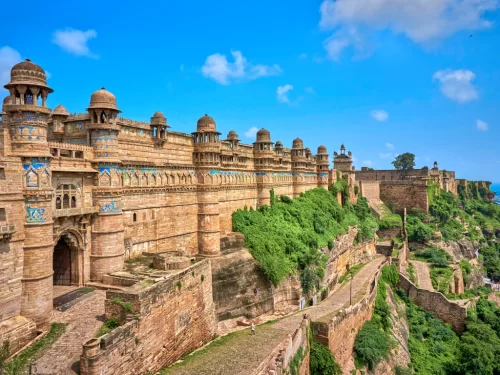
Gwalior Fort ramparts during clear afternoon, featuring turquoise tilework pavilions and domes atop cliffside with lush greenery, perfect heritage experience in Madhya Pradesh tour package. Fort

Gwalior Fort

Gwalior Fort is a major hilltop fort complex known for its palaces, temples, and long military history.
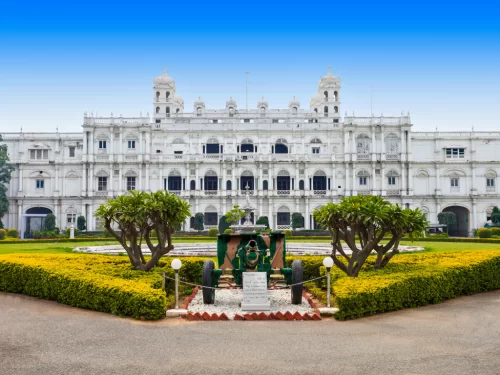
Jai Vilas Palace Gwalior during clear afternoon, featuring white Italianate facade with domed towers before manicured gardens showcasing silver royal carriage display amid yellow flower borders, perfect heritage experience in Madhya Pradesh tour package. Palace

Jai Vilas Palace

Jai Vilas Palace is a 19th-century royal residence built by Maharaja Jayajirao Scindia and partly converted into a museum.

 Aerial view of Gujari Mahal in Gwalior showcasing its fortified walls, central courtyard, and surrounding greenery, a historic attraction included in Madhya Pradesh tour packages Palace

Gujari Mahal

Gujari Mahal is a 15th-century palace in Gwalior built by Raja Man Singh Tomar for Queen Mrignayani.

Frequently Asked Questions About Sun Temple Gwalior

Sun Temple Gwalior is located in the Morar area of Gwalior, Madhya Pradesh. It is around 5 to 6 kilometers from the Gwalior railway station and easily accessible by road.
Sun Temple Gwalior is generally open daily from early morning until evening. Visiting between 6 AM and 6 PM is ideal for comfortable sightseeing.
There is no entry fee to visit Sun Temple Gwalior. Visitors can enter the temple premises without purchasing a ticket.
Visitors can reach Sun Temple Gwalior by taxi, auto rickshaw, or private vehicle from anywhere in Gwalior, Madhya Pradesh. Local transport services operate regularly to the Morar area.
Parking is available near Sun Temple Gwalior for cars and two wheelers. The parking area is located close to the entrance and usually has adequate space on weekdays.
The best time to visit Sun Temple Gwalior is between October and March when the weather in Gwalior, Madhya Pradesh is pleasant. Early mornings and late afternoons offer a peaceful atmosphere.
Most visitors spend about 30 to 60 minutes exploring Sun Temple Gwalior and its surroundings. Additional time may be needed during festivals or for photography.
Sun Temple Gwalior is suitable for family visits and offers a calm environment for all age groups. The premises are relatively easy to walk, making it manageable for senior citizens.
Photography is generally allowed in the outer premises of Sun Temple Gwalior. Visitors should avoid photographing inside restricted prayer areas.
Small food stalls and local shops are available near Sun Temple Gwalior, while full dining options are located within Gwalior city. Basic restroom facilities are available near the temple complex.

Loved this place ? Let’s Plan Your Madhya Pradesh Trip

Get customized Madhya Pradesh tour planning designed around safari seasons, road travel distances, heritage site exploration time, and comfortable pacing across regions. Whether you are visiting for wildlife safaris, temple architecture, historical monume

⚡ Quick Response | 💰 Free consultation | 🕒 24×7 expert support

×

Plan Your Trip