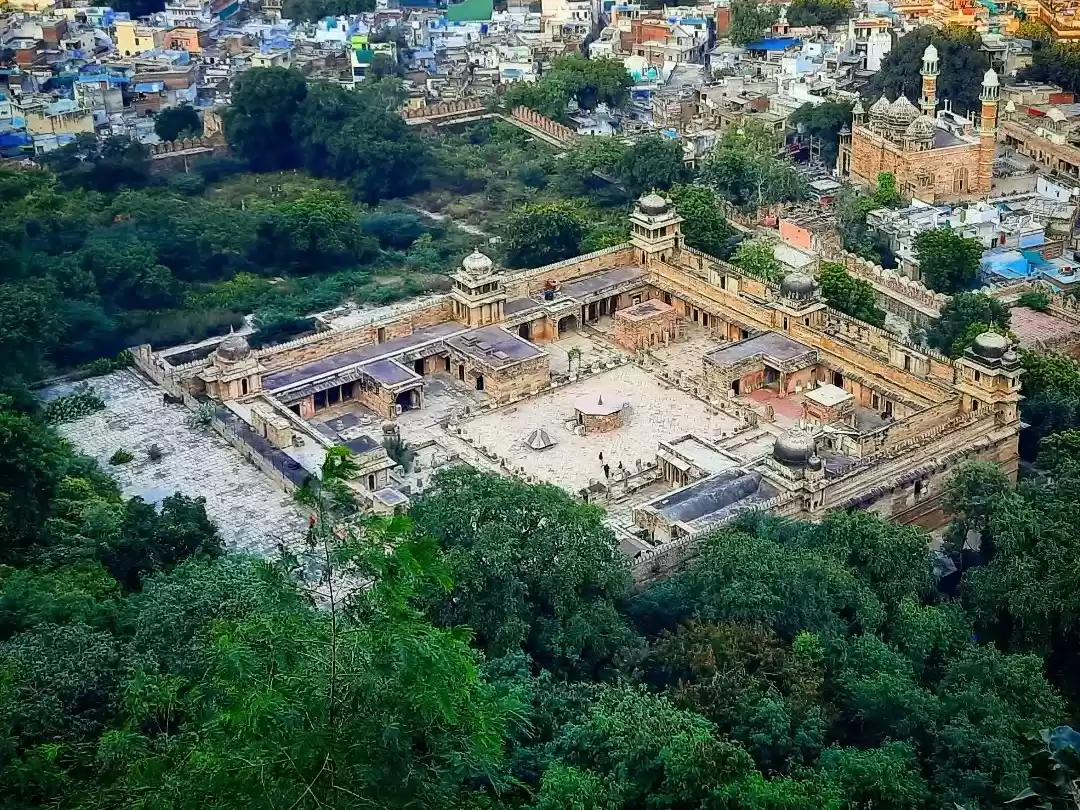
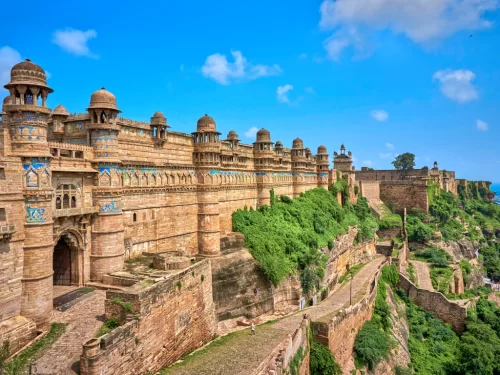
Gujari Mahal in Gwalior, Madhya Pradesh, India

Gujari Mahal , Gwalior
Tourists visit to see its distinct Rajput architecture and the State Archaeological Museum housed inside, which displays sculptures and artifacts from the region, including rare early-period statues.

Quick Facts About Gujari Mahal

Quick Facts for Gujari Mahal, Gwalior

Entry Fee INR 10 (Indian citizens), INR 250 (Foreign nationals)
Timings 10:00 AM - 5:00 PM (Closed on Fridays)
Altitude (m) Approx. 210 m
Ideal Visit Duration 1-1.5 hours
Best Time of Day Late morning to early afternoon (museum is indoors)
Crowd Level Moderate; higher on weekends and holidays
Distance from City Centre (km) Approx. 3 km from Gwalior Railway Station
Walking Difficulty Easy (mostly flat museum floors)
Parking Available Limited parking available near the entrance
Last Mile Access Car/auto accessible up to entrance; short walk to ticket counter
Suitable for Kids Yes
Suitable for Seniors Yes
Wheelchair Friendly Partially (ground-level access available; some internal sections may have steps)

Why Visit Gujari Mahal

Visitors come to Gujari Mahal in Gwalior to explore a palace that now houses the Archaeological Museum, known for its strong collection of regional sculpture and inscriptions. Travelers visit to see rare artifacts from central India, including stone carvings, statues, and historical fragments that add context to the fort and the wider Gwalior region.

The on-ground atmosphere is quiet and museum-like, with spacious galleries and a slower pace compared to the busier fort viewpoints. Inside, the focus shifts from grand architecture to detailed craftsmanship, where visitors spend time closely observing sculpture work and curated displays. The setting feels calm, making it easy to explore without rushing.

What makes Gujari Mahal distinct for travelers is that it combines a fort-era palace structure with one of Gwalior’s most important museum collections. Instead of being only a photo stop, it offers a deeper, object-based experience of the region’s art traditions. It’s especially rewarding for travelers who want more than panoramic views from the fort complex.

History of Gujari Mahal

Gujari Mahal, located within the Gwalior Fort complex, was built in the 15th century by Raja Man Singh Tomar for his beloved queen, Mrignayani. According to local accounts, the queen, who belonged to the Gujjar community, agreed to marry the king on the condition that she would have a separate palace with an independent water supply drawn from the Rai River. The construction of Gujari Mahal fulfilled this promise and stands as a testament to their story.

Architecturally distinct from the main Man Mandir Palace, Gujari Mahal was designed at a lower level of the fort, reflecting both functional planning and aesthetic simplicity. The palace features sturdy stone construction and spacious courtyards, characteristic of Tomar-era architecture in Gwalior.

Today, Gujari Mahal houses the State Archaeological Museum, displaying rare sculptures and artifacts dating from the 1st century BCE to the medieval period. This transformation has preserved the palace as both a historical monument and a cultural repository, offering visitors insight into Gwalior’s royal and artistic heritage.

Best Time to Visit Gujari Mahal, Gwalior

The best time to visit Gujari Mahal in Gwalior is between October and March, when the weather is cool enough to comfortably explore this 15th-century palace-turned-archaeological museum without the strain of central India’s summer heat.

  • Ideal months: October to March, with November to February offering the most pleasant conditions for combining the visit with Gwalior Fort and nearby monuments.
  • Weather conditions during the best season: Daytime temperatures typically range from 12°C to 25°C, with dry air and clear skies—comfortable for walking through stone corridors, examining sculptures, and spending time in open courtyards.
  • Periods to avoid: April to June due to intense heat in Gwalior (often above 40°C), which can make fort-area exploration exhausting; July to September sees monsoon showers that may complicate movement around the fort complex and limit outdoor sightseeing.

How to Reach Gujari Mahal Gwalior

  • Nearest Airport: The nearest airport is Gwalior Airport (GWL), located approximately 12 km from Gujari Mahal. The airport has regular domestic connections to Delhi and select other cities. From the airport, taxis and app-based cabs are readily available, with an average travel time of 25–35 minutes depending on traffic.
  • Nearest Railway Station: Gwalior Junction (GWL) is about 4–5 km from Gujari Mahal. It is a major railhead on the Delhi–Mumbai route, with frequent superfast and express trains from Delhi, Agra, Jhansi, Bhopal, and Mumbai. Auto-rickshaws and taxis are easily available outside the station for direct access.
  • Road Access: Gujari Mahal is located within the Gwalior Fort complex at the foothills of the fort. Gwalior is well connected by NH 44. From the city center, follow signs toward Gwalior Fort; the palace is situated near the Urvai Gate approach. Roads are paved but can be busy during peak tourist hours.
  • Last-Mile Connectivity: Taxis and auto-rickshaws can drop visitors near the museum entrance. Limited parking is available close to the site. From the designated parking area, a short walk leads to the palace. During weekends and holidays, expect higher footfall and minor delays at the fort entry points.

What to Expect When You Visit Gujari Mahal Gwalior

Gujari Mahal in Gwalior is a 15th-century palace built by Raja Man Singh Tomar for Queen Mrignayani. Today, it functions as an archaeological museum and is located within the Gwalior Fort complex. The experience combines historic architecture with curated exhibits rather than a furnished royal palace setting.

  • Environment and surroundings: The palace sits at the base of Gwalior Fort, separate from the main hilltop structures. The architecture is robust and stone-built, with open courtyards and arched corridors. The atmosphere is quieter than the upper fort monuments, though you may still hear city traffic from outside the complex. Summers in Gwalior are extremely hot, and much of the courtyard area is exposed to direct sunlight.
  • Facilities and amenities: As a government-managed museum, facilities are basic. Expect ticket counters, limited seating areas, and standard washroom facilities. There are no cafés or large food outlets inside the palace complex. Informational plaques are present for many exhibits, but detailed guided interpretation may not always be available unless you hire a local guide separately.
  • Accessibility and movement: The site is accessible by road, and vehicles can reach the entrance area. Inside, movement involves walking across stone floors and navigating steps in certain sections. The structure is historic and not fully barrier-free, so wheelchair access may be limited in some areas. Comfortable footwear is recommended due to uneven stone surfaces.
  • Typical visitor behavior and conditions: Visitors primarily include history enthusiasts, students, and tourists exploring the Gwalior Fort area. The museum displays sculptures, inscriptions, and artifacts from the region, so most people move slowly through the galleries reading labels and taking photographs where permitted. Weekends and school holidays tend to see higher footfall, while weekdays are generally quieter.

Important Visitor Information for Gujari Mahal Gwalior

  • Crowd and Weather Notes: Gujari Mahal, located within the Gwalior Fort complex, receives steady visitor traffic, especially during weekends, school holidays, and peak tourist season (October to March). Summers in Gwalior are extremely hot, with open courtyards and stone structures retaining heat, while winters offer the most comfortable conditions for exploring the museum. During monsoon months, the fort approach roads and stone pathways can become damp and slippery.
  • Peak and Quiet Visiting Hours: The museum is generally busiest between late morning and early afternoon, when most visitors combine it with a Gwalior Fort tour. For a quieter experience and better time to view exhibits without crowding, arrive soon after opening hours or visit in the last hour before closing.
  • Dress Code: There is no formal dress code, as Gujari Mahal functions as an archaeological museum. However, modest and comfortable clothing is recommended due to its heritage setting. Wear sturdy, comfortable footwear, as the fort complex involves walking on stone pathways and uneven surfaces.
  • Safety Notes and Practical Cautions: The structure features historic stone floors, steps, and open courtyards that may be uneven. Watch your footing, particularly during or after rain. Follow museum guidelines regarding photography and do not touch displayed artifacts. During summer visits, carry water and sun protection, as shaded areas are limited within parts of the fort complex.

Photography and Viewpoints in Gujari Mahal Gwalior

Gujari Mahal in Gwalior, now home to the State Archaeological Museum, is a rare example of a palace designed as a residential complex rather than a fortification. Built for Queen Mrignayani, it is known for its robust stone walls, arched corridors, and the museum’s historic sculptures and artifacts, making it a strong location for architectural and heritage photography.
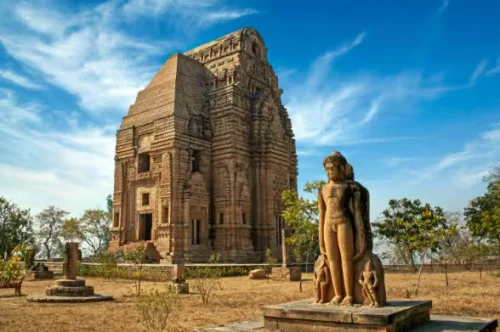
  • Best Viewpoints for Photography: The most effective exterior shot is from the front courtyard, where the palace façade and arched entryways can be framed symmetrically. Inside, the corridor arches and stone passageways offer strong perspective lines, especially when photographed from low angles. If museum galleries allow photography, the best compositions come from side-lighted display areas where sculptures can be captured with clean backgrounds and minimal glare from glass cases.
  • Lighting Conditions and Time-of-Day Considerations: Late morning to early afternoon works well for the outer courtyard, as the stone structure is evenly lit and the shadows are less dramatic under the arches. For interior corridors, softer light (early morning or late afternoon) helps preserve detail in the darker stone without overexposing the brighter courtyard areas. Indoor museum lighting can be mixed, so color tones may vary across different rooms.
  • Rules and Restrictions: As Gujari Mahal functions as a museum, photography rules can vary by gallery. Some sections may prohibit photography of artifacts, and flash is typically not allowed to protect exhibits. Tripods and professional equipment may require permission. Always follow museum signage and staff instructions, especially around sculpture displays and protected items.
  • Crowd and Access Factors: Gujari Mahal is usually less crowded than Gwalior Fort, but visitor flow increases on weekends and school holiday periods. For clearer corridor and courtyard shots, arrive close to opening hours. Indoor galleries can feel tight during peak time, which limits the ability to step back for wide frames of large exhibits.

Near By Attraction

Gwalior Fort ramparts during clear afternoon, featuring turquoise tilework pavilions and domes atop cliffside with lush greenery, perfect heritage experience in Madhya Pradesh tour package. Fort

Gwalior Fort

Gwalior Fort is a major hilltop fort complex known for its palaces, temples, and long military history.
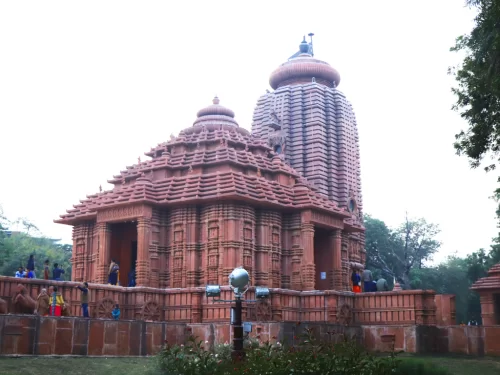
Sun Temple Gwalior temple complex during clear afternoon, featuring visitors at stepped jagamohana entrance beside towering rekha deul vimana amid lush gardens, perfect heritage experience in Madhya Pradesh tour package. Temple

Sun Temple Gwalior

The Sun Temple in Gwalior is a modern Hindu temple dedicated to Surya (the Sun God), inspired by the Sun Temple architecture of Konark.

Jai Vilas Palace Gwalior during clear afternoon, featuring white Italianate facade with domed towers before manicured gardens showcasing silver royal carriage display amid yellow flower borders, perfect heritage experience in Madhya Pradesh tour package. Palace

Jai Vilas Palace

Jai Vilas Palace is a 19th-century royal residence built by Maharaja Jayajirao Scindia and partly converted into a museum.

Frequently Asked Questions About Gujari Mahal

Gujari Mahal is located within the Gwalior Fort complex in Gwalior, Madhya Pradesh. It is situated near the main fort entrance and is easily accessible by road.
Gujari Mahal is generally open from around 9 AM to 5 PM as it operates as an archaeological museum. Timings may vary slightly on public holidays.
There is a separate entry fee to visit Gujari Mahal museum apart from the main fort access. Ticket prices differ for Indian and foreign visitors.
Visitors can reach Gujari Mahal by traveling to Gwalior Fort via taxi, auto rickshaw, or private vehicle in Gwalior, Madhya Pradesh. The mahal is located inside the fort premises.
Parking is available near the main entrance of Gwalior Fort from where visitors can walk to Gujari Mahal. Parking charges may apply depending on the entry gate used.
The best time to visit Gujari Mahal is between October and March when the weather in Gwalior, Madhya Pradesh is comfortable for fort exploration. Morning hours are generally less crowded.
Most visitors spend about 45 minutes to 1 hour exploring the museum galleries inside Gujari Mahal. Those interested in ancient sculptures and artifacts may take longer.
Gujari Mahal is suitable for family visits as it is a compact museum space within the fort complex. The walking distance is manageable for children and senior citizens.
Photography inside Gujari Mahal museum may be restricted or chargeable depending on current rules. Visitors should confirm camera policies at the ticket counter.
Restroom facilities are available within the Gwalior Fort complex near Gujari Mahal. Food stalls are limited inside the fort, but several restaurants are located in Gwalior city below the fort.

Loved this place ? Let’s Plan Your Madhya Pradesh Trip

Get customized Madhya Pradesh tour planning designed around safari seasons, road travel distances, heritage site exploration time, and comfortable pacing across regions. Whether you are visiting for wildlife safaris, temple architecture, historical monume

⚡ Quick Response | 💰 Free consultation | 🕒 24×7 expert support

×

Plan Your Trip