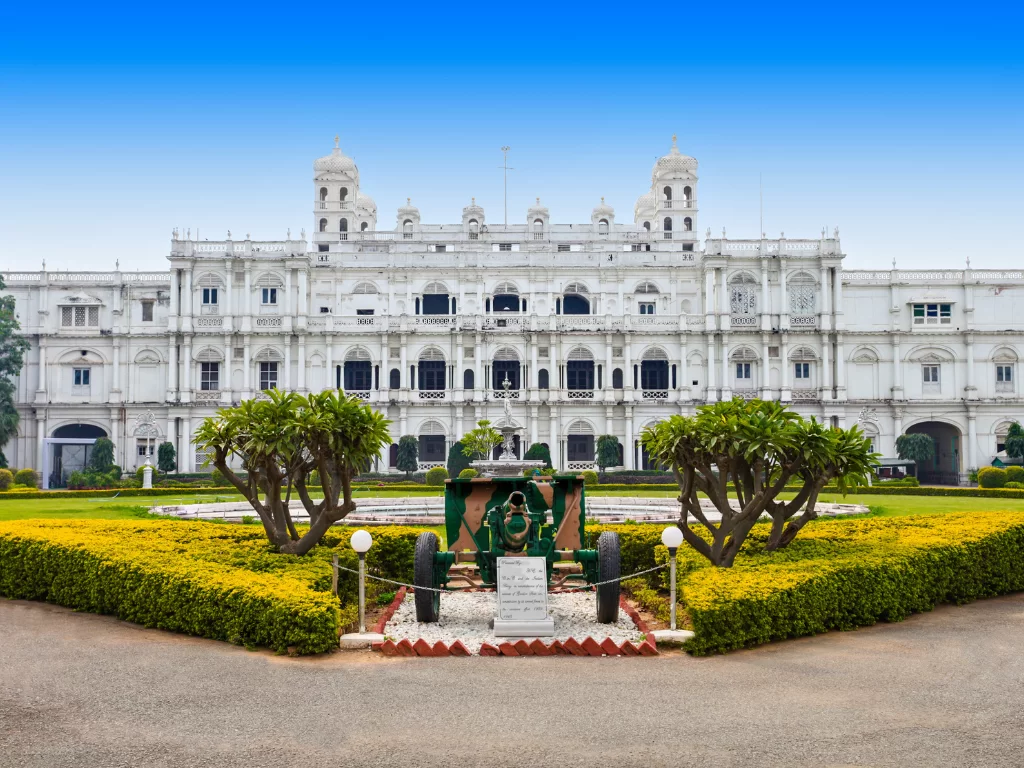
Jai Vilas Palace in Gwalior, Madhya Pradesh, India

Jai Vilas Palace , Gwalior
Tourists visit to view its European-influenced architecture and the Jai Vilas Palace Museum, which displays royal artifacts, furnishings, and one of the world’s largest chandeliers in the Durbar Hall. A section of the palace remains the residence of the Scindia family.

Quick Facts About Jai Vilas Palace

Quick Facts for Jai Vilas Palace, Gwalior

Entry Fee INR 300 (Indian citizens), INR 850 (Foreign nationals); camera charges may apply and can vary
Timings 10:00 AM - 5:00 PM (Closed on Mondays)
Altitude (m) Approx. 215 m
Ideal Visit Duration 1.5-2.5 hours
Best Time of Day Late morning to early afternoon (museum visit is indoors)
Crowd Level Moderate; higher on weekends and public holidays
Distance from City Centre (km) Approx. 2 km from Gwalior Railway Station
Walking Difficulty Easy (mostly indoor museum floors; some stair sections may be restricted)
Parking Available Yes (on-site parking available)
Last Mile Access Car/auto accessible up to main gate; short walk to ticket counter
Suitable for Kids Yes
Suitable for Seniors Yes
Wheelchair Friendly Partially (some areas are accessible, but several sections have steps and limited ramps)

Why Visit Jai Vilas Palace

Visitors come to Jai Vilas Palace in Gwalior to see one of India’s grandest 19th-century royal residences and its well-curated museum displays. The palace is best known for its ornate Durbar Hall, where enormous chandeliers, gilded ceilings, and formal interiors give a clear sense of how the Scindia dynasty hosted state ceremonies. Travelers interested in architecture, decorative arts, and royal collections find this a standout stop in the city.

The on-ground atmosphere is formal and quiet, with visitors moving through large halls, gallery rooms, and exhibits showcasing furniture, weapons, textiles, and personal objects. The scale of the interiors feels impressive in person, especially the high-ceilinged ceremonial spaces that contrast sharply with Gwalior’s busy streets outside. Photography rules vary by section, so the visit often feels structured and museum-led.

What makes Jai Vilas Palace distinct for travelers is how intact and experiential the palace interiors are compared to many fort-only monuments. You’re not just viewing ruins or façades—you’re walking through rooms designed for royal life, complete with original décor and collections. It’s one of the most detailed ways to understand Gwalior’s modern royal legacy without needing a guided tour.

History of Jai Vilas Palace

Jai Vilas Palace, located in Gwalior, was constructed in 1874 by Maharaja Jayajirao Scindia of the Scindia dynasty. Designed by British architect Sir Michael Filose, the palace reflects strong European influences, particularly Italianate architecture blended with elements of Corinthian and Tuscan styles. It was built to serve as the royal residence and to host distinguished guests, including the Prince of Wales during his visit to India.

The palace is renowned for its grand Durbar Hall, which features some of the largest chandeliers in the world, weighing several tons and suspended from a richly decorated ceiling. The interiors showcase opulent furnishings, gold embellishments, and a mix of European decorative styles, illustrating the Scindia rulers’ close association with British India during the 19th century.

A significant portion of Jai Vilas Palace has been converted into the Jiwaji Rao Scindia Museum, displaying royal artifacts, arms, textiles, and personal belongings of the Scindia family. Part of the palace remains the residence of the royal family, preserving its living heritage. For visitors, Jai Vilas Palace offers a direct glimpse into the grandeur and political history of princely Gwalior.

Best Time to Visit Jai Vilas Palace, Gwalior

The best time to visit Jai Vilas Palace in Gwalior is from October to March, when cooler temperatures make it comfortable to explore the museum galleries, palace grounds, and nearby city attractions without the discomfort of extreme summer heat.

  • Ideal months: October to March, with November to February being the most pleasant for combining the palace visit with Gwalior Fort and local markets.
  • Weather conditions during the best season: Expect mild, dry days with temperatures usually between 12°C and 25°C, ideal for walking through the palace complex, spending time in museum halls, and exploring the outdoor areas comfortably.
  • Periods to avoid: April to June due to intense heat in Gwalior (frequently 40°C+), which can make travel between attractions tiring; July to September can be humid with monsoon showers, which may affect city sightseeing and outdoor movement.

How to Reach Jai Vilas Palace Gwalior

  • Nearest Airport: Gwalior Airport (GWL) is the nearest airport, located approximately 13 km from Jai Vilas Palace. It operates regular domestic flights to Delhi and select major cities. Taxis and app-based cabs are available outside the terminal, with an average travel time of 30–40 minutes depending on traffic.
  • Nearest Railway Station: Gwalior Junction (GWL) is about 3–4 km from the palace and is a major station on the Delhi–Mumbai rail route. It has frequent superfast and express trains connecting Delhi, Agra, Jhansi, Bhopal, and Mumbai. Auto-rickshaws and taxis are easily available for a short 10–15 minute ride to the palace.
  • Road Access: Jai Vilas Palace is centrally located in the Lashkar area of Gwalior and is easily accessible via well-maintained city roads. Gwalior is connected by NH 44, making road travel from Agra (approx. 120 km) and Jhansi (approx. 100 km) convenient. City traffic can be moderately busy during office hours.
  • Last-Mile Connectivity: Taxis, auto-rickshaws, and local city buses operate in the Lashkar area. Visitors can be dropped directly at the palace entrance, where designated parking is available. The Jai Vilas Museum entry is within the palace complex, requiring a short walk from the main gate.

What to Expect When You Visit Jai Vilas Palace Gwalior

Jai Vilas Palace in Gwalior is a 19th-century royal residence of the Scindia dynasty, with a large portion converted into the Jiwaji Rao Scindia Museum. The experience is structured and museum-oriented, with access limited to designated public sections while parts of the palace remain a private residence.

  • Environment and surroundings: The palace complex features European-inspired architecture with expansive lawns and a grand façade. Inside the museum areas, expect high ceilings, ornate chandeliers, gilded décor, and formal galleries displaying royal artifacts. The interiors are well-maintained, though certain sections may feel dim due to preservation lighting. Summers in Gwalior are very hot, but indoor galleries offer some relief compared to outdoor monuments.
  • Facilities and amenities: As a managed museum, the palace has a formal ticketing system at the entrance. Basic visitor amenities such as restrooms are available within the complex. Photography inside the museum is usually restricted or subject to additional fees and rules. There are no full-scale restaurants inside the museum area, though small refreshment options may be available near the entrance or outside the palace grounds.
  • Accessibility and movement: Jai Vilas Palace is accessible by road within central Gwalior, and vehicles can reach the entrance directly. Inside, visitors move through designated galleries, which may include staircases between floors. While some sections are relatively easy to navigate, the heritage structure is not fully barrier-free. Visitors should expect moderate walking across marble or stone flooring.
  • Typical visitor behavior and conditions: Visitors typically explore the museum exhibits at a steady pace, viewing royal carriages, silver artifacts, weapons, furniture, and the grand Durbar Hall known for its massive chandeliers. The atmosphere is orderly and quiet, similar to a formal museum setting. Weekends and holiday periods can bring larger crowds, especially school groups. Visitors are expected to follow museum rules strictly, including restrictions on photography and touching displays.

Important Visitor Information for Jai Vilas Palace Gwalior

  • Crowd and Weather Notes: Jai Vilas Palace, one of Gwalior’s most visited heritage attractions, experiences steady tourist traffic throughout the year, with higher footfall on weekends, public holidays, and during the peak travel season from October to March. Summers in Gwalior are extremely hot, but the palace museum interiors remain relatively comfortable. Winters offer the best overall visiting conditions. The monsoon season may bring brief heavy showers, though most exhibits are indoors.
  • Peak and Quiet Visiting Hours: The museum sections are typically busiest between late morning and early afternoon, when tour groups arrive. For a quieter experience and better viewing of the Durbar Hall and galleries, visit shortly after opening hours or in the final hour before closing.
  • Dress Code: There is no mandatory dress code, but as Jai Vilas Palace is a royal residence and museum, smart casual and modest attire is appropriate. Comfortable footwear is recommended, as visitors walk through multiple galleries and large halls.
  • Safety Notes and Practical Cautions: The palace museum is well-maintained and secure, but visitors must follow strict photography rules, as photography is restricted or ticketed in certain sections. Do not touch artifacts or cross marked barriers. Marble floors and polished surfaces can be slippery, especially during wet weather. Keep entry tickets safe, as they may be checked at different gallery sections.

Photography and Viewpoints in Jai Vilas Palace Gwalior

Jai Vilas Palace in Gwalior is one of India’s grandest 19th-century royal residences, famous for its European-style interiors, ornate Durbar Hall, and the Scindia family’s heritage collections. The palace offers excellent architectural photography opportunities, but the best images depend heavily on what sections are open to visitors and what photography rules are enforced inside the museum areas.
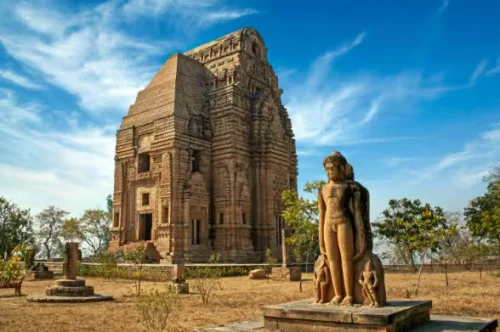
  • Best Viewpoints for Photography: The strongest exterior photos are taken from the main front lawn, where you can frame the full palace façade with its symmetrical windows, domes, and balconies. A slightly angled shot from either corner of the garden works well to show the palace’s length and layered architecture. If interior photography is permitted in any sections, the Durbar Hall is the highlight for capturing scale, chandeliers, and ceiling detailing, while corridor shots emphasize the palace’s arched doors and decorative flooring.
  • Lighting Conditions and Time-of-Day Considerations: Morning light is best for photographing the front façade without harsh contrast, especially when the sun is still low and the building’s pale exterior holds detail. Late afternoon can add warmth to the palace walls, but shadows from trees and architectural projections become stronger. Indoor lighting is typically dimmer and warmer, so handheld shots may be more practical than attempting long exposures if tripods are not allowed.
  • Rules and Restrictions: Jai Vilas Palace functions as a heritage museum, and photography restrictions are common inside galleries. Many rooms may prohibit photography entirely, and flash is generally not allowed due to conservation concerns. Tripods, gimbals, and professional shoots typically require prior permission. Always check the ticket counter and gallery signage before taking out a camera indoors.
  • Crowd and Access Factors: Visitor numbers increase significantly on weekends and during peak tourist season in Gwalior, which can make it difficult to get clean garden and façade shots. For the clearest frames, arrive close to opening time and start with exterior photography before tour groups build up. Interior spaces can feel crowded quickly, limiting the ability to step back for wide compositions.

Near By Attraction

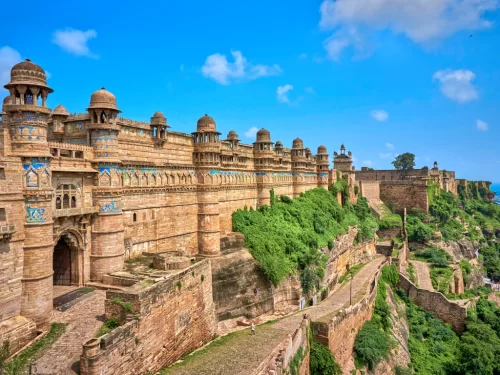
Gwalior Fort ramparts during clear afternoon, featuring turquoise tilework pavilions and domes atop cliffside with lush greenery, perfect heritage experience in Madhya Pradesh tour package. Fort

Gwalior Fort

Gwalior Fort is a major hilltop fort complex known for its palaces, temples, and long military history.
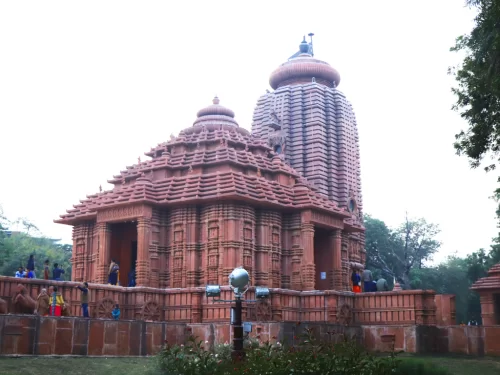
Sun Temple Gwalior temple complex during clear afternoon, featuring visitors at stepped jagamohana entrance beside towering rekha deul vimana amid lush gardens, perfect heritage experience in Madhya Pradesh tour package. Temple

Sun Temple Gwalior

The Sun Temple in Gwalior is a modern Hindu temple dedicated to Surya (the Sun God), inspired by the Sun Temple architecture of Konark.

 Aerial view of Gujari Mahal in Gwalior showcasing its fortified walls, central courtyard, and surrounding greenery, a historic attraction included in Madhya Pradesh tour packages Palace

Gujari Mahal

Gujari Mahal is a 15th-century palace in Gwalior built by Raja Man Singh Tomar for Queen Mrignayani.

Frequently Asked Questions About Jai Vilas Palace

Jai Vilas Palace is located in Gwalior, Madhya Pradesh, close to the city center. It is easily accessible by road from the Gwalior railway station.
Jai Vilas Palace is generally open to visitors from around 10 AM to 5 PM. The palace museum remains closed on certain public holidays, so checking in advance is advisable.
There is an entry fee for Jai Vilas Palace which varies for Indian and foreign visitors. Separate charges apply for photography and videography inside the museum.
Visitors can reach Jai Vilas Palace by taxi, auto rickshaw, or private vehicle from anywhere in Gwalior, Madhya Pradesh. The palace is well connected by city roads.
Parking is available near Jai Vilas Palace for cars and two wheelers. Visitors may need to pay a nominal parking fee at the designated area.
The best time to visit Jai Vilas Palace is between October and March when the weather in Gwalior, Madhya Pradesh is pleasant. Morning hours are usually less crowded for museum visits.
Most travelers spend around 1 to 2 hours exploring Jai Vilas Palace and its museum galleries. Visitors interested in detailed exhibits may require additional time.
Jai Vilas Palace is suitable for family visits and offers indoor museum spaces that are comfortable for all age groups. The layout is manageable for senior citizens.
Photography inside Jai Vilas Palace museum is usually restricted or chargeable depending on the section. Visitors should check the rules at the ticket counter before carrying cameras.
Basic restroom facilities are available inside Jai Vilas Palace complex. Food options are limited within the premises, but several restaurants are located nearby in Gwalior city.

Loved this place ? Let’s Plan Your Madhya Pradesh Trip

Get customized Madhya Pradesh tour planning designed around safari seasons, road travel distances, heritage site exploration time, and comfortable pacing across regions. Whether you are visiting for wildlife safaris, temple architecture, historical monume

⚡ Quick Response | 💰 Free consultation | 🕒 24×7 expert support

×

Plan Your Trip