+91 9910402252
admin@chalbanjare.com


| Entry Fee | No entry fee |
| Timings | Open daily during daylight hours (no officially notified timings) |
| Altitude (m) | Approx. 420–430 m above sea level |
| Ideal Visit Duration | 15–30 minutes |
| Best Time of Day | Morning or late afternoon |
| Crowd Level | Low to moderate |
| Distance from City Centre (km) | Approx. 4–5 km from Vidisha city centre |
| Walking Difficulty | Easy; flat ground with short walking distance |
| Parking Available | Yes, informal roadside parking |
| Last Mile Access | Accessible by local road; short walk from roadside |
| Suitable for Kids | Yes, with supervision |
| Suitable for Seniors | Yes |
| Wheelchair Friendly | Partially; ground access possible but no paved ramps or facilities |
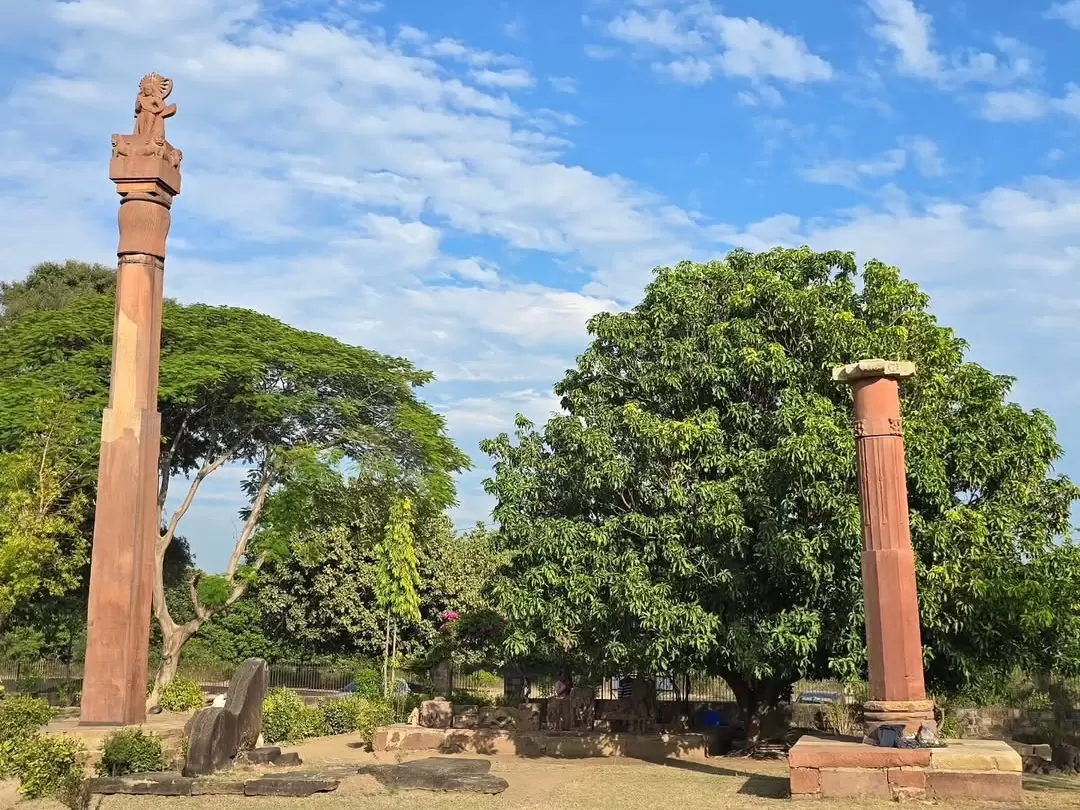
Visitors come to the Heliodorus Pillar to see one of the earliest surviving monuments linked to Vaishnava worship in India, known for its clear inscription and historical association with early religious traditions near Vidisha.
The on-ground atmosphere is simple and open, with the pillar standing in a small, quiet open area surrounded by local village life rather than a large monument complex. The site is calm, lightly visited, and easy to explore in a short stop.
What makes the Heliodorus Pillar distinct for travelers is its unique identity as a standalone column with a historically significant inscription, offering a direct, physical connection to early religious practice without the scale or formality of larger archaeological sites.
The Heliodorus Pillar was erected in the 2nd century BCE by Heliodorus, a Greek ambassador from the Indo-Greek kingdom, during the reign of the Shunga dynasty ruler Bhagabhadra. The pillar stands as a commemorative monument dedicated to the deity Vasudeva, an early form of Krishna worship.
The stone column bears a Brahmi inscription identifying Heliodorus as a devotee of Vasudeva, making it one of the earliest known physical records of Vaishnavism in the Indian subcontinent and a rare example of cross-cultural religious interaction in ancient India.
Today, the pillar remains preserved at its original location near Vidisha as a standalone archaeological monument, valued primarily for its inscriptional evidence and historical importance rather than architectural scale or ritual function.
The Heliodorus Pillar is most comfortable to visit during the cooler months, as the site is fully open-air with no shade structures and involves standing and walking in exposed conditions.
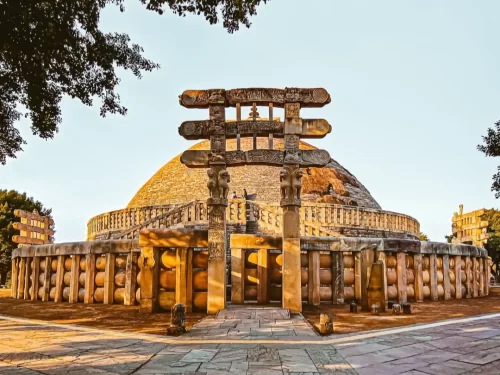 Stupa
Stupa
Sanchi Stupa is a major Buddhist monument located in Sanchi, Madhya Pradesh, within a protected archaeological complex
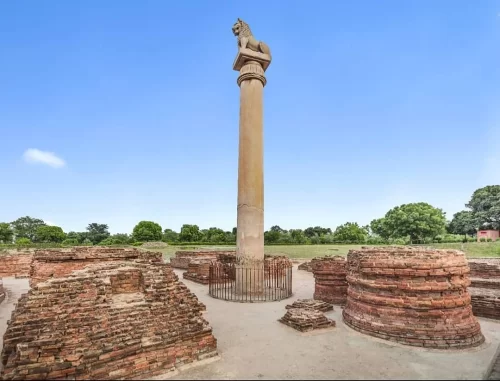 Monument
The Ashokan Pillar at Sanchi is a stone column from the Mauryan period located within the Sanchi archaeological complex in Madhya Pradesh
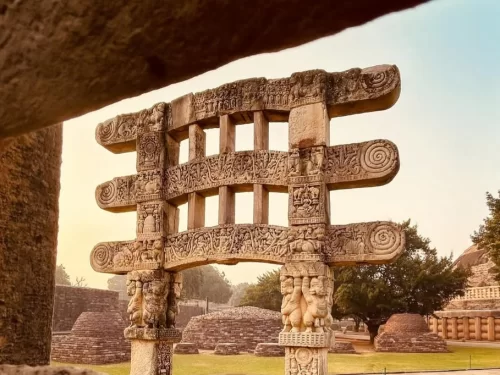 Historical Site
Toranas are traditional carved gateways found at temples and sacred sites across India
Get customized Madhya Pradesh tour planning designed around safari seasons, road travel distances, heritage site exploration time, and comfortable pacing across regions. Whether you are visiting for wildlife safaris, temple architecture, historical monume
⚡ Quick Response | 💰 Free consultation | 🕒 24×7 expert support