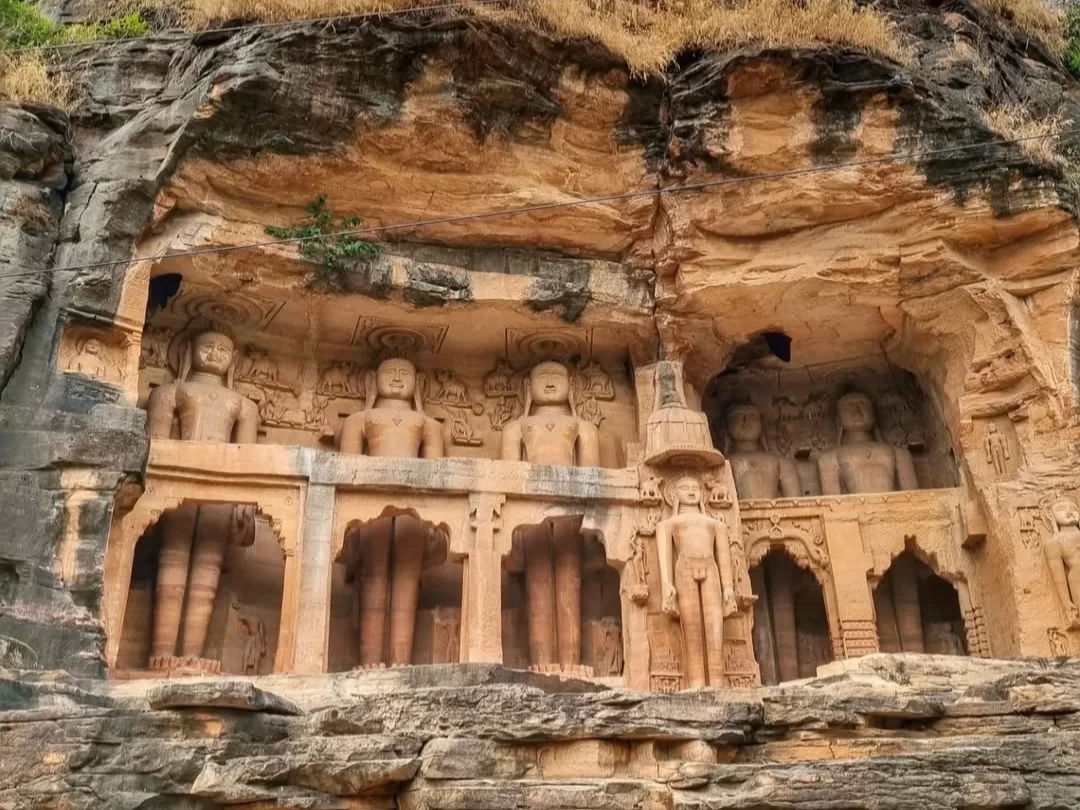
Gopachal Jain Parvat in Gwalior, Madhya Pradesh, India

Gopachal Jain Parvat , Gwalior
Tourists visit to see the monumental Tirthankara carvings cut directly into the sandstone cliffs and to understand Gwalior’s Jain heritage. The site is also valued for its quiet atmosphere and views from the fort slopes.

Quick Facts About Gopachal Jain Parvat

Quick Facts for Gopachal Jain Parvat, Gwalior

Entry Fee Free
Timings 6:00 AM - 6:00 PM (may vary slightly by season and local conditions)
Altitude (m) Approx. 220 m
Ideal Visit Duration 1-2 hours
Best Time of Day Morning (better light for carvings and fewer visitors)
Crowd Level Low to moderate; higher on weekends and Jain religious days
Distance from City Centre (km) Approx. 4 km from Gwalior Railway Station
Walking Difficulty Moderate (stone steps and uneven rock paths)
Parking Available Limited (roadside parking near entry points)
Last Mile Access Auto/taxi can reach near the entrance; final approach involves steps
Suitable for Kids Yes (with supervision on steps and rocky areas)
Suitable for Seniors Partially (steps may be difficult for those with knee or mobility issues)
Wheelchair Friendly No (steps and uneven rock surfaces)

Why Visit Gopachal Jain Parvat

Visitors come to Gopachal Jain Parvat to see the remarkable rock-cut Jain sculptures carved directly into the cliffs of Gwalior Fort. These colossal statues of Tirthankaras, some towering over 50 feet high, are among the most striking Jain monuments in India. Travelers interested in religious art, archaeology, and heritage architecture find this site especially compelling.

The atmosphere at Gopachal Jain Parvat is quiet and contemplative, set along the fort’s rocky slopes away from the busier palace sections. As you walk along the carved niches and towering figures, the scale of the sculptures becomes more impressive up close. The open hillside setting, combined with minimal commercial activity, allows for an unhurried visit.

What makes Gopachal Jain Parvat distinct for travelers is the sheer scale and integration of the sculptures into the natural rock face. Unlike standalone temple complexes, these monuments are carved directly into the fort’s sandstone cliffs, creating a dramatic fusion of landscape and devotion. It offers a rare opportunity to experience large-scale Jain art in its original setting.

History of Gopachal Jain Parvat

Gopachal Jain Parvat, located within the Gwalior Fort complex, is one of the most significant Jain heritage sites in central India. The hill is renowned for its remarkable rock-cut Jain sculptures carved between the 7th and 15th centuries, primarily under the patronage of the Tomar rulers of Gwalior. These carvings were created as an expression of devotion and reflect the strong presence of the Jain community in the region during the medieval period.

The site features hundreds of intricately carved statues of Jain Tirthankaras, including towering figures of Lord Adinath (Rishabhanatha), Lord Parshvanatha, and Lord Mahavira. Some of these monolithic statues rise over 50 feet, making them among the tallest rock-cut Jain images in India. The sculptures are arranged in groups along the sandstone cliffs, forming a continuous sacred landscape that attracts pilgrims and history enthusiasts alike.

Despite damage during periods of conflict in the 16th century, many of the carvings remain intact and continue to be revered by Jain devotees. Today, Gopachal Jain Parvat stands as a testament to the artistic excellence and religious dedication of medieval Jain communities, offering visitors a powerful glimpse into Gwalior’s layered spiritual and architectural history.

Best Time to Visit Gopachal Jain Parvat, Gwalior

The best time to visit Gopachal Jain Parvat in Gwalior is from October to March, when cooler weather makes it comfortable to climb, explore the rock-cut Jain sculptures, and spend time at the site without heat exhaustion.

  • Ideal months: October to March, with December to February being the most comfortable for longer exploration and photography.
  • Weather conditions during the best season: Expect mostly dry days with temperatures typically between 12°C and 25°C, which is ideal for walking on stone paths, climbing steps, and viewing carvings in natural daylight.
  • Periods to avoid: April to June due to harsh heat in Gwalior (often crossing 40°C), making the climb and exposed rock areas tiring; July to September because monsoon moisture can make steps and rocky surfaces slippery and reduce visibility for detailed sculpture viewing.

How to Reach Gopachal Jain Parvat, Gwalior

  • Nearest Airport: The nearest airport is Gwalior Airport (GWL), around 12–15 km from Gopachal Jain Parvat. From the airport, the most practical option is a prepaid taxi or app-based cab to the fort-side area of the city, with typical travel time of 30–40 minutes depending on traffic.
  • Nearest Railway Station: Gwalior Junction (GWL) is approximately 4–6 km from Gopachal Jain Parvat. It is a major station with frequent trains from Delhi, Agra, Jhansi, Bhopal, and Mumbai. Auto-rickshaws and local taxis are easily available outside the station for a direct drop.
  • Road Access: Gopachal Jain Parvat is located on the southern side of Gwalior Fort, close to the fort approach roads. Gwalior has strong road connectivity via NH 44. The final approach includes narrow lanes and busy local traffic near the fort area, especially in the evening and on weekends.
  • Last-Mile Connectivity: You can reach the site by auto-rickshaw or taxi up to the nearest access point, but the Jain sculptures are spread across rock-cut sections, so expect short walks and stone steps. Footwear with grip is recommended, as the rock surfaces can get slippery during monsoon months.

What to Expect When You Visit Gopachal Jain Parvat

Gopachal Jain Parvat in Gwalior is an important Jain pilgrimage site known for its massive rock-cut Tirthankara statues carved into the cliffs of Gwalior Fort. The site is primarily a heritage and religious location, with minimal commercial development and a strong sense of historical presence.

  • Environment and surroundings: The site consists of steep rock faces carved with large and small Jain statues dating back to the 15th century. Expect an open, rocky landscape with limited shade and direct exposure to sun for much of the day. The surroundings are quiet compared to the main fort complex, though you may hear city traffic from below. Summers in Gwalior are extremely hot, making early morning visits more practical.
  • Facilities and amenities: Facilities at Gopachal Jain Parvat are minimal. There are no developed visitor centers, food stalls, or structured interpretation panels on-site. Basic amenities such as restrooms may not be consistently available in the immediate statue area, so it is advisable to carry drinking water and essentials. The focus here is entirely on the sculptures and their religious significance rather than tourism infrastructure.
  • Accessibility and movement: Access is via road to the base area, followed by walking along uneven paths near the rock-cut carvings. Some sections require navigating steps or sloped stone surfaces. The terrain is not fully barrier-free, and visitors with mobility challenges may find certain areas difficult to access. Comfortable footwear is important due to rocky and sometimes dusty ground conditions.
  • Typical visitor behavior and conditions: Visitors include Jain pilgrims, history enthusiasts, and photographers. The atmosphere is generally quiet and respectful. Some visitors may perform brief prayers near the statues. Crowds are usually lighter than at the main Gwalior Fort attractions, though numbers can increase during Jain religious observances. Visitors are expected to avoid touching or climbing on the carvings and to maintain decorum at this heritage site.

Important Visitor Information for Gopachal Jain Parvat

  • Crowd and Weather Notes: Gopachal Jain Parvat, located along the slopes of Gwalior Fort, remains relatively uncrowded compared to the main fort complex. Visitor numbers increase on weekends and during Jain religious observances. Summers in Gwalior are extremely hot with exposed rock surfaces radiating heat, while winters offer the most comfortable conditions for climbing and exploration. During monsoon months, stone steps and pathways can become slippery.
  • Peak and Quiet Visiting Hours: The site is quietest in the early morning, shortly after opening, when temperatures are cooler and the light enhances the details of the colossal rock-cut Jain tirthankara statues. Late morning to mid-afternoon sees more visitors, particularly tour groups combining it with a Gwalior Fort visit.
  • Dress Code: As Gopachal Jain Parvat is a sacred Jain site featuring monumental statues of Tirthankaras, modest attire is recommended. Clothing covering shoulders and knees is appropriate. Comfortable footwear with good grip is essential due to uneven rock-cut steps and sloping terrain.
  • Safety Notes and Practical Cautions: The pathways consist of carved stone steps and natural rock surfaces that can be uneven and steep in sections. Exercise caution while climbing or descending, especially during or after rain. There are limited shaded areas and minimal on-site facilities, so carry water and sun protection. Avoid touching or climbing on the ancient sculptures to preserve the fragile carvings and for personal safety.

Photography and Viewpoints in Gopachal Jain Parvat

Gopachal Jain Parvat, located on the slopes of Gwalior Fort hill, is renowned for its massive rock-cut Jain statues dating from the 7th to 15th centuries. Carved directly into sandstone cliffs, these towering tirthankara sculptures create one of the most dramatic heritage photography settings in Madhya Pradesh, especially for architectural and devotional imagery.
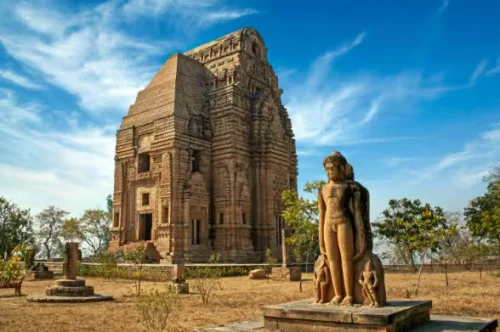
  • Best Viewpoints for Photography: The Urvai Gate approach offers the most striking frontal compositions, where multiple colossal statues appear carved into the vertical cliff face. Standing slightly below the sculptures allows you to emphasize their height against the sky. For detailed shots, move closer to capture the fine carving work on seated and standing tirthankaras. The cluster formations along the rock wall create layered compositions, particularly effective when framed diagonally along the cliff base.
  • Lighting Conditions and Time-of-Day Considerations: Early morning is ideal, as the eastern light illuminates the cliff face evenly and brings out the texture of the sandstone. Late afternoon can also be effective, but strong side light may create deep shadows in the carved recesses. Midday sunlight is harsh and flattens relief details, making intricate carvings harder to capture clearly.
  • Rules and Restrictions: As a protected archaeological site, photography for personal use is generally permitted. Tripods, drones, and commercial shoots may require prior permission from authorities. Climbing on sculptures or touching carvings is strictly prohibited. Flash is unnecessary outdoors and should be avoided near any painted or sensitive surfaces.
  • Crowd and Access Factors: The site is usually less crowded than the main Gwalior Fort complex, but it can see steady visitor flow during weekends and tourist season. Early morning visits provide unobstructed frames and easier access to the narrow approach road. The roadside layout means vehicles occasionally pass through the frame, so timing your shots between traffic gaps is important.

Near By Attraction

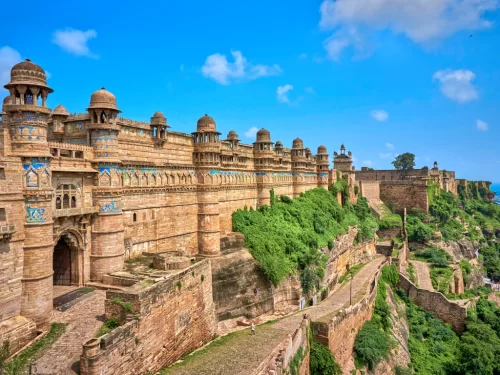
Gwalior Fort ramparts during clear afternoon, featuring turquoise tilework pavilions and domes atop cliffside with lush greenery, perfect heritage experience in Madhya Pradesh tour package. Fort

Gwalior Fort

Gwalior Fort is a major hilltop fort complex known for its palaces, temples, and long military history.
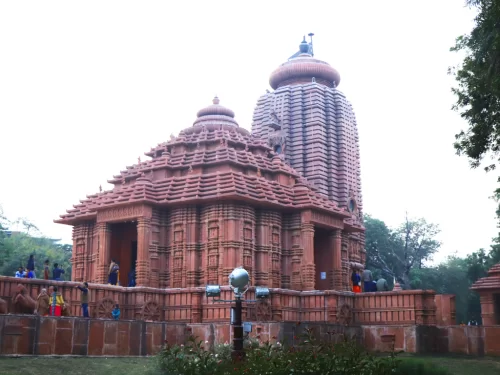
Sun Temple Gwalior temple complex during clear afternoon, featuring visitors at stepped jagamohana entrance beside towering rekha deul vimana amid lush gardens, perfect heritage experience in Madhya Pradesh tour package. Temple

Sun Temple Gwalior

The Sun Temple in Gwalior is a modern Hindu temple dedicated to Surya (the Sun God), inspired by the Sun Temple architecture of Konark.

Jai Vilas Palace Gwalior during clear afternoon, featuring white Italianate facade with domed towers before manicured gardens showcasing silver royal carriage display amid yellow flower borders, perfect heritage experience in Madhya Pradesh tour package. Palace

Jai Vilas Palace

Jai Vilas Palace is a 19th-century royal residence built by Maharaja Jayajirao Scindia and partly converted into a museum.

Frequently Asked Questions About Gopachal Jain Parvat

Gopachal Jain Parvat is located within the Gwalior Fort area in Gwalior, Madhya Pradesh. It is situated on the hillside near the fort complex and is accessible by road.
Gopachal Jain Parvat can generally be visited from sunrise to sunset. Daytime hours are recommended for safe access to the rock cut sculptures.
There is usually no separate heavy entry fee for Gopachal Jain Parvat beyond the fort access charges. Visitors should check at the main fort entrance for updated ticket rules.
Visitors can reach Gopachal Jain Parvat by taxi, auto rickshaw, or private vehicle in Gwalior, Madhya Pradesh. The site is located along the road leading up to Gwalior Fort.
Parking is available near designated areas around Gwalior Fort from where visitors can walk to Gopachal Jain Parvat. Parking charges may apply depending on the entry point used.
The best time to visit Gopachal Jain Parvat is between October and March when the weather in Gwalior, Madhya Pradesh is comfortable. Early mornings offer better light for viewing the sculptures.
Most travelers spend about 45 minutes to 1 hour exploring Gopachal Jain Parvat and viewing the rock cut Jain statues. Additional time may be needed for photography.
Gopachal Jain Parvat is suitable for family visits, but the terrain may involve steps and uneven paths. Senior citizens should walk carefully while exploring the site.
Photography is generally allowed at Gopachal Jain Parvat as it is an open heritage site. Visitors should avoid touching or damaging the sculptures while taking pictures.
Food and restroom facilities are limited directly at Gopachal Jain Parvat. Visitors can find better amenities within Gwalior city or near the main fort entrance.

Loved this place ? Let’s Plan Your Madhya Pradesh Trip

Get customized Madhya Pradesh tour planning designed around safari seasons, road travel distances, heritage site exploration time, and comfortable pacing across regions. Whether you are visiting for wildlife safaris, temple architecture, historical monume

⚡ Quick Response | 💰 Free consultation | 🕒 24×7 expert support

×

Plan Your Trip