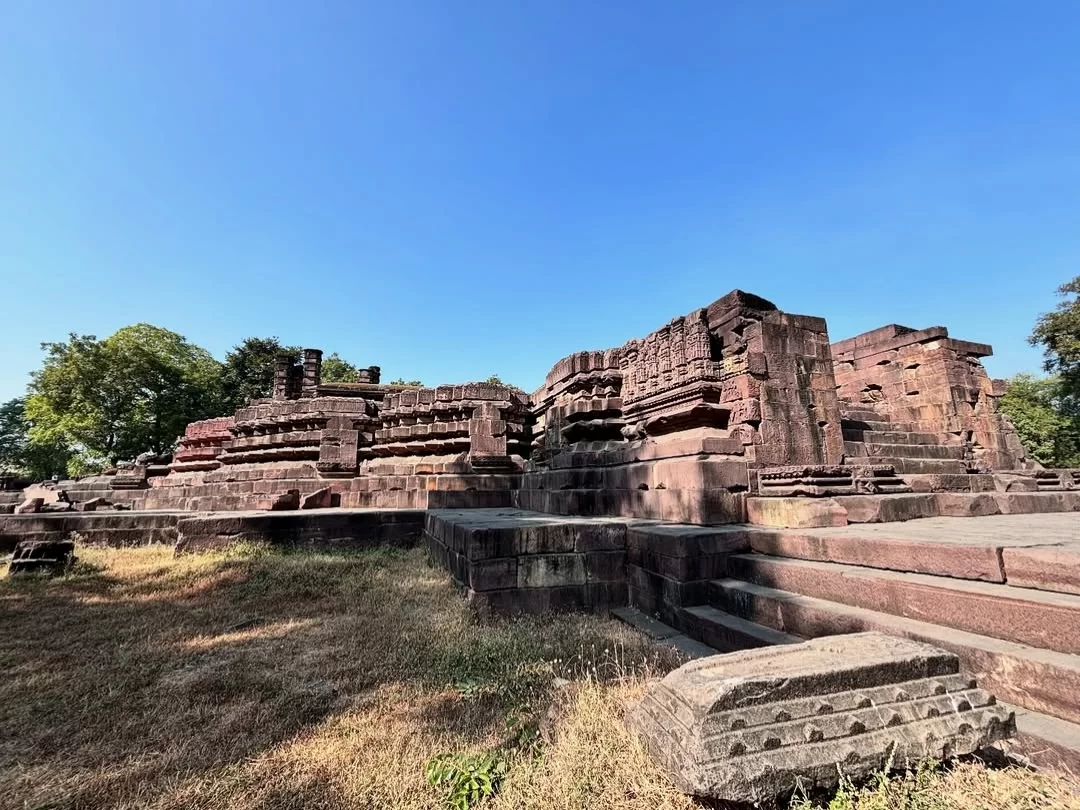
Bijamandal Temple, Sanchi, Madhya Pradesh, India

Bijamandal Temple , Sanchi
Tourists visit Bijamandal Temple to see its large temple platform, stone remains, and archaeological layout that reflect early temple construction traditions in central India. It is usually explored as part of a heritage circuit with Sanchi Stupa and nearby historical sites, offering context to the region’s early religious architecture.

Quick Facts About Bijamandal Temple

Quick Facts – Bijamandal Temple, Sanchi

Entry Fee No formal entry fee (open archaeological site)
Timings No officially notified visiting hours; accessible during daylight
Altitude (m) Approx. 420–430 m above sea level (Sanchi region elevation)
Ideal Visit Duration 20–40 minutes
Best Time of Day Morning or late afternoon for comfortable temperatures and visibility
Crowd Level Low; mostly local visitors and heritage travelers
Distance from City Centre (km) Approx. 1–2 km from Sanchi village centre
Walking Difficulty Easy to moderate; uneven stone surfaces and open ground
Parking Available Informal roadside parking only
Last Mile Access Short walk from local road access; no developed pathways
Suitable for Kids Yes, with supervision due to open ruins and uneven surfaces
Suitable for Seniors Yes, but walking support may be helpful
Wheelchair Friendly No; uneven terrain and lack of paved access

Why Visit Bijamandal Temple, Sanchi

Visitors come to Bijamandal Temple to explore one of the lesser-known archaeological sites in the Sanchi region, where the remains of a large ancient temple platform and stone structures provide insight into early temple architecture in central India.

The on-ground atmosphere is quiet and open, with scattered stone remains, wide open spaces, and minimal tourist activity. The site feels more like an active archaeological landscape than a managed monument, with natural surroundings and very limited facilities.

What makes Bijamandal Temple distinct for travelers is its scale and layout rather than decorative detail, offering a clear view of early structural temple planning. It appeals mainly to visitors interested in archaeology, heritage circuits, and offbeat sites beyond the main Sanchi monuments.

History of Bijamandal Temple, Sanchi

Bijamandal Temple is an archaeological site believed to date back to the Paramara period, around the 11th–12th century CE, based on architectural remains and structural layout. The site originally supported a large stone temple, of which only the massive platform, foundation stones, and scattered architectural fragments remain today.

The structure is traditionally associated with the worship of Shiva, supported by the scale of the temple base and surviving stone elements typical of early medieval temple construction in central India. The original superstructure no longer exists, leaving the site as an open ruin rather than a functioning temple.

Today, Bijamandal is preserved as an archaeological site rather than an active religious complex, forming part of the wider historical landscape around Sanchi. Its importance lies in its structural remains, which reflect early temple-building traditions of the region rather than living ritual or cultural practices.

Best Time to Visit Bijamandal Temple, Sanchi

Bijamandal Temple is most comfortable to visit during the cooler months when walking around the open archaeological site is easier and the exposed stone platform can be explored without heat stress.
  • Ideal months: October to March, when temperatures are moderate and conditions are suitable for walking and exploration
  • Weather conditions: Mild winter days with clear visibility and low humidity, making it easier to view stone structures and open ruins
  • Periods to avoid: April to June due to high summer temperatures and direct sun exposure on the open stone platform; July to September can be uncomfortable due to rain, slippery surfaces, and muddy ground

How to Reach Bijamandal Temple, Sanchi

  • Nearest airport: Raja Bhoj Airport, Bhopal (approx. 50 km). This is the nearest airport with regular domestic flight connectivity.
  • Nearest railway station: Sanchi Railway Station (approx. 2 km). It has limited train connectivity; Vidisha Junction (approx. 10 km) is the more practical rail hub with better connections.
  • Road access and last-mile connectivity: Bijamandal Temple is accessible by local roads from Sanchi village. The final approach is via narrow local roads with limited signage, followed by short walking access over open ground. Private vehicles, taxis, or auto-rickshaws from Sanchi or Vidisha are the most reliable options, as public transport does not stop directly at the site.

What to Expect When You Visit Bijamandal Temple, Sanchi

  • Environment and surroundings: An open archaeological landscape with a large stone platform, scattered ruins, and exposed ground, surrounded by rural fields and village edges rather than a protected monument complex.
  • Facilities and amenities: No on-site facilities such as washrooms, drinking water points, seating areas, or information boards. Visitors must rely on basic amenities available in Sanchi village.
  • Accessibility and movement: Movement is on uneven stone and soil surfaces with no paved pathways, railings, or guided walking routes. Access involves short walking over open ground from the nearest road.
  • Typical visitor behavior and conditions: Mostly visited by heritage travelers, researchers, and local visitors. Crowd levels are low, supervision is minimal, and the site is largely unmanaged as a tourist location.

Important Visitor Information for Bijamandal Temple, Sanchi

  • Crowd and weather notes: The site remains largely uncrowded. Summers bring high heat due to open stone surfaces and lack of shade, while winter mornings and evenings can feel cold in open terrain.
  • Peak and quiet visiting hours: Midday sees occasional local visitors. Early mornings and late afternoons are quieter, with better comfort for walking but lower natural light at dusk.
  • Dress code: No religious dress requirements; practical clothing and covered footwear are suitable due to uneven ground and open exposure.
  • Safety notes and practical cautions: No safety barriers, railings, or site supervision. Uneven stones and open excavation areas pose tripping risks. Mobile network coverage may be inconsistent, and there is no on-site emergency support.

Photography and Viewpoints at Bijamandal Temple, Sanchi

  • Best viewpoints: Elevated edges of the stone platform offer wide views of the site layout and surrounding rural landscape. Ground-level angles highlight foundation stones and structural remains.
  • Lighting and time-of-day: Early morning and late afternoon provide softer light and clearer texture on stone surfaces. Midday light creates harsh contrast and glare on exposed stone.
  • Rules and restrictions: No formal photography restrictions for visitors in public access areas; the site is not a managed monument complex.
  • Crowd and access factors: Low visitor numbers allow uninterrupted photography, but uneven ground and lack of defined pathways can limit stable positioning and tripod use.

Near By Attraction

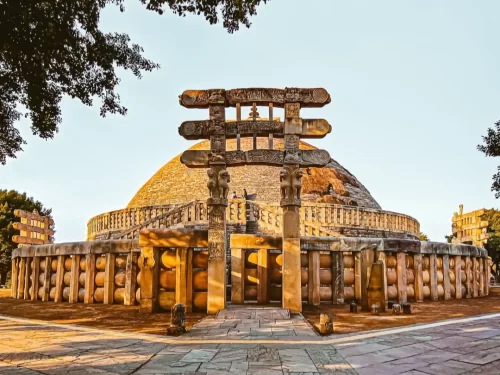
Sanchi Stupa in Sanchi, Madhya Pradesh with carved stone torana gateway and ancient Buddhist dome, featured in Madhya Pradesh tour packages Stupa

Sanchi Stupa

Sanchi Stupa is a major Buddhist monument located in Sanchi, Madhya Pradesh, within a protected archaeological complex
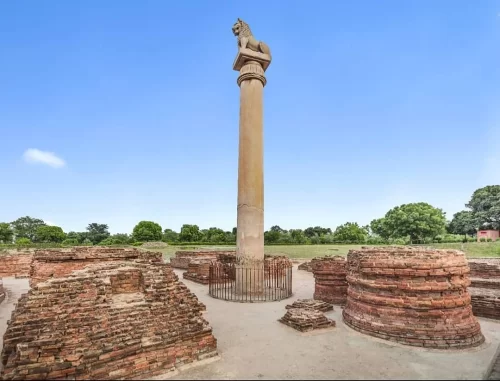
Ashoka Pillar with horse capital at Sanchi during clear afternoon, featuring monolithic shaft amid ancient ruins, perfect heritage experience in Madhya Pradesh tour package. Monument

Ashokan Pillar Sanchi

The Ashokan Pillar at Sanchi is a stone column from the Mauryan period located within the Sanchi archaeological complex in Madhya Pradesh
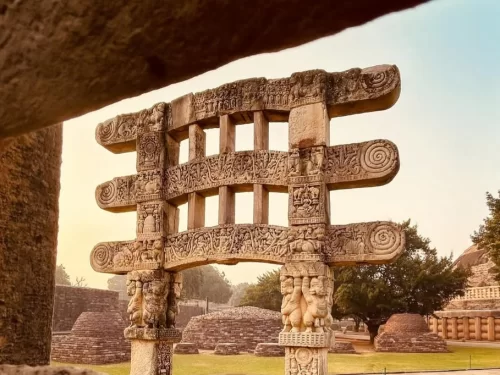
Carved stone toranas at Sanchi Stupa in Sanchi, Madhya Pradesh showcasing intricate Buddhist reliefs, featured in Madhya Pradesh tour packages Historical Site

Toranas

Toranas are traditional carved gateways found at temples and sacred sites across India

Frequently Asked Questions About Bijamandal Temple

Bijamandal Temple is located near Sanchi in Vidisha district of Madhya Pradesh. The site consists of ancient temple remains situated on an elevated mound.
Bijamandal Temple can generally be visited during daylight hours as it is an open archaeological site. Visiting before sunset is recommended for safety and visibility.
There is usually no major separate entry fee for Bijamandal Temple, but visitors should confirm if any local maintenance charges apply at the time of visit.
Visitors can reach Bijamandal Temple by road from Sanchi or Vidisha. The nearest railway station is Vidisha, which is well connected within Madhya Pradesh.
Limited parking is available near Bijamandal Temple along the roadside or in nearby open areas. Visitors may need to walk a short distance to reach the ruins.
The best time to visit Bijamandal Temple is between October and March when the weather in Madhya Pradesh remains pleasant for outdoor exploration.
Most travelers spend about 30 to 45 minutes exploring Bijamandal Temple and its surrounding archaeological remains.
Bijamandal Temple is suitable for family visits, but visitors should be cautious while walking on uneven stone surfaces.
Photography is allowed at Bijamandal Temple for personal use. Visitors should avoid climbing on fragile structures.
Food and restroom facilities are not available directly at Bijamandal Temple. Visitors can find better amenities in nearby Sanchi or Vidisha town areas.

Loved this place ? Let’s Plan Your Madhya Pradesh Trip

Get customized Madhya Pradesh tour planning designed around safari seasons, road travel distances, heritage site exploration time, and comfortable pacing across regions. Whether you are visiting for wildlife safaris, temple architecture, historical monume

⚡ Quick Response | 💰 Free consultation | 🕒 24×7 expert support

×

Plan Your Trip