Quick Facts About Zorawar Fort
| Detail | Information |
|---|---|
| Entry Fee | Free |
| Timings | 8:00 AM to 6:00 PM |
| Altitude (m) | 3500 |
| Ideal Visit Duration (hrs) | 0.5 |
| Best Time of Day | Morning or late afternoon |
| Crowd Level | Very low |
| Distance from City Centre (km) | 2 |
| Walking Difficulty | Easy to moderate |
| Parking Available | Yes |
| Last Mile Access | Short walk on uneven ground |
| Suitable for Kids | Yes |
| Suitable for Seniors | Yes |
| Wheelchair Friendly | No |
Why Visit
Zorawar Fort is worth visiting for travelers interested in Ladakh’s military history rather than architectural grandeur. The atmosphere is quiet and functional, reflecting the fort’s original purpose as a defensive and administrative outpost during the Dogra expansion.
What makes Zorawar Fort special is its association with General Zorawar Singh, a key figure in the 19th century campaigns that brought Ladakh under Dogra rule. The fort stands as a physical reminder of this period, offering historical context rather than scenic views or restored structures, making it meaningful for history focused visitors.
History
Zorawar Fort was built in the 19th century during the Dogra expansion into Ladakh under the leadership of General Zorawar Singh, a key military commander of the Dogra kingdom. The fort functioned as a strategic military base and storage point to secure control over Leh and surrounding routes.
Unlike royal palaces or ceremonial forts, Zorawar Fort had a strictly defensive and administrative role. It symbolized the shift of Ladakh into Dogra rule and was used to house troops, supplies, and artillery. The remaining structures today reflect its utilitarian military purpose rather than architectural ornamentation or religious use.
Best Time to Visit
Zorawar Fort can be visited year round, but weather conditions greatly influence comfort due to its open setting and lack of shelter. Choosing the right season ensures easier access and a more enjoyable visit.
- May to September: Best time to visit, with clear weather, dry ground, and comfortable daytime temperatures.
- June to August: Ideal months for walking around the fort remains, though midday sun can be strong.
- October: Cooler and quieter, suitable for short visits during daylight hours.
- November to April: Winter months are very cold, and snow or ice may make surfaces slippery.
- Best Time of Day: Morning or late afternoon offers better light and milder temperatures.
How to Reach
- From Leh Main Market: Zorawar Fort is located about 2 km from Leh town center and can be reached in 10 to 15 minutes by vehicle.
- By Taxi: Local taxis can drop visitors close to the fort entrance. This is the easiest option, especially at high altitude.
- By Private Vehicle: The fort is accessible via motorable roads, with limited roadside parking available nearby.
- On Foot: Visitors staying nearby can walk to the fort, though the approach includes uneven paths and mild elevation.
- Public Transport: There is no direct public bus stop at the fort; visitors can walk from nearby residential roads.
- Last Mile Access: A short walk over uneven ground is required from the parking area to reach the fort remains.
What to Expect When You Visit
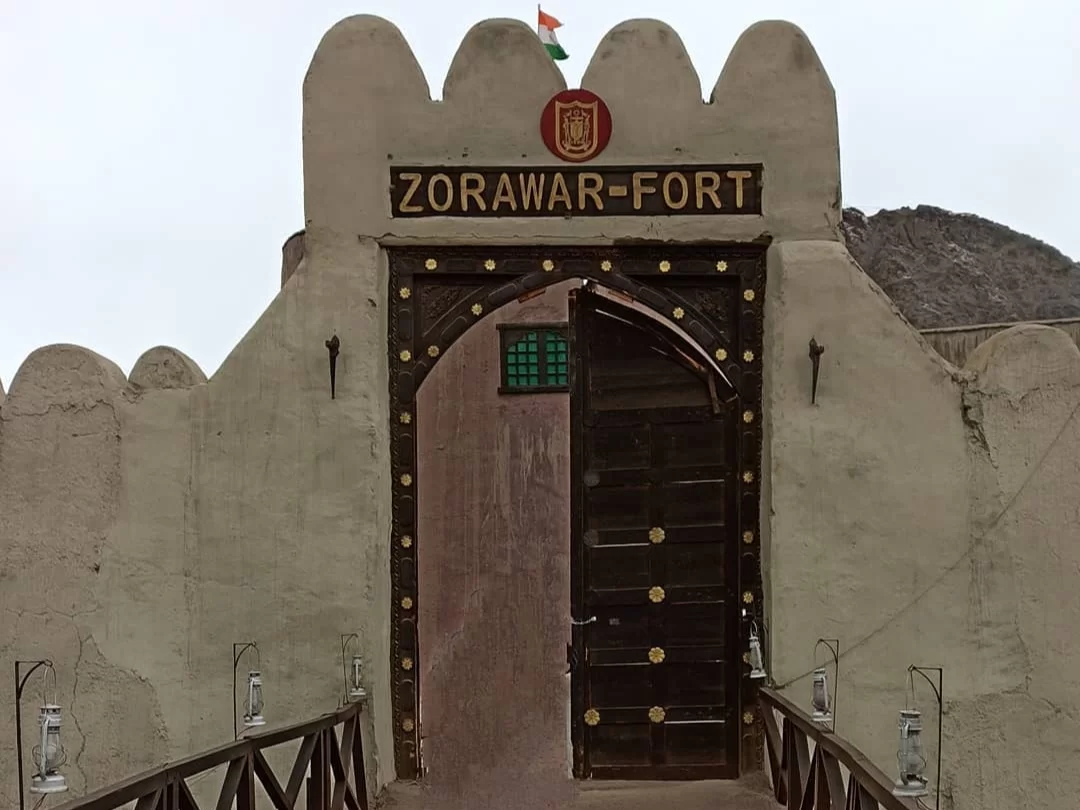
- Ruins of a small military fort with partial walls and foundations.
- A quiet environment with very few visitors throughout the day.
- Open and exposed surroundings with minimal shade or shelter.
- Basic pathways without signage or guided explanations.
- No commercial facilities such as shops, restrooms, or seating.
- A short visit focused on historical context rather than visual spectacle.
- An easy stop for history enthusiasts exploring Leh town.
Important Visitor Information
- Crowd and Weather Notes: Zorawar Fort remains largely uncrowded throughout the year. The site is open and exposed, so visitors may experience strong sunlight, wind, and sudden temperature changes.
- Peak and Quiet Hours: There are no fixed peak hours due to low footfall. Late morning and early afternoon are generally the quietest and most comfortable.
- Dress Code: No formal dress code applies. Comfortable clothing, sun protection, and sturdy footwear are recommended due to uneven ground.
- Safety Notes: Visitors should watch their footing around loose stones and crumbling walls. There are no safety railings or marked paths, so caution is advised, especially with children.
Photography and Viewpoint
- Zorawar Fort offers limited architectural photography due to its ruined condition.
- The site is better suited for contextual shots showing military remains against the Ladakh landscape.
- Morning and late afternoon light provide softer shadows on stone walls.
- There are no elevated viewpoints or wide panoramas from the fort.
- Photography is unrestricted, but care should be taken near unstable structures.
- Tripods can be used easily due to open space and low visitor numbers.
- Clear weather allows for clean, minimal compositions highlighting the fort’s utilitarian design.