+91 9910402252
admin@chalbanjare.com


| Entry Fee | 30 / 100 |
| Timings | 08:00 - 13:00, 14:00 - 18:00 |
| Altitude (m) | 3100 |
| Ideal Visit Duration (hrs) | 1.5 |
| Best Time of Day | Morning |
| Crowd Level | Moderate |
| Distance from Leh (km) | 66 |
| Walking Difficulty | Easy |
| Parking Available | Yes |
| Last Mile Access | Road |
| Suitable for Kids | Yes |
| Suitable for Seniors | Yes |
| Wheelchair Friendly | Partial |
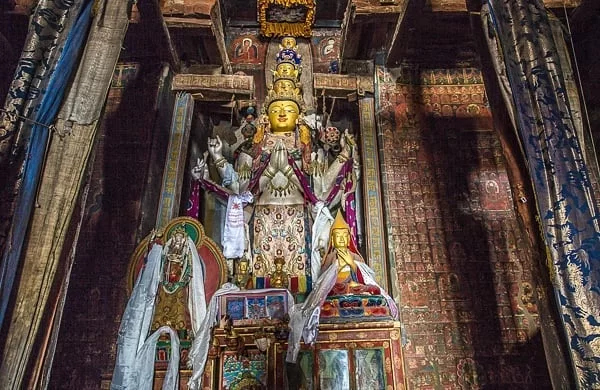
Alchi Monastery is a unique cultural treasure situated on the banks of the Indus River, world-renowned for being the only monastic complex in Ladakh built on flat ground rather than a hilltop. Travelers visit this 11th-century site to witness its remarkably preserved Indo-Tibetan murals and colossal stucco statues, which reflect a rare Kashmiri artistic influence that predates the later Tibetan styles found in most other Ladakhi gompas.
The on-ground atmosphere is intimate and meditative, characterized by ancient, low-ceilinged temples and intricate wood carvings that have survived nearly a millennium of Himalayan winters. Visitors experience a profound sense of stepping back in time while exploring the five distinct temple structures, where the cool, dark interiors protect some of the most detailed and vibrant Buddhist iconography in the world.
What makes Alchi distinct is its status as a "living time capsule" of the era of the Great Translator, Rinchen Zangpo, offering a window into the artistic and spiritual exchange between India and Tibet. Unlike the larger, fortified monasteries, Alchi’s charm lies in its human-scale architecture and the stunning contrast between its ancient stone walls and the surrounding lush apricot orchards, making it a premier destination for historians, art connoisseurs, and those seeking spiritual quietude.
Alchi Monastery, or Alchi Chos-khor, is a premier Buddhist complex situated at an elevation of 3,100 meters (10,171 feet) on the banks of the Indus River. Unlike most Ladakhi gompas perched on hilltops, Alchi is built on flat ground and is renowned for being the oldest and most significant monastic center in the region, with its oldest structures dating back to the late 11th century.
The monastery was founded by the great translator Rinchen Zangpo and is architecturally distinct for its "Indo-Tibetan" style. The interiors are adorned with world-famous wall paintings and wood carvings executed by Kashmiri artists, reflecting a unique fusion of Buddhist and Kashmiri artistic traditions that have largely vanished elsewhere. The complex comprises several shrines, including the Dukhang (Assembly Hall), the Sumtseg (Three-tiered Temple), and the Manjushri Temple, all housing colossal statues and intricate mandalas.
Historically, Alchi served as a vital spiritual and educational hub during the "Second Propagation" of Buddhism in Tibet. Its lower altitude and riverside location allowed for the preservation of delicate frescoes that might have otherwise perished in harsher environments. Today, the monastery is managed by the Likir Monastery administration and is recognized globally as a UNESCO-level heritage site, providing an unparalleled record of the artistic and religious evolution of the Trans-Himalayas.
Alchi Monastery, located at a relatively lower altitude of 10,200 feet along the banks of the Indus River, is one of the few monastic complexes in Ladakh accessible throughout most of the year. However, because its world-renowned 11th-century frescoes are sensitive to light and moisture, the quality of your visit is highly dependent on seasonal visibility and regional road connectivity.
Alchi Monastery, located at an elevation of approximately 3,100m, is a prominent cultural landmark in the Indus Valley. Unlike traditional Ladakhi gompas built on mountain peaks, Alchi is situated on flat land, making it easily accessible for tourists of all ages and fitness levels.
Alchi Monastery (Alchi Chos-khor) is a world-renowned archaeological site dating back to the 10th century. Unlike other Ladakhi gompas perched on hilltops, Alchi is situated on flat land by the Indus River, and its photography profile is defined by some of the best-preserved Indo-Tibetan murals and intricate Kashmiri-style woodcarvings in existence.
 Tourist Attraction
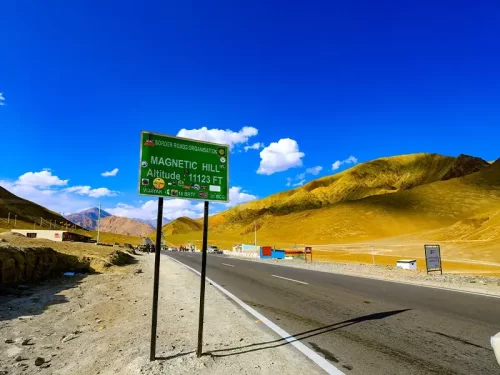
Magnetic Hill is a gravity hill located at an elevation of approximately 3,350 meters (10,991 feet) on the Leh-Srinagar National Highway.
 Mountain Pass
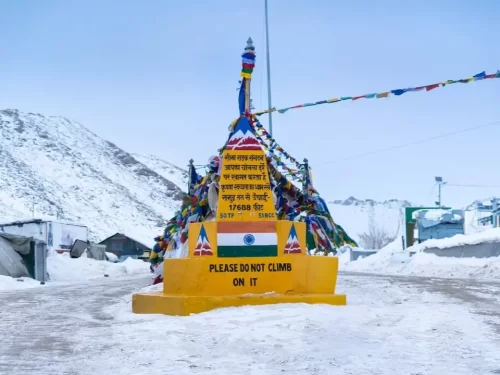
Chang La is a high-altitude mountain pass situated at an elevation of approximately 5,360 meters (17,585 feet) on the road between Leh and Pangong Tso.
 Monastery
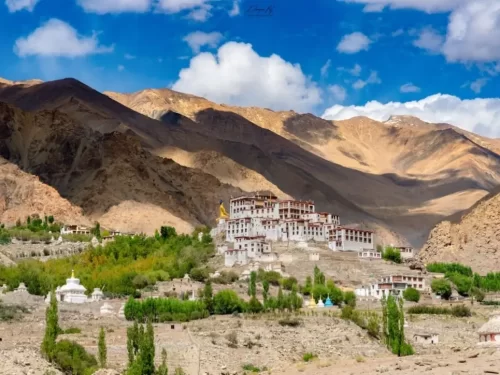
Likir Monastery, or Klu-kkhyil Gompa, is a Tibetan Buddhist monastery of the Gelugpa sect situated at an elevation of approximately 3,500 meters (11,483 feet) near the Indus River.
Get customized Ladakh tour planning designed around altitude comfort, acclimatization time, weather windows, and real Himalayan road conditions. Whether you are visiting for high mountain passes, monasteries, lakes, or remote valley experiences, our exper
⚡ Quick Response | 💰 Free consultation | 🕒 24×7 expert support

