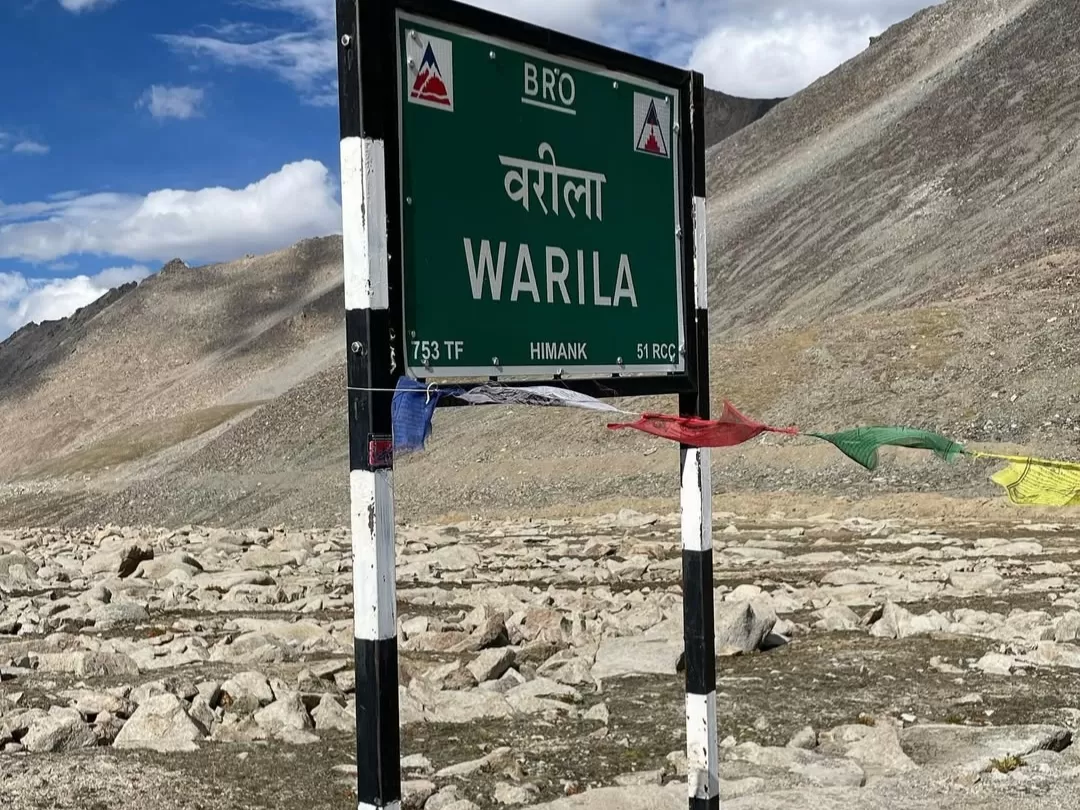
Wari La Pass Ladakh High Mountain Pass Between Leh and Nubra Valley

Wari La Pass , Leh
Wari La Pass lies north east of Leh and offers an alternative route to Nubra Valley through remote mountain terrain. The pass is known for its raw landscapes, minimal traffic, and challenging road conditions rather than convenience. It is usually used by experienced drivers, locals, and army convoys when conditions allow. There are no facilities on the route, and travel depends heavily on weather and road status, making it unsuitable for casual sightseeing.

Quick Facts About Wari La Pass

Entry Fee Free
Timings 06:00 - 18:00
Altitude (m) 5312
Ideal Visit Duration (hrs) 1
Best Time of Day Morning
Crowd Level Low
Distance from Leh (km) 80
Walking Difficulty Hard
Parking Available No
Last Mile Access Road
Suitable for Kids No
Suitable for Seniors No
Wheelchair Friendly No

Why Visit Wari La Pass

Why Visit

Wari La Pass is visited by travelers seeking raw high altitude terrain rather than comfort or sightseeing stops. It appeals to those interested in experiencing a remote mountain route that reflects Ladakh’s extreme geography and strategic road networks. The journey itself is the primary reason to visit, not the destination.

Atmosphere

The atmosphere at Wari La Pass is stark and exposed. There are no settlements, shops, or shelters, and weather conditions can shift rapidly. The area feels isolated and serious, shaped by altitude, wind, and minimal human presence.

What Makes It Special

What makes Wari La Pass special is its elevation and isolation. As one of the higher motorable passes in Ladakh, it offers an unfiltered experience of high Himalayan terrain. The absence of tourist infrastructure preserves its raw character, making it memorable for travelers who value authenticity over accessibility.

History of Wari La Pass

Wari La Pass has historically functioned as a strategic mountain route rather than a cultural or settlement area. Its primary importance has been logistical, providing an alternate high altitude connection between Leh and Nubra Valley through remote terrain. Unlike traditional trade passes with villages and caravan stops, Wari La remained largely undeveloped due to its extreme elevation and harsh conditions.

In modern times, the pass gained relevance for military and administrative movement, especially as an alternative route when other passes faced closures or congestion. Road development in the region focused on strategic access rather than civilian convenience, which explains the lack of facilities and minimal traffic.

Today, Wari La Pass stands as a functional high mountain corridor rather than a historic landmark in the conventional sense. Its significance lies in geography and strategic connectivity, reflecting Ladakh’s dependence on challenging terrain routes for movement and security rather than cultural or religious history.

Best Time to Visit Wari La Pass

The best time to visit Wari La Pass is during the short summer window when the road is snow free and weather conditions are relatively stable. Accessibility depends entirely on snow clearance, road condition, and safety advisories, making timing critical.

  • June to September is the only practical visiting period when the pass is usually open
  • July and August offer the most stable road conditions, though sudden weather changes are still possible
  • Early June may have residual snow and rough road patches, increasing travel risk
  • September sees fewer vehicles but colder temperatures and early snowfall risks
  • October to May is not suitable due to heavy snow accumulation and complete road closure

Even during the ideal months, Wari La Pass should only be attempted with experienced drivers and real time local updates. The pass is a conditional transit route, not a guaranteed sightseeing stop.
How to Reach Wari La Pass

  • Wari La Pass lies north east of Leh and connects the Indus Valley with Nubra Valley through a remote mountain route
  • The approach starts from Leh, heading toward Sakti village and further into high altitude terrain
  • The route passes through Chang La side roads before climbing toward the pass
  • Travel is possible only by private vehicles or experienced local drivers, as public transport does not operate on this route
  • Road conditions are rough and largely unpaved in sections, requiring high ground clearance vehicles
  • An Inner Line Permit is mandatory for Indian nationals traveling on this route
  • Foreign nationals are generally not permitted on the Wari La route due to security restrictions
  • Travel plans should include buffer time and confirmation of road status from local authorities before departure

What to Expect When You Visit Wari La Pass

  • An extremely high altitude environment with thin air and rapid weather changes
  • No tourist facilities such as shops, restrooms, shelters, or signboards
  • A rough, narrow mountain road with limited traffic, mostly army or local vehicles
  • Strong winds and low temperatures even during summer months
  • Very short stop duration focused on transit rather than sightseeing
  • High risk of altitude sickness if not properly acclimatized
  • No mobile network connectivity across most of the route
  • An experience defined by remoteness, scale of landscape, and raw terrain rather than comfort

Important Visitor Information for Wari La Pass

  • Crowd levels are extremely low, with most vehicles belonging to the army or experienced local drivers
  • Weather is highly unpredictable, with sudden snowfall, strong winds, and rapid temperature drops even in summer
  • Peak movement hours are late morning to early afternoon when visibility is relatively better
  • Early mornings and late evenings are considered risky due to black ice, fog, and poor visibility
  • Heavy winter clothing is essential year round, including windproof jackets and thermal layers
  • Proper acclimatization is critical, as the altitude exceeds 5300 meters and oxygen levels are very low
  • Avoid prolonged stops at the pass to reduce the risk of altitude sickness
  • Follow local and army advisories strictly, as access may be restricted without prior notice

Photography and Viewpoint at Wari La Pass

  • Photography is permitted in open areas, but stopping time should be kept very short due to altitude risks
  • There are no designated viewpoints, platforms, or safety railings at the pass
  • Visual appeal comes from vast high altitude landscapes, snow patches, and exposed mountain ridgelines
  • Wide angle lenses are more suitable than close up photography due to scale and distance
  • Late morning light offers better visibility and reduced shadowing compared to early hours
  • Strong winds can make tripod use difficult and unsafe
  • Avoid photographing military vehicles, convoys, or installations if present
  • Photography here is brief and situational, focused on documenting terrain rather than scenic framing

Near By Attraction

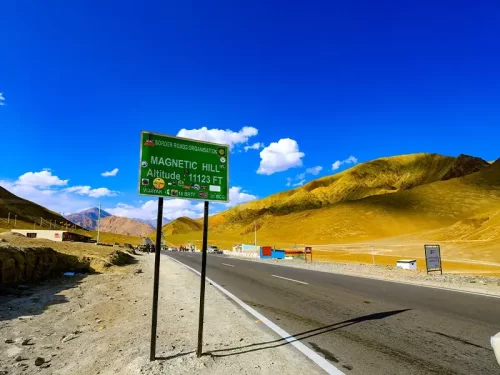
Magnetic Hill sign at Ladakh BRO during clear skies, featuring altitude 11312 ft board yellow mountains highway, perfect adventure Ladakh tour package.  Tourist Attraction

Magnetic Hill

Magnetic Hill is a gravity hill located at an elevation of approximately 3,350 meters (10,991 feet) on the Leh-Srinagar National Highway.
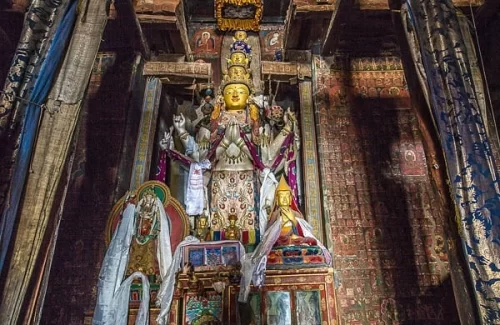
Buddha statue at Alchi Gompa Ladakh in dimly lit shrine during misty weather, featuring multiple arms prayer scarves and wall murals, perfect spiritual Ladakh tour package. Monastery

Alchi Monastery

Alchi Monastery is a historic Buddhist temple complex situated at an elevation of approximately 3,100 meters (10,170 feet) on the southern bank of the Indus River.
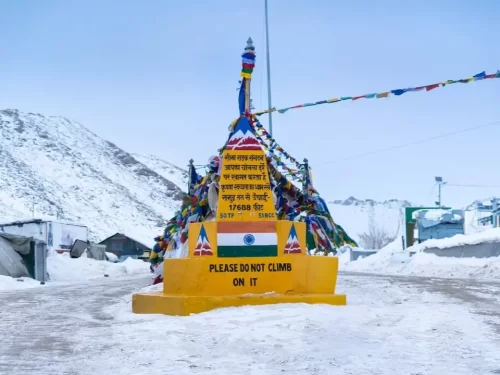
Memorial at Changla Pass 17688 ft during overcast skies, featuring prayer flags, Indian tricolor, snowy mountains, perfect spiritual adventure Ladakh tour pack Mountain Pass

Chang La Pass

Chang La is a high-altitude mountain pass situated at an elevation of approximately 5,360 meters (17,585 feet) on the road between Leh and Pangong Tso.

Frequently Asked Questions About Wari La Pass

Wari La Pass is a high mountain pass located around 80 kilometers from Leh city in Ladakh, connecting the Indus Valley region with Nubra Valley. It is less crowded compared to Khardung La and offers remote mountain scenery.
Wari La Pass can be reached by road from Leh city in approximately 3 to 4 hours depending on weather and road conditions in Ladakh. The route involves narrow stretches and requires careful driving.
Visitors traveling from Leh to Wari La Pass may require an Inner Line Permit as the route connects to restricted regions of Ladakh. Permits are usually arranged in Leh city before departure.
The best time to visit Wari La Pass is between May and September when roads are generally open and weather conditions are stable in Ladakh. Morning departures from Leh city are recommended for safer driving.
Wari La Pass is often inaccessible during peak winter months due to heavy snowfall in Ladakh. Road closures are common in winter, so checking local road updates before planning is essential.
Travelers usually spend 15 to 30 minutes at Wari La Pass due to high altitude and limited facilities. The stop is mainly for viewing mountain landscapes and photography.
Wari La Pass is safe for tourists when road conditions are clear and vehicles are well maintained. Drivers experienced in mountain terrain in Ladakh are recommended for this route.
Visitors should carry warm clothing, sufficient fuel, water, and basic supplies when traveling to Wari La Pass. The high altitude requires proper acclimatization in Leh city before attempting the journey.
Wari La Pass may not be suitable for individuals with severe altitude related health concerns due to its elevation in Ladakh. Senior citizens can travel if medically fit but should avoid prolonged exposure at the top.
There are generally no permanent food stalls or restroom facilities at Wari La Pass. Travelers should plan essentials in advance from Leh city.
Limited parking space is available along the roadside at Wari La Pass for vehicles stopping briefly. The area is open and does not have structured parking zones.
Wari La Pass can be combined with routes connecting Nubra Valley or extended circuits toward Pangong Lake in Ladakh. It is usually chosen by travelers seeking an alternate scenic route from Leh city.

Loved this place ? Let’s Plan Your Ladakh Trip

Get customized Ladakh tour planning designed around altitude comfort, acclimatization time, weather windows, and real Himalayan road conditions. Whether you are visiting for high mountain passes, monasteries, lakes, or remote valley experiences, our exper

⚡ Quick Response | 💰 Free consultation | 🕒 24×7 expert support

×

Plan Your Trip