Thiksey Monastery Ladakh A Complete Visitor Guide to the Hilltop Gompa

Thiksey Monastery , Leh
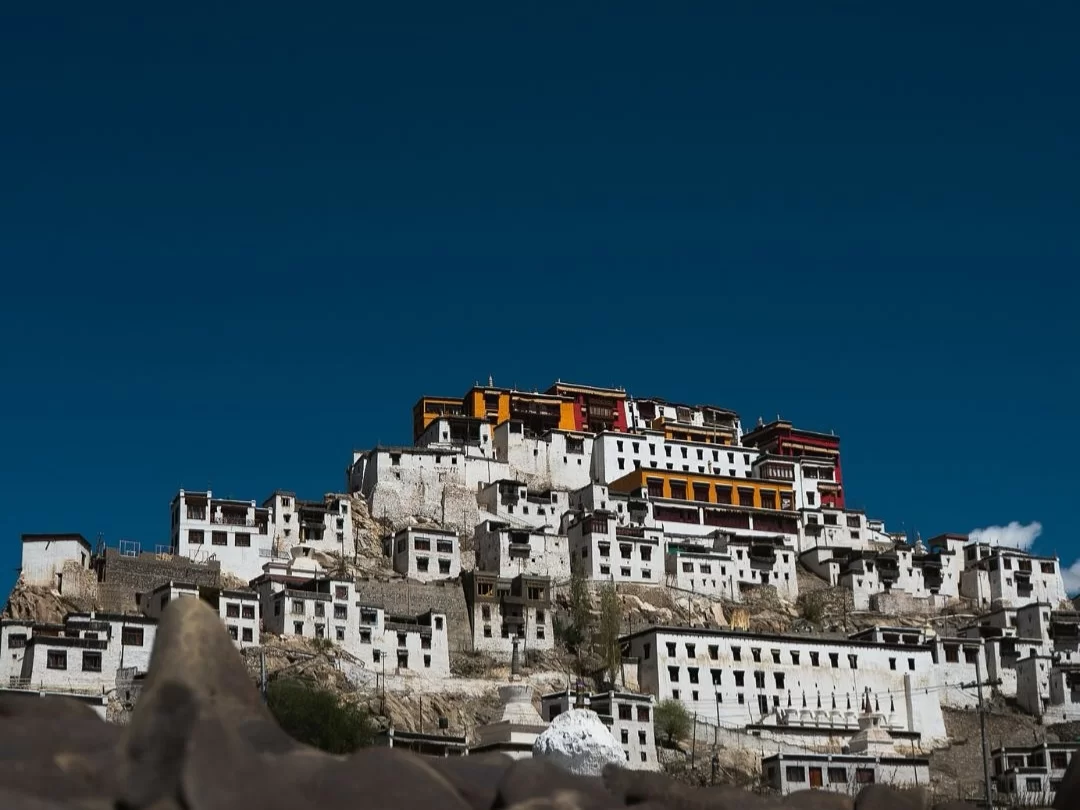
Thiksey Monastery is one of the most prominent monasteries in Ladakh and belongs to the Gelugpa sect of Tibetan Buddhism. It is located around 19 km from Leh on the Leh Manali highway. The monastery is built in tiers on a hill, which is why it is often compared to the Potala Palace in Lhasa. Inside, you will find prayer halls, monk quarters, a large assembly hall, and a 15 meter tall statue of Maitreya Buddha. The monastery is active, with monks living and studying here, so visitors should expect prayer timings, restricted areas, and a calm but disciplined environment.

Quick Facts About Thiksey Monastery

Entry Fee (INR) 50
Timings 07:00 - 19:00
Altitude (m) 3600
Ideal Visit Duration (hrs) 2
Best Time of Day Morning
Crowd Level Moderate
Distance from Leh (km) 19
Walking Difficulty Moderate
Parking Available Yes
Last Mile Access Walk
Suitable for Kids Yes
Suitable for Seniors No
Wheelchair Friendly No

Why Visit Thiksey Monastery

Thiksey Monastery is worth visiting if you want to see a working Ladakhi monastery that is both architecturally impressive and spiritually active. Unlike smaller gompas, Thiksey functions as a major monastic center, so visitors experience real daily routines such as morning prayers, study sessions, and quiet movement of monks across different levels of the complex. The location on a hill above the Indus Valley gives wide, open views that help you understand why monasteries in Ladakh are often built away from settlements.

The atmosphere inside the monastery is calm but disciplined. Prayer halls are quiet, and visitors are expected to move slowly and speak softly. During prayer hours, the sound of chanting and horns carries through the corridors, creating an experience that feels grounded rather than staged. Outside peak hours, the monastery feels spacious and unhurried, making it easier to spend time observing details such as wall paintings, prayer wheels, and daily life of resident monks.

What makes Thiksey special is the combination of scale, accessibility, and authenticity. The 15 meter tall Maitreya Buddha statue is one of the largest in Ladakh and is housed in a dedicated temple built to commemorate the visit of the 14th Dalai Lama. The monastery also offers a clear layout that allows visitors to explore multiple levels without getting lost. Being close to Leh and located directly on a main highway, Thiksey is easy to reach while still retaining a strong sense of isolation and spiritual focus.

History

Thiksey Monastery was established in the early 15th century by Paldan Zangpo, a disciple of Je Tsongkhapa, the founder of the Gelugpa order of Tibetan Buddhism. The monastery originally began at a smaller site near Stakmo village before being relocated to its present hilltop position, which offered better space, visibility, and protection. Over time, Thiksey grew into one of the largest and most influential Gelugpa monasteries in central Ladakh.

The monastery has long served as an important center for monastic education in the region. Young monks from surrounding villages traditionally came here to study Buddhist philosophy, rituals, and debate under senior teachers. This educational role continues today, making Thiksey not just a historical structure but a living institution that evolves while preserving its core traditions.

A major addition to the monastery complex is the Maitreya Buddha temple, completed in 1970 to mark the visit of the 14th Dalai Lama to Ladakh. The statue represents the future Buddha and reflects Thiksey’s continuing religious importance in modern times. The monastery’s layout, rituals, and festivals still follow Gelugpa practices, maintaining a direct link between its origins and present-day religious life.

Best Time to Visit Thiksey Monastery

The best time to visit Thiksey Monastery is between May and September, when roads to Ladakh are open and weather conditions are stable. During these months, daytime temperatures are comfortable, skies are usually clear, and access from Leh is reliable. This period also allows visitors to explore the monastery without the risk of road closures caused by snow.

July and August are the busiest months due to peak tourist season and school holidays. While the monastery remains calm inside, the outer areas, parking zone, and photo points can feel crowded during late morning and early afternoon. If you prefer a quieter experience, visiting in May, June, or September is more comfortable.

Winter visits from October to April are possible but come with limitations. Temperatures drop sharply, some sections may be closed, and fewer monks are present as many travel to winter monasteries near Leh. Roads usually remain open from Leh, but weather can change quickly, and facilities such as cafes and nearby shops are limited.
  • May to June offers clear views, fewer crowds, and comfortable daytime temperatures
  • July to August is ideal for festivals but has higher visitor numbers
  • September provides crisp weather and reduced tourist traffic
  • Winter months suit experienced travelers prepared for cold and limited services

How to Reach Thiksey Monastery

  • By road from Leh: Thiksey Monastery is located about 19 km southeast of Leh on the Leh Manali highway. The road is fully paved and in good condition during the tourist season. Taxis are the most practical option, as public transport is limited. The drive takes around 30 to 40 minutes depending on traffic and weather.
  • By local bus: State-run buses and shared vehicles occasionally operate between Leh and villages along the Manali highway. Buses drop passengers on the main road near Thiksey village, from where a short uphill walk leads to the monastery. Services are infrequent and schedules are not always reliable.
  • By bike or self-drive: Motorbikes and rental cars from Leh can reach Thiksey easily. The route is straightforward with no off-road sections. Riders should be cautious of thin air, strong winds, and occasional livestock on the road.
  • On foot: Walking from Leh is not practical due to distance, altitude, and highway traffic. However, short walks within Thiksey village up to the monastery are manageable for most visitors.

What to Expect When You Visit Thiksey Monastery

  • Active monastic life: Thiksey is a functioning monastery with resident monks. You will see daily routines such as prayer sessions, study, and maintenance work. Some areas may be closed during prayer times, and visitors are expected to observe quietly.
  • Multiple levels and stairs: The monastery is built in tiers along a hill. Expect staircases, uneven stone paths, and short climbs between sections. While the layout is logical, moving through the complex requires moderate walking.
  • Quiet interior spaces: Prayer halls are dimly lit and calm. Photography may be restricted inside certain rooms, especially during prayers. Shoes must be removed before entering sacred areas.
  • Limited facilities on site: Basic facilities such as toilets are available near the entrance, but there are no cafes or food counters inside the monastery. Small shops selling religious items may be present outside.
  • Weather and altitude effects: At over 3,600 meters, some visitors may feel shortness of breath or fatigue. Strong sunlight and winds are common, even on clear days.
  • Respectful visitor conduct: Modest clothing is expected. Loud conversations, running, or touching religious objects is discouraged and may attract intervention from monks or staff.

Important Visitor Information

  • Crowd and weather notes: Thiksey Monastery sees the highest visitor numbers between late morning and early afternoon, especially from June to August. Weather is generally dry, but strong winds are common on the hilltop. Sun exposure can be intense even on cooler days due to altitude.
  • Peak and quiet hours: Peak hours are usually between 10:30 AM and 3:00 PM when tour vehicles arrive from Leh. Early morning during prayer time and late afternoon are noticeably quieter and more suitable for slow exploration.
  • Dress code: Visitors should wear modest clothing that covers shoulders and knees. Sleeveless tops, short skirts, and revealing clothes are discouraged. Shoes must be removed before entering prayer halls.
  • Safety notes: Walking surfaces include stone steps and uneven paths, which can be slippery in wind or dust. Visitors should move carefully, especially at higher levels. The altitude may cause fatigue or breathlessness, so carrying water and taking breaks is advised.

Photography and Viewpoint

  • Best photography areas: The upper terraces of Thiksey Monastery offer wide, unobstructed views of the Indus Valley and surrounding mountains. These terraces are the most reliable spots for landscape photography without needing special access.
  • Light conditions: Early morning provides softer light on the monastery facade and valley below. Late afternoon creates strong contrasts and long shadows, which work well for architectural shots but can be harsh for close details.
  • Interior photography rules: Photography is allowed in some courtyards and open areas, but it is usually restricted inside prayer halls and during prayer sessions. Signs are posted, and rules are enforced by monks and staff.
  • Viewpoint experience: The monastery itself functions as a viewpoint rather than having a separate viewing platform. From higher levels, visitors can clearly see the Indus River belt, nearby villages, and agricultural fields, giving context to Ladakh’s settlement patterns.
  • Crowd management for photos: During peak hours, popular angles near the main entrance and Maitreya Buddha temple can be busy. Waiting a few minutes or moving to upper levels usually provides quieter photo opportunities.

Near By Attraction

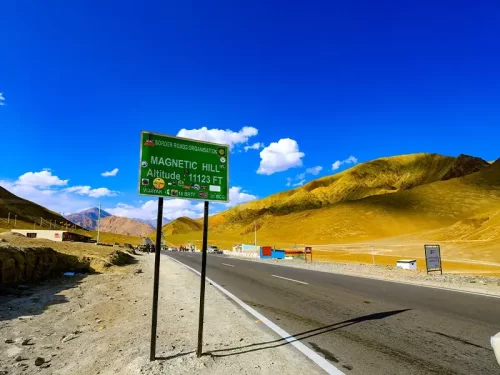
Magnetic Hill sign at Ladakh BRO during clear skies, featuring altitude 11312 ft board yellow mountains highway, perfect adventure Ladakh tour package.  Tourist Attraction

Magnetic Hill

Magnetic Hill is a gravity hill located at an elevation of approximately 3,350 meters (10,991 feet) on the Leh-Srinagar National Highway.
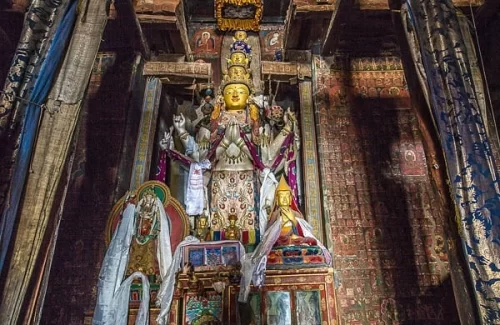
Buddha statue at Alchi Gompa Ladakh in dimly lit shrine during misty weather, featuring multiple arms prayer scarves and wall murals, perfect spiritual Ladakh tour package. Monastery

Alchi Monastery

Alchi Monastery is a historic Buddhist temple complex situated at an elevation of approximately 3,100 meters (10,170 feet) on the southern bank of the Indus River.
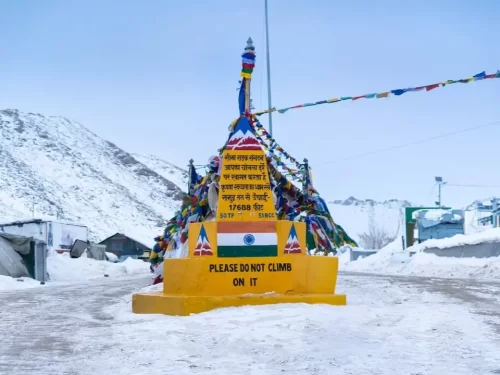
Memorial at Changla Pass 17688 ft during overcast skies, featuring prayer flags, Indian tricolor, snowy mountains, perfect spiritual adventure Ladakh tour pack Mountain Pass

Chang La Pass

Chang La is a high-altitude mountain pass situated at an elevation of approximately 5,360 meters (17,585 feet) on the road between Leh and Pangong Tso.

Frequently Asked Questions About Thiksey Monastery

Thiksey Monastery is located about 19 kilometers from Leh city in Ladakh along the Leh Manali highway. It sits on a hilltop overlooking the Indus Valley and is clearly visible from the road.
Thiksey Monastery can be reached by car, taxi, or rented bike from Leh city in around 30 to 40 minutes. The road is well maintained and part of common sightseeing routes in Ladakh.
Thiksey Monastery near Leh is generally open to visitors from morning until late afternoon. Visiting hours may adjust slightly depending on seasonal daylight conditions in Ladakh.
Thiksey Monastery has a modest entry fee for visitors in Ladakh, which is collected at the entrance. Tickets are usually purchased on arrival.
Around one to two hours is ideal to explore Thiksey Monastery comfortably near Leh. This allows time to climb different levels, visit prayer halls, and enjoy valley views.
Morning is considered the best time to visit Thiksey Monastery near Leh when the monastery atmosphere is peaceful and light conditions are clear. Early visits also provide a better experience of monastic routines.
Thiksey Monastery can be visited during winter months if road conditions remain clear in Ladakh. Cold temperatures and occasional snowfall require warm clothing and careful movement on steps.
Thiksey Monastery involves climbing stairs and walking on uneven surfaces, so visitors should be prepared for moderate physical effort. Senior citizens can visit but should take it slow due to altitude in Leh, Ladakh.
Inside Thiksey Monastery near Leh, visitors can see large statues, prayer halls, murals, and traditional Tibetan Buddhist architecture. The monastery complex also offers wide views of surrounding mountains in Ladakh.
Photography is generally allowed in open areas of Thiksey Monastery near Leh, though restrictions may apply inside certain prayer halls. Visitors should follow posted guidelines and respect religious practices.
Parking is available near the base of Thiksey Monastery outside Leh city. From the parking area, visitors walk uphill to reach the main entrance.
Thiksey Monastery near Leh can easily be combined with other attractions along the Indus Valley route in Ladakh. Its location makes it suitable for inclusion in a half day or full day sightseeing plan from Leh city.

Loved this place ? Let’s Plan Your Ladakh Trip

Get customized Ladakh tour planning designed around altitude comfort, acclimatization time, weather windows, and real Himalayan road conditions. Whether you are visiting for high mountain passes, monasteries, lakes, or remote valley experiences, our exper

⚡ Quick Response | 💰 Free consultation | 🕒 24×7 expert support

×

Plan Your Trip