Shey Palace Leh Ladakh History and Former Royal Capital Guide

Shey Palace , Leh
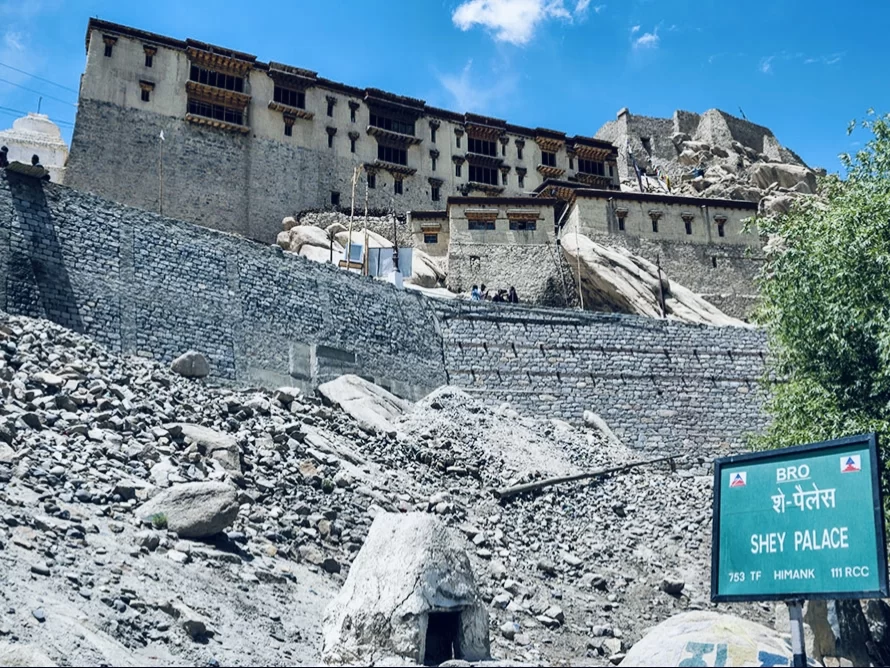
Shey Palace is located near Shey Monastery, about 15 km from Leh, and dates back to the early period of the Namgyal dynasty. The palace stands in a semi-ruined state, with crumbling walls and limited restoration, offering insight into Ladakh\'s early royal architecture. It is less visited than nearby monasteries and often quiet, but access involves walking on uneven ground and climbing slopes. Facilities are minimal, and visits are usually combined with Shey Monastery rather than done separately.

Quick Facts About Shey Palace

Entry Fee Free
Timings 06:00 - 18:00
Altitude (m) 3500
Ideal Visit Duration (hrs) 1
Best Time of Day Morning
Crowd Level Low
Distance from Leh (km) 15
Walking Difficulty Moderate
Parking Available Yes
Last Mile Access Walk
Suitable for Kids Yes
Suitable for Seniors No
Wheelchair Friendly No

Why Visit Shey Palace

Atmosphere

Shey Palace has a quiet, abandoned atmosphere shaped by its ruined condition and low visitor numbers. There are no managed pathways or restored interiors, and the site feels exposed to wind and weather. Most visitors pass through briefly, which keeps the surroundings calm for much of the day. The setting is open and rural, with fields and village life visible below rather than tourist activity.

What Makes It Special

Shey Palace is significant as the former seat of Ladakh's early kings before the capital moved to Leh. Unlike Leh Palace, it has not been heavily restored, which allows visitors to see raw construction methods and the effects of time on traditional Ladakhi architecture. Its proximity to Shey Monastery helps place the site in historical context, showing how royal and religious centers once coexisted. The palace appeals mainly to travelers interested in early Ladakh history rather than preserved monuments.

History

Shey Palace dates back to the early period of the Namgyal dynasty and served as the first royal seat of Ladakh before the capital shifted to Leh in the 16th century. The palace was built as part of a larger fortified complex that included administrative spaces and residential quarters for the royal family.

The site gradually lost its importance after King Sengge Namgyal established Leh as the new capital and constructed Leh Palace. As political power moved away, Shey Palace was largely abandoned, and its structures were left without major maintenance or renovation.

Today, the remaining ruins reflect the early phase of Ladakhi royal architecture, characterized by simple stone construction and functional design. The palace remains historically relevant for understanding the transition of power in Ladakh and the close relationship between royal residences and nearby monastic centers such as Shey Monastery.

Best Time to Visit Shey Palace

The best time to visit Shey Palace is between May and September, when weather conditions are stable and access from Leh is straightforward. During this period, the ground around the ruins is dry, visibility is clear, and walking the uneven terrain is safer. Morning visits are more comfortable due to cooler temperatures and calmer wind.

Outside the main season, conditions become less favorable. From October onward, cold temperatures and strong winds make the exposed site uncomfortable. In winter, snow and ice can make the paths slippery, and visits are not recommended unless conditions are clear and dry.
  • May and June offer mild weather and the clearest views.
  • July and August remain accessible but can feel warmer by midday.
  • Early morning is best for easy walking and minimal wind.
  • Afternoons can be windy due to the open hillside setting.
  • Winter visits are risky due to icy ground and lack of maintenance.

How to Reach Shey Palace

  • Shey Palace is located near Shey village, about 15 km southeast of Leh town.
  • The most common way to reach is by taxi or private vehicle via the Leh Manali highway.
  • The palace is usually visited along with Shey Monastery, which shares the same access road.
  • Parking is available near Shey Monastery, from where the palace ruins are reached on foot.
  • The final approach involves walking uphill on uneven paths with loose stones.
  • Motorcycles can reach the parking area easily, but walking is required beyond that point.
  • There is no direct public transport stop at the palace, though local buses toward Karu may drop passengers near Shey village.

What to Expect When You Visit Shey Palace

  • Ruined palace structures with no restored interiors.
  • Uneven stone walls, collapsed sections, and exposed foundations.
  • Open access without ticket counters or managed entry.
  • Quiet surroundings with very few visitors.
  • Short uphill walk from the parking area.
  • Open views of Shey village and surrounding fields.
  • No on site facilities such as restrooms or information boards.
  • A brief visit focused on historical context rather than visual displays.

Important Visitor Information

  • Crowd and Weather Notes: Shey Palace sees very few visitors throughout the day. The site is fully exposed to sun and wind, and weather conditions can feel harsher here than at nearby monasteries due to lack of shelter.
  • Peak and Quiet Hours: There are no true peak hours because of low footfall. Early morning is the most comfortable time to visit, while afternoons can be windy and warmer.
  • Dress Code: There is no formal dress requirement, but sturdy footwear is strongly recommended due to uneven ground and loose stones.
  • Safety Notes: Visitors should watch their footing on crumbling walls and unstable paths. The ruins are not maintained, and there are no safety barriers or railings.

Important Visitor Information

  • Crowd and Weather Notes: Shey Palace remains largely uncrowded throughout the day. The ruins are completely exposed, and strong sunlight and wind are common, especially from late morning onward.
  • Peak and Quiet Hours: There are no defined peak hours due to low visitor numbers. Early morning offers the most comfortable conditions, while afternoons can feel warmer and windier.
  • Dress Code: There is no religious dress requirement, but closed shoes with good grip are essential because of uneven surfaces and loose stones.
  • Safety Notes: Extra caution is required around crumbling walls and unstable ground. The site is not maintained or monitored, and there are no railings or safety barriers.

Near By Attraction

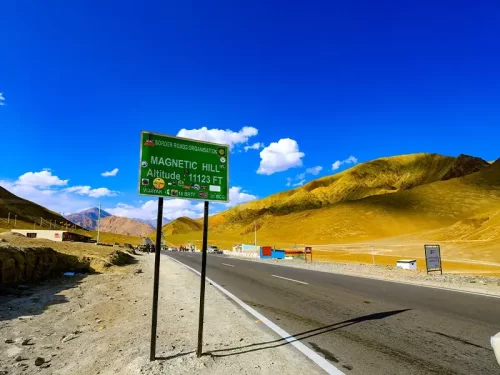
Magnetic Hill sign at Ladakh BRO during clear skies, featuring altitude 11312 ft board yellow mountains highway, perfect adventure Ladakh tour package.  Tourist Attraction

Magnetic Hill

Magnetic Hill is a gravity hill located at an elevation of approximately 3,350 meters (10,991 feet) on the Leh-Srinagar National Highway.
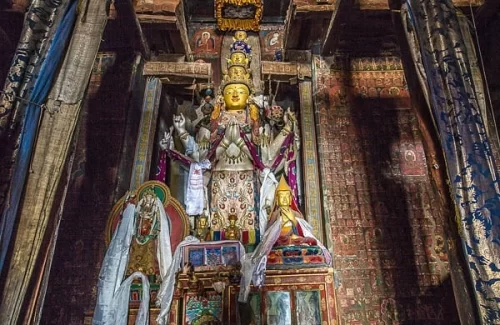
Buddha statue at Alchi Gompa Ladakh in dimly lit shrine during misty weather, featuring multiple arms prayer scarves and wall murals, perfect spiritual Ladakh tour package. Monastery

Alchi Monastery

Alchi Monastery is a historic Buddhist temple complex situated at an elevation of approximately 3,100 meters (10,170 feet) on the southern bank of the Indus River.
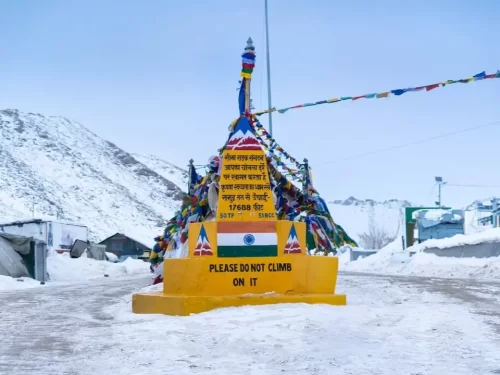
Memorial at Changla Pass 17688 ft during overcast skies, featuring prayer flags, Indian tricolor, snowy mountains, perfect spiritual adventure Ladakh tour pack Mountain Pass

Chang La Pass

Chang La is a high-altitude mountain pass situated at an elevation of approximately 5,360 meters (17,585 feet) on the road between Leh and Pangong Tso.

Frequently Asked Questions About Shey Palace

Shey Palace is located about 15 kilometers from Leh city in Ladakh, along the Leh Manali highway in the Indus Valley. It stands on a hill and overlooks surrounding fields and mountains near Leh.
Shey Palace can be reached within 25 to 30 minutes by car or taxi from Leh city center in Ladakh. The road is well maintained and commonly included in Indus Valley sightseeing routes.
Shey Palace near Leh is generally open during daytime hours from morning until late afternoon. Timings may vary slightly depending on season and local management guidelines in Ladakh.
Shey Palace in Ladakh usually has a nominal entry fee collected at the entrance. Tickets are available on arrival without the need for advance booking.
Around 45 minutes to one hour is sufficient to explore Shey Palace comfortably near Leh. This allows time to walk through the palace ruins and enjoy panoramic views of the valley.
Morning and late afternoon are considered ideal times to visit Shey Palace near Leh when the light enhances views of the Indus Valley. Clear weather in Ladakh improves the overall experience.
Shey Palace near Leh can be visited during winter if road conditions remain open in Ladakh. Cold temperatures require warm clothing, and visitors should be careful on uneven or icy steps.
Shey Palace involves climbing steps and walking on inclined paths, so visitors should be prepared for moderate physical effort at high altitude. Senior citizens can visit but should proceed slowly and rest when needed in Leh, Ladakh.
At Shey Palace near Leh, visitors can see historical palace structures, prayer areas, and open courtyards. The elevated position provides wide views of the surrounding valley landscape in Ladakh.
Photography is generally allowed at Shey Palace near Leh for personal use. Visitors should respect local guidelines and avoid disturbing any religious areas within the complex.
Parking space is available near the base of Shey Palace outside Leh city. From the parking area, visitors walk uphill to reach the palace entrance.
Shey Palace near Leh can easily be combined with visits to Shey Monastery, Thiksey Monastery, and other Indus Valley attractions in Ladakh. Its location makes it convenient for inclusion in a half day sightseeing plan from Leh city.

Loved this place ? Let’s Plan Your Ladakh Trip

Get customized Ladakh tour planning designed around altitude comfort, acclimatization time, weather windows, and real Himalayan road conditions. Whether you are visiting for high mountain passes, monasteries, lakes, or remote valley experiences, our exper

⚡ Quick Response | 💰 Free consultation | 🕒 24×7 expert support

×

Plan Your Trip