Shanti Stupa Leh: Sightseeing, Sunset Views & Visiting Guide

Shanti Stupa , Leh
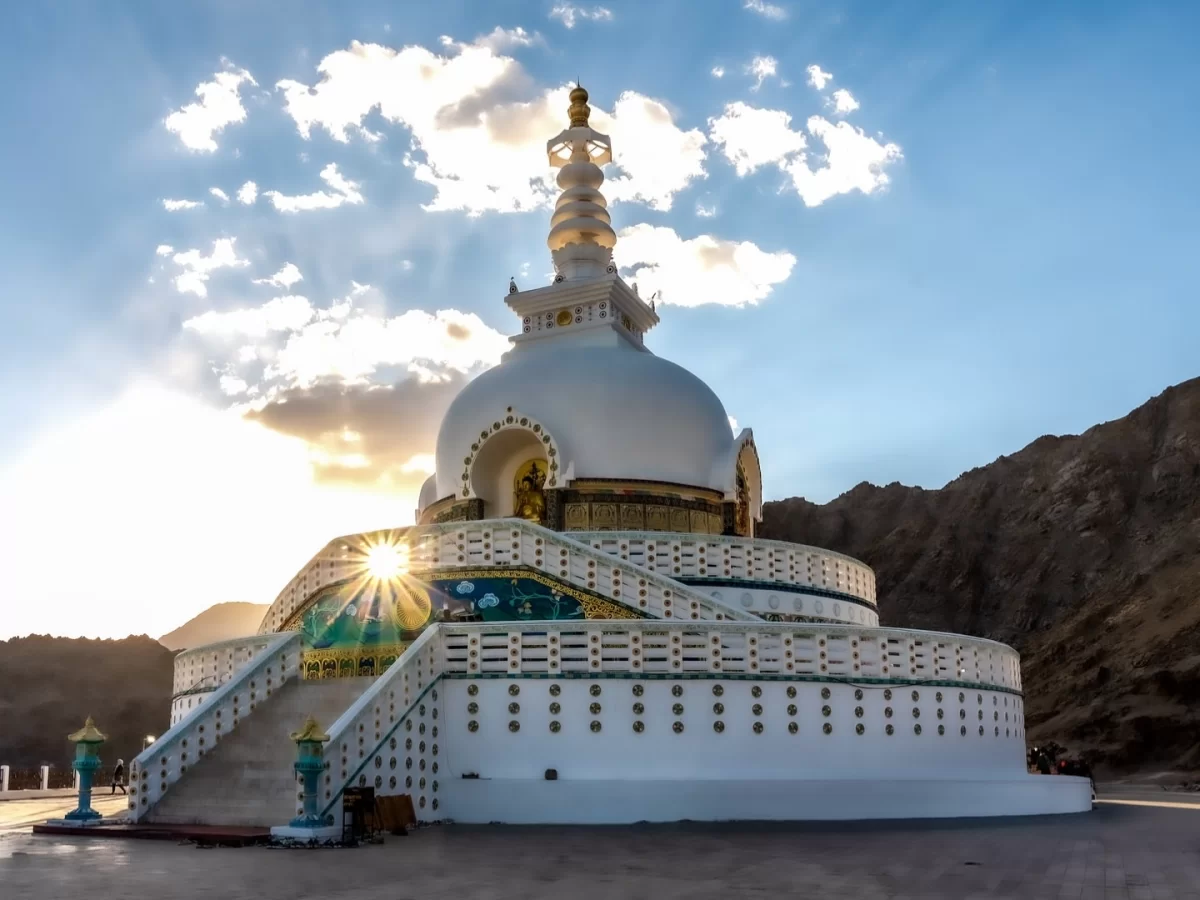
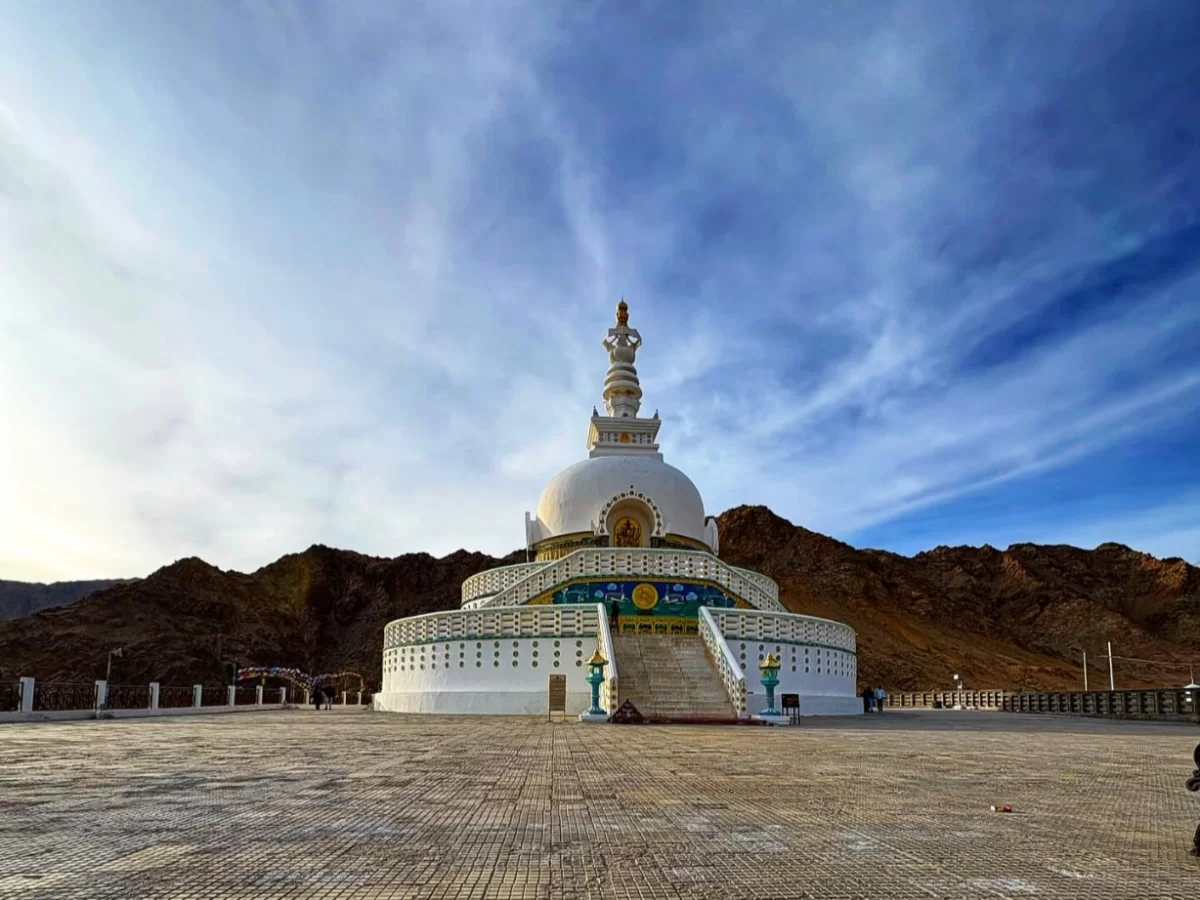
Shanti Stupa is a magnificent religious monument built by Japanese and Ladakhi Buddhists to promote world peace and commemorate 2,500 years of Buddhism. Located at an altitude of 3,609 meters, it is famous for its gilded statues of Buddha and intricate relief work. Beyond its spiritual value, the stupa serves as the primary vantage point for photographers, particularly during sunset when the light hits the surrounding Zanskar range and Leh Palace. It is accessible by a steep flight of 500 stairs or a paved road, making it a standard inclusion on any Leh acclimatization itinerary.

Quick Facts About Shanti Stupa

Entry Fee Free
Timings 05:00 - 21:00
Altitude (m) 3609
Ideal Visit Duration (hrs) 1.5
Best Time of Day Evening
Crowd Level High
Distance from Leh (km) 3.5
Walking Difficulty Moderate
Parking Available Yes
Last Mile Access Road
Suitable for Kids Yes
Suitable for Seniors Yes
Wheelchair Friendly No

Why Visit Shanti Stupa

Why Visit

Shanti Stupa is the most accessible high-altitude vantage point in Leh, offering an unobstructed 360-degree view of the Leh valley, the Indus River, and the Stok Kangri mountain range. For travelers, it serves as an essential acclimatization spot during the first 48 hours in Ladakh. Beyond the views, it provides a unique architectural contrast to the ancient Tibetan monasteries in the region, showcasing modern Japanese Buddhist design and a peaceful environment for meditation or evening reflection.

Atmosphere

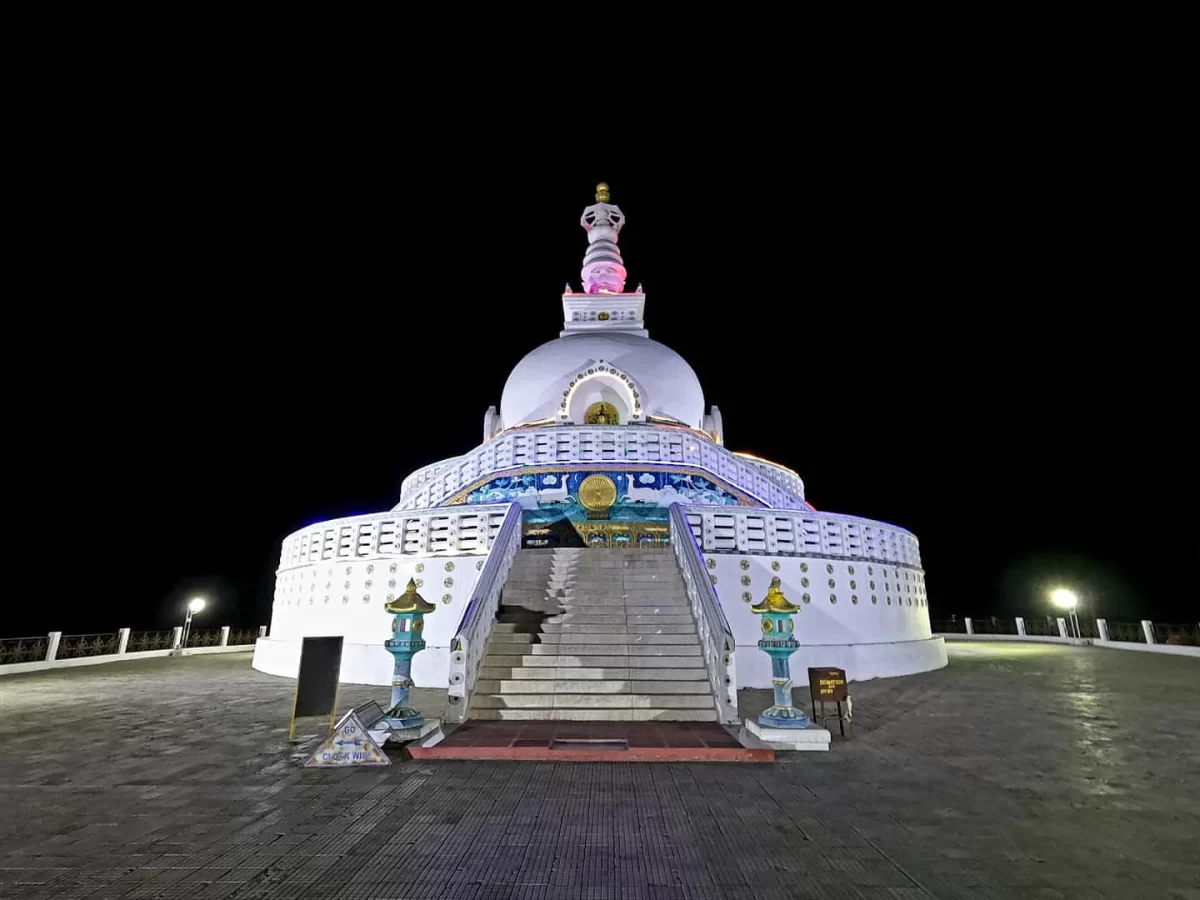
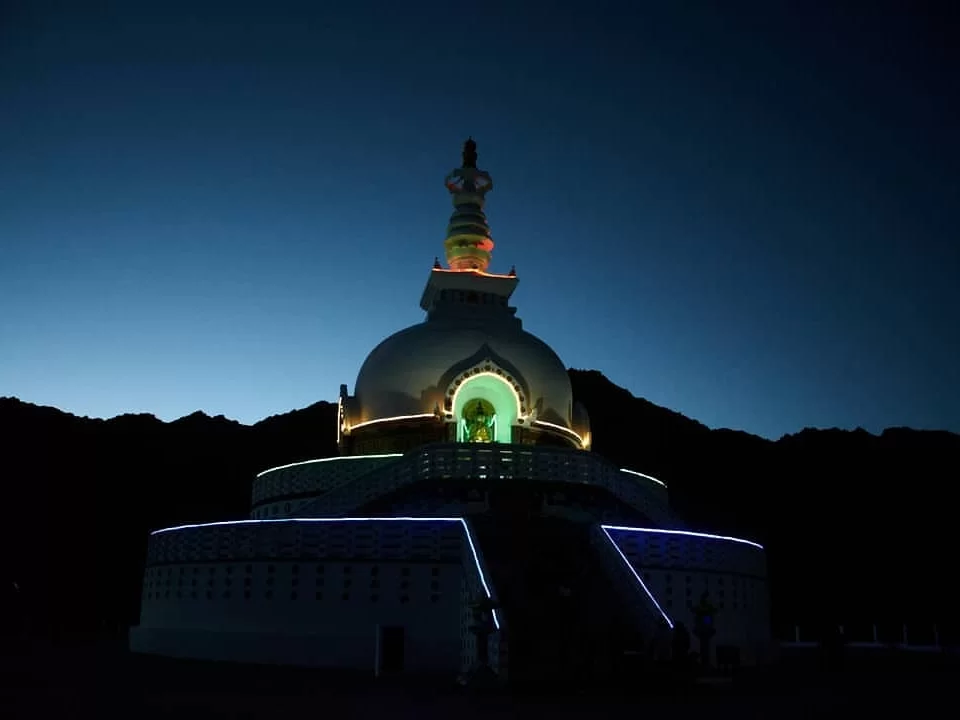
The atmosphere at Shanti Stupa transitions from deeply spiritual in the early morning to vibrant and social by late afternoon. At sunrise, you will encounter local practitioners and monks performing kora (circumambulation) in relative silence. As sunset approaches, the energy shifts as travelers gather to watch the sky change colors. Despite the evening crowds, the site maintains a sense of serenity, especially as the white marble stupa is illuminated by floodlights after dark, standing out against the black silhouette of the mountains.

What Makes it Special

What makes Shanti Stupa truly unique is its origin as a collaborative peace project between the Japanese Buddhist monk Gyomyo Nakamura and the Ladakh Sarvodaya Society, inaugurated by the 14th Dalai Lama in 1991. Unlike the 15th-century monasteries nearby, it houses the relics of the Buddha at its base. The stupa is built over two levels: the first level features the central relief of Dharmachakra and a golden Buddha, while the second level depicts the birth, death (Mahanirvana), and victory of Buddha over demons. This blend of global peace symbolism and traditional Ladakhi landscape makes it a profound cultural landmark.

History and Religious Significance of Shanti Stupa

The Shanti Stupa is a relatively modern addition to Leh's landscape compared to the ancient monasteries of the Indus Valley, yet it holds deep spiritual weight as a symbol of global harmony. The project was conceived by Bhikshu Gyomyo Nakamura, a Japanese Buddhist monk belonging to the Nipponzan Myohoji sect, whose mission was to build Peace Pagodas worldwide to promote non-violence after World War II. Construction began in 1983 as a joint effort between Japanese Buddhists and the Ladakh Sarvodaya Society, under the guidance of the late 19th Kushok Bakula Rinpoche.

Culturally, the stupa represents the strong ties between Japanese and Tibetan Buddhism. It was built largely through voluntary labor provided by the local Ladakhi community, who viewed the project as a collective act of merit-making. The monument was officially inaugurated by the 14th Dalai Lama, Tenzin Gyatso, in August 1991. The site is religiously significant because it enshrines the relics of the Buddha at its base, which were placed there by the Dalai Lama himself, making it a living site of worship and pilgrimage.

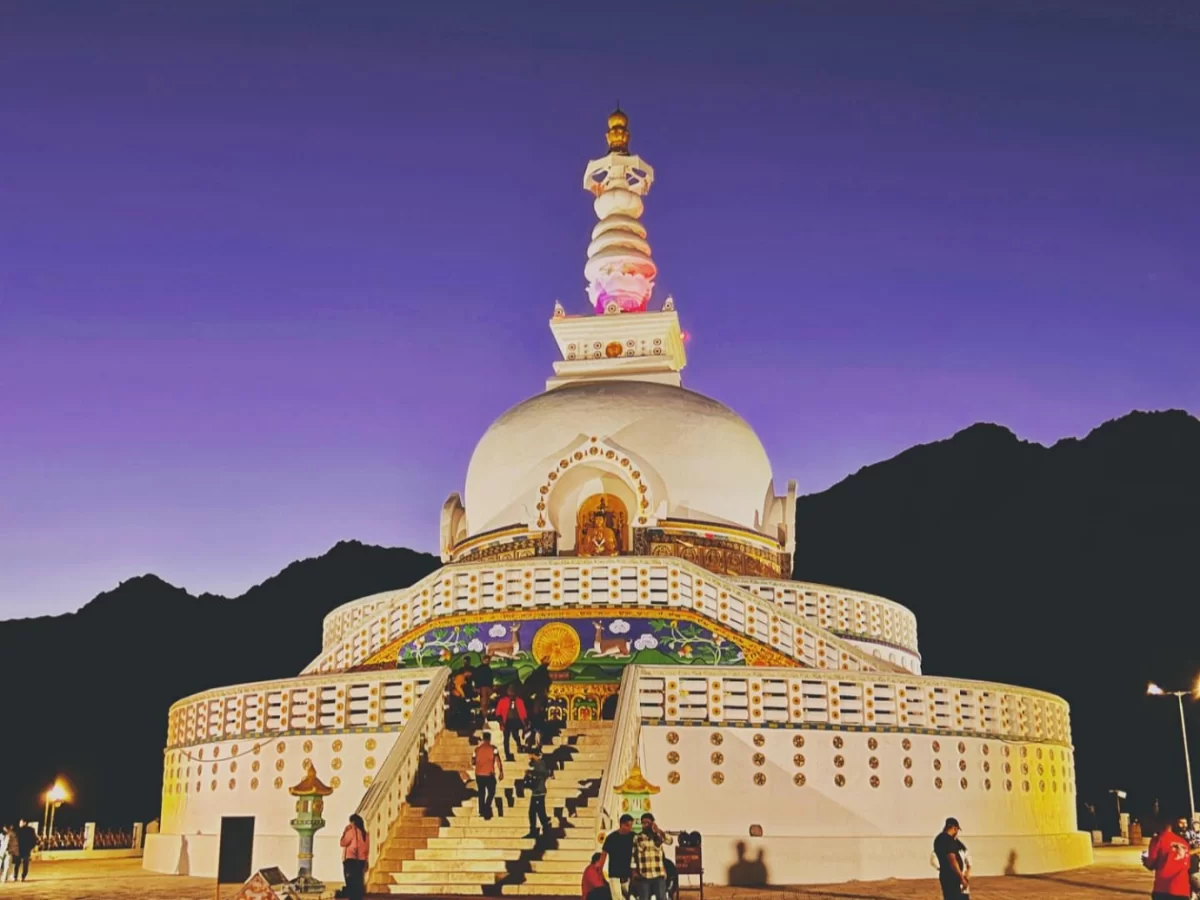
The architecture reflects the traditional "Peace Pagoda" style found in Japan but is adapted to the high-desert aesthetic of Ladakh. The two-tier structure is decorated with intricate bas-reliefs. The first level features the central image of the Dharmachakra (Wheel of Dharma) with deer on either side, symbolizing the Buddha's first sermon at Sarnath. The second level contains panels depicting various stages of the Buddha's life: his birth, the defeat of the demon Mara during meditation, and his final Mahaparinirvana (passing). For visitors, performing a 'Kora' (ritual circumambulation) around these tiers is considered a way to cleanse the mind and pay respect to the teachings of peace.

Best Time to Visit Shanti Stupa

The ideal window to visit Shanti Stupa is between May and September. During these months, the weather in Leh is pleasant, with daytime temperatures ranging from 15°C to 25°C, making the outdoor observation decks comfortable. While the monument is accessible year-round, winter visits (November to March) involve sub-zero temperatures and potentially icy steps, though the view of a snow-covered Leh valley is exceptionally stark and beautiful.

  • Peak Season (May to June): Expect clear blue skies and the highest visitor footfall. The evening atmosphere is vibrant, though finding a quiet spot for photography requires arriving early.
  • Monsoon Season (July to August): Ladakh falls in a rain shadow area, so while the rest of India faces heavy rains, Leh remains largely dry. This is a great time for photography as the air is dust-free and the valley looks relatively green.
  • Shoulder Season (September to October): The air becomes crisp and the poplar trees in the valley turn a brilliant gold. The crowds thin out significantly, offering a much more peaceful experience.
  • Golden Hour: Regardless of the month, the absolute best time of day is 30 minutes before sunset. The white marble of the stupa reflects the changing hues of the sky, and the floodlights create a dramatic silhouette against the dark mountains once the sun goes down.
  • Full Moon Nights: If your trip coincides with a full moon, the stupa is particularly ethereal as the natural moonlight makes the white dome glow, a phenomenon highly prized by night photographers.

How to Reach Shanti Stupa

Shanti Stupa is located on a hilltop in the Chanspa area, approximately 3.5 to 5 kilometers from the main Leh market. Because it is situated within the town limits, it is one of the most accessible attractions in Ladakh, though the final ascent requires choosing between a physical climb or a vehicular drive.

  • By Road (Car/Taxi): The most common way to reach the stupa is via a well-paved, winding motorable road that leads directly to the upper parking lot. A taxi from the Leh main market takes about 10-15 minutes. This is the recommended route for those who have not yet fully acclimatized or for travelers with mobility concerns.
  • By Foot (The Staircase): For those seeking a physical challenge and a rewarding view, there is a steep flight of approximately 500 to 555 stone steps starting from the base of the hill in Chanspa. The climb takes 20 to 45 minutes depending on your fitness level. It is highly advised not to attempt this on your first day in Leh due to the risk of Acute Mountain Sickness (AMS).
  • By Bike or Scooter: Many travelers rent Royal Enfields or scooters in Leh. The ride up Shanti Stupa Road is short but steep, offering several hairpin bends that overlook the valley. There is dedicated parking for two-wheelers near the entrance.
  • Public Transport: There are no direct local buses that go up the hill to Shanti Stupa. You can take a local bus to the Chanspa area or the Leh bus stand and then either walk up the stairs or hire a private taxi for the final leg.

What to Expect When You Visit Shanti Stupa

Visiting Shanti Stupa is a multisensory experience that combines physical exertion, spiritual observation, and some of the finest landscape viewing in the Himalayas. While it is a popular tourist spot, it remains an active place of worship, so visitors should expect a mix of religious solemnity and tourist activity. The site is impeccably maintained, but the high altitude and exposure to the elements dictate the nature of the experience.

  • Panoramic Vistas: Expect a bird-eye view of Leh town, the historic Leh Palace, Namgyal Tsemo Monastery, and the expansive Indus Valley. On a clear day, the snow-capped peaks of the Zanskar Range are visible on the horizon.
  • Physical Strain: Even if you arrive by car, walking around the two levels of the stupa at 3,600 meters can cause breathlessness. Expect to move slowly and take breaks, especially if you have just arrived in Ladakh.
  • Religious Etiquette: As an active Buddhist site, you are expected to walk around the stupa in a clockwise direction (Pradakshina). You must remove your shoes before stepping onto the main platforms of the stupa.
  • Temperature Fluctuations: Expect a sharp drop in temperature as soon as the sun sets. The hilltop is prone to high winds, making it feel significantly colder than the Leh market below.
  • Photography Crowds: During the golden hour, the platform becomes crowded with photographers and tourists. Expect to wait for a clear shot at the most popular viewing angles.
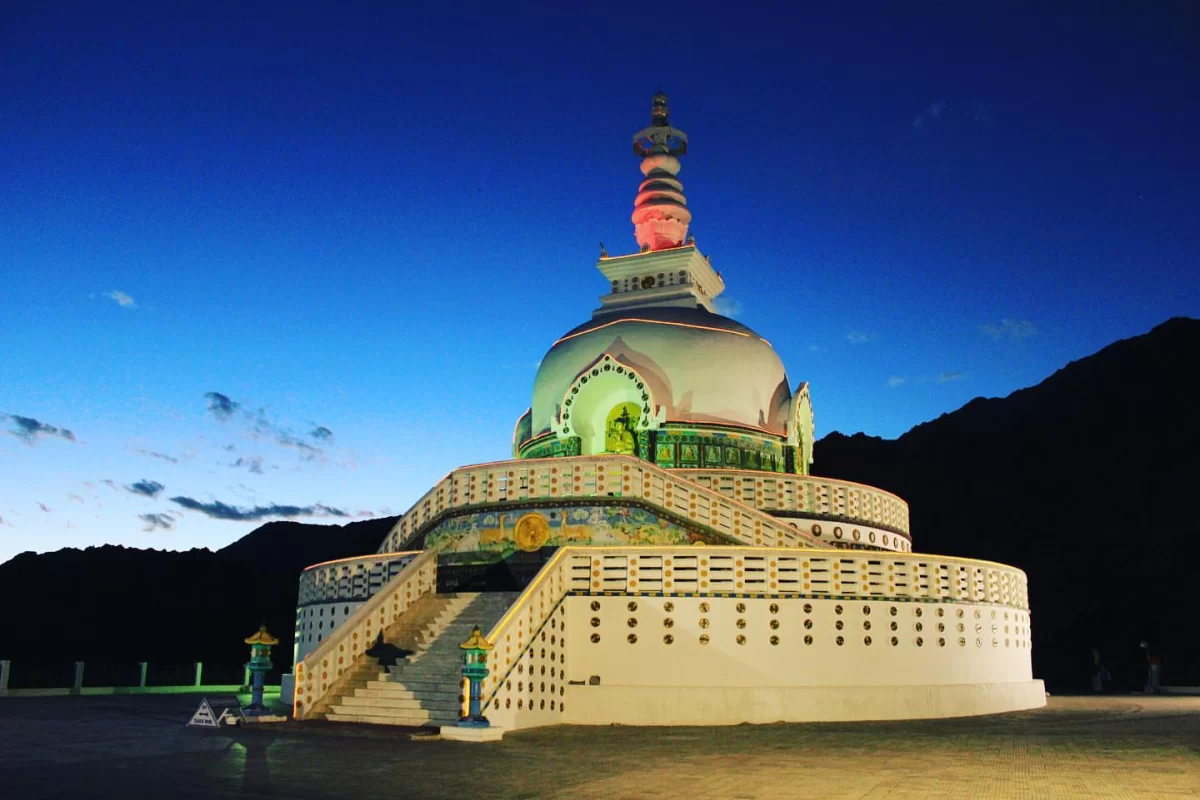
  • Evening Illumination: After dark, the white marble structure is lit by powerful floodlights, giving it a majestic, glowing appearance that can be seen from almost anywhere in Leh.
  • Minimal Facilities: There is a small cafe and some basic souvenir stalls near the parking area, along with public restrooms, but do not expect extensive dining or shopping options on-site.

Important Visitor Information

Crowd & Weather Notes

  • Crowd Dynamics: The site sees minimal footfall between 8:00 AM and 3:00 PM. The crowd peaks significantly 45 minutes before sunset as tour groups and independent travelers arrive for the view.
  • Wind Chill: Due to its exposed hilltop position, Shanti Stupa is significantly windier than the Leh market. Even on warm summer days, the wind chill factor can make it feel 5 to 7 degrees colder.
  • UV Exposure: At this altitude, the sun is exceptionally strong. The white marble of the stupa reflects sunlight, increasing the risk of sunburn even if the air feels cool.

Peak / Quiet Hours

  • Peak Hours: 5:30 PM to 7:30 PM (Sunset) and 7:00 AM to 9:00 AM.
  • Quiet Hours: 11:00 AM to 3:00 PM. This is the best time for those who want to study the relief carvings or meditate without interruptions.
  • Night Viewing: The stupa remains open until 9:00 PM. Visiting after 8:00 PM offers a quiet, illuminated experience with a view of the city lights below.

Dress Code

  • Modesty: While there is no strict "robes only" rule, visitors should dress modestly. Shoulders and knees should be covered as a mark of respect for the religious site.
  • Footwear: You must remove your shoes to walk on the stupa levels. It is recommended to wear socks, as the marble can be extremely cold in the evening or burning hot in the afternoon sun.
  • Layers: Always carry a windcheater or a light jacket, regardless of how warm it feels in Leh town.

Safety Notes

  • Acclimatization: Do not attempt to climb the 500 stairs on your first or second day in Leh. This is a common mistake that leads to immediate altitude sickness.
  • Hydration: Carry a bottle of water, especially if taking the stairs, but ensure you do not litter. The area is a strictly monitored no-plastic zone.
  • Stair Safety: The staircase is steep and lacks railings in certain sections. If you are prone to vertigo or have knee issues, use the motorable road instead.
  • Emergency: There are no medical facilities on the hilltop. The nearest hospital is the SNM Hospital in Leh, roughly 4 km away.

Photography and Viewpoint

Shanti Stupa is widely considered the premier photography location in Leh due to its elevated position and the reflective properties of its white marble. The site offers a 360-degree unobstructed view that encompasses the entire Leh valley, the Indus River, and the high-altitude desert peaks. For professional and amateur photographers alike, the interplay of light and shadow on the surrounding mountains provides a dynamic canvas that changes by the minute.
  • The Golden Hour: The 30-minute window before sunset is the most sought-after time. The sun sets behind the mountains opposite the stupa, casting a warm, golden glow on the monument and the valley.
  • Cityscape and Leh Palace: From the northern side of the stupa, you have a direct line of sight to the historic Leh Palace and Namgyal Tsemo Monastery. Using a telephoto lens (70-200mm) allows for compressed shots of the palace against the backdrop of the rugged mountains.
  • Wide-Angle Landscapes: Use a wide-angle lens (16-35mm) to capture the entire stupa structure along with the Stok Kangri range in the background. The prayer flags fluttering in the wind add a sense of motion to still shots.
  • Night Photography: After 7:30 PM, the stupa is illuminated by artificial lights. This is an excellent time for long-exposure photography to capture the glowing white dome against the starry Himalayan sky or the twinkling lights of Leh town below.
  • Reflection Shots: After a rare rain shower, the puddles on the marble platform can be used to capture symmetrical reflections of the stupa.
  • Etiquette for Photographers: While photography is permitted, avoid blocking the path of devotees performing 'Kora'. Using tripods is generally allowed, but be mindful of the heavy foot traffic during peak sunset hours.
  • Drone Usage: Flying drones at Shanti Stupa is strictly prohibited due to its proximity to sensitive areas and the Leh airport.

Near By Attraction

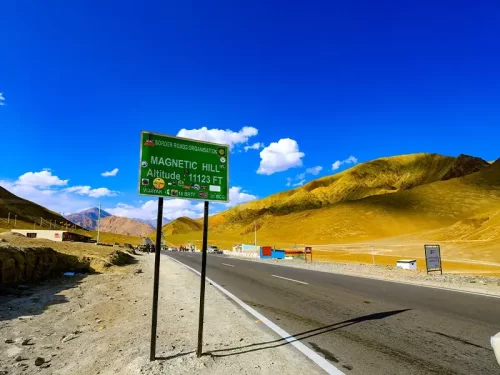
Magnetic Hill sign at Ladakh BRO during clear skies, featuring altitude 11312 ft board yellow mountains highway, perfect adventure Ladakh tour package.  Tourist Attraction

Magnetic Hill

Magnetic Hill is a gravity hill located at an elevation of approximately 3,350 meters (10,991 feet) on the Leh-Srinagar National Highway.
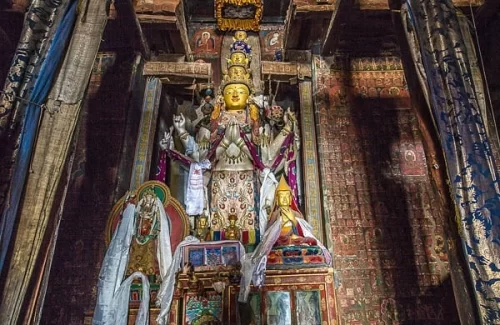
Buddha statue at Alchi Gompa Ladakh in dimly lit shrine during misty weather, featuring multiple arms prayer scarves and wall murals, perfect spiritual Ladakh tour package. Monastery

Alchi Monastery

Alchi Monastery is a historic Buddhist temple complex situated at an elevation of approximately 3,100 meters (10,170 feet) on the southern bank of the Indus River.
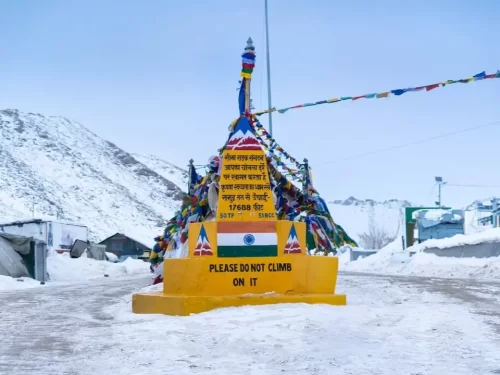
Memorial at Changla Pass 17688 ft during overcast skies, featuring prayer flags, Indian tricolor, snowy mountains, perfect spiritual adventure Ladakh tour pack Mountain Pass

Chang La Pass

Chang La is a high-altitude mountain pass situated at an elevation of approximately 5,360 meters (17,585 feet) on the road between Leh and Pangong Tso.

Frequently Asked Questions About Shanti Stupa

Shanti Stupa Leh is famous for its panoramic sunset views over Leh town and the surrounding Himalayan mountains. The white-domed Buddhist monument offers peaceful surroundings and wide-angle views, making it one of the most visited viewpoints in Leh, Ladakh.
Shanti Stupa Leh is located on a hilltop in Leh town in the Union Territory of Ladakh. It is approximately 5 kilometers from Leh main market and is accessible by road as well as by a staircase path.
Shanti Stupa Leh is generally open daily from early morning around 5:00 AM until evening around 9:00 PM. Sunrise and sunset hours are considered the most comfortable and scenic times to visit.
About 45 minutes to 1 hour is usually enough to explore Shanti Stupa Leh comfortably. This allows time to walk around the structure, enjoy the surrounding views, and take photographs.
There is no entry fee to visit Shanti Stupa Leh. Visitors can enter freely, which makes it an easy addition to a Leh sightseeing plan.
Travelers can reach Shanti Stupa Leh by car, taxi, or two-wheeler using the motorable hill road from Leh market. A staircase route is also available for those who prefer walking uphill.
Shanti Stupa Leh is suitable for elderly visitors if they use the motorable road route. Climbing the stairs may feel tiring due to the high altitude of Leh at around 11,500 feet.
The best time to visit Shanti Stupa Leh for clear views is between May and September. During these months, Leh, Ladakh typically experiences clearer skies and more stable weather conditions.
Shanti Stupa Leh can be visited during winter, but temperatures in Leh, Ladakh drop significantly and occasional snowfall may affect road comfort. Warm clothing is essential for winter visits.
Photography for personal use is allowed at Shanti Stupa Leh. Drone usage may require local permission as Ladakh has regulated airspace guidelines, so travelers should confirm current rules before operating drones.

Loved this place ? Let’s Plan Your Ladakh Trip

Get customized Ladakh tour planning designed around altitude comfort, acclimatization time, weather windows, and real Himalayan road conditions. Whether you are visiting for high mountain passes, monasteries, lakes, or remote valley experiences, our exper

⚡ Quick Response | 💰 Free consultation | 🕒 24×7 expert support

×

Plan Your Trip