+91 9910402252
admin@chalbanjare.com


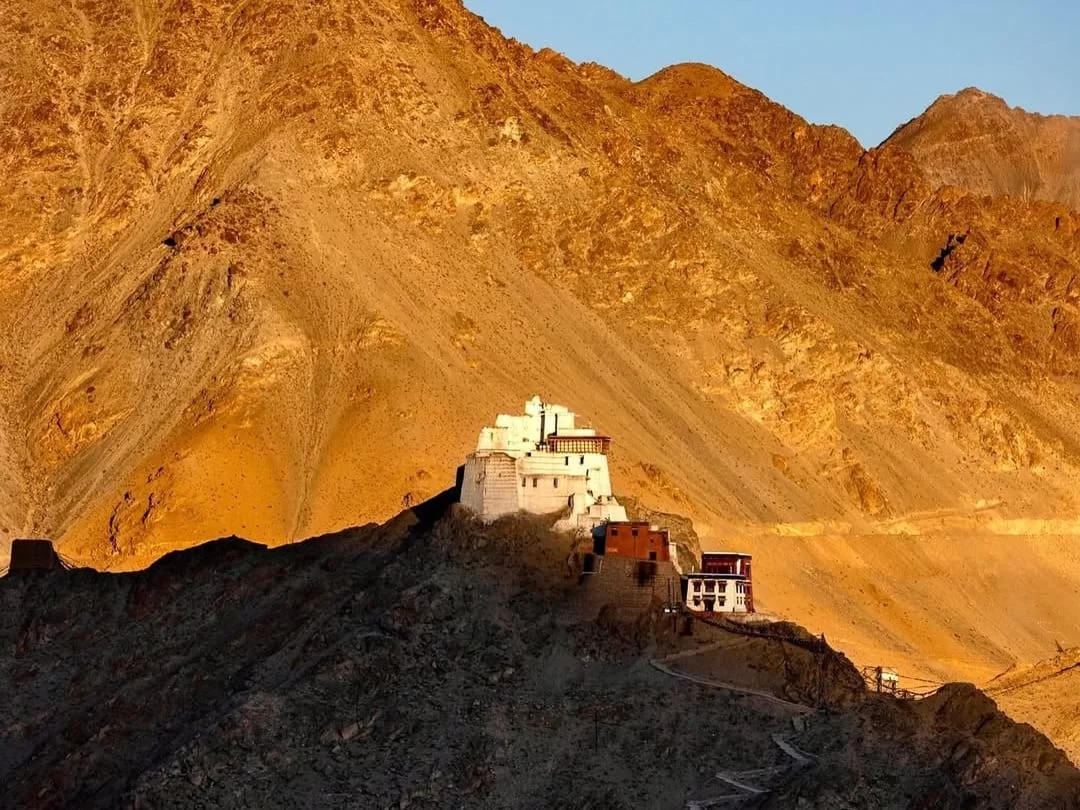
| Entry Fee | Free |
| Timings | 06:00 - 18:00 |
| Altitude (m) | 3550 |
| Ideal Visit Duration (hrs) | 1 |
| Best Time of Day | Morning |
| Crowd Level | Moderate |
| Distance from Leh (km) | 3 |
| Walking Difficulty | Easy |
| Parking Available | Yes |
| Last Mile Access | Road |
| Suitable for Kids | Yes |
| Suitable for Seniors | Yes |
| Wheelchair Friendly | No |
Sankar Monastery has a lived-in, working monastery feel rather than a polished tourist site. You will often see resident monks going about daily routines, chanting quietly, or moving between buildings. Because it is close to Leh town, outside traffic noise can occasionally be heard, but inside the complex the mood remains calm and grounded. Early mornings are especially quiet, while afternoons can feel slightly busier due to tour vehicles stopping briefly.
The main reason to visit Sankar Monastery is the large statue of Avalokitesvara, depicted with eleven heads and a thousand arms, which is rare to see at this scale in Ladakh. The monastery also offers a more realistic view of modern monastic life compared to larger, heavily visited gompas. Its location makes it easy to include without physical strain, and the simplicity of the complex allows visitors to observe religious spaces without distraction. It is best suited for travelers who value quiet observation over grand architecture.
Sankar Monastery was established in the 19th century and is closely associated with Spituk Monastery, one of the older and more influential monasteries in the Leh region. Rather than being founded as a major teaching center, Sankar developed primarily as a residential monastery for monks of the Gelugpa order. Over time, it became an important extension of Spituk, especially as Leh town expanded around it.
The monastery gained wider recognition after the installation of the large Avalokitesvara statue, which reflects the Gelugpa emphasis on compassion and disciplined monastic practice. Sankar has also served as a temporary residence for senior monks and visiting teachers, including periods when the head lama of Spituk stayed here. Its role has always been practical and religious rather than ceremonial, which explains its modest scale and functional layout.
Today, Sankar Monastery continues to function as an active religious space rather than a preserved heritage monument. Its history is closely tied to everyday monastic life in Leh, offering insight into how Buddhist institutions adapt and continue within a growing town environment.
The best time to visit Sankar Monastery is between May and September, when Leh is fully accessible and weather conditions are stable enough for walking and short visits. During these months, daytime temperatures are manageable, and the roads around Leh town remain clear. Because the monastery sits at high altitude, even summer mornings can be cool, so layered clothing is still necessary.
Winter visits from November to March are possible but less practical for most travelers. Temperatures drop well below freezing, sections of the monastery can feel extremely cold, and access depends on local road conditions. Spring in April and early May is quieter but can still be unpredictable due to lingering cold and wind.
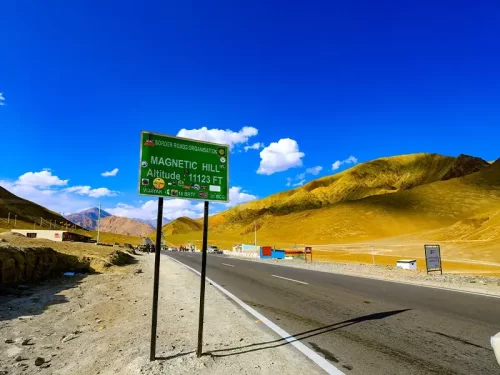 Tourist Attraction
Magnetic Hill is a gravity hill located at an elevation of approximately 3,350 meters (10,991 feet) on the Leh-Srinagar National Highway.
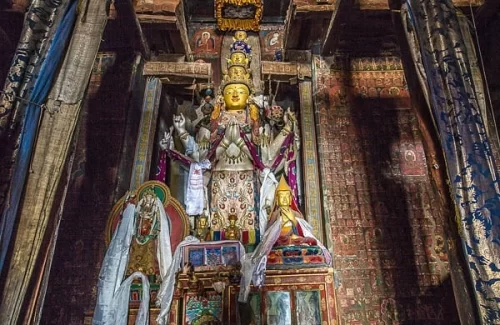 Monastery
Alchi Monastery is a historic Buddhist temple complex situated at an elevation of approximately 3,100 meters (10,170 feet) on the southern bank of the Indus River.
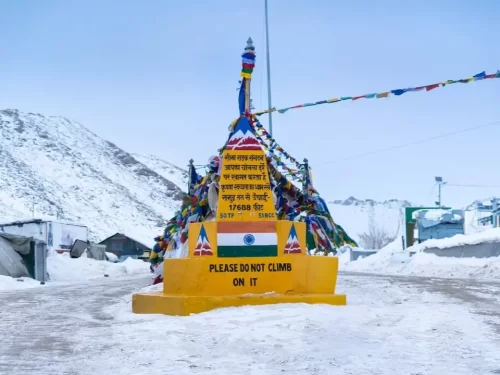 Mountain Pass
Chang La is a high-altitude mountain pass situated at an elevation of approximately 5,360 meters (17,585 feet) on the road between Leh and Pangong Tso.
Get customized Ladakh tour planning designed around altitude comfort, acclimatization time, weather windows, and real Himalayan road conditions. Whether you are visiting for high mountain passes, monasteries, lakes, or remote valley experiences, our exper
⚡ Quick Response | 💰 Free consultation | 🕒 24×7 expert support

