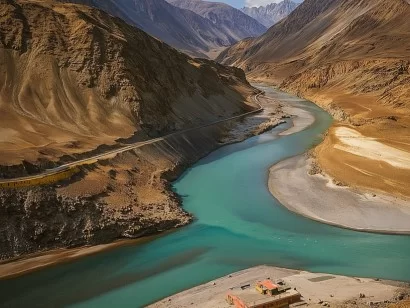
Sangam Point Leh Ladakh Confluence of Indus and Zanskar Rivers Guide

Sangam Point , Leh
Sangam Point is located near Nimmu village on the Leh Srinagar highway and is one of the most commonly visited natural stops around Leh. The main attraction is the visible confluence of the greenish Indus River and the muddy brown Zanskar River, especially clear during summer months. The site is easy to access and often included in half-day trips toward Alchi or Lamayuru. It can get crowded during peak season, facilities are basic, and visits are usually short but visually distinct.

Quick Facts About Sangam Point

Entry Fee Free
Timings 06:00 - 18:00
Altitude (m) 3170
Ideal Visit Duration (hrs) 1
Best Time of Day Morning
Crowd Level High
Distance from Leh (km) 35
Walking Difficulty Easy
Parking Available Yes
Last Mile Access Road
Suitable for Kids Yes
Suitable for Seniors Yes
Wheelchair Friendly No

Why Visit Sangam Point

Atmosphere

Sangam Point has an open, exposed feel with constant movement from passing vehicles on the Leh Srinagar highway. The sound of flowing water and wind dominates the area. During peak season, the atmosphere is busy and brief, with most visitors stopping for photos before moving on. Early hours are calmer, but there is little shade, and the midday sun can feel harsh, especially in summer.

What Makes It Special

The main reason to visit Sangam Point is the clear visual contrast between the Indus and Zanskar rivers as they merge. In summer, the color difference is distinct due to glacial silt carried by the Zanskar River. This natural phenomenon is easy to observe without hiking or special access, making it one of the most straightforward geological sights around Leh. Its location on a major travel route also makes it a practical stop rather than a standalone destination.

History

Sangam Point marks the natural meeting place of the Indus and Zanskar rivers, a location that has been geographically important for centuries. The Indus River has historically been the main lifeline of Ladakh, supporting settlements, agriculture, and travel routes through the region. The Zanskar River, flowing in from the south, brings glacial meltwater from the Zanskar range and has long shaped the landscape through erosion and sediment.

The area around the confluence was traditionally used as a transit zone rather than a settlement, as steep riverbanks and seasonal flooding made permanent habitation difficult. Over time, the route near Sangam became part of the main corridor connecting Leh with western Ladakh and Kashmir, increasing its strategic and logistical importance.

In recent decades, Sangam Point has also gained recognition as the starting or ending point for Zanskar river rafting expeditions during summer. Its significance today is primarily geographical and experiential, offering insight into how Ladakh's river systems shape travel, terrain, and daily life in the region.

Best Time to Visit Sangam Point

The best time to visit Sangam Point is from May to September, when both the Indus and Zanskar rivers are flowing strongly and the color contrast is clearly visible. During these months, roads remain open, and daylight conditions are stable for short roadside stops. Summer also aligns with rafting season on the Zanskar River, adding activity to the area.

Outside the main season, the experience changes noticeably. In winter, the Zanskar River flow reduces and color contrast is less distinct, while icy conditions can limit safe access. Early spring can be quiet but may not offer the visual clarity most visitors expect.
  • June to August offers the strongest water flow and clearest color difference.
  • Late morning to early afternoon provides the best light for viewing the confluence.
  • Early mornings are quieter but can appear muted due to shadow and low light.
  • Winter visits are possible but visually less rewarding.
  • Weather is generally dry, but wind is common throughout the year.

How to Reach Sangam Point

  • Sangam Point is located near Nimmu village on the Leh Srinagar highway, around 35 km from Leh town.
  • It can be reached by taxi, private car, or bike as part of a day trip toward Alchi, Lamayuru, or Kargil.
  • The road is fully paved and generally in good condition during the tourist season.
  • Shared taxis running between Leh and nearby villages may drop passengers near the viewpoint.
  • There is no public bus stop directly at Sangam Point.
  • The viewpoint is a short walk from the roadside parking area.
  • Road conditions can be affected by weather, especially after heavy rain or in early spring.

What to Expect When You Visit Sangam Point

  • A clearly visible meeting point of the Indus and Zanskar rivers during summer months.
  • A roadside viewpoint with open access and minimal infrastructure.
  • Short stopovers by tour vehicles, leading to brief crowd build-up.
  • Strong wind and direct sunlight with very limited shade.
  • Basic local vendors selling snacks and drinks during peak season.
  • No formal safety barriers near the river edge.
  • A visit that typically lasts less than half an hour.
  • Occasional rafting activity on the Zanskar River in summer.

Important Visitor Information

  • Crowd and Weather Notes: Sangam Point experiences steady footfall during the day, especially in peak tourist season. Weather is mostly dry, but strong winds and intense sunlight are common due to the open river valley.
  • Peak and Quiet Hours: Peak visiting hours are from 10:30 AM to 3:30 PM. Quieter periods are early morning and late afternoon.
  • Dress Code: There is no formal dress requirement, but sun protection such as hats and covered clothing is recommended due to lack of shade.
  • Safety Notes: Visitors should stay away from the river edge, as currents are strong and banks can be unstable. Caution is needed around traffic near the roadside viewpoint.

Photography and Viewpoint

  • The main viewpoint offers a clear elevated angle over the confluence of the Indus and Zanskar rivers.
  • Color contrast between the two rivers is most visible in summer when Zanskar carries glacial silt.
  • Late morning light provides the clearest definition of water color and river lines.
  • Early morning and late afternoon can create shadows that reduce color separation.
  • Wide angle lenses work best to capture both rivers and surrounding valley.
  • There are no marked photography zones, so visitors need to position carefully.
  • Tripods can be used but wind can affect stability.
  • No safety railings are present, so caution is required near edges.

Near By Attraction

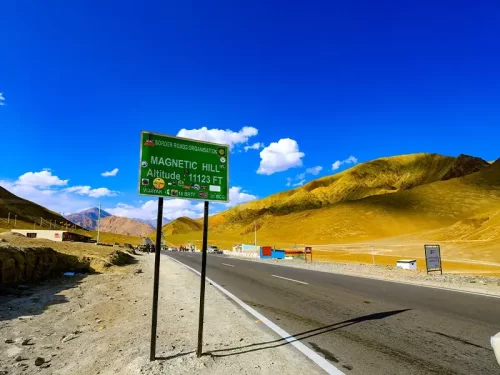
Magnetic Hill sign at Ladakh BRO during clear skies, featuring altitude 11312 ft board yellow mountains highway, perfect adventure Ladakh tour package.  Tourist Attraction

Magnetic Hill

Magnetic Hill is a gravity hill located at an elevation of approximately 3,350 meters (10,991 feet) on the Leh-Srinagar National Highway.
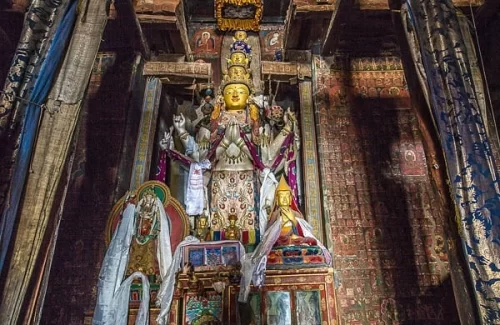
Buddha statue at Alchi Gompa Ladakh in dimly lit shrine during misty weather, featuring multiple arms prayer scarves and wall murals, perfect spiritual Ladakh tour package. Monastery

Alchi Monastery

Alchi Monastery is a historic Buddhist temple complex situated at an elevation of approximately 3,100 meters (10,170 feet) on the southern bank of the Indus River.
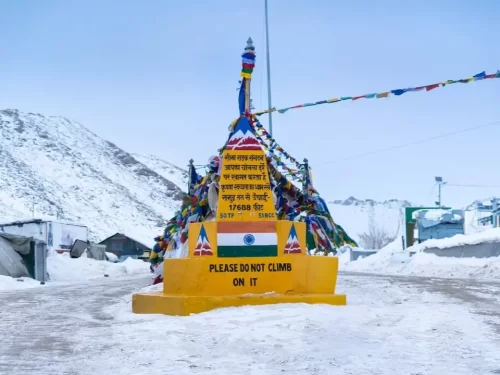
Memorial at Changla Pass 17688 ft during overcast skies, featuring prayer flags, Indian tricolor, snowy mountains, perfect spiritual adventure Ladakh tour pack Mountain Pass

Chang La Pass

Chang La is a high-altitude mountain pass situated at an elevation of approximately 5,360 meters (17,585 feet) on the road between Leh and Pangong Tso.

Frequently Asked Questions About Sangam Point

Sangam Point is located about 35 kilometers from Leh city in Ladakh, on the Leh Kargil highway where the Indus and Zanskar rivers meet. It is one of the most visited viewpoints along this scenic route.
Sangam Point can be reached in around 60 to 75 minutes by car or taxi from Leh city in Ladakh. The drive follows the Indus River and is commonly included in day sightseeing plans.
Late morning to early afternoon is considered a good time to visit Sangam Point near Leh when sunlight clearly highlights the distinct colors of the two rivers. Clear weather in Ladakh enhances the viewing experience.
Sangam Point generally does not have a significant entry fee, though local parking or viewing charges may apply seasonally in Ladakh. Visitors typically access the viewpoint freely.
Around 30 to 45 minutes is enough to explore Sangam Point near Leh, take photographs, and enjoy views of the river confluence. Travelers often spend more time if including nearby stops.
Sangam Point near Leh can be visited during winter if the Leh Kargil highway remains open. Cold temperatures in Ladakh require proper winter clothing, especially when standing outdoors near the river.
Sangam Point is suitable for families and senior citizens as the main viewpoint is accessible from the parking area. The terrain near the riverbank may involve steps or uneven surfaces.
Visitors at Sangam Point near Leh can see the clear confluence of the Indus and Zanskar rivers, often visible as two different shades of water merging. The surrounding mountains add to the dramatic landscape of Ladakh.
River rafting activities are sometimes available near Sangam Point during suitable seasons in Ladakh. Availability depends on weather conditions and local operators running guided rafting trips.
Parking space is available close to Sangam Point near Leh for cars and bikes. The parking area is located near the viewpoint steps.
Basic food stalls and temporary facilities may be available near Sangam Point during peak tourist season in Ladakh. It is advisable to carry drinking water and essentials from Leh city.
Sangam Point near Leh can easily be combined with visits to Magnetic Hill, Pathar Sahib Gurudwara, and other attractions along the Leh Kargil highway in Ladakh. Its location makes it suitable for inclusion in a half day or full day sightseeing plan from Leh city.

Loved this place ? Let’s Plan Your Ladakh Trip

Get customized Ladakh tour planning designed around altitude comfort, acclimatization time, weather windows, and real Himalayan road conditions. Whether you are visiting for high mountain passes, monasteries, lakes, or remote valley experiences, our exper

⚑ Quick Response | πŸ’° Free consultation | πŸ•’ 24Γ—7 expert support

×

Plan Your Trip