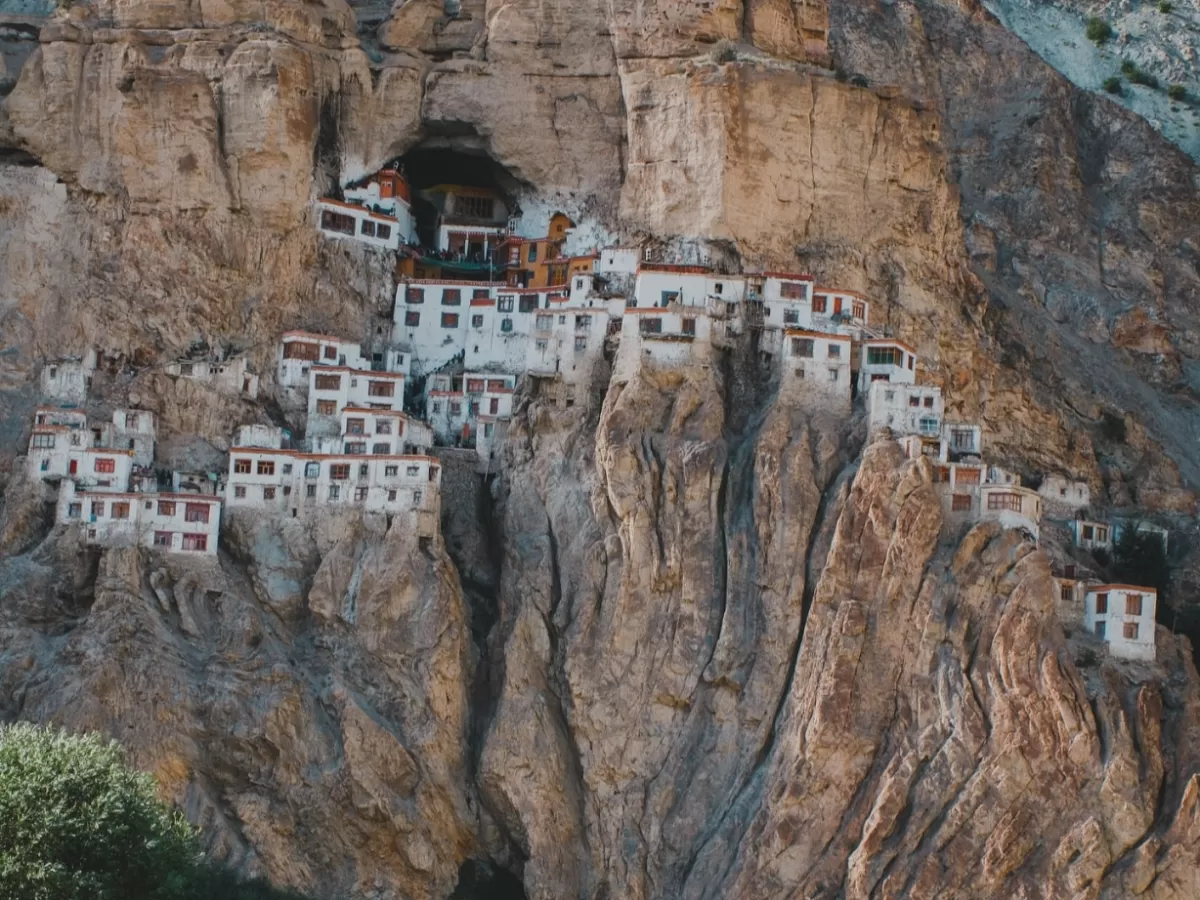
Phugtal Monastery Zanskar Ladakh India

Phuktal Monastery , Padum
Phugtal Monastery, also spelled Phuktal, is one of the most isolated monasteries in Ladakh, located in the Lungnak Valley of Zanskar. Built into the mouth of a natural cave on a cliffside, the monastery belongs to the Gelug school of Tibetan Buddhism. It functions as an active monastic center where monks live, study, and practice in extreme geographical isolation. Access requires a trek, making it a destination for travelers seeking cultural depth rather than convenience.

Quick Facts About Phuktal Monastery

Entry Fee Free
Timings 06:00 - 18:00
Altitude (m) 3850
Ideal Visit Duration (hrs) 2
Best Time of Day Morning
Crowd Level Low
Distance from Padum (km) 70
Walking Difficulty Moderate
Parking Available Yes
Last Mile Access Walk
Suitable for Kids No
Suitable for Seniors No
Wheelchair Friendly No

Why Visit Phugtal Monastery

Phugtal Monastery is visited for its setting and continuity rather than convenience. It is one of the few monasteries in Ladakh built around a natural cave and still functioning as a place of learning and worship. The journey itself shapes the experience, making the visit meaningful for travelers seeking depth, isolation, and cultural authenticity.

Atmosphere

The atmosphere at Phugtal Monastery is quiet and self-contained. Surrounded by steep cliffs and the Lungnak River, the monastery feels detached from settlements and modern distractions. Daily prayers, study sessions, and routine chores continue without interruption, creating an environment defined by discipline and silence rather than tourism.

What Makes It Special

What makes Phugtal Monastery distinct is its cave-based structure and extreme location. The buildings emerge directly from the rock face, forming a natural amphitheater around the cave entrance. Unlike more accessible monasteries, Phugtal has remained largely unchanged due to its isolation, preserving traditional monastic life and architectural forms shaped by survival in a harsh Himalayan landscape.

Origins and Spiritual Role of Phugtal Monastery

Phugtal Monastery traces its origins to the early spread of Buddhism in the Zanskar region, with strong associations to the 12th century teacher Gangsem Sherap Sampo. Built around a natural cave, the site was chosen for its seclusion and suitability for meditation, long before permanent structures were added. The cave itself has historically served as a retreat for monks and wandering practitioners seeking isolation.

The monastery belongs to the Gelug school of Tibetan Buddhism and functions as an active center for monastic education and practice. It supports resident monks who follow a traditional curriculum of study, debate, and ritual, maintaining continuity despite the region’s extreme geography. Its survival in such isolation reflects deliberate spiritual choice rather than architectural ambition.

Phugtal Monastery continues to hold importance for nearby villages in the Lungnak Valley, providing religious guidance, seasonal rituals, and monastic training. Unlike monasteries shaped by royal patronage or urban growth, Phugtal’s role has remained focused on practice and learning, rooted in solitude and self-sufficiency rather than expansion.

Best Time to Visit Phugtal Monastery

The best time to visit Phugtal Monastery is from late May to early October, when road access to Zanskar is open and the walking trail from the bridge remains safe. During this period, the monastery is active, weather conditions are relatively stable, and daylight hours are sufficient for the return walk.

June to September offers the most reliable conditions, with clearer skies and manageable temperatures during the day. Outside these months, snowfall, freezing temperatures, and road closures make travel unsafe and unpredictable, and the monastery may become inaccessible.
  • Late May and June provide fewer visitors but cooler temperatures and occasional weather disruptions
  • July to September is the most suitable period for access, visibility, and safety
  • October brings sharp temperature drops and reduced daylight
  • November to April is not recommended due to extreme cold and access limitations

How to Reach Phugtal Monastery

  • By Air: The nearest airport is Leh Airport. From Leh, travel by road to Kargil and then onward to Padum during the summer season.
  • By Road via Kargil: Phugtal Monastery is accessible by road from Kargil to Padum when roads are open, usually from late May to October. From Padum, continue by road to the bridge, which is currently the last motorable point.
  • By Road via Manali: Seasonal access is possible via Manali, Darcha, Shinkula Pass, and Padum during peak summer months, depending on weather and road conditions.
  • Last Mile Access: From the bridge, a walking trail of approximately 1 km leads to Phugtal Monastery along the Lungnak River.
  • Local Transport: Taxis and private vehicles are the most reliable options to reach the bridge, as public transport in this area is infrequent and irregular.

What to Expect When You Visit Phugtal Monastery

  • An active monastic setting where monks continue daily prayers, study, and routines without accommodation for visitors
  • A dramatic cave-based structure integrated into a cliff face, with narrow walkways and uneven stone surfaces
  • A short but exposed walking trail from the bridge, requiring steady footing and basic fitness
  • Very limited facilities, with no shops, cafes, or restrooms inside the monastery complex
  • Quiet surroundings with minimal tourist presence compared to more accessible monasteries
  • High altitude conditions that may cause breathlessness or fatigue for first time visitors
  • Strong expectations of respectful conduct, including silence and modest clothing inside prayer areas

Important Visitor Information

  • Crowd and Weather Notes: Phugtal Monastery receives very few visitors due to its remote location. Weather can change quickly in the Lungnak Valley, with strong sunlight during the day and cold winds in shaded sections, even in summer.
  • Peak and Quiet Hours: Late morning to early afternoon sees the highest number of visitors, mainly trekkers arriving from Padum. Early morning and late afternoon are the quietest but require careful timing due to light and weather.
  • Dress Code: Visitors should wear modest clothing that covers shoulders and knees. Shoes must be removed before entering prayer areas, and loud behavior or photography during prayers should be avoided.
  • Safety Notes: The walking trail from the bridge includes narrow and uneven sections. High altitude can cause fatigue, so slow movement and hydration are important. Medical facilities are not available at the site, with the nearest basic services located in Padum.

Photography and Viewpoints at Phugtal Monastery

  • The most striking viewpoint is from the approach trail, where the monastery appears carved into the cliff around the natural cave opening.
  • Mid morning light offers the best visibility of the cave facade and surrounding rock formations without harsh shadows.
  • Late afternoon light adds contrast to the cliffs but can create deep shadows inside the cave area.
  • Wide angle lenses work well to capture the full structure and the scale of the surrounding valley.
  • Wind and dust are common near exposed sections, so camera protection is recommended.
  • Photography inside prayer halls may be restricted, especially during active rituals. Always observe local guidance.
  • Photographing monks or residents should be done respectfully and only with clear consent.
  • Tripods are difficult to use due to narrow paths and uneven surfaces near viewpoints.

Near By Attraction

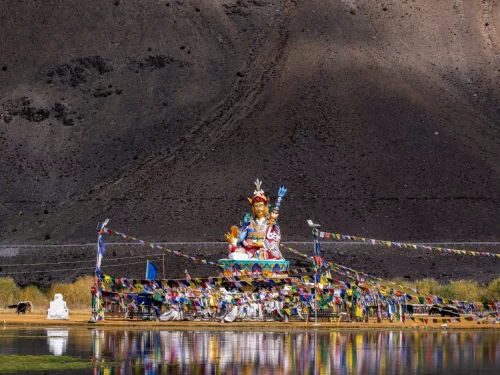
Guru Padmasambhava statue at Sani Lake near Padum village Zanskar Valley Ladakh during clear day, featuring prayer flags, motorcycles, barren mountain backdrop, perfect spiritual Zanskar tour package.  Monastery

Sani Monastery

Sani Monastery is one of the oldest Buddhist monasteries in the Zanskar region of Ladakh, closely associated with early Buddhist traditions and Padmasambhava.
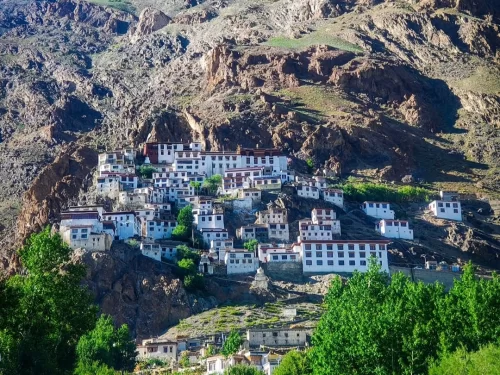
Karsha Monastery, largest Buddhist monastery in Zanskar Valley near Padum, Ladakh India. Monastery

Karsha Monastery

Karsha Monastery is a Tibetan Buddhist gompa and the largest and most important monastery in the Zanskar region of Ladakh, India.
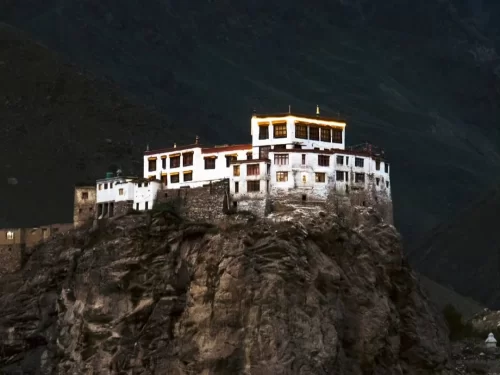
Bardan Monastery, ancient Buddhist monastery in Zanskar Valley near Padum, Ladakh India. Mountain

Bardan Monastery

Bardan Monastery is a historic 17th-century Buddhist monastery in the Zanskar Valley, known for its religious importance and remote Himalayan setting.

Frequently Asked Questions About Phuktal Monastery

Phuktal Monastery is located in a remote part of Zanskar Valley in Ladakh built into a cliffside above the Lungnak River. It is one of the most isolated monasteries in the region.
Phuktal Monastery is approximately 470 to 500 kilometers from Leh and the journey typically requires two days by road to reach the nearest motorable point.
Travelers reach Phuktal Monastery by driving from Leh toward Kargil and then continuing to Padum in Zanskar Valley, followed by a road journey to a nearby village and a several hour trek to the monastery.
Visitors generally do not require a separate permit specifically for Phuktal Monastery when traveling via the standard Zanskar route though checking current regulations before departure is advisable.
The best time to visit Phuktal Monastery is between June and September when the road to Zanskar Valley is open and trekking routes are clear of heavy snow.
Phuktal Monastery is usually not accessible during winter months because mountain passes into Zanskar close due to snowfall and trekking paths become unsafe.
Travelers typically spend two to three hours at Phuktal Monastery including trekking time and exploration of the monastery complex.
Phuktal Monastery is not ideal for senior citizens unless they are physically fit and comfortable with moderate trekking in high altitude terrain.
Basic food and simple accommodation may be available in nearby villages or through homestays in Zanskar Valley though facilities are limited.
The trek to Phuktal Monastery involves uneven mountain trails river crossings and rocky paths requiring proper footwear and reasonable fitness.
Phuktal Monastery is not directly accessible by vehicle and requires walking from the nearest road head.
Phuktal Monastery is commonly combined with a broader Zanskar Valley trip including Padum and nearby monasteries as part of a multi day exploration from Leh.

Loved this place ? Let’s Plan Your Ladakh Trip

Get customized Ladakh tour planning designed around altitude comfort, acclimatization time, weather windows, and real Himalayan road conditions. Whether you are visiting for high mountain passes, monasteries, lakes, or remote valley experiences, our exper

⚡ Quick Response | 💰 Free consultation | 🕒 24×7 expert support

×

Plan Your Trip