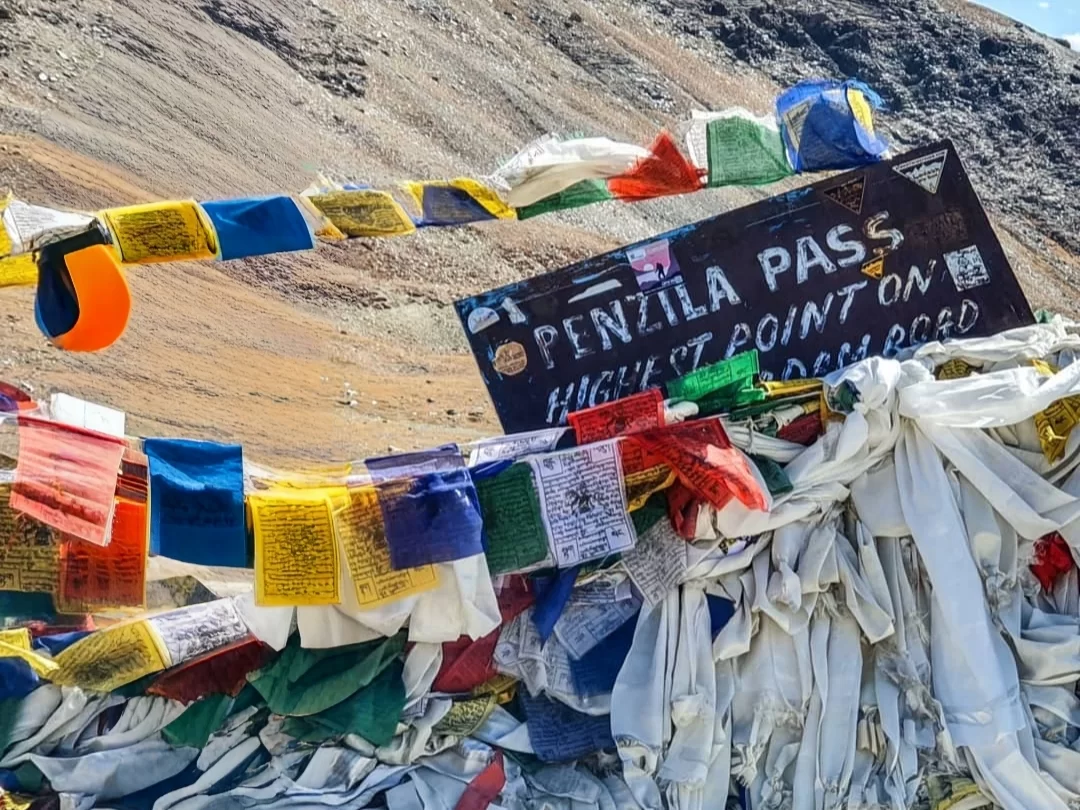
Quick Facts About Penzi La Pass
| Entry Fee | Free |
| Timings | 06:00 - 18:00 |
| Altitude (m) | 4400 |
| Ideal Visit Duration (hrs) | 1 |
| Best Time of Day | Morning |
| Crowd Level | Moderate |
| Distance from Kargil (km) | 90 |
| Walking Difficulty | Easy |
| Parking Available | No |
| Last Mile Access | Road |
| Suitable for Kids | No |
| Suitable for Seniors | No |
| Wheelchair Friendly | No |
Why Visit Penzi La Pass
Why Visit
Penzi La Pass is visited primarily for its role as the main road gateway into Zanskar Valley. Travelers experience it as part of the journey rather than a destination, gaining a direct sense of how isolated Zanskar remains and how seasonal access shapes travel in this region.
Atmosphere
The atmosphere at Penzi La Pass is open and exposed, with wide views of surrounding mountains and the Drang Drung Glacier below. Wind conditions are common, and weather can shift quickly. There are no permanent structures or tourist services, reinforcing its utilitarian nature.
What Makes It Special
What makes Penzi La Pass special is its proximity to the Drang Drung Glacier, one of the largest glaciers accessible by road in Ladakh. The pass marks a clear transition point between the greener Suru Valley and the stark landscapes of Zanskar, making it a geographic and experiential threshold rather than a scenic stop.
History of Penzi La Pass
Penzi La Pass has historically served as the primary land connection between the Suru Valley and the remote Zanskar region. For centuries, this route determined seasonal movement, trade supply, and administrative access, as Zanskar remained completely cut off during winter months due to heavy snowfall.
Before modern road development, travel across Penzi La was undertaken on foot or by pack animals during short summer windows. The pass played a practical role in linking Zanskar with Kargil and the wider Ladakh region, enabling movement of essential goods rather than functioning as a cultural or settlement corridor.
With the construction and gradual improvement of the Kargil Padum road, Penzi La became the most reliable gateway into Zanskar Valley. Its historical importance lies in accessibility and survival logistics, highlighting how geography shaped life, administration, and isolation in one of Ladakh’s most remote regions.
Best Time to Visit Penzi La Pass
The best time to visit Penzi La Pass is during the limited summer window when the road between Kargil and Zanskar Valley is open and weather conditions are relatively stable. Travel here depends entirely on snow clearance and seasonal accessibility rather than tourism preference.
- June to September is the only practical period when Penzi La Pass remains open for vehicles
- July and August offer the most reliable road conditions and clearer views of the Drang Drung Glacier
- Early June may still have snow patches and slushy sections affecting driving safety
- September sees fewer vehicles but colder temperatures and increasing risk of early snowfall
- October to May is not suitable due to heavy snow accumulation and complete closure of the pass
Late morning to early afternoon is the safest time to cross Penzi La Pass, as temperatures are slightly higher and visibility improves. Travelers should always confirm road status locally, as weather changes can lead to sudden closures.
How to Reach Penzi La Pass
- Penzi La Pass lies on the Kargil to Padum road and serves as the main entry point into Zanskar Valley
- The approach from the western side starts at Kargil, passing through Sankoo and Rangdum in Suru Valley
- The eastern descent from the pass leads toward Padum, the administrative center of Zanskar
- Private taxis and hired vehicles are the only practical transport options, as public transport is infrequent and seasonal
- The road is fully motorable during the open season but can have rough patches, water crossings, and landslide zones
- No special permits are required for Indian nationals beyond standard travel documents
- Foreign nationals are permitted to travel on this route, subject to prevailing regional regulations
- Travel plans should include buffer time, as road conditions can change quickly due to weather or maintenance work
What to Expect When You Visit Penzi La Pass
- A high altitude transit point rather than a developed sightseeing stop
- Open, windswept terrain with sudden changes in weather conditions
- Clear views toward the Drang Drung Glacier on the Zanskar side during good visibility
- No facilities such as restrooms, shops, or shelters at the pass
- Short halts only, as prolonged stops are uncomfortable due to cold and altitude
- Regular movement of vehicles heading to or from Zanskar Valley during the open season
- Cold temperatures even in summer, with strong winds common at the top
- An experience defined by geography and remoteness rather than planned activities
Important Visitor Information for Penzi La Pass
- Crowd levels are generally low, with traffic limited to vehicles traveling between Kargil and Zanskar Valley
- Weather conditions can change rapidly, with strong winds, fog, and sudden snowfall even during summer months
- Peak movement hours are late morning to early afternoon when visibility is usually better
- Early mornings and late evenings are colder and riskier due to poor visibility and icy patches
- Warm, windproof clothing is essential regardless of season due to exposure at the pass
- Proper acclimatization is important to avoid altitude related discomfort
- Avoid long stops at the top, as prolonged exposure can increase the risk of altitude sickness
- Follow local advisories and avoid crossing the pass during bad weather or low visibility
Photography and Viewpoint at Penzi La Pass
- Photography is permitted in open areas, but stopping should be brief due to cold winds and altitude exposure
- The pass offers clear views toward the Drang Drung Glacier on the Zanskar side during good weather
- There are no designated viewpoints, platforms, or safety barriers at the pass
- Wide angle lenses are ideal for capturing the scale of the glacier and surrounding mountain terrain
- Late morning light provides better visibility and reduces harsh shadows on snow and rock surfaces
- Weather changes can quickly affect visibility, making photography conditions unpredictable
- Strong winds can make tripod use difficult and unsafe
- Avoid photographing military vehicles or convoys if present on the route