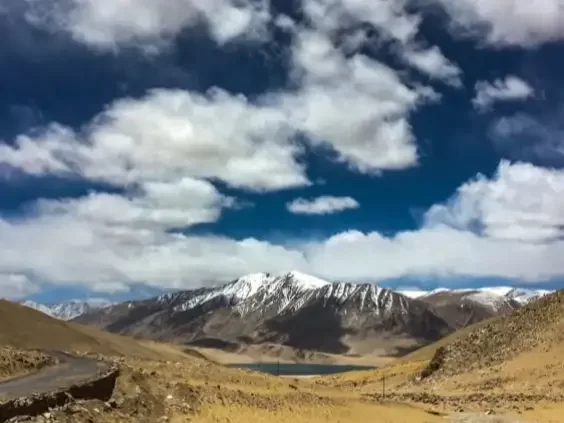
Namashang La Pass: High-Altitude Mountain Pass in Changthang, Ladakh, India

Namashang La Pass , Tso Moriri
Tourists traverse Namashang La while traveling the route between the Indus Valley and the high-altitude lakes of Tso Moriri and Tso Kar. The pass is a significant transit point for observing the transition into the Tibetan plateau landscape, featuring views of the nomadic Rebo encampments and the surrounding Kiang-populated plains.

Quick Facts About Namashang La Pass

Entry Fee Free
Timings 00:00 - 23:59
Altitude (m) 4960
Ideal Visit Duration (hrs) 0.25
Best Time of Day Morning
Crowd Level Low
Distance from Leh (km) 140
Walking Difficulty Easy
Parking Available Yes
Last Mile Access Road
Suitable for Kids Yes
Suitable for Seniors Yes
Wheelchair Friendly No

Why Visit Namashang La Pass in Ladakh

Namashang La is a high-altitude mountain pass situated at approximately 16,300 feet, serving as a vital link between the Indus Valley and the nomadic highlands of Tso Moriri. Travelers ascend this pass to access the remote Rupshu plateau, making it an essential transit point for those seeking to reach the turquoise waters of Korzok and the ancient nomadic settlements of the Changthang.

The atmosphere on the pass is defined by its immense silence and the panoramic views of the surrounding snow-capped peaks of the Zanskar Range. The terrain is a stark, high-desert landscape where the thin air and cold winds emphasize the isolation of the region, yet the sight of colorful prayer flags fluttering at the summit provides a sense of spiritual connection in this vast, barren wilderness.

What makes Namashang La distinct is its role as a gateway to the high-altitude wetlands and the unique biodiversity of the Tso Moriri Ramsar site. It offers travelers a front-row seat to the dramatic geological shifts of the plateau, providing frequent opportunities to spot the Kiang (Tibetan wild ass) and the Himalayan Marmot amidst the rolling plains that lead toward the sacred lake, far from the established tourist circuits.

Historical and Geographic Significance of Namashang La Pass

Namashang La is a high-altitude mountain pass located in the eastern part of Ladakh, situated at an elevation of approximately 4,960 meters (16,273 feet). It serves as a vital transition point on the road between the Indus Valley and the high-altitude lake basins, specifically connecting the Mahe Bridge area to the Tso Moriri wetland reserve.

Geographically, the pass marks the entry into the Korzok sector of the Changthang plateau. The surrounding landscape is characterized by its wide, arid valleys and distant snow-capped peaks of the Zanskar range. Unlike some of the more precipitous passes in western Ladakh, Namashang La features a relatively gradual ascent, making it a critical route for the movement of heavy supplies and logistics to the remote border settlements near the Line of Actual Control (LAC).

Historically, Namashang La has been an indispensable corridor for the Changpa nomads. For generations, these pastoralists have used the pass to move their pashmina goat herds between the winter pastures of the Indus banks and the high-summer grazing lands surrounding the Puga valley and Tso Moriri. Today, the pass is an essential landmark for travelers seeking the geothermal wonders of Puga and the nomadic culture of Korzok, representing a gateway to the deep interior of the Trans-Himalayan wilderness.

Best Time to Visit Namashang La Pass

Namashang La, standing at an elevation of 16,280 feet, is a vital mountain pass connecting the Puga Valley to the Tso Moriri lake basin. Because it remains part of the high-altitude Changthang plateau, its accessibility is strictly dictated by the heavy winter snowpack and the extreme sub-arctic climate that dominates the region for the majority of the year.

  • Ideal months: June to September is the only reliable window for a visit, with September offering the most stable weather and the clearest views of the turquoise waters of Tso Moriri on the horizon.
  • Weather conditions: During the summer, daytime temperatures range from 5°C to 15°C, but the pass is notorious for its relentless, high-velocity winds that sweep across the barren landscape, creating a significant wind-chill effect even under direct sunlight.
  • Periods to avoid: Avoid travel from November to April when the pass is frequently blocked by deep snow and temperatures can drop to a life-threatening -30°C; furthermore, early June can be challenging as the melting permafrost can make the road surfaces near the summit soft and prone to sinking.

How to Reach Namashang La Pass

Namashang La Pass is a high-altitude mountain crossing situated at approximately 4,960m (16,273 ft) in the Changthang region of Ladakh. It serves as a vital transit point for travelers moving between the Indus Valley and the high-altitude lake basin of Tso Moriri, offering breathtaking views of the barren Himalayan landscape and the nomadic plains of Kiagar Tso.

  • Nearest Airport: Kushok Bakula Rimpochee Airport (IXL) in Leh is the closest air link, located roughly 195 km away. Because Namashang La is nearly 1,500m higher than Leh, travelers must spend at least 48-72 hours in Leh for mandatory acclimatization before heading toward this pass.
  • Nearest Railway Station: Jammu Tawi is the nearest major railhead, approximately 810 km away. Practical access is strictly via road, typically as part of a multi-day tour from Leh.
  • Road Access and Route: The pass is located on the main route from Leh to Tso Moriri. The journey follows the Leh – Karu – Upshi – Chumathang – Mahe Bridge route. After crossing the Mahe Bridge, the road climbs steeply through a series of switchbacks to reach the summit of Namashang La.
  • Last-Mile Connectivity: Access is limited to private 4x4 SUVs, high-clearance taxis, and heavy-duty adventure motorcycles. While the road from Leh to Mahe is largely paved, the stretch over the pass can be rough, with sections of loose gravel and dirt tracks. Smaller sedans and hatchbacks are generally not recommended for this route.
  • Permits and Restrictions: Namashang La lies within a restricted border zone. All travelers require a valid Inner Line Permit (ILP) for Indian citizens or a Protected Area Permit (PAP) for foreigners. Permits must explicitly mention "Tso Moriri" or "Chumathang-Mahe" and are strictly checked at the Mahe Bridge military post.
  • Realistic Travel Conditions: The pass is seasonally accessible from late May to October. There are no facilities, shops, or oxygen points at the summit. The nearest basic medical aid and fuel are available at Chumathang (approx. 50 km away) or the village of Karzok near Tso Moriri. Due to the high risk of AMS, stops at the summit should be limited to 10 minutes.

What to Expect When You Visit Namashang La Pass

  • Environment and Surroundings: At an altitude of approximately 4,960 meters (16,273 feet), Namashang La is a critical high-altitude corridor connecting the Indus Valley to the Tso Moriri lake basin. The pass is characterized by a vast, open landscape with rolling, barren hills typical of the Changthang plateau. It is notable for having a high concentration of Buddhist prayer flags at the summit and offers a distinct transition from the river-fed valley of Chumathang to the stark, high-altitude desert surroundings of Kiagar Tso.
  • Facilities and Amenities: There is no infrastructure at the summit. No shops, toilets, or shelters are available. The pass is isolated, and travelers should ensure they have sufficient supplies before departing from Chumathang or Mahe. The nearest basic nomadic settlements and homestays are located in Korzok, approximately 40 kilometers further toward Tso Moriri. Mobile connectivity is non-existent at the pass and remains extremely limited throughout the region.
  • Accessibility and Movement: The road is generally paved with black tar but is subject to seasonal damage, including frost heaves and loose gravel patches near the summit. While it is less steep than passes like Chang La, the thin air at nearly 5,000 meters can cause vehicle engines to lose power. A high-clearance vehicle is recommended. Access is strictly regulated; a valid Inner Line Permit (ILP) specifying the Tso Moriri circuit is required and will be checked at the Mahe Bridge checkpoint.
  • Typical Visitor Behavior and Conditions: Most travelers stop at Namashang La for only 5-10 minutes for photography and to view the prayer flags before continuing toward Kiagar Tso. Due to the high elevation, visitors often experience immediate breathlessness and should avoid any running or physical exertion at the summit. The pass is frequently hit by strong, cold winds even on sunny days, and rapid weather changes can lead to sudden drops in temperature.

Essential Visitor Information for Namashang La Pass

  • Crowd and Weather: Located at approximately 4,960 meters (16,273 feet), this pass is extremely quiet and serves as the gateway to the Tso Moriri region; expect intense, dry winds and freezing temperatures even during mid-summer.
  • Peak and Quiet Visiting Hours: Most travelers cross between 11:00 AM and 3:00 PM; visiting in the early morning (before 9:00 AM) offers the most pristine views of the surrounding Himalayan peaks but comes with a risk of black ice on the road.
  • Dress Code: Heavy winter layering is required; a windproof down jacket, thermal inner-wear, and woolen accessories (cap and gloves) are essential to combat the relentless wind-chill at the summit.
  • Safety and Altitude Cautions: Due to the significant elevation, Acute Mountain Sickness (AMS) is a major risk; limit your stop at the summit to 15 minutes and avoid any physical overexertion like climbing the nearby ridges.
  • Logistics and Infrastructure: There are no shops, medical facilities, or mobile signals at the pass; the nearest basic support is at Chumathang (60 km away) or the Karzok village near Tso Moriri.
  • Permits: A valid Inner Line Permit (ILP) specifically mentioning the Tso Moriri/Chumathang circuit is mandatory for all visitors and will be checked at the Mahe Bridge military post.

Photography Strategy and Panoramic Viewpoints for Namashang La Pass

Namashang La, standing at an elevation of 4,960 meters (16,273 feet), serves as the scenic gateway to the Tso Moriri wetland sanctuary. Photography at this pass is defined by the sudden, dramatic transition from the high-altitude desert of the Rupshu Plateau to the shimmering blue waters of Tso Kiagar visible in the distance.
  • Tso Kiagar Bird's-Eye View: The most significant photographic opportunity is during the initial descent toward Tso Moriri. From the summit switchbacks, use a telephoto lens (70-200mm) to compress the turquoise lake against the surrounding chocolate-colored mountains, creating a striking color contrast.
  • Prayer Flag Foreground: The summit is heavily adorned with multi-layered prayer flags. Position your camera at a low angle to use these vibrant textiles as a high-contrast foreground, framing the distant snow-capped peaks of the Chamser and Lungser Kangri (both above 6,000 meters).
  • Optimal Lighting and Atmospheric Depth: Morning light (8:30 AM – 10:30 AM) is essential for this pass. As the sun rises over the eastern ridges, it illuminates the mineral streaks on the valley walls, whereas afternoon light often creates a heavy haze that obscures the clarity of the distant peaks.
  • Wildlife and Movement: The plateau stretches surrounding Namashang La are frequent grazing grounds for the Kiang (Tibetan Wild Ass). Keep your camera settings on a high shutter speed (1/1000s or faster) to capture these animals in motion against the barren landscape as you approach the pass.
  • Wind Stability and UV Management: Like most Rupshu passes, Namashang La is subject to high-velocity winds that can cause significant camera shake. Use a weighted tripod or a fast prime lens to ensure sharpness. A circular polarizer is necessary to manage the intense UV radiation and prevent the deep indigo sky from looking over-processed.
  • Access and Restrictions: The pass is located within the Inner Line Permit (ILP) zone. While landscape photography is fully permitted, do not photograph the ITBP (Indo-Tibetan Border Police) convoys or checkpoints that frequently monitor this route. Drone flights are restricted due to the proximity to the Tso Moriri wildlife reserve and sensitive border sectors.

Near By Attraction

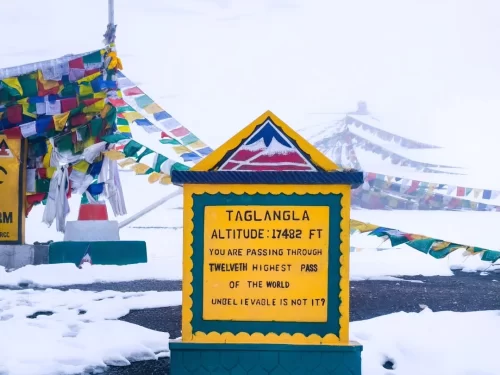
Tanglang La (Taglang La) Pass sits at 5,328 meters (17,480 ft) on Leh-Manali Highway in Ladakh, often signposted as 17,582 ft and claimed as second highest motorable pass after Khardung La, though now ranked around 12th globally Mountain Pass

Tanglang La Pass

Tanglang La is a high-altitude mountain pass situated at an elevation of approximately 5,328 meters (17,480 feet) in the Ladakh region, often cited as the second-highest motorable pass on the Manali-Leh Highway.
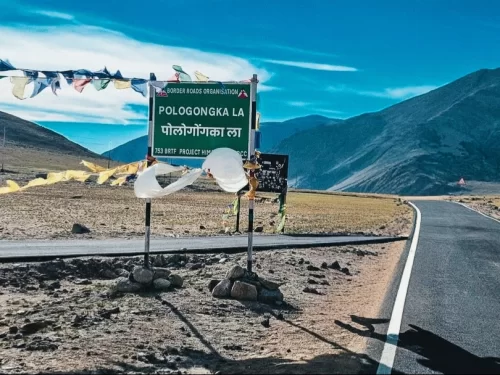
Pologongka La high-altitude mountain pass BRO signboard fluttering prayer flags barren rugged mountains clear blue skies Ladakh India, scenic offbeat route Tso Moriri Tso Kar Leh-Manali highway adventure travel landmark. Mountain Pass

Pologongka La

Pologongka La is a mountain pass situated at an elevation of approximately 4,940 meters (16,207 feet) in the Leh district of Ladakh.
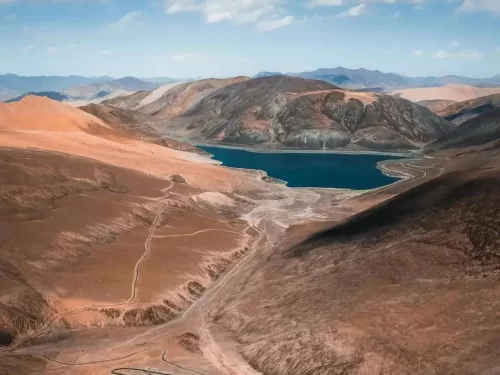
Stunning aerial drone view of turquoise Mirpal Tso Lake nestled amid barren rusty brown desert sand dunes rugged arid mountains in remote high-altitude Changthang Ladakh under clear blue skies, perfect India Leh Ladakh offbeat adventure tour package.  Lake

Mirpal Tso

Mirpal Tso is a remote high-altitude freshwater lake situated at an elevation of approximately 4,913 meters (16,122 feet) on the Changthang Plateau.

Frequently Asked Questions About Namashang La Pass

Namashang La Pass is located in eastern Ladakh on the route connecting the Indus Valley to the Tso Moriri region. It lies beyond Mahe in the Changthang plateau southeast of Leh city.
Namashang La Pass can be reached from Leh city by driving along the Indus River through Karu and Chumathang and crossing the Mahe bridge checkpoint. The journey usually takes several hours due to distance and mountain terrain.
An Inner Line Permit is required for tourists visiting Namashang La Pass because it falls within a restricted border area of Ladakh. Permits are issued by the authorities in Leh city before travel.
The best time to visit Namashang La Pass in Ladakh is from June to September when roads are generally clear and weather conditions are relatively stable. Outside this period access depends on snow clearance and local advisories.
Namashang La Pass stands at an altitude of around 16200 feet where oxygen levels are considerably lower than in Leh city. Visitors may experience breathlessness if they have not properly acclimatized.
There are no food outlets or accommodation facilities at Namashang La Pass. Travelers should carry water and essential supplies and plan overnight stays in Chumathang, Korzok, or Leh city.
A high clearance SUV is recommended for reaching Namashang La Pass due to steep climbs and occasional rough patches. Vehicles should be in good mechanical condition for high altitude driving.
Travelers usually spend 10 to 20 minutes at Namashang La Pass because of the thin air and cold winds. Short stops help reduce physical strain while allowing time for photographs.
Visitors should wear layered thermal clothing and a windproof jacket when traveling to Namashang La Pass. Even during summer months temperatures can remain low at this altitude.
Namashang La Pass is generally not accessible during winter months as heavy snowfall blocks interior plateau roads in eastern Ladakh. Travel plans should be based on current road status updates from Leh city.
Namashang La Pass is better suited for acclimatized and physically fit travelers. Senior citizens or young children should consider altitude sensitivity before planning the journey from Leh city.
Mobile network connectivity is not available at Namashang La Pass in Ladakh. Signals usually drop after crossing Mahe, so communication should be arranged in advance from Leh city.

Loved this place ? Let’s Plan Your Ladakh Trip

Get customized Ladakh tour planning designed around altitude comfort, acclimatization time, weather windows, and real Himalayan road conditions. Whether you are visiting for high mountain passes, monasteries, lakes, or remote valley experiences, our exper

⚑ Quick Response | πŸ’° Free consultation | πŸ•’ 24Γ—7 expert support

×

Plan Your Trip