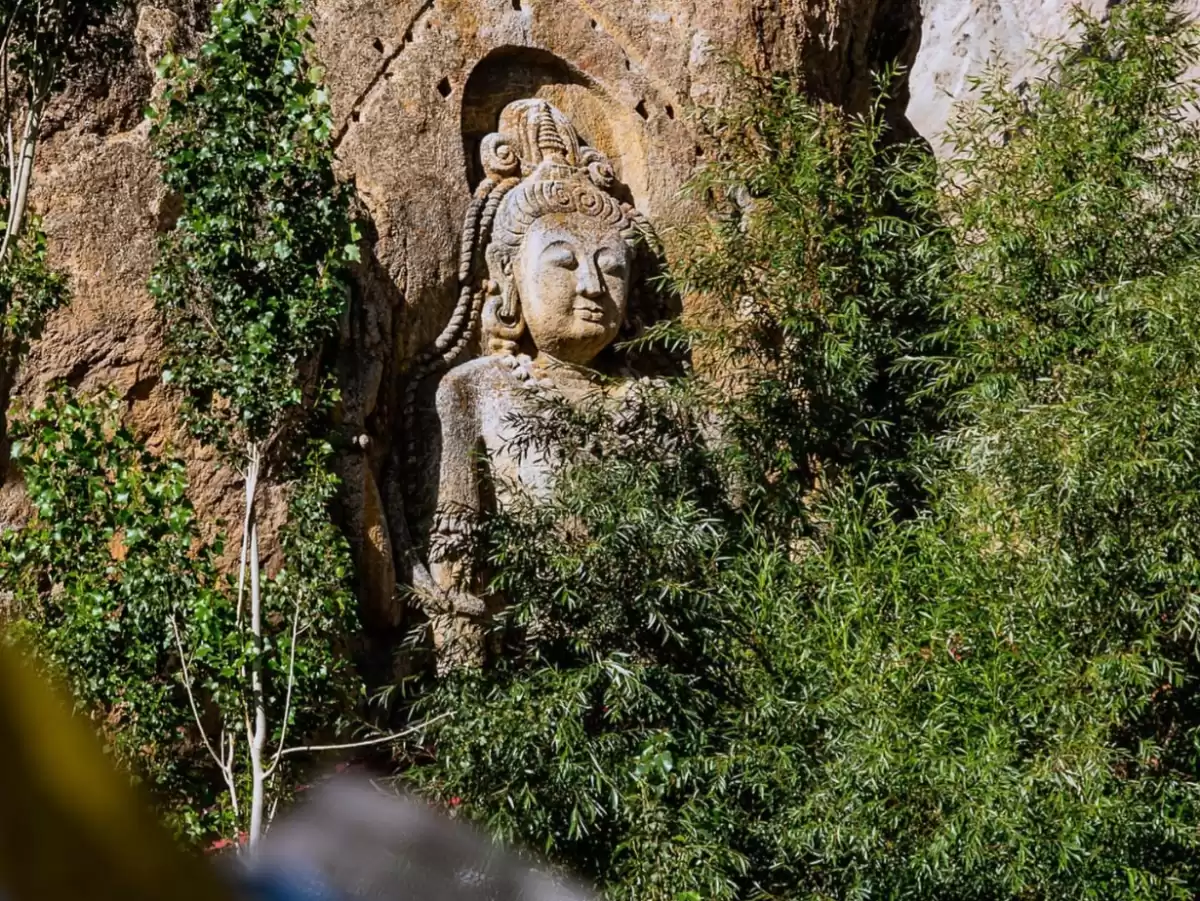
Mulbekh Monastery: Ancient Buddhist Site in Mulbekh, Ladakh, India

Mulbekh Monastery , Kargil
Tourists visit Mulbekh primarily to view the Chamba Statue, a 9-meter (30-foot) tall Maitreya Buddha carved directly into a limestone rock face dating back to the 7th or 8th century. The site serves as a significant cultural transition point between the Muslim-majority Kargil district and the Buddhist-majority Leh district, offering insights into early Gandhara-influenced art and architecture.

Quick Facts About Mulbekh Monastery

Entry Fee Free
Timings 08:00 - 18:00
Altitude (m) 3304
Ideal Visit Duration (hrs) 0.5
Best Time of Day Morning
Crowd Level Moderate
Distance from Kargil (km) 40
Walking Difficulty Easy
Parking Available Yes
Last Mile Access Road
Suitable for Kids Yes
Suitable for Seniors Yes
Wheelchair Friendly Partial

Why Visit Mulbekh Monastery in Ladakh

Mulbekh Monastery is a primary spiritual landmark on the Srinagar-Leh highway, drawing visitors to witness its extraordinary 9-meter-tall rock-cut sculpture of the Maitreya Buddha (the Future Buddha). Carved directly into a massive limestone cliff during the 8th century, it stands as a rare surviving example of Gandharan-influenced art and marks the definitive cultural transition from the Islamic influence of Kargil to the Buddhist heartland of Ladakh.

The atmosphere on the ground is a blend of roadside energy and ancient tranquility, as the monastery consists of two distinct gompas—one Drukpa and one Gelugpa—perched precariously atop a craggy hill overlooking the village. Visitors experience a profound sense of history while walking through the narrow chambers filled with centuries-old frescoes and statues, all while hearing the distant hum of travelers moving along the vital NH1 artery below.

What makes Mulbekh distinct is its unique positioning as a "living museum" where ancient petroglyphs and Kharosthi inscriptions coexist with active monastic daily life. Its location at the foot of the Namik La pass provides a rare opportunity for travelers to see how early Buddhist missionaries integrated their faith into the rugged Trans-Himalayan geography, making it an essential stop for those interested in the historical Silk Road connections between India and Central Asia.

Historical and Geographic Significance of Photi La Pass

Photi La Pass is a high-altitude mountain pass situated at an elevation of approximately 5,520 meters (18,124 feet) in the Changthang region of Ladakh. It serves as a vital geographic link connecting the Hanle valley to Photile village and the settlement of Chismule, which serves as the primary gateway leading further toward Umling La, the highest motorable road in the world.

Historically, this pass has been a traditional transit corridor for the nomadic Changpa herders moving livestock across the high-altitude plateau. Geographically, it is located in one of the most remote parts of the Indian Trans-Himalayas, characterized by extreme weather and stark, high-alpine desert terrain. Its proximity to the Indian Astronomical Observatory in Hanle makes it a significant site for high-altitude atmospheric research and deep-space observation due to its clear, unpolluted skies.

The pass is of high strategic importance due to its location near the eastern border. It is maintained by the Border Roads Organization (BRO) to ensure connectivity to the nomadic settlements and military outposts in the region. Access to Photi La is strictly regulated, requiring specific permits for travelers navigating this remote sector of the Ladakh range.

Best Time to Visit Mulbekh Monastery

Mulbekh Monastery, famous for its 9-meter tall rock-carved Chamba (Maitreya Buddha), is located on the Srinagar-Leh Highway at an altitude of approximately 11,000 feet. Unlike higher mountain passes, it remains accessible for a longer duration, but the quality of the experience is heavily dependent on the opening of the mountain gateways from Srinagar or Manali.

  • Ideal months: June to September is the most favorable window for visitors, with July and August being peak months for those attending local monastic festivals or traveling the full NH1 circuit.
  • Weather conditions: Summer weather is generally pleasant with daytime temperatures between 15°C and 25°C; however, the sun is exceptionally strong at this altitude, and evenings remain cool, often requiring light woolens even in mid-July.
  • Periods to avoid: Avoid travel from December to March when the region experiences extreme cold and the main highways (Zoji La and Shinku La/Rohtang) are closed, isolating the area from mainstream tourism; additionally, late August can occasionally see road disruptions due to monsoon-induced mudslides in the lower Himalayan reaches.

How to Reach Mulbekh Monastery

Mulbekh Monastery (Mulbekh Gompa) is a prominent spiritual landmark located on the Srinagar-Leh Highway (NH1), approximately 45 km east of Kargil. Famous for its 9-meter tall rock-cut Maitreya Buddha (Chamba), it serves as the gateway to the Buddhist-dominated regions of Ladakh for those traveling from the Kashmir Valley.

  • Nearest Airport: Kushok Bakula Rimpochee Airport (IXL) in Leh is approximately 175 km to the east. Alternatively, Srinagar International Airport (SXR) is located about 245 km to the west. Most travelers visit Mulbekh as a stopover while transiting between these two cities.
  • Nearest Railway Station: Jammu Tawi is the nearest major railhead, situated roughly 510 km away. From Jammu, the journey to Mulbekh is typically broken into two days, with an overnight stay in Srinagar or Kargil.
  • Road Access and Connectivity: The monastery is situated directly on the NH1, making it one of the most accessible religious sites in Ladakh. The road is well-maintained and remains open for most of the year, generally from May to November, depending on the status of the Zoji La pass.
  • Last-Mile Connectivity: Since it is located on the main highway, Mulbekh is accessible by all vehicle types, including small hatchbacks, sedans, and luxury buses. Regular JKSRTC buses and shared taxis plying the Srinagar–Kargil–Leh route stop directly in Mulbekh village.
  • Traveler Logistics: The monastery and the Chamba statue are located right by the roadside in Mulbekh village. No strenuous trekking or climbing is required. Visitors typically spend 30–60 minutes here before proceeding toward the Namik La and Fotu La passes.
  • Practical Amenities: Mulbekh village offers basic amenities including local tea stalls, small guesthouses, and public restrooms. The nearest reliable fuel station and comprehensive medical facilities are located in Kargil, roughly an hour's drive away.

What to Expect When You Visit Fotu La Pass

  • Environment and Surroundings: At an elevation of 4,108 meters (13,478 feet), Fotu La is the highest point on the Srinagar-Leh Highway (NH1). The landscape is a stark, high-altitude cold desert featuring dramatic, wind-eroded geological formations. The summit provides an expansive viewpoint of the "Moonland" topography near Lamayuru and is often clear of snow earlier than other passes due to its relatively lower moisture levels.
  • Facilities and Amenities: There is no commercial infrastructure at the pass summit. Aside from a large Prasar Bharati television relay station and a few road signs, there are no shops, restrooms, or medical centers. Travelers should plan for breaks in the nearby village of Lamayuru (15 km away) or at Budhkharbu, where basic food and fuel may be available.
  • Accessibility and Movement: The pass is located on a well-maintained section of the NH1 and is generally easier to traverse than the more volatile Zoji La. However, the road features sharp hairpin bends and steep inclines that can be challenging for low-powered vehicles. It is typically open from April to November, though sudden winter dust storms or late-season snow can cause temporary delays.
  • Typical Visitor Behavior and Conditions: Most tourists stop for 10–15 minutes to take photographs with the prayer flags and the summit marker. The altitude is high enough to cause mild breathlessness for those not yet acclimated to Ladakh's environment. It is common to see travelers transitioning from the Kargil district to the Leh district here, using the pass as a final high-altitude benchmark before descending into the Indus Valley.

Essential Visitor Information for Mulbekh Monastery

  • Crowd and Weather: Located at an altitude of approximately 3,300 meters (10,827 feet), this site sees steady traffic as a primary stop on the Srinagar-Leh Highway; the weather is typical of a high-altitude desert, featuring intense sun exposure and dry, dusty winds.
  • Peak and Quiet Visiting Hours: Peak tourist hours are between 10:00 AM and 4:00 PM; for a more spiritual and quiet experience, visit before 9:00 AM when the morning light perfectly illuminates the 9-meter tall Chamba (Maitreya Buddha) rock carving.
  • Dress Code: As a sacred Buddhist site, modest dress is mandatory; shoulders and knees must be covered. Remove shoes before entering the temple shrines adjacent to the rock carving, and always walk clockwise (circumambulate) around the religious structures.
  • Safety and Practical Cautions: The monastery is situated directly on a sharp bend of the highway; exercise extreme caution when crossing the road or parking, as heavy truck traffic often passes through at speed. Use high-SPF sunscreen and lip balm to combat the arid conditions.
  • Experience-Based Notes: The site consists of two gompas (Drukpa and Gelugpa) built around the ancient 1st-century BC or 8th-century AD (scholarly debated) rock relief; allow at least 30–45 minutes to appreciate the intricate carvings and the small museum on-site.

Photography Strategy and Viewpoints for Mulbekh Monastery

Mulbekh Monastery is a significant spiritual landmark on the Kargil-Leh Highway, famous for its towering 9-meter (30-foot) rock carving of Maitreya Buddha (Chamba). The site combines ancient Gandhara-style relief sculpture with two perched gompas—one Drukpa and one Gelugpa—offering a unique blend of archaeological and architectural subjects.
  • The Chamba Statue Perspective: The primary subject is the Maitreya Buddha carving. For the best detail, stand across the highway to capture the statue’s full height in relation to the jagged rock face it is carved into. Use a mid-range lens (35-50mm) to avoid the distortion that wide-angle lenses can cause at close range.
  • Perched Gompa Vistas: To capture the monastery’s dramatic placement, walk slightly east along the highway toward Leh. This angle provides a clear view of the white-washed monastic buildings clinging to the vertical cliffs, creating a stark contrast against the deep blue sky and the rugged mountain backdrop.
  • Optimal Lighting and Detail: The statue faces roughly east-southeast. The best time for photography is during the morning (8:00 AM – 10:30 AM) when the sun directly illuminates the carving, highlighting the intricate details of the robes and jewelry that are often lost in afternoon shadows.
  • Interiors and Sacred Etiquette: While photography of the external rock carving and landscape is generally encouraged, photography inside the small temples (Lhakhangs) at the base or on the cliff is strictly prohibited. Always look for signage or ask the resident monks for permission before taking out your camera in communal areas.
  • Crowd and Traffic Management: Being located directly on the NH1 highway, the area experiences high traffic from tourist taxis and trucks. Early morning visits allow for cleaner shots without vehicles obstructing the foreground. Use the dedicated parking bay to set up your gear safely and avoid standing in the middle of the highway curves.

Near By Attraction

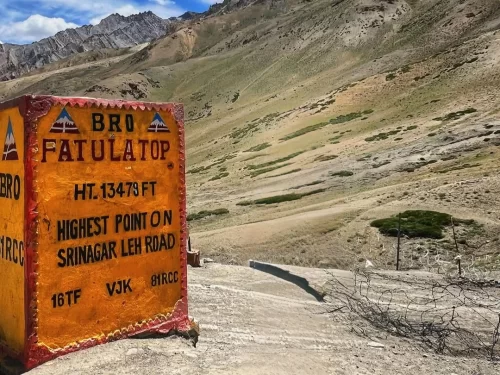
A vibrant yellow BRO sign marks the summit of Fotu La Pass at 13,479 feet, set against the sweeping, arid slopes and rugged peaks of the Himalayan landscape on the Srinagar-Leh highway. Mountain Pass

Fotu La Pass

Fotu La is a high-altitude mountain pass situated at an elevation of approximately 4,108 meters (13,478 feet) in the Zanskar Range of the Himalayas.
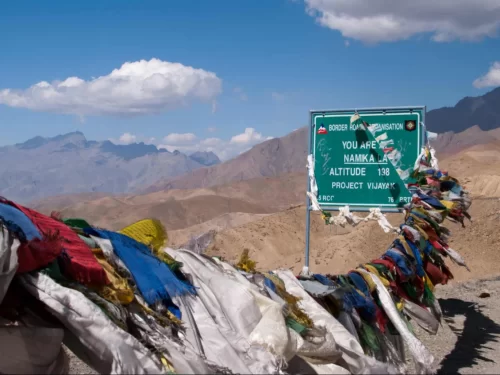
Namika La Pass signboard Ladakh India during clear partly cloudy day, featuring altitude marker prayer flags barren mountains highway, perfect high-altitude adventure Ladakh tour package. Mountain Pass

Namika La Pass

Namika La, also known as the Pillar of the Sky, is a high-altitude mountain pass situated at an elevation of approximately 3,700 meters (12,139 feet) in the Zanskar Range.
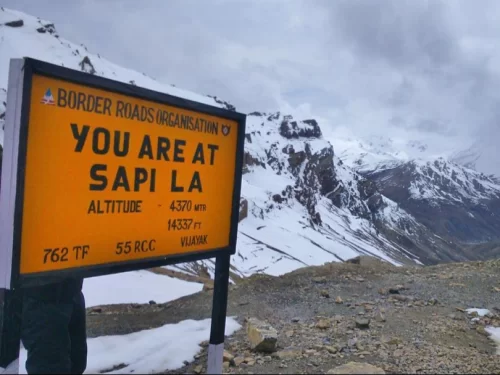
Sapi La pass BRO signboard 4370m altitude snowy rugged mountains cloudy skies Ladakh India, high-altitude BRO achievement Nyoma-Leh route Changthang scenic drive Tso Moriri detour. Mountain

Sapi La

Sapi La is a high-altitude mountain pass in Ladakh that connects Shargole and Sapi Valley on a motorable road

Frequently Asked Questions About Mulbekh Monastery

Mulbekh Monastery is located in Mulbekh village on the Srinagar Leh Highway in western Ladakh between Kargil and Lamayuru. It lies about 190 kilometers from Leh city and is easily accessible by road.
Mulbekh Monastery can be reached from Leh city by driving toward Kargil on National Highway 1. The journey usually takes five to six hours depending on traffic and road conditions.
There is generally no major entry fee to visit Mulbekh Monastery, though small donations are appreciated for maintenance. Visitors can check locally in Mulbekh village for updated information.
The best time to visit Mulbekh Monastery in Ladakh is from May to October when the Srinagar Leh Highway remains open and weather conditions are comfortable for sightseeing.
Most travelers need 30 to 45 minutes to explore Mulbekh Monastery. The visit usually includes viewing the rock carved Maitreya Buddha statue and spending quiet time inside the monastery complex.
Mulbekh Monastery is suitable for family travel as it is located along a main highway and does not require strenuous walking. Senior citizens and children can visit comfortably with short stops.
Basic food options and small guesthouses are available in Mulbekh village near the monastery. Larger accommodation and restaurant choices can be found in Kargil or Leh city.
Visitors at Mulbekh Monastery can see the large ancient rock carving of Maitreya Buddha along with prayer halls and traditional Buddhist artwork. The site offers insight into the cultural heritage of western Ladakh.
Mulbekh Monastery can sometimes be visited during winter months depending on snowfall and road clearance along the highway. Travel plans should be confirmed with current road updates from Leh city or Kargil.
Photography is generally allowed in the outer areas of Mulbekh Monastery, including the rock carved statue. Inside prayer halls, visitors should seek permission before taking photographs.
Mobile network coverage near Mulbekh Monastery in Ladakh is usually available but may be intermittent. Connectivity is more reliable in nearby towns such as Kargil or Leh city.

Loved this place ? Let’s Plan Your Ladakh Trip

Get customized Ladakh tour planning designed around altitude comfort, acclimatization time, weather windows, and real Himalayan road conditions. Whether you are visiting for high mountain passes, monasteries, lakes, or remote valley experiences, our exper

⚑ Quick Response | πŸ’° Free consultation | πŸ•’ 24Γ—7 expert support

×

Plan Your Trip