Quick Facts About Fotu La Pass
| Entry Fee | Free |
| Timings | 00:00 - 23:59 |
| Altitude (m) | 4108 |
| Ideal Visit Duration (hrs) | 0.25 |
| Best Time of Day | Morning |
| Crowd Level | Moderate |
| Distance from Leh (km) | 135 |
| Walking Difficulty | Easy |
| Parking Available | Yes |
| Last Mile Access | Road |
| Suitable for Kids | Yes |
| Suitable for Seniors | Yes |
| Wheelchair Friendly | No |
Why Visit Fotu La Pass, Ladakh
Fotu La Pass attracts travelers primarily as the highest point on the Srinagar–Leh Highway, offering expansive views of the rugged Ladakh landscape. It serves as a natural stopover for those driving between Leh and Kargil, where visitors pause to experience the elevation, take photographs, and observe the dramatic terrain shaped by high-altitude conditions.
On-ground, the atmosphere is stark and windswept, with thin air, minimal vegetation, and uninterrupted mountain vistas in every direction. The area remains quiet, with only occasional movement of vehicles along the highway, making it feel remote despite being directly accessible by road.
What sets Fotu La apart is its position as a true high-altitude highway pass that does not require trekking to experience. Unlike many Ladakh viewpoints, it combines ease of access with a raw Himalayan setting, allowing travelers to witness altitude-driven landscapes within minutes of stopping their vehicle.
History of Fotu La Pass, Ladakh
Fotu La Pass has historically functioned as a key transit point on the route connecting the Kashmir region with Leh. The present-day Srinagar–Leh Highway follows this alignment, which has long been used for movement of goods and people across the western Himalayas.
There is no major standalone historical monument or event directly associated with Fotu La itself, but its importance lies in its role as a high-altitude passage enabling connectivity in a region where terrain restricts movement. Travelers today experience it primarily as part of this long-established route rather than as a destination with independent historical structures.
Best Time to Visit Fotu La Pass, Ladakh
Fotu La Pass is best visited during the summer and early autumn months when the Srinagar–Leh Highway remains open and road conditions are stable. Being a high-altitude pass, accessibility is entirely dependent on weather and road clearance rather than just temperature.
- Ideal months: May to October
- Weather conditions: Cold and dry with clear skies; temperatures remain low due to altitude, with strong winds common at the pass
- Periods to avoid: November to April due to heavy snowfall, road closures, and unsafe driving conditions on the Srinagar–Leh Highway
How to Reach Fotu La Pass, Ladakh
- Nearest airport: Kushok Bakula Rimpochee Airport, Leh (approx. 135 km); onward travel by road via Srinagar–Leh Highway
- Nearest railway station: Jammu Tawi Railway Station (approx. 430 km); requires onward road journey via Srinagar–Kargil route
- Road access: Located directly on NH1 (Srinagar–Leh Highway); accessible by private vehicles, taxis, and buses traveling between Leh and Kargil; no separate last-mile route or trekking required
What to Expect When You Visit Fotu La Pass, Ladakh
- Environment: High-altitude mountain pass with barren landscapes, rocky terrain, and wide panoramic views; strong winds and low oxygen levels are common
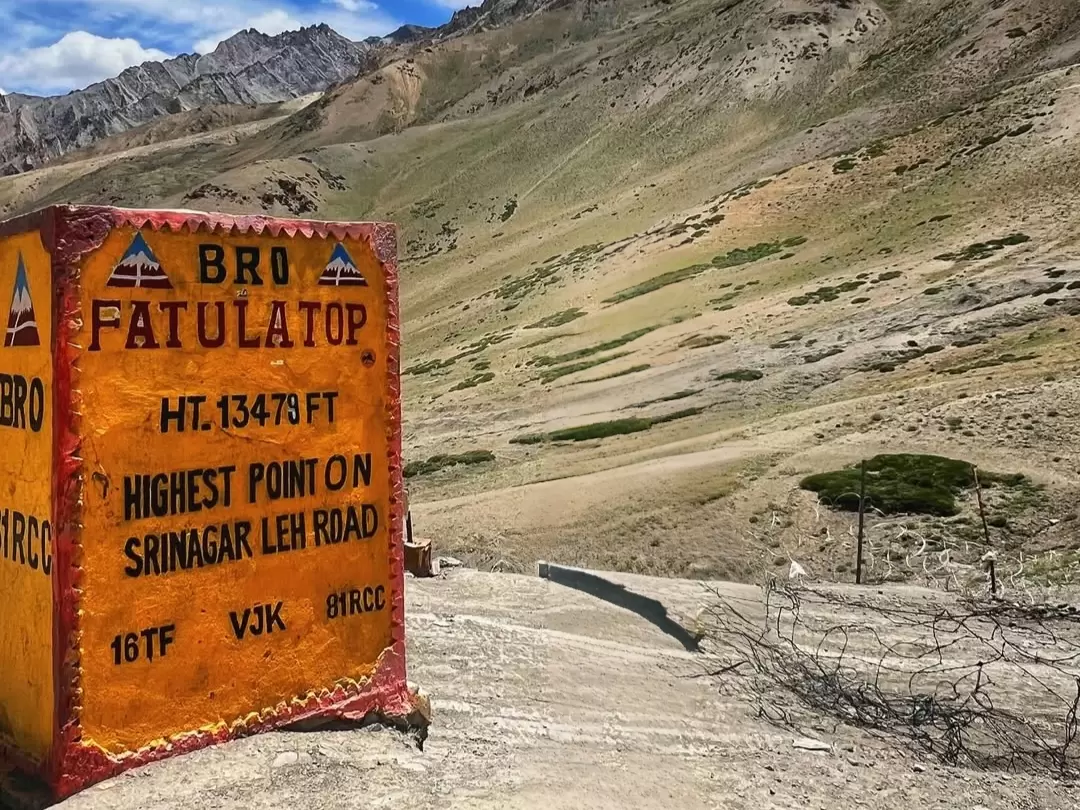
- Facilities: No formal tourist facilities such as restrooms, food stalls, or shops; only a signboard marking the pass and occasional BRO presence
- Accessibility: Direct roadside stop on NH1 with limited space to pull over; no designated viewpoints or walking trails
- Movement: Visitors typically spend short durations due to altitude; walking is minimal and mostly confined to the roadside area
- Visitor conditions: Mostly transit travelers halting briefly for photos; exposure to cold and wind can be intense even in summer
Important Visitor Information for Fotu La Pass, Ladakh
- Crowd and weather: Generally low crowd levels; weather can change quickly with strong winds and sudden drops in temperature even during summer months
- Peak and quiet hours: Midday sees more vehicle movement on the Srinagar–Leh Highway; early morning and late afternoon are quieter with better visibility
- Dress code: Warm layers, windproof jackets, and sunglasses are essential due to cold winds and high-altitude exposure
- Safety notes: High altitude (4108 m) may cause breathlessness; avoid long stays, stay hydrated, and do not exert physically; roadside stops require caution due to moving traffic and limited parking space
Photography and Viewpoints at Fotu La Pass, Ladakh
- Best viewpoints: Roadside stop near the Fotu La signboard offers wide-angle views of layered mountain ridges and the descending highway
- Lighting conditions: Morning to early afternoon provides clearer skies and better visibility; late afternoon light adds depth to the terrain but weather can shift quickly
- Photography restrictions: No formal restrictions; however, avoid obstructing the highway while stopping for photos
- Crowd and access factors: Limited space to stop vehicles; most visitors take quick photos and move on, so timing your stop carefully helps avoid traffic interference