Moonland in Lamayuru – The Moon-Like Landscape of Ladakh

Moonland , Lamayuru
Located along the Leh–Kargil highway near Lamayuru village, Moonland features eroded hills with pale yellow and grey textures that resemble the surface of the moon. The formations are a result of centuries of wind and water erosion. Tourists usually stop here briefly while traveling between Leh and Kargil, often combining the visit with Lamayuru Monastery.

Quick Facts About Moonland

Entry Fee Free
Timings 00:00 - 23:59
Altitude (m) 3510
Ideal Visit Duration (hrs) 0.5
Best Time of Day Morning
Crowd Level Moderate
Distance from Leh (km) 115
Walking Difficulty Easy
Parking Available Yes
Last Mile Access Road
Suitable for Kids Yes
Suitable for Seniors Yes
Wheelchair Friendly No

Why Visit Moonland (Lamayuru), Leh District, Ladakh

Visitors stop at Moonland to see its unusual eroded hills that resemble a lunar surface. Located along the Leh–Kargil highway near Lamayuru village, it is a natural roadside viewpoint where travelers pause to observe and photograph the distinct pale-yellow and grey sediment formations.

The atmosphere is quiet and open, typical of Ladakh’s high-altitude desert landscape. With minimal commercial activity and no built infrastructure at the site itself, the experience is brief and centered on observing the terrain against the stark mountain backdrop and wide skies.

What makes Moonland distinct is its geological appearance, formed by centuries of wind and water erosion acting on soft rock layers. Unlike green valleys or snow-covered peaks common in Ladakh, this site stands out for its textured, crater-like slopes and unusual coloration visible directly from the highway.

History of Moonland (Lamayuru), Leh District, Ladakh

Moonland is not a man-made or historically constructed site but a natural geological formation created over long periods through erosion of soft sedimentary rock. The layered hills visible today were shaped by wind and water activity in Ladakh’s cold desert climate, resulting in the distinctive cratered appearance.

The name “Moonland” is a modern descriptive term used by travelers due to the terrain’s resemblance to the lunar surface. The area lies close to Lamayuru village and the historic Lamayuru Monastery, but the landscape itself does not hold documented historical or religious structures within its formation.

Best Time to Visit Moonland (Lamayuru), Leh District, Ladakh

Moonland is best visited during Ladakh’s open travel season when road access via the Leh–Kargil Highway is reliable and weather conditions are stable. As it is a roadside geological viewpoint at high altitude, accessibility depends largely on regional road and climate conditions.
  • Ideal Months: May to September, when the Leh–Kargil Highway (NH1) is fully operational and snow clearance is complete.
  • Weather During Best Season: Daytime temperatures typically range from 10°C to 25°C with clear skies, allowing better visibility of the terrain’s textures and colors.
  • Periods to Avoid: November to April due to heavy snowfall, sub-zero temperatures, and possible highway closures that restrict access to Lamayuru.

How to Reach Moonland (Lamayuru), Leh District, Ladakh

  • Nearest Airport: Kushok Bakula Rimpochee Airport, Leh (approx. 115 km). Regular flights connect Leh with Delhi and select major Indian cities. From Leh, Moonland is reached by road toward Kargil.
  • Nearest Railway Station: Jammu Tawi Railway Station (approx. 700 km). There is no railway network in Ladakh; onward travel from Jammu requires a long road journey via Srinagar–Kargil or Manali–Leh routes, subject to seasonal road openings.
  • Road Access & Last-Mile Connectivity: Located directly along NH1 (Leh–Kargil Highway) near Lamayuru village. Accessible by private vehicle, taxi, or shared taxi from Leh. The site is a roadside viewpoint with no dedicated internal pathways; access depends on highway conditions, especially outside May–September.

What to Expect When You Visit Moonland (Lamayuru), Leh District, Ladakh

  • Environment & Surroundings: A high-altitude cold desert landscape with pale yellow and grey eroded hills resembling a lunar surface. The area is open, dry, and exposed to strong sunlight and wind, with no shade structures.
  • Facilities & Amenities: No dedicated tourist facilities at the site. There are no toilets, ticket counters, or food stalls directly at Moonland; basic amenities are available in Lamayuru village nearby.
  • Accessibility & Movement: Direct roadside access from NH1 with limited informal parking. Walking on the terrain involves loose soil and uneven slopes; there are no marked trails or safety barriers.
  • Typical Visitor Conditions: Most visitors stop briefly (20–40 minutes) while traveling between Leh and Kargil. Crowd levels are generally low to moderate, depending on highway traffic during peak tourist months.

Important Visitor Information for Moonland (Lamayuru), Leh District, Ladakh

  • Crowd & Weather Notes: Visitor flow depends on traffic along the Leh–Kargil Highway, with higher movement from May to September. Weather is typically dry with strong UV exposure; sudden winds are common due to the open terrain.
  • Peak & Quiet Hours: Late morning to mid-afternoon sees more roadside stops by tour vehicles. Early morning and late afternoon are generally quieter and offer softer natural light.
  • Dress Code: No formal dress requirements, but layered clothing is recommended due to high altitude and temperature variation. Sun protection (cap, sunglasses, sunscreen) is essential.
  • Safety Notes: The terrain consists of loose, crumbly soil and steep slopes with no guardrails. Stay on stable ground, supervise children closely, and avoid climbing unstable sections. Be cautious of passing vehicles when parked along the highway.

Photography and Viewpoints at Moonland (Lamayuru), Leh District, Ladakh

  • Best Viewpoints & Angles: The most accessible views are from the roadside along NH1 near Lamayuru, where the layered, crater-like hills can be photographed against the wider mountain backdrop. Slight elevation points near the highway offer broader landscape frames without needing to descend onto unstable slopes.
  • Lighting & Time of Day: Early morning and late afternoon provide angled light that highlights the texture and ridges of the eroded formations. Midday light is harsh but clearly reveals the pale yellow and grey tones of the terrain under Ladakh’s typically clear skies.
  • Photography Rules: There are no formal restrictions on photography at the site. However, drone usage may be regulated in Ladakh; visitors should check current local aviation guidelines before flying drones.
  • Crowd & Access Factors: As a roadside stop, parked vehicles and passing traffic can enter the frame during peak travel hours. Visiting during quieter times reduces interruptions and allows safer positioning near the highway.

Near By Attraction

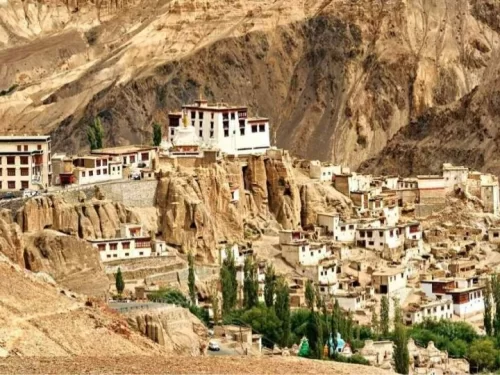
Lamayuru Monastery Ladakh close-up view of white gompa and clustered village buildings perched on dramatic eroded moonland cliffs amid barren Himalayan mountains, key stop on Leh Kargil highway in Lad Monastery

Lamayuru Monastery

Lamayuru Monastery, also known as Tharpa Ling, is one of the oldest and largest Tibetan Buddhist monasteries in Ladakh, situated at an elevation of approximately 3,510 meters (11,516 feet) on the Srinagar-Leh Highway.
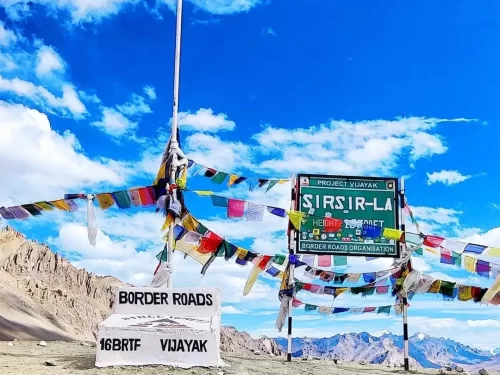
Sirsir La Pass BRO sign Project Viyayak 16BRTF Ladakh blue sky clouds, colorful prayer flags rocky arid mountains; perfect Spiti Valley Ladakh adventure tour package. Mountain Pass

Sirsir La

Sirsir La is a remote high altitude mountain pass in Ladakh that connects Lamayuru with the isolated village of Photoksar.
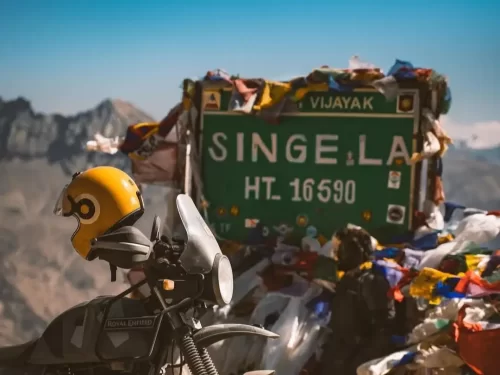
Royal Enfield biker yellow helmet at Singe La Pass HT 16590 ft Lahaul Spiti sunny day, prayer flags snow peaks; perfect Ladakh Manali tour package. Mountain Pass

Singe La

Singe La is a high altitude mountain pass in Zanskar that connects Lamayuru with the remote village of Lingshed.

Frequently Asked Questions About Moonland

Moonland Lamayuru is located near Lamayuru village on the Srinagar Leh Highway in western Ladakh. It lies about 125 kilometers from Leh city and is known for its unusual moonlike terrain.
Moonland Lamayuru can be reached from Leh city by driving toward Kargil on National Highway 1. The journey usually takes around three to four hours depending on traffic and road conditions.
There is no separate entry fee specifically for Moonland Lamayuru as it is a natural landscape viewable from the highway and nearby viewpoints.
The best time to visit Moonland Lamayuru in Ladakh is between May and October when the highway remains open and the weather allows clear views of the unique formations.
Most travelers spend 20 to 40 minutes exploring Moonland Lamayuru viewpoints. It is often combined with a visit to Lamayuru Monastery during the same trip from Leh city.
Moonland Lamayuru is suitable for family travel because it requires minimal walking and can be enjoyed from roadside viewpoints. Visitors of all age groups can experience the landscape comfortably.
Guesthouses and small hotels are available in Lamayuru village near Moonland Lamayuru. Larger accommodation options and restaurants can be found in Leh city or Kargil.
Visitors at Moonland Lamayuru can experience dramatic eroded hills that resemble a lunar surface. The landscape changes color with sunlight, creating striking visual effects against the surrounding mountains.
Moonland Lamayuru can sometimes be visited during winter months if the Srinagar Leh Highway remains open. Travel should be planned according to current road conditions from Leh city authorities.
Photography is allowed at Moonland Lamayuru and it is one of the most photographed landscapes in western Ladakh. The terrain offers wide open views ideal for scenic photography.
Mobile network coverage near Moonland Lamayuru in Ladakh is limited and may be intermittent. Connectivity improves as travelers move closer to Leh city or larger towns along the highway.

Loved this place ? Let’s Plan Your Ladakh Trip

Get customized Ladakh tour planning designed around altitude comfort, acclimatization time, weather windows, and real Himalayan road conditions. Whether you are visiting for high mountain passes, monasteries, lakes, or remote valley experiences, our exper

⚡ Quick Response | 💰 Free consultation | 🕒 24×7 expert support

×

Plan Your Trip
