Lamayuru Monastery: Ancient Buddhist Site in Lamayuru, Ladakh, India

Lamayuru Monastery , Lamayuru
Tourists visit Lamayuru to explore its 11th-century architecture and to view the surrounding geological formations known as Moonland, which resemble a lunar surface. The monastery is a central site for the annual Yuru Kabgyat festival and houses a significant collection of ancient thangkas, murals, and a meditation cave associated with the scholar Naropa.

Quick Facts About Lamayuru Monastery

Entry Fee 50
Timings 06:00 - 19:00
Altitude (m) 3510
Ideal Visit Duration (hrs) 2
Best Time of Day Morning
Crowd Level Moderate
Distance from Leh (km) 115
Walking Difficulty Moderate
Parking Available Yes
Last Mile Access Road
Suitable for Kids Yes
Suitable for Seniors Moderate
Wheelchair Friendly No

Why Visit Lamayuru Monastery in Ladakh

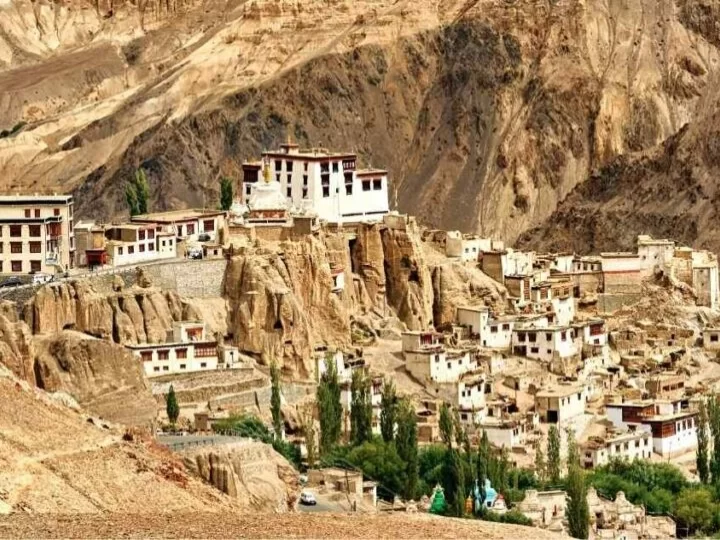
Lamayuru Monastery, also known as Yungdrung Tharpaling, is one of the oldest and most visually spectacular gompas in Ladakh, perched dramatically on a high cliff overlooking the Srinagar to Leh highway. Travelers visit this 11th-century spiritual site to witness its unique architecture and its legendary history as a place of retreat for the Great Scholar Naropa, making it a cornerstone for understanding the Drikung Kagyu lineage of Tibetan Buddhism.

The on-ground atmosphere is surreal, as the monastery sits directly above the famous "Moonland" geological formations, where eroded clay craters create a landscape resembling the lunar surface. Visitors experience a profound sense of antiquity while navigating the narrow, winding corridors of the complex, where the smell of juniper incense and the sight of ancient meditation caves carved into the rock face offer a glimpse into a thousand years of continuous monastic life.

What makes Lamayuru distinct is its breathtaking location at the heart of a prehistoric dried-up lake bed, which gives the entire area its otherworldly appearance. It is a premier destination for those interested in sacred art, housing an exceptional collection of murals, thangkas, and statues, while also serving as a central hub for the colorful Yuru Kabgyat festival, where traditional cham masks and dances bring the ancient stone walls to life.

Historical and Religious Significance of Lamayuru Monastery

Lamayuru Monastery, also known as Yungdrung Tharpaling, is one of the oldest and largest monastic institutions in Ladakh, situated at an elevation of 3,510 meters (11,516 feet). Belonging to the Drikung Kagyu lineage of Tibetan Buddhism, it is dramatically perched atop a steep sandstone cliff overlooking the "Moonland" landscape—a unique geological formation of eroded soil that resembles the lunar surface.

The history of the site dates back to the 11th century, when the Indian scholar-saint Naropa is said to have meditated in a cave here, which is still preserved within the monastery's central hall. Legend states that Naropa caused a lake that filled the valley to dry up, revealing the land where the monastery was later built. The Great Translator, Rinchen Zangpo, is credited with the formal construction of the original five temples at the site, though only one remains today.

Lamayuru has served as a sanctuary for centuries, historically known as a "Tharpaling" or "place of freedom," where even criminals could seek asylum. Today, it houses a significant collection of ancient thangkas, wall paintings, and statues. The monastery remains a vibrant cultural center, most notably during the Yuru Kabgyat festival, where monks perform sacred mask dances to commemorate the victory of good over evil. Its strategic location on the Srinagar-Leh highway continues to make it a vital spiritual stop for travelers and pilgrims alike.

Best Time to Visit Lamayuru Monastery

Lamayuru Monastery, perched at 11,520 feet amidst the "Moonland" landscape, is accessible year-round via the Srinagar-Leh Highway, yet the experience varies significantly between the harsh trans-Himalayan winter and the vibrant summer months. While the monastery remains active daily, tourist infrastructure and road connectivity from Kashmir are strictly seasonal.

  • Ideal months: June to September is the optimal window for travel, with June being particularly significant for the Yuru Kabgyat festival, where masked cham dances provide a deep cultural immersion.
  • Weather conditions: Summer days are temperate, with temperatures ranging from 15°C to 25°C, though the arid environment and high altitude result in intense solar radiation; evenings are crisp and typically require a light jacket as temperatures drop to around 8°C.
  • Periods to avoid: Avoid the peak winter months of January and February unless traveling specifically for winter photography, as temperatures plummet to -15°C and the heavy snow often closes the Zoji La pass, making road access from the west impossible; also, be wary of early August when the fragile "Moonland" soil can become unstable during rare but heavy monsoon downpours.

How to Reach Lamayuru Monastery

Lamayuru Monastery, one of Ladakh’s oldest and largest gompas, is situated at an altitude of 3,510m along the Srinagar-Leh Highway (NH1). Known for its "Moonland" landscapes, it is a primary stop for travelers transiting between Kargil and Leh.

  • Nearest Airport: Kushok Bakula Rimpochee Airport (IXL) in Leh is the closest air link, located approximately 115 km to the east. Srinagar International Airport (SXR) is about 310 km to the west.
  • Nearest Railway Station: Jammu Tawi is the nearest major railhead, roughly 570 km away. Access is strictly via the Srinagar-Leh highway.
  • Road Access via NH1: The monastery is located directly on the National Highway 1. From Leh, the drive takes about 3 hours via Nimmu and Khalsi. From Kargil, the journey is approximately 100 km and involves crossing the Namik La and Fotu La passes.
  • Last-Mile Connectivity: The highway is well-maintained by the Border Roads Organization (BRO) and is accessible by all vehicle types. Regular JKSRTC buses and shared taxis operating between Leh and Kargil stop daily at Lamayuru.
  • Traveler Logistics: The monastery is perched on a hill overlooking the village. While the main road passes the base, a paved internal road leads to the monastery gates. Visitors can easily access the complex without strenuous trekking.
  • Practical Amenities: Lamayuru village offers several guesthouses, homestays, and local restaurants catering to tourists. The nearest fuel station is in Khalsi, about 22 km toward Leh. Mobile connectivity is generally available via BSNL and Airtel postpaid.

What to Expect When You Visit Lamayuru Monastery

  • Environment and Surroundings: Established in the 11th century, the monastery is situated atop a steep cliff overlooking the "Moonland" landscape, a unique geological formation of yellowish-grey eroded soil that resembles a lunar surface. The atmosphere is profoundly spiritual and quiet, with the complex consisting of several ancient prayer halls, residential quarters for monks, and numerous stupas built into the hillside.
  • Facilities and Amenities: The monastery has a small museum housing rare artifacts, statues, and thangkas. Basic guesthouses and local eateries (dhabas) are located at the base of the monastery in Lamayuru village. Public restrooms are available but are often very basic. There is a small ticket counter for entry, and some local shops sell meditation bowls and traditional handicrafts.
  • Accessibility and Movement: Located on the Srinagar-Leh Highway (NH1), the monastery is easily reached by road. However, the internal layout involves steep, narrow stone alleys and multiple flights of uneven stairs to reach the main Dukhang (prayer hall) and the upper meditation caves. It is physically demanding for those with respiratory issues or limited mobility due to the altitude and incline.
  • Typical Visitor Behavior and Conditions: Visitors should wear modest clothing that covers shoulders and legs. It is mandatory to remove footwear before entering prayer halls and to walk clockwise around stupas and shrines. Photography is usually allowed in the courtyards but is strictly forbidden inside the ancient main temple. Most visitors spend 1.5 to 2 hours here, often arriving in the morning to witness the monks' chanting sessions.

Essential Visitor Information for Lamayuru Monastery

  • Crowd and Weather: Located at 3,510 meters, this site experiences high tourist footfall as a major highway stop; the weather is arid with sharp temperature shifts between the sun and shade, and the surrounding Moonland terrain reflects intense heat during midday.
  • Peak and Quiet Visiting Hours: Peak hours are 10:00 AM to 4:00 PM; visit at 6:00 AM to witness the morning monastic prayers or stay until sunset when the Moonland craters below the monastery are cast in dramatic, deep shadows.
  • Dress Code: Modest clothing is strictly enforced; shoulders and knees must be covered to enter the Dukhang. Footwear must be removed before entering any interior shrine or the ancient Sengge Lhakhang.
  • Safety and Practical Cautions: The monastery complex involves navigating steep, uneven stone paths and narrow stairways that can be taxing if not fully acclimatized; maintain a slow pace to avoid dizziness.
  • Photography and Conduct: Photography is permitted in the courtyards and exterior areas but is strictly prohibited inside the main prayer halls to protect the ancient frescoes; always walk clockwise around the monastery and its stupas.
  • Logistics: While situated on the main highway, the interior village roads are narrow; use the designated parking area at the base and prepare for a short, steep uphill walk to reach the main entrance.

Photography Strategy and Viewpoints for Lamayuru Monastery

Lamayuru Monastery (Yung-drung), one of the oldest and largest gompas in Ladakh, is perched atop a steep cliff overlooking the famous Moonland geological formations. Its photography profile is defined by dramatic architectural verticality and its integration into the surrounding prehistoric lakebed deposits.
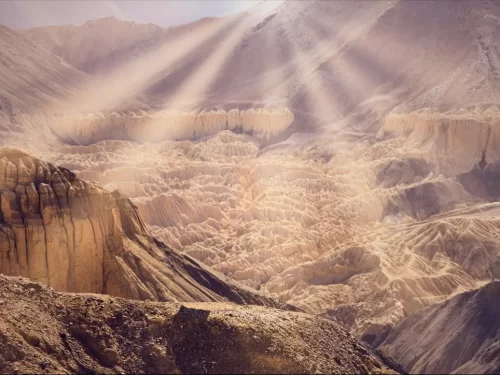
  • The Moonland Panorama: To capture the monastery in its legendary context, head to the "Moonland" viewpoint on the Srinagar-Leh Highway, approximately 2 kilometers before the village. From here, use a wide-angle lens to frame the white-washed monastic complex sitting precariously above the yellow-ochre, crater-like sedimentary formations.
  • Summit Courtyard Perspectives: The main courtyard offers a close-up view of the ancient tiered architecture. Use the colorful prayer wheels and intricately carved wooden pillars as foreground elements to lead the eye toward the central prayer hall and the stark mountains beyond.
  • Golden Hour and Shadow Play: The best time for photography is during the late afternoon (4:30 PM – 6:00 PM). The setting sun hits the Moonland basin at a low angle, emphasizing the deep furrows and ridges of the soil, while the monastery is bathed in a warm, soft glow. Early morning is also effective for capturing the mist that sometimes settles in the valley below the cliffs.
  • Interior Murals and Sacred Spaces: Inside the Seng-ge-sgang (Lion Temple), which dates back to the 11th century, photography of the ancient murals is sensitive. Use a fast lens with a wide aperture (f/1.8 or f/2.8) to shoot in low light, as flash is strictly prohibited to prevent the degradation of historical pigments.
  • Crowd and Access Factors: Lamayuru is a major stop on the highway and can become crowded by midday with tour buses. For quiet, unobstructed shots of the monastic life and the "meditation hill," visit during the early morning hours (6:00 AM – 8:00 AM) when the monks are engaged in morning prayers.
  • Rules and Restrictions: While outdoor landscape and architectural photography is encouraged, always seek verbal permission from the monks before photographing individuals or rituals. Drones are generally restricted over the monastery complex to maintain the peaceful environment and respect the privacy of the resident monastic community.

Near By Attraction

Lamayuru Moonland Ladakh dramatic sun rays illuminating eroded moonscape valleys and rugged Himalayan cliffs, iconic landscape near Lamayuru Monastery on Leh Kargil highway in Ladakh tour packages Tourist Attraction

Moonland

Moonland is a unique high-altitude landscape near Lamayuru in Leh district, Ladakh, known for its moon-like terrain formations.
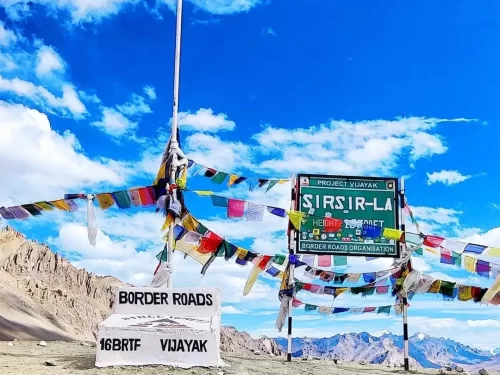
Sirsir La Pass BRO sign Project Viyayak 16BRTF Ladakh blue sky clouds, colorful prayer flags rocky arid mountains; perfect Spiti Valley Ladakh adventure tour package. Mountain Pass

Sirsir La

Sirsir La is a remote high altitude mountain pass in Ladakh that connects Lamayuru with the isolated village of Photoksar.
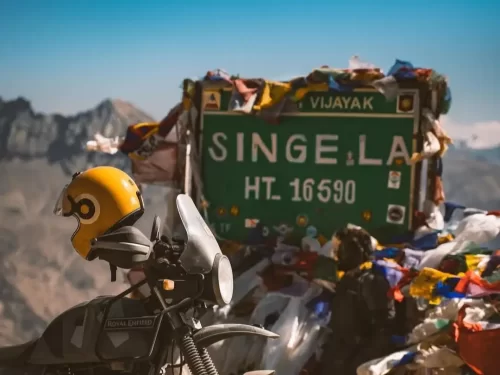
Royal Enfield biker yellow helmet at Singe La Pass HT 16590 ft Lahaul Spiti sunny day, prayer flags snow peaks; perfect Ladakh Manali tour package. Mountain Pass

Singe La

Singe La is a high altitude mountain pass in Zanskar that connects Lamayuru with the remote village of Lingshed.

Frequently Asked Questions About Lamayuru Monastery

Lamayuru Monastery is located in Lamayuru village on the Srinagar Leh Highway about 125 kilometers west of Leh city in Ladakh. It is set against dramatic moonlike landscapes in western Ladakh.
Lamayuru Monastery can be reached from Leh city by driving toward Kargil on National Highway 1. The journey usually takes around three to four hours depending on traffic and road conditions.
A small entry fee is generally charged to visit Lamayuru Monastery in Ladakh. The ticket helps maintain the monastery complex and museum areas.
The best time to visit Lamayuru Monastery in Ladakh is between May and October when the highway remains open and weather conditions are suitable for sightseeing. Clear skies during these months enhance valley views.
Most travelers need one to two hours to explore Lamayuru Monastery comfortably. This includes visiting prayer halls, courtyards, and the monastery museum while enjoying views of the surrounding landscape.
Lamayuru Monastery is suitable for family travel as it is accessible by road and requires moderate walking. Some stair climbing is involved, so visitors should move at a comfortable pace.
Guesthouses and small hotels are available in Lamayuru village near the monastery. Larger accommodation options and restaurants can be found in Leh city or Kargil.
Visitors at Lamayuru Monastery can see ancient murals, traditional prayer halls, and monastic residences along with sweeping views of the surrounding terrain. The monastery is known for its distinctive setting and active monastic life.
Lamayuru Monastery can be visited during winter months if road conditions remain open. Travel plans should be checked against current highway updates from Leh city due to seasonal snowfall.
Photography is generally allowed in the outer areas of Lamayuru Monastery. Inside prayer halls and museum sections, visitors should seek permission before taking photographs.
Mobile network coverage near Lamayuru Monastery in Ladakh is limited and may be intermittent. Connectivity is more reliable once travelers move closer to Leh city or larger towns along the highway.

Loved this place ? Let’s Plan Your Ladakh Trip

Get customized Ladakh tour planning designed around altitude comfort, acclimatization time, weather windows, and real Himalayan road conditions. Whether you are visiting for high mountain passes, monasteries, lakes, or remote valley experiences, our exper

⚑ Quick Response | πŸ’° Free consultation | πŸ•’ 24Γ—7 expert support

×

Plan Your Trip