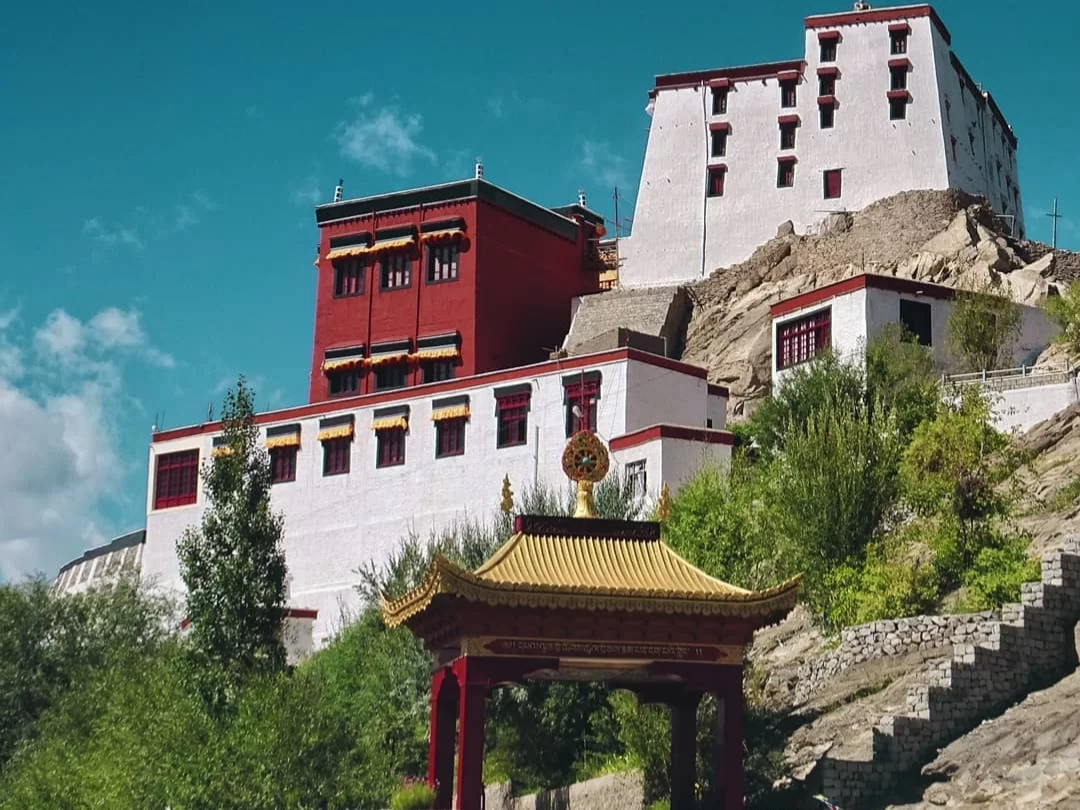
Matho Monastery Leh Ladakh Travel Guide

Matho Monastery , Leh
Matho Monastery is located around 26 km southeast of Leh and belongs to the Sakya sect of Tibetan Buddhism. Compared to larger monasteries in Ladakh, it is modest in size and receives very few visitors. The monastery is best known for the Matho Nagrang festival, during which oracles enter a trance state, making it culturally significant for locals rather than a mainstream sightseeing stop. Outside festival days, the monastery feels calm, functional, and largely untouched by tourism.

Quick Facts About Matho Monastery

Entry Fee Free
Timings 08:00 - 17:00
Altitude (m) 3650
Ideal Visit Duration (hrs) 1
Best Time of Day Morning
Crowd Level Low
Distance from Leh (km) 26
Walking Difficulty Moderate
Parking Available Yes
Last Mile Access Walk
Suitable for Kids Yes
Suitable for Seniors No
Wheelchair Friendly No

Why Visit

Matho Monastery is worth visiting for travelers interested in experiencing a working Ladakhi monastery that has remained largely untouched by mass tourism. The atmosphere here is quiet and grounded, with daily monastic routines continuing without catering to visitors. Unlike visually dramatic monasteries, Matho offers a more realistic view of monastic life in the Indus Valley.

What makes Matho Monastery special is its association with the Matho Nagrang festival, during which designated monks serve as oracles and enter trance states believed to deliver prophecies for the community. Outside festival days, the monastery remains calm and functional, making it suitable for visitors seeking cultural understanding rather than architectural spectacle.

History

Matho Monastery was established in the early 15th century and is affiliated with the Sakya sect of Tibetan Buddhism. It has traditionally served as a regional center for religious practice and learning rather than a political or royal institution.

The monastery is especially known for maintaining the oracle tradition linked to the Matho Nagrang festival, where selected monks undergo years of preparation before serving as spiritual mediums. This practice continues today and remains important to the local community, reflecting the monastery’s role in preserving living religious traditions rather than functioning as a historic monument alone.

Best Time to Visit

Matho Monastery can be visited year round, but seasonal conditions and road access play an important role in planning a comfortable visit. Due to its location above the Indus Valley, weather can change quickly and winters are especially harsh.
  • May to September: Best period to visit, with stable weather, clear roads, and comfortable daytime temperatures.
  • July or August: Ideal if you want to witness the Matho Nagrang festival, though expect local crowds during festival days.
  • October: Quieter month with crisp air and fewer visitors, suitable for short cultural visits.
  • November to April: Winter months are extremely cold and access may be limited due to snow and ice.
  • Best Time of Day: Morning hours between 9:00 AM and 11:00 AM offer better light and more comfortable walking conditions.

How to Reach

  • From Leh City: Matho Monastery is located approximately 26 km southeast of Leh. The drive usually takes 45 to 60 minutes.
  • By Taxi: Hiring a private taxi from Leh is the most reliable option. Drivers commonly combine Matho with other Indus Valley monasteries.
  • By Private Vehicle: The route follows the Leh Manali Highway along the Indus River and remains motorable during the tourist season.
  • Last Mile Access: Vehicles can reach close to the monastery base, followed by a short uphill walk on a paved and stone pathway.
  • Public Transport: There is no direct public bus service to the monastery. Travelers may need to walk from nearby village roads.
  • Winter Access: During winter months, snow and ice can make the approach road slippery and difficult.

What to Expect When You Visit

  • A small and active monastery with very few tourists on regular days.
  • Simple prayer halls with traditional statues, thangkas, and ritual objects rather than elaborate interiors.
  • Monks engaged in daily routines, giving the site a functional and lived in atmosphere.
  • Open views of the Indus Valley and surrounding fields from the monastery terrace.
  • A short uphill walk with steps and uneven surfaces to reach the main complex.
  • Minimal facilities on site, with no shops or restrooms within the monastery grounds.
  • A calm environment suited for quiet observation and short visits rather than extended sightseeing.

Important Visitor Information

  • Crowd and Weather Notes: Matho Monastery remains lightly visited most of the year, except during the Matho Nagrang festival when local crowds gather. The hilltop location is exposed to sun and wind, with cooler temperatures than the valley floor.
  • Peak and Quiet Hours: There are no fixed peak hours outside festival days. Early mornings are the quietest and most comfortable time to explore.
  • Dress Code: Modest clothing is expected. Visitors should cover shoulders and knees and remove footwear before entering prayer halls.
  • Safety Notes: The approach path includes steps and uneven stone surfaces. Visitors should move carefully, especially seniors and those not accustomed to high altitude.

Important Visitor Information

  • Crowd and Weather Notes: Matho Monastery is generally very quiet, with minimal tourist presence. Crowds increase only during the Matho Nagrang festival. Weather can be windy and cooler due to its elevated position above the Indus Valley.
  • Peak and Quiet Hours: There are no regular peak hours. Quiet hours are throughout the day, especially early morning before 10:00 AM.
  • Dress Code: Visitors should wear modest clothing covering shoulders and knees. Shoes must be removed before entering prayer halls.
  • Safety Notes: The monastery has uneven steps and stone pathways with limited railings. Visitors should walk carefully and move slowly to avoid altitude related discomfort.

Photography and Viewpoint

  • The monastery provides open viewpoints overlooking the Indus River and surrounding agricultural land, making it suitable for landscape photography.
  • Morning light offers the clearest visibility and softer shadows across the valley and nearby mountains.
  • Wide angles work best for capturing the monastery setting rather than close architectural details.
  • The site remains quiet, allowing time to compose shots without interference from crowds.
  • Wind exposure at the viewpoint can make handheld shooting easier than using tripods.
  • Photography inside prayer halls may be restricted, and permission should always be requested.
  • The location is better suited for environmental and contextual photography rather than decorative interior shots.

Near By Attraction

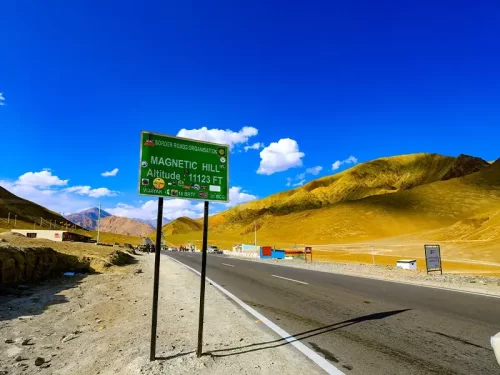
Magnetic Hill sign at Ladakh BRO during clear skies, featuring altitude 11312 ft board yellow mountains highway, perfect adventure Ladakh tour package.  Tourist Attraction

Magnetic Hill

Magnetic Hill is a gravity hill located at an elevation of approximately 3,350 meters (10,991 feet) on the Leh-Srinagar National Highway.
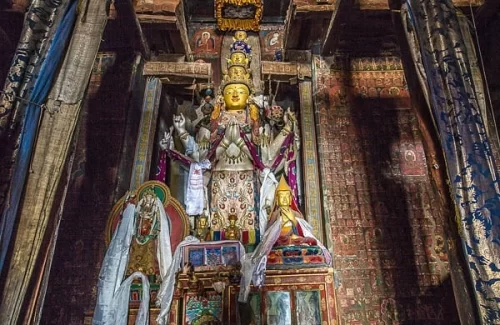
Buddha statue at Alchi Gompa Ladakh in dimly lit shrine during misty weather, featuring multiple arms prayer scarves and wall murals, perfect spiritual Ladakh tour package. Monastery

Alchi Monastery

Alchi Monastery is a historic Buddhist temple complex situated at an elevation of approximately 3,100 meters (10,170 feet) on the southern bank of the Indus River.
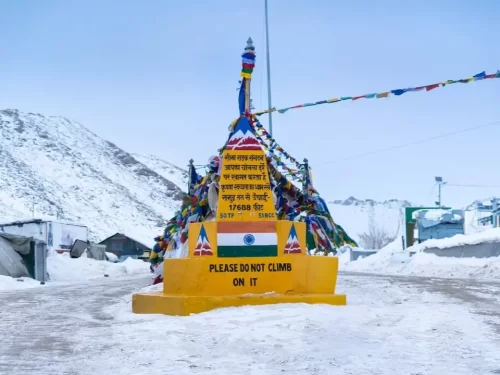
Memorial at Changla Pass 17688 ft during overcast skies, featuring prayer flags, Indian tricolor, snowy mountains, perfect spiritual adventure Ladakh tour pack Mountain Pass

Chang La Pass

Chang La is a high-altitude mountain pass situated at an elevation of approximately 5,360 meters (17,585 feet) on the road between Leh and Pangong Tso.

Frequently Asked Questions About Matho Monastery

Matho Monastery is located about 26 kilometers from Leh city in Ladakh, on the eastern bank of the Indus River in the Indus Valley region. It sits on a hill overlooking agricultural fields and surrounding mountains.
Matho Monastery can be reached within 40 to 50 minutes by car or taxi from Leh city center in Ladakh. The road is generally smooth and part of common sightseeing circuits in the valley.
Matho Monastery near Leh usually remains open to visitors during daytime hours from morning until late afternoon. Timings may vary slightly depending on religious ceremonies and seasonal conditions in Ladakh.
Matho Monastery in Ladakh typically has a small entry fee collected at the entrance. Tickets are issued on site and help support upkeep of the monastery complex.
Around one hour is sufficient to explore Matho Monastery comfortably near Leh. This allows time to visit prayer halls, small courtyards, and enjoy views of the surrounding Indus Valley.
Morning is considered an ideal time to visit Matho Monastery near Leh when the atmosphere is peaceful and lighting conditions are clear. The monastery is especially active during its annual Matho Festival in Ladakh.
Matho Monastery near Leh can be visited during winter if road conditions remain open in Ladakh. Visitors should be prepared for cold temperatures and wear appropriate winter clothing.
Matho Monastery involves climbing steps and walking on inclined paths, so visitors should expect moderate physical effort at high altitude. Senior citizens can visit but should move slowly and take breaks as needed in Leh, Ladakh.
Inside Matho Monastery near Leh, visitors can see traditional Buddhist statues, ancient murals, prayer halls, and ceremonial artifacts. The monastery offers elevated views of the Indus River landscape.
Photography is generally allowed in outer areas of Matho Monastery near Leh, while certain shrine rooms may have restrictions. Visitors should follow local guidelines and respect religious customs.
Parking space is available near the base of Matho Monastery outside Leh city. From the parking area, visitors walk uphill to reach the main entrance.
Matho Monastery near Leh can be combined with visits to Shey Palace, Thiksey Monastery, and other Indus Valley attractions in Ladakh. Its location makes it suitable for inclusion in a half day or full day sightseeing plan from Leh city.

Loved this place ? Let’s Plan Your Ladakh Trip

Get customized Ladakh tour planning designed around altitude comfort, acclimatization time, weather windows, and real Himalayan road conditions. Whether you are visiting for high mountain passes, monasteries, lakes, or remote valley experiences, our exper

⚡ Quick Response | 💰 Free consultation | 🕒 24×7 expert support

×

Plan Your Trip