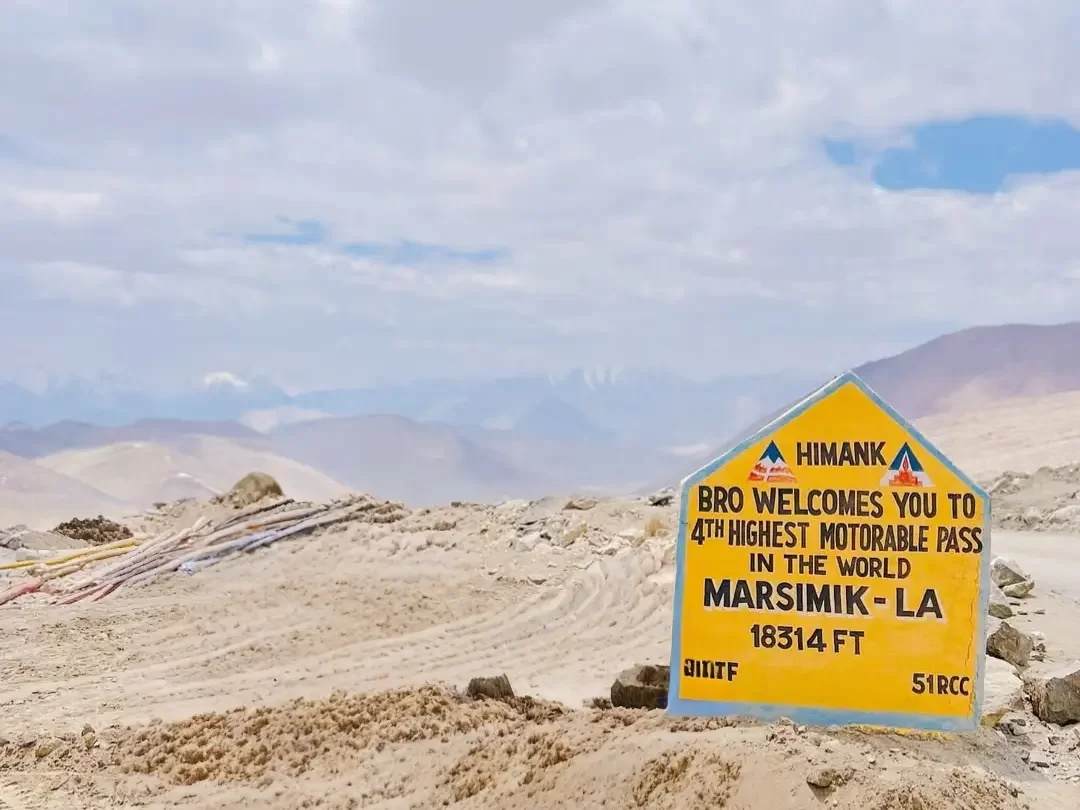
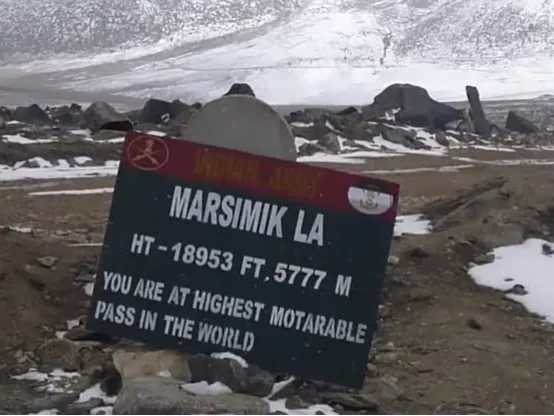
Marsimik La Pass Ladakh India

Marsimik La Pass , Pangong
Tourists visit Marsimik La to reach one of the highest motorable points in the world, often using it as a testing ground for extreme off-road driving and high-altitude endurance. The pass offers views of the Chang Chenmo Valley and the Tibetan plateau, and it features a small shrine known as Chak Mandir dedicated to Lord Shiva at the summit.

Quick Facts About Marsimik La Pass

Entry Fee Free
Timings 06:00 - 18:00
Altitude (m) 5582
Ideal Visit Duration (hrs) 1
Best Time of Day Morning
Crowd Level Low
Distance from Leh (km) 185
Distance from Phobrang (km) 42
Walking Difficulty Hard
Parking Available Yes
Last Mile Access Road
Suitable for Kids No
Suitable for Seniors No
Wheelchair Friendly No

Why Visit Marsimik La Pass in Ladakh

Marsimik La stands as one of the highest and most challenging motorable mountain passes in the world, reaching an elevation of approximately 18,314 feet. Located in the Chang Chenmo Range near the sensitive Indo-China border, it is a primary destination for hardcore adventure travelers and professional overlanders who seek to test their vehicles and personal endurance against extreme altitude and technical terrain.

The on-ground atmosphere is defined by its harsh, high-arctic desert conditions and a sense of absolute frontier isolation. The ascent is characterized by loose scree, sharp hairpin bends, and steep gradients that lead to a windswept summit where oxygen levels are significantly lower than at sea level, offering a raw and humbling experience of the Trans-Himalayan wilderness far beyond the reach of conventional tourism.

What makes Marsimik La distinct is its status as the gateway to the remote Chang Chenmo Valley and its proximity to the Line of Actual Control. It offers travelers a rare, unobstructed view of the Tibetan plateau’s vast, undulating geography and provides a unique vantage point to appreciate the strategic and environmental complexities of Ladakh’s high-altitude borderlands, making it a pinnacle achievement for off-road explorers.

Historical and Geographic Significance of Marsimik La Pass

Marsimik La is an ultra-high-altitude mountain pass situated at an elevation of approximately 5,582 meters (18,314 feet) in the Chang Chenmo Range of Ladakh. Located north of the Pangong Tso lake, it was long considered one of the highest motorable passes in the world before the construction of newer roads like Umling La. It serves as the primary gateway to the strategic Chang Chenmo Valley.

Geographically, the pass is characterized by its exceptionally rugged terrain, consisting of loose scree, sharp gradients, and a complete absence of vegetation. It acts as a formidable barrier between the Phobrang village sector and the remote valleys leading toward the Line of Actual Control (LAC). The environmental conditions at the summit are extreme, with sub-zero temperatures persisting throughout the year and oxygen levels significantly lower than at sea level.

Historically, Marsimik La has been a critical link on the ancient trade routes that connected Ladakh with the Yarkand and Kashgar regions of Central Asia. In modern history, it holds immense strategic military importance due to its proximity to the border and its role in providing logistical access to forward posts. Because it is located within a sensitive frontier zone, the pass is under the strict jurisdiction of the Indian Army, and civilian access is highly restricted, requiring specific permits that are often difficult to obtain.

Best Time to Visit Marsimik La Pass

Marsimik La, situated at a staggering 18,314 feet, is one of the highest and most challenging motorable passes in the world, located north of Pangong Tso near the Line of Actual Control. Access is strictly limited by both the extreme Himalayan weather and the sensitive nature of the border region, making it a destination only for well-prepared expeditions during the peak of summer.

  • Ideal months: July to September is the only window for travel, with August and early September offering the best chance of encountering a dry road surface on the steep, loose-gravel ascent from Phobrang.
  • Weather conditions: Even in mid-summer, the climate is arctic; daytime temperatures at the summit rarely rise above 5°C, and the pass is subjected to thin air and brutal, high-velocity winds that can induce rapid hypothermia and altitude sickness.
  • Periods to avoid: Avoid the pass from October to June as it remains under heavy snow and is physically impassable; additionally, travel should be avoided during late August if there are reports of heavy glacial melt, as the primitive tracks are highly prone to washouts and deep water crossings.

How to Reach Marsimik La Pass

Marsimik La, situated at a formidable elevation of approximately 5,582m (18,314 ft), is one of the highest motorable mountain passes in the world. Located in the Chang Chenmo Range near the Line of Actual Control, it serves as the gateway to the remote Chang Chenmo Valley and is significantly higher than the more famous Khardung La.

  • Nearest Airport: Kushok Bakula Rimpochee Airport (IXL) in Leh is the closest air link, located about 170 km away. Due to the extreme altitude of Marsimik La, it is medically essential to spend at least 4 to 5 days acclimatizing in Leh and Pangong Tso before attempting the ascent.
  • Nearest Railway Station: Jammu Tawi is the nearest major railhead, approximately 850 km away. Access is strictly via road travel from Leh, usually as a dedicated day trip from the Pangong Lake area.
  • Road Access and Route: The pass is accessed via the Leh – Karu – Chang La – Tangste – Lukung route. From the north shore of Pangong Tso (near Lukung or Phobrang), a steep and rocky track diverts toward the north to climb the Marsimik La summit.
  • Last-Mile Connectivity: The final 20 km to the summit is exceptionally challenging, consisting of loose boulders, sharp scree, and deep ruts. High-clearance 4x4 vehicles with low-range gearing or high-torque adventure motorcycles are mandatory. Standard SUVs and hatchbacks cannot navigate this terrain.
  • Permits and Restrictions: Marsimik La is located in a highly sensitive border zone. A valid Inner Line Permit (ILP) or Protected Area Permit (PAP) is required. As of 2026, special additional clearances from the District Magistrate in Leh or military authorities may be necessary, and permits are strictly checked at the Phobrang military post.
  • Realistic Travel Conditions: The pass is typically motorable only between July and September. Oxygen levels are dangerously low, and the risk of Acute Mountain Sickness (AMS) is severe. There are no facilities, shelter, or mobile networks beyond Phobrang. Travelers must carry portable oxygen, a comprehensive toolkit, and spare fuel. Stops at the summit should not exceed 10 minutes.

What to Expect When You Visit Marsimik La Pass

  • http://googleusercontent.com/map_location_reference/1
  • Environment and Surroundings: [Marsimik La](http://googleusercontent.com/map_location_reference/0) stands at an extreme elevation of approximately 5,582 meters (18,314 feet), making it one of the highest motorable passes in the world. The landscape is a brutal, high-altitude desert characterized by vast scree slopes, permafrost, and panoramic views of the Chang Chenmo range. The area is subject to freezing temperatures year-round and intense, gale-force winds that offer no natural shelter.
  • Facilities and Amenities: There is no civilian or commercial infrastructure at the summit. You will find no shops, medical facilities, restrooms, or permanent shelters. Aside from a small stone shrine and prayer flags, the pass is entirely undeveloped. Travelers must be completely self-reliant, carrying emergency oxygen, adequate fuel, and survival gear, as the nearest support is found at distant military outposts or the village of Phobrang.
  • Accessibility and Movement: The road to the pass is notorious for being exceptionally difficult, consisting of loose rocks, deep sand, and steep gradients that challenge even experienced off-road drivers. A high-clearance 4x4 vehicle in peak mechanical condition is mandatory. Due to its strategic location near the Line of Actual Control (LAC), access is strictly regulated; a specific Inner Line Permit (ILP) and military clearance are required, and the pass is often closed to civilians depending on security conditions.
  • Typical Visitor Behavior and Conditions: Due to the extreme altitude and thin air, visitors typically limit their stay at the summit to 5–10 minutes to avoid the rapid onset of Acute Mountain Sickness (AMS). Physical exertion should be avoided entirely. The route sees very little traffic, creating a sense of total isolation; mechanical failures are high-risk here because there is no mobile network coverage and help may be hours or even days away.

Essential Visitor Information for Marsimik La Pass

  • Crowd and Weather: Located at approximately 5,582 meters (18,314 feet), Marsimik La is one of the highest motorable passes in the world and remains largely uncrowded; the weather is brutally cold with thin air and persistent, high-velocity winds that sweep across the Chang Chenmo Range.
  • Peak and Quiet Visiting Hours: Recommended crossing is between 10:00 AM and 12:30 PM; avoid the pass after 2:00 PM as freezing winds intensify and the long, rugged descent toward Phobrang must be completed before the temperature plummets at dusk.
  • Dress Code: Expedition-grade layering is mandatory; wear a heavy windproof down jacket, thermal base layers, and insulated gloves. Polarized sunglasses are essential to combat intense UV radiation and snow glare.
  • Safety and Altitude Cautions: The risk of Acute Mountain Sickness (AMS) is severe due to the extreme elevation; limit your time at the summit to 10 minutes and ensure you have spent at least 3-4 days acclimatizing at the altitude of Leh or Pangong before attempting the climb.
  • Vehicle and Terrain: The track is notoriously difficult, consisting of steep gradients, loose boulders, and deep sand; only high-clearance 4x4 vehicles in peak mechanical condition should attempt this, as there is zero roadside assistance or mobile connectivity.
  • Permits: Due to its extreme proximity to the Line of Actual Control (LAC), a specific Inner Line Permit (ILP) with additional military clearance is strictly required and is verified at the Phobrang check post.

Strategic Photography and Viewpoints for Marsimik La Pass

Marsimik La, standing at an extreme altitude of approximately 5,582 meters (18,314 feet), is one of the highest motorable passes in the world. Located in the Chang Chenmo Range near the Line of Actual Control (LAC), its photography profile is characterized by raw, unpaved terrain, vast visibility toward the Tibetan plateau, and a distinct near-space atmospheric aesthetic.
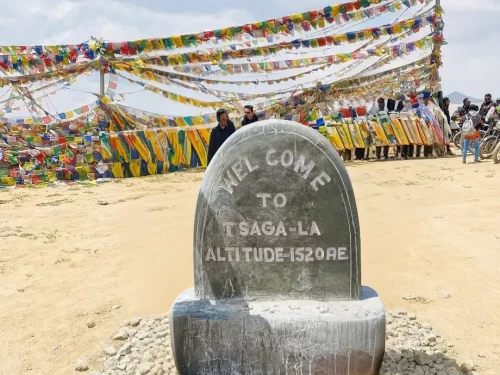
  • Summit Panoramic Perspective: The pass offers an unobstructed 360-degree view of the Trans-Himalayan desert. From the prayer-flag-heavy summit, use a wide-angle lens (14-24mm) to capture the curvature of the horizon against the deep indigo sky, which appears significantly darker at this altitude due to reduced atmospheric scattering.
  • Leading Lines of the Ascent: The road to Marsimik La is a rugged, unpaved track. Photographing the winding gravel path from the mid-ascent points provides a powerful visual narrative of the remote and technical nature of the climb. Position your camera at a low angle to emphasize the sharp scree and rocky textures in the foreground.
  • Optimal Lighting and High-Altitude Contrast: The best window for photography is between 10:00 AM and 1:00 PM. While usually avoided elsewhere, the midday sun here is necessary to penetrate the deep shadows of the steep, barren valleys. A circular polarizer is mandatory to manage the intense UV glare and to prevent the landscape from appearing "washed out" in the thin air.
  • Equipment Resilience and Stability: High-velocity winds and sub-zero temperatures are constant. Use a heavy, weighted tripod to prevent camera shake and keep spare batteries in an inner jacket pocket, as the cold will deplete them rapidly. Given the fine dust and grit, avoid changing lenses in the open air to protect your sensor.
  • Strict Security and Drone Restrictions: Marsimik La is located in a highly sensitive border zone. While landscape photography is generally permitted, it is strictly forbidden to photograph military installations, personnel, or convoys. Drones are prohibited in this entire sector due to national security regulations and proximity to the LAC.
  • Physical Constraints for Photographers: At over 18,000 feet, the oxygen levels are 50% lower than at sea level. Limit your physical exertion when moving gear; avoid long hikes from your vehicle for "better angles" to prevent the onset of Acute Mountain Sickness (AMS).

Near By Attraction

Tsaga La Pass Ladakh welcome stone monument altitude 5200m multicolored Tibetan prayer flags tourists motorcycles gravel ground blue sky; high-altitude adventure Leh photography heritage package. Mountain Pass

Tsaga la Pass

Tsaga La is a high-altitude mountain pass situated at an elevation of approximately 4,611 meters (15,128 feet) in the Leh district, connecting the villages of Tsaga and Loma.
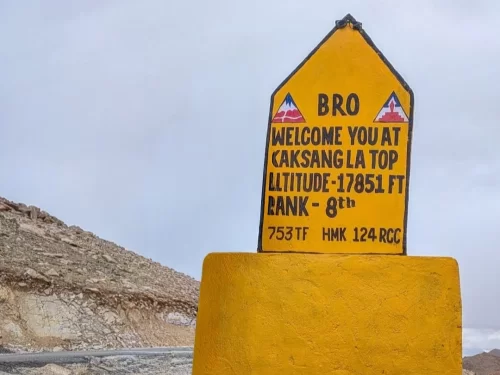
BRO milestone Welcome You at Kaksang La Top Altitude 17851 FT Rank – 8th against barren high-altitude mountains under cloudy sky, ideal for Ladakh road trip photogra Mountain Pass

Kaksang La Pass

Kaksang La is a high-altitude mountain pass situated at an elevation of approximately 5,438 meters (17,841 feet) in the Leh district of Ladakh.
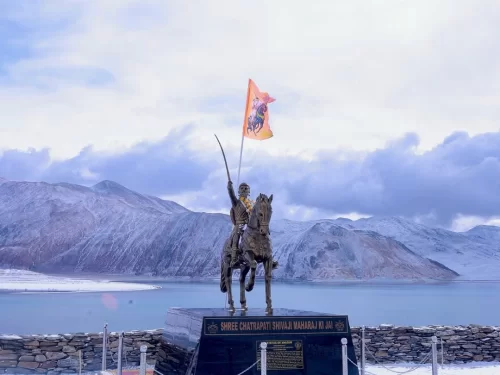
Pangong Lake Ladakh winter Chhatrapati Shivaji Maharaj statue bronze equestrian sword saffron flag pedestal snowy mountains turquoise water cloudy sky stone wall railing, historical monument adventure tour package.  Mountain

Pangong Tso

Pangong Tso is the world's highest saltwater lake, famous for its mesmerizing ability to change colors from turquoise to deep blue.

Frequently Asked Questions About Marsimik La Pass

The best time to visit Marsimik La Pass is between July and September when the high altitude track is generally clear of heavy snow and weather conditions are relatively stable.
Driving from the Lukung or Phobrang side of Pangong Lake to Marsimik La Pass typically takes three to four hours due to extremely steep gradients and rough off road terrain.
A special Inner Line Permit with specific mention of Marsimik La Pass is required because the route lies in a highly sensitive border zone of eastern Ladakh.
Oxygen levels at Marsimik La Pass are significantly lower than in Leh and can be nearly fifty percent of sea level concentration due to its elevation above 18,000 feet.
There are no food stalls fuel stations or restroom facilities at Marsimik La Pass so travelers must carry sufficient water snacks and emergency supplies.
A high clearance 4x4 vehicle with strong low gear capability is strongly recommended for Marsimik La Pass because the route includes loose gravel sharp inclines and unpaved stretches.
Travelers should limit their stay at the Marsimik La Pass summit to about ten to fifteen minutes due to the extreme altitude and thin air.
Visitors should wear heavy thermal layers insulated gloves and windproof jackets because temperatures at Marsimik La Pass remain cold even during summer.
Foreign nationals are generally not permitted to visit Marsimik La Pass due to its proximity to the Line of Actual Control and strict security regulations.
Marsimik La Pass is not accessible during winter months as heavy snowfall and extreme temperatures block the unpaved mountain track.
Marsimik La Pass is not suitable for families with young children or senior citizens because of the very high altitude and lack of medical facilities in the area.
Travelers visiting Marsimik La Pass should be fully acclimatized in Ladakh for at least two to three days carry emergency oxygen if advised and avoid rapid physical exertion at the summit.

Loved this place ? Let’s Plan Your Ladakh Trip

Get customized Ladakh tour planning designed around altitude comfort, acclimatization time, weather windows, and real Himalayan road conditions. Whether you are visiting for high mountain passes, monasteries, lakes, or remote valley experiences, our exper

⚡ Quick Response | 💰 Free consultation | 🕒 24×7 expert support

×

Plan Your Trip