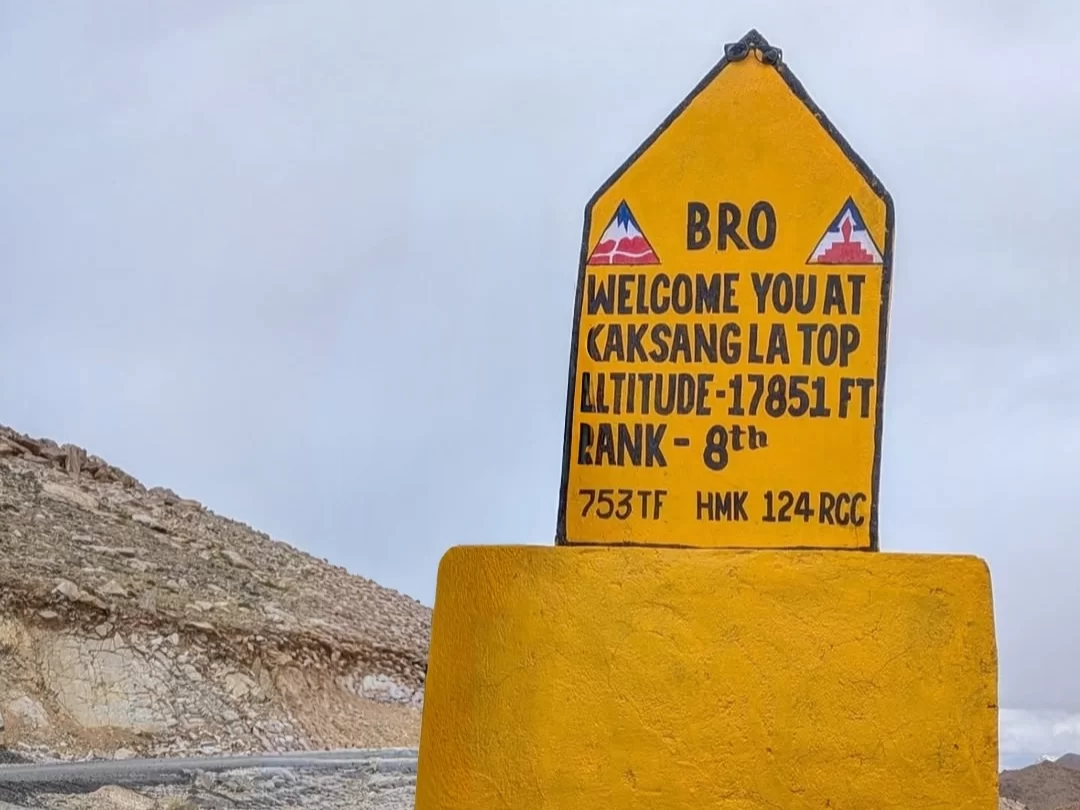
Kaksang La Pass: High-Altitude Mountain Pass in Chushul, Ladakh, India

Kaksang La Pass , Pangong
Tourists visit Kaksang La while traveling the remote route connecting Chushul to Mahe, often as part of a high-altitude circuit that includes Mirpal Tso and Yaye Tso. The pass is known for its steep gradients and provides a vantage point for viewing the plateau’s specialized topography, including nearby glacial lakes and the border mountain ranges.

Quick Facts About Kaksang La Pass

Entry Fee Free
Timings 06:00 - 18:00
Altitude (m) 5438
Ideal Visit Duration (hrs) 0.1
Best Time of Day Morning
Crowd Level Low
Distance from Leh (km) 140
Walking Difficulty Moderate
Parking Available Yes
Last Mile Access Road
Suitable for Kids No
Suitable for Seniors No
Wheelchair Friendly No

Why Visit Kaksang La Pass in Ladakh

Kaksang La Pass is a formidable high-altitude crossing situated at approximately 17,841 feet, primarily sought out by hardcore overlanders and motorcyclists. It serves as a vital but grueling link on the internal route between Mahe and Chushul, offering a shorter but significantly more challenging alternative to the traditional valley roads for those heading toward the remote frontier of Pangong Tso.

The atmosphere on the pass is defined by its sheer verticality and the isolation of the Eastern Ladakh wilderness. The climb is characterized by steep, unpaved gradients and narrow switchbacks that provide an adrenaline-heavy experience, while the summit offers a stark, windswept environment with panoramic views of the Twin Lakes (Yaye Tso and Mirpal Tso) shimmering in the distance below.

What makes Kaksang La distinct is its status as one of the steepest and least-traversed motorable passes in the world, often requiring high-clearance 4x4 vehicles and expert navigation. It is a premier destination for travelers looking to test their endurance against extreme thin air and rugged terrain, providing a raw, high-altitude perspective of the Changthang plateau that few visitors to Ladakh ever witness.

Historical and Geographic Significance of Kaksang La Pass

Kaksang La Pass is an ultra-high-altitude mountain pass located in the Changthang region of Ladakh, reaching an elevation of approximately 5,438 meters (17,841 feet). Situated between the villages of Mahe and Chushul, it serves as a formidable crossing over the mountain range that separates the Indus Valley from the high-plateau borderlands.

Geographically, the pass is noted for its extreme ascent and its proximity to the Yaye Tso and Mirpal Tso lakes. It functions as a vital transit link for the Indian military and the Border Roads Organization (BRO) to maintain connectivity along the sensitive eastern frontier of Ladakh. The terrain at the summit is characterized by permafrost conditions and sparse oxygen, representing the harsh environmental realities of the Trans-Himalayan desert.

The pass is integral to the seasonal migration patterns of the Changpa nomads, who have historically navigated these high ridges to access remote summer pastures for their livestock. Due to its strategic location near the Line of Actual Control (LAC) and its extreme weather conditions, the pass remained largely inaccessible to civilians until recently and requires specific Inner Line Permits (ILP) for transit.

Best Time to Visit Kaksang La Pass

Kaksang La, one of the most formidable and remote passes in the Changthang region at an elevation of approximately 17,841 feet (5,438 meters), is a strictly seasonal crossing that connects the valleys of Chushul and Mahe. Due to its extreme isolation and lack of any transit infrastructure, the pass is only accessible during the core summer months when the high-altitude off-road tracks are clear of heavy snowdrifts.

  • Ideal months: June to September is the only viable window for travel, with July and August offering the most stable ground conditions for the steep, loose-gravel ascent.
  • Weather conditions: Even in peak summer, the pass is characterized by "knife-like" cold winds and erratic weather; daytime temperatures rarely exceed 10°C at the summit, and rapid cloud cover can cause temperatures to plunge toward freezing within minutes.
  • Periods to avoid: October to May must be strictly avoided as the pass remains buried under deep snow and is officially closed to civilian traffic; travelers should also avoid attempting the pass in late August during years of high glacial melt, as the primitive tracks near Mirpal Tso can become treacherous with slush and water crossings.

How to Reach Kaksang La Pass

Kaksang La Pass is one of the world's highest motorable passes, situated at an elevation of approximately 5,438m (17,841 ft) in the Changthang region of Ladakh. It serves as a vital link between the Indus Valley and the remote Chushul Valley, offering a shorter but significantly more challenging route than the traditional paths.

  • Nearest Airport: Kushok Bakula Rimpochee Airport (IXL) in Leh is the closest air link, located about 220 km away. Due to the extreme altitude of Kaksang La, arriving travelers must spend at least 3-4 days acclimatizing in Leh and lower-altitude villages like Chumathang before attempting this pass.
  • Nearest Railway Station: Jammu Tawi is the nearest major railhead, approximately 850 km away. Road travel from Leh is the only feasible method for tourists to reach this remote pass.
  • Road Access and Route: The pass is located on the route connecting Mahe to Chushul. The most common approach is Leh – Karu – Upshi – Chumathang – Mahe Bridge. From Mahe, the road climbs steeply toward Kaksang La and continues toward Horala and Chushul.
  • Last-Mile Connectivity: This route is characterized by steep gradients and sharp switchbacks. High-clearance 4x4 vehicles are essential; smaller hatchbacks or sedans are not suitable for this terrain. While the road has seen improvements, it remains prone to landslides and loose gravel.
  • Permits and Security: Kaksang La is located in a highly sensitive border zone. All travelers require a valid Inner Line Permit (ILP) or Protected Area Permit (PAP) specifically mentioning the Mahe-Chushul circuit. Multiple permit checks are conducted by the Indian Army and ITBP at Mahe Bridge and Chushul.
  • Realistic Travel Conditions: The pass is extremely remote with zero mobile connectivity or roadside assistance. Oxygen levels are roughly 50% of those at sea level, making altitude sickness a severe risk. There are no fuel stations between Karu and Nyoma/Chushul; travelers must carry extra fuel and a comprehensive medical kit.

What to Expect When You Visit Kaksang La Pass

  • Environment and Surroundings: Standing at an altitude of approximately 5,438 meters (17,841 feet), Kaksang La is one of the highest motorable passes in the world. The environment is a stark, high-altitude desert with dramatic views of the Changthang plateau and the nearby Mirpal Tso. The summit is characterized by intense, biting winds and extreme UV exposure, with oxygen levels significantly lower than in Leh.
  • Facilities and Amenities: There is absolutely no infrastructure at the pass or along the immediate approach. You will find no shops, medical aid centers, restrooms, or shelters. Travelers must be entirely self-reliant, carrying sufficient fuel, food, water, and emergency medical kits, as the nearest basic settlements like Chushul or Mahe are several hours away over difficult terrain.
  • Accessibility and Movement: The route is remote and physically demanding, consisting of narrow, winding tracks with steep gradients and loose gravel surfaces. A high-clearance 4x4 vehicle is essential, and the road is best suited for experienced mountain drivers. Due to its proximity to the Line of Actual Control (LAC), a valid Inner Line Permit (ILP) is mandatory, and movement may be restricted by military convoys or sudden weather shifts.
  • Typical Visitor Behavior and Conditions: Because it is off the standard tourist circuit, the pass sees very low traffic, offering profound solitude. Visitors typically spend no more than 10–15 minutes at the summit to mitigate the risk of Acute Mountain Sickness (AMS). It is common to encounter extreme cold even in mid-summer, and there is no mobile network coverage, making it a "dark zone" for communication.

What to Expect When You Visit Kaksang La Pass

  • Environment and Surroundings: Standing at an altitude of approximately 5,438 meters (17,841 feet), Kaksang La is one of the highest motorable passes in the world. The environment is a stark, high-altitude desert with dramatic views of the Changthang plateau and the nearby Mirpal Tso. The summit is characterized by intense, biting winds and extreme UV exposure, with oxygen levels significantly lower than in Leh.
  • Facilities and Amenities: There is absolutely no infrastructure at the pass or along the immediate approach. You will find no shops, medical aid centers, restrooms, or shelters. Travelers must be entirely self-reliant, carrying sufficient fuel, food, water, and emergency medical kits, as the nearest basic settlements like Chushul or Mahe are several hours away over difficult terrain.
  • Accessibility and Movement: The route is remote and physically demanding, consisting of narrow, winding tracks with steep gradients and loose gravel surfaces. A high-clearance 4x4 vehicle is essential, and the road is best suited for experienced mountain drivers. Due to its proximity to the Line of Actual Control (LAC), a valid Inner Line Permit (ILP) is mandatory, and movement may be restricted by military convoys or sudden weather shifts.
  • Typical Visitor Behavior and Conditions: Because it is off the standard tourist circuit, the pass sees very low traffic, offering profound solitude. Visitors typically spend no more than 10–15 minutes at the summit to mitigate the risk of Acute Mountain Sickness (AMS). It is common to encounter extreme cold even in mid-summer, and there is no mobile network coverage, making it a "dark zone" for communication.

Photography Strategy and Panoramic Viewpoints for Kaksang La Pass

Kaksang La, standing at a staggering 5,438 meters (17,841 feet), is one of the highest and steepest motorable passes in the Changthang region. Its photography profile is dominated by extreme verticality and an unparalleled 360-degree view of the Trans-Himalayan ranges, including a distant perspective of the Tibetan border peaks.
  • High-Altitude Panorama: The summit provides a rare unobstructed view of both the Yaye Tso and Mirpal Tso valleys from a single elevation. Use a panoramic head or a wide-angle lens (14-20mm) to capture the contrast between the turquoise lake basins below and the stark, snow-dusted summits at eye level.
  • Switchback Perspective: The ascent from the Mahe side features incredibly tight, steep hairpins. Photographing these from the mid-ascent points provides a dramatic "leading line" composition that emphasizes the engineering challenge and the sheer scale of the climb.
  • Atmospheric Clarity and UV Management: At nearly 5,500 meters, the atmosphere is thin enough to produce a deep, almost indigo sky. A high-quality UV filter and a circular polarizer are mandatory to cut through the intense high-altitude glare and to maintain the natural saturation of the brown and ochre mountain folds.
  • Golden Hour Constraints: Because Kaksang La is flanked by higher ridges to the east, the morning "photographic light" arrives later than expected. The best window for warm, directional light is between 3:00 PM and 4:30 PM, just before the sun dips behind the western peaks, casting long, dramatic shadows across the valley floor.
  • Operational Safety and Restrictions: This pass is located within a sensitive border zone. While landscape photography is allowed at the summit, do not photograph military bunkers or telecommunication infrastructure near the pass. Due to the extreme altitude and thin air, avoid prolonged physical exertion while carrying heavy camera gear; keep equipment lightweight and accessible.

Near By Attraction

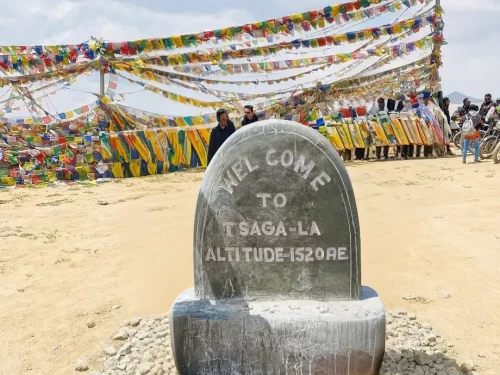
Tsaga La Pass Ladakh welcome stone monument altitude 5200m multicolored Tibetan prayer flags tourists motorcycles gravel ground blue sky; high-altitude adventure Leh photography heritage package. Mountain Pass

Tsaga la Pass

Tsaga La is a high-altitude mountain pass situated at an elevation of approximately 4,611 meters (15,128 feet) in the Leh district, connecting the villages of Tsaga and Loma.
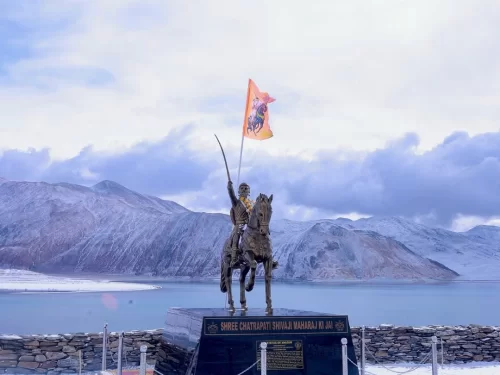
Pangong Lake Ladakh winter Chhatrapati Shivaji Maharaj statue bronze equestrian sword saffron flag pedestal snowy mountains turquoise water cloudy sky stone wall railing, historical monument adventure tour package.  Mountain

Pangong Tso

Pangong Tso is the world's highest saltwater lake, famous for its mesmerizing ability to change colors from turquoise to deep blue.
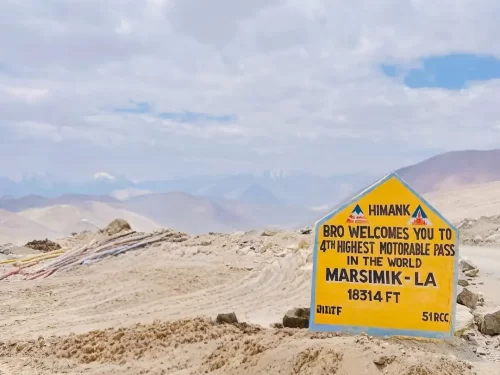
Marsimik La signboard Ladakh during clear partly cloudy day, featuring Himank BRO plaque 4th highest motorable pass 18314 ft, desert mountains, perfect adventure Ladakh tour package. Mountain Pass

Marsimik La Pass

Marsimik La is a high-altitude mountain pass situated at an elevation of approximately 5,582 meters (18,314 feet) in the eastern Ladakh region, near the northern shore of Pangong Tso.

Frequently Asked Questions About Kaksang La Pass

Kaksang La Pass is located in the remote Changthang region of Ladakh between Mahe and Chushul. It connects interior high altitude routes southeast of Leh city in the Union Territory of Ladakh.
Kaksang La Pass can be reached from Leh city by driving via Karu and crossing the Mahe bridge toward Chushul. The journey involves long mountain stretches and usually takes a full day depending on road conditions.
An Inner Line Permit is required for tourists visiting Kaksang La Pass because the pass lies in a restricted border area of Ladakh. Permits are issued by the authorities in Leh city before travel.
The best time to visit Kaksang La Pass in Ladakh is from June to September when the mountain roads are generally open and weather conditions are more stable. Access outside this period depends on snowfall and clearance.
Kaksang La Pass stands at an altitude of over 17000 feet where oxygen levels are significantly lower than in Leh city. Visitors may feel breathless or fatigued if they ascend without proper acclimatization.
There are no food stalls or accommodation facilities at Kaksang La Pass. Travelers must carry drinking water, snacks, and essential supplies from Leh city or nearby settlements.
A high clearance SUV is strongly recommended to reach Kaksang La Pass due to steep gradients, loose gravel, and rugged terrain. The route requires confident driving skills in high altitude conditions.
Travelers typically spend 10 to 20 minutes at Kaksang La Pass because of extreme altitude and cold winds. Short stops help reduce physical strain while allowing time for photographs.
Visitors should wear layered thermal clothing along with a windproof jacket when visiting Kaksang La Pass. Weather can change quickly and temperatures remain low even during summer months.
Kaksang La Pass is generally not accessible during winter months as heavy snowfall blocks the high altitude routes. Travel plans during colder months depend entirely on road clearance updates from Leh city.
Kaksang La Pass is better suited for physically fit travelers accustomed to high altitude travel. Senior citizens or young children should consider altitude sensitivity before planning the journey from Leh city.
Mobile network connectivity is not available at Kaksang La Pass in Ladakh. Signals usually drop after crossing Mahe, so communication should be arranged before leaving Leh city.

Loved this place ? Let’s Plan Your Ladakh Trip

Get customized Ladakh tour planning designed around altitude comfort, acclimatization time, weather windows, and real Himalayan road conditions. Whether you are visiting for high mountain passes, monasteries, lakes, or remote valley experiences, our exper

⚡ Quick Response | 💰 Free consultation | 🕒 24×7 expert support

×

Plan Your Trip