Likir Monastery: Ancient Buddhist Site in Likir, Ladakh, India

Likir Monastery , Leh
Tourists visit Likir to see the 25-foot gold-plated outdoor statue of Maitreya Buddha and its extensive collection of ancient thangkas, murals, and manuscripts. The monastery is a central hub for religious festivals and serves as a major architectural landmark along the route from Leh to Alchi.

Quick Facts About Likir Monastery

Entry Fee 50
Timings 08:00 - 18:00
Altitude (m) 3500
Ideal Visit Duration (hrs) 1.5
Best Time of Day Morning
Crowd Level Moderate
Distance from Leh (km) 52
Walking Difficulty Moderate
Parking Available Yes
Last Mile Access Road
Suitable for Kids Yes
Suitable for Seniors Moderate
Wheelchair Friendly No

Why Visit Likir Monastery in Ladakh

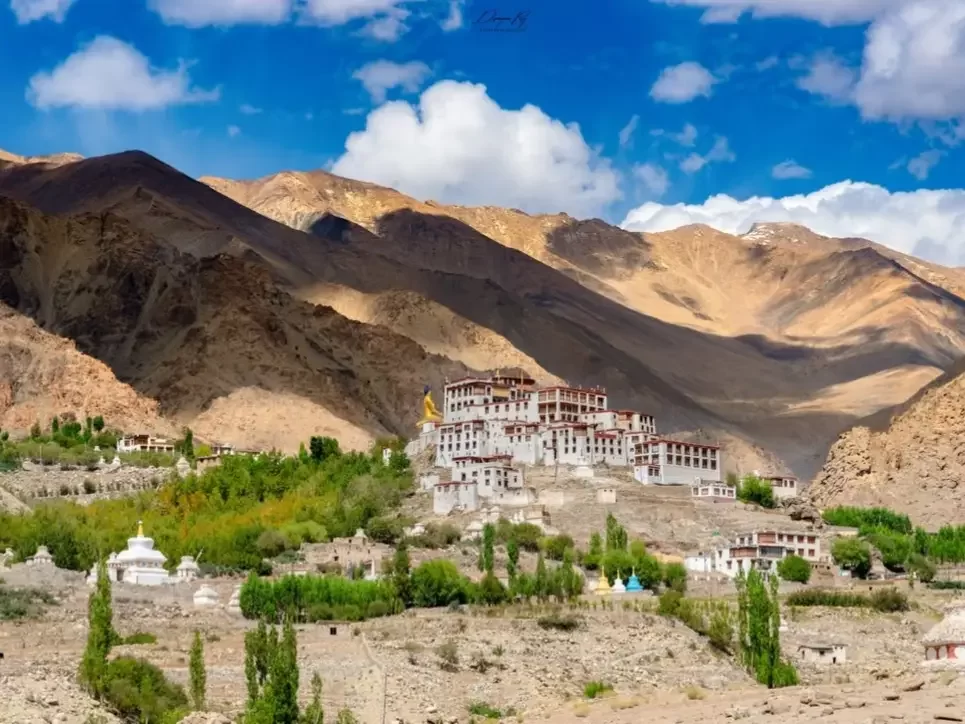
Likir Monastery, or Klu-kkhyil Gompa, is a prominent spiritual center of the Gelugpa sect located approximately 52 kilometers west of Leh. Travelers visit this site to witness the majestic 25-foot gold-plated statue of the Maitreya Buddha that dominates the landscape, serving as a powerful introduction to the scale and artistry of Ladakhi monastic architecture and the region's deep-rooted Tibetan Buddhist heritage.

The on-ground atmosphere is defined by a sense of orderly devotion and quiet grandeur, with the white-washed monastic buildings cascading down a scenic hillock overlooking the Indus Valley. Visitors often experience the rhythmic sounds of young monks in training and the aromatic presence of butter lamps, all set against a backdrop of fertile green fields and the stark, snow-capped peaks of the Ladakh Range.

Likir is distinct for its impressive collection of 18th-century thangkas and ancient manuscripts, housed within a museum that preserves the intellectual history of the order. Its unique name, meaning "The Naga Encircled," refers to the local legend of the site being guarded by the serpent kings Nanda and Takshaka, making it a vital stop for those interested in the intersection of Himalayan mythology, traditional woodblock printing, and classical religious education.

Historical and Religious Significance of Likir Monastery

Likir Monastery, also known as Klu-kkhyil Gompa, is a prominent Buddhist monastery situated at an elevation of 3,700 meters (12,139 feet) in the Indus Valley, approximately 52 kilometers west of Leh. Founded in the 11th century by Lama Duwang Chosje during the reign of King Lhachen Gyalpo, it belongs to the Gelugpa (Yellow Hat) sect of Tibetan Buddhism and is one of the oldest and most well-preserved religious institutions in Ladakh.

The monastery is most iconic for its 23-meter (75-foot) tall gilded statue of Maitreya Buddha (the Future Buddha), which towers over the complex and was consecrated in 1999. Historically, the site was chosen as it was believed to be encircled by the bodies of two great serpent spirits (Nagas or Klus), giving the monastery its name "Likir," which translates to "The Naga Encircled."

Serving as a major seat of Buddhist learning and authority, Likir Monastery houses a rich collection of ancient manuscripts, thangkas (religious scrolls), and intricate wall paintings. It also hosts the annual Dosmoche festival, a significant cultural event involving mask dances (Cham) to ward off evil spirits. The complex remains an active residence for over 100 monks and continues to function as a vital spiritual hub for the surrounding village communities.

Best Time to Visit Likir Monastery

Likir Monastery, situated at approximately 11,500 feet in the Indus Valley, is one of Ladakh’s most accessible and architecturally significant sites. While the monastery is technically open year-round due to its proximity to the Leh-Srinagar Highway, the quality of travel is dictated by the thermal comfort of the high-altitude desert and the accessibility of the mountain passes leading into the region.

  • Ideal months: June to September is the peak window for visiting, with the Likir Dosmoche festival (typically held in February) serving as a significant draw for cultural enthusiasts willing to brave the extreme winter cold.
  • Weather conditions: Summer daytime temperatures range comfortably between 15°C and 25°C, providing perfect conditions for exploring the 75-foot outdoor Maitreya statue; however, the lack of shade and high UV index mean sun protection is essential even in cooler weather.
  • Periods to avoid: Avoid the deep winter months of December to February if you are not prepared for sub-zero temperatures (dropping to -15°C), as the monastery’s interior halls are unheated; additionally, late July can bring sporadic but heavy rain showers that occasionally cause minor debris on the short access road from the main highway.

How to Reach Likir Monastery

Likir Monastery (Likir Gompa), located approximately 52 km west of Leh, is one of Ladakh’s most accessible and architecturally significant monasteries. Situated in the Indus Valley, it is famous for its 25-foot gold-layered statue of the Maitreya Buddha and its proximity to the popular Sham Valley trek.

  • Nearest Airport: Kushok Bakula Rimpochee Airport (IXL) in Leh is the closest air link, roughly 50 km away. From the airport, the monastery can be reached in about 1.5 to 2 hours by road. Since Likir is at a slightly lower altitude than Leh (~3,200m), it is an excellent destination for early-stage acclimatization.
  • Nearest Railway Station: Jammu Tawi is the nearest major railhead, approximately 700 km away. Most visitors prefer flying into Leh or driving from Srinagar via the NH1.
  • Road Access via NH1: Likir is located just off the main Srinagar-Leh Highway. When driving from Leh, travelers follow the highway toward Nimmu (the confluence of Indus and Zanskar rivers). About 5 km after passing Saspol, a clearly marked northward diversion leads a further 5 km up a paved winding road to the monastery.
  • Last-Mile Connectivity: The road from the highway to the monastery is well-surfaced and accessible by all vehicle types, including small cars, SUVs, and motorcycles. Local buses operate daily from the Leh bus stand to Likir village, though they are less frequent than private taxis or shared cabs.
  • Traveler Logistics: The monastery is easily accessible, but the final approach involves a short walk from the parking area. Visitors often combine a trip to Likir with nearby attractions such as the Alchi Monastery, Basgo Fort, and the Magnetic Hill, all located along the same highway circuit.
  • Practical Amenities: Likir village offers basic homestays and small local eateries. The nearest fuel station is located in Leh or further west at Khalsi. Mobile connectivity (BSNL/Airtel postpaid) is generally stable near the monastery, unlike in the more remote high-altitude passes.

What to Expect When You Visit Likir Monastery

  • Environment and Surroundings: Perched on a hill overlooking the Indus Valley, the monastery is famous for its 25-meter (75-foot) gold-covered outdoor statue of Maitreya Buddha. The complex is surrounded by terraced barley fields and traditional whitewashed Ladakhi houses, offering a peaceful, monastic atmosphere far removed from the traffic of the main Srinagar-Leh highway.
  • Facilities and Amenities: The monastery houses a small museum containing ancient thangkas, manuscripts, and religious artifacts (entry fee applies). A basic café and a local handicraft center run by the monks are located near the entrance, selling handmade woolens and pottery. While there are public restrooms, they are rudimentary; more reliable facilities and guesthouses are located in Likir village below.
  • Accessibility and Movement: The monastery is approximately 52 km from Leh and is reached via a well-paved 5 km detour from the NH1. The complex involves navigating several flights of steep stone stairs and uneven paths to reach the main prayer halls (Dukhangs). It is moderately accessible, but those with mobility issues may find the climb to the upper levels and the base of the giant Buddha statue taxing.
  • Typical Visitor Behavior and Conditions: Visitors are expected to dress modestly, covering shoulders and knees, and must remove shoes before entering any prayer hall. Photography is generally permitted in the courtyard but strictly prohibited inside the main temples. The monastery is most active during the morning prayers; visitors often spend 1–2 hours exploring the various shrines and the museum while maintaining a quiet, respectful demeanor.

Essential Visitor Information for Likir Monastery

  • Crowd and Weather: Situated at approximately 3,500 meters (11,483 feet), Likir receives moderate footfall; the weather is characterized by intense high-altitude sunlight and a dry, arid climate. The courtyard where the giant Buddha stands is highly exposed and can become very hot during midday.
  • Peak and Quiet Visiting Hours: Best visited between 8:00 AM and 10:00 AM to witness morning prayers and avoid the heat; peak tourist hours are 11:00 AM to 3:00 PM. The late afternoon (after 4:00 PM) offers a quiet experience with the 25-foot gold-plated Maitreya Buddha catching the sunset light.
  • Dress Code: Respectful attire is strictly required; ensure shoulders and legs are fully covered. You must remove footwear before entering the main Dukhang (assembly hall) and the Gonkhang. Hats and caps should be removed inside the shrines.
  • Safety and Practical Cautions: The monastery involves climbing several flights of steep stone stairs; move slowly to avoid breathlessness. The sun is exceptionally strong here, so high-SPF sunscreen and a hat for the outdoor areas are essential to prevent severe sunburn.
  • Experience-Based Notes: Always circumambulate the monastery and mani walls in a clockwise direction. Photography is generally permitted in the courtyard but is strictly prohibited inside the main prayer halls containing ancient murals and thangkas.
  • Logistics: Likir is located about 52 km from Leh; while the road is well-paved, there is limited public transport. There is a small entry fee for the museum, which houses a notable collection of old manuscripts and costumes.

Photography Strategy and Viewpoints for Likir Monastery

Likir Monastery (Klu-kkhyil Gompa), founded in the 11th century, is one of Ladakh’s most visually striking Gelugpa institutions. Its photography profile is dominated by the colossal 23-meter (75-foot) gilded statue of Maitreya Buddha, which sits outdoors and overlooks the valley, providing a dramatic focal point against the stark mountain backdrop.
  • The Colossal Maitreya Buddha: The most iconic shot is taken from the courtyard at the base of the statue. To capture its full scale without extreme perspective distortion, use a wide-angle lens (16-24mm) or move back toward the monastery’s prayer wheel corridor to frame the golden figure against the open sky and distant peaks.
  • Monastic Complex Panorama: For the best wide-scale view of the tiered white-and-red architecture, stop at the road bend approximately 500 meters before reaching the main entrance. This vantage point allows you to capture the monastery "clinging" to the hill, resembling a mini-Potala Palace.
  • Optimal Lighting and Shadows: The Maitreya statue faces east. Arrive in the early morning (7:30 AM – 9:30 AM) to capture the sun hitting the gold leaf directly, creating a brilliant glow. By late afternoon, the monastery hill casts deep shadows over the courtyard, which is better for moody, high-contrast shots but less ideal for detail.
  • Interior Murals and Thangkas: Photography is generally permitted in the main assembly hall (Dukhang), but you must disable your flash to protect the ancient pigments of the murals and 18th-century thangkas. Always check with the monk on duty before filming or photographing inside the central shrines.
  • Annual Likir Dosmoche: If visiting during the annual festival (usually February), use a fast prime lens to capture the Cham masks and traditional dances. The courtyard becomes extremely crowded, so arriving early to secure a spot on the upper balconies is essential for an unobstructed high-angle view.
  • Drone Restrictions: While the monastery is not in a primary border zone, it is an active religious site. Drone use is strictly prohibited within the monastery grounds to maintain the sanctity of the space and the privacy of the resident monks.

Near By Attraction

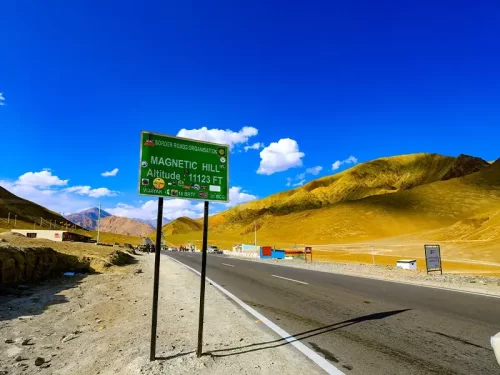
Magnetic Hill sign at Ladakh BRO during clear skies, featuring altitude 11312 ft board yellow mountains highway, perfect adventure Ladakh tour package.  Tourist Attraction

Magnetic Hill

Magnetic Hill is a gravity hill located at an elevation of approximately 3,350 meters (10,991 feet) on the Leh-Srinagar National Highway.
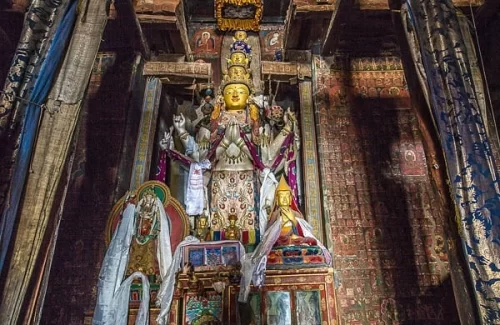
Buddha statue at Alchi Gompa Ladakh in dimly lit shrine during misty weather, featuring multiple arms prayer scarves and wall murals, perfect spiritual Ladakh tour package. Monastery

Alchi Monastery

Alchi Monastery is a historic Buddhist temple complex situated at an elevation of approximately 3,100 meters (10,170 feet) on the southern bank of the Indus River.
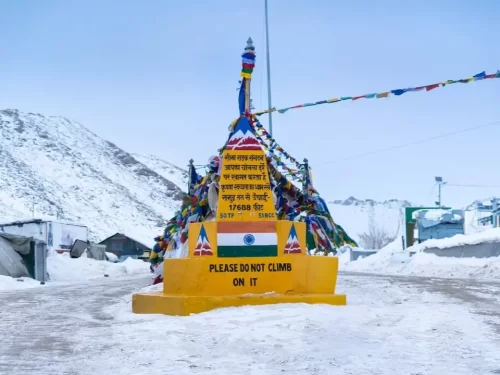
Memorial at Changla Pass 17688 ft during overcast skies, featuring prayer flags, Indian tricolor, snowy mountains, perfect spiritual adventure Ladakh tour pack Mountain Pass

Chang La Pass

Chang La is a high-altitude mountain pass situated at an elevation of approximately 5,360 meters (17,585 feet) on the road between Leh and Pangong Tso.

Frequently Asked Questions About Likir Monastery

Likir Monastery is located in Likir village about 50 kilometers west of Leh city in Ladakh. It sits on a hilltop overlooking the Indus Valley and is easily accessible by road.
Likir Monastery can be reached from Leh city by driving via the Leh Srinagar Highway and taking a diversion toward Likir village. The journey usually takes around one and a half hours depending on road conditions.
A small entry fee is generally charged to visit Likir Monastery in Ladakh, which helps maintain the monastery complex. Tickets are available at the entrance.
The best time to visit Likir Monastery in Ladakh is between May and October when roads are open and the weather is pleasant for sightseeing. Clear skies during these months offer better valley views.
Most travelers need 45 minutes to one hour to explore Likir Monastery comfortably. This allows time to visit the prayer halls, museum section, and the large outdoor Buddha statue.
Likir Monastery is suitable for family travel as it involves moderate walking and short stair climbs. Senior citizens and children can visit comfortably with brief rest stops.
Basic homestays and small guesthouses are available in Likir village near the monastery. A wider range of hotels and restaurants can be found in Leh city.
Visitors at Likir Monastery can see traditional prayer halls, ancient thangka paintings, Buddhist relics, and a prominent statue of Maitreya Buddha overlooking the valley. The monastery provides insight into Ladakh?s living monastic culture.
Likir Monastery can be visited during winter months if road conditions remain clear. Weather may be cold, but access from Leh city is generally possible depending on snowfall.
Photography is usually allowed in the outer courtyard and around the Buddha statue at Likir Monastery. Inside prayer halls, visitors should request permission before taking pictures.
Mobile network coverage near Likir Monastery in Ladakh is generally available but may be inconsistent. Connectivity is stronger once travelers return toward Leh city.

Loved this place ? Let’s Plan Your Ladakh Trip

Get customized Ladakh tour planning designed around altitude comfort, acclimatization time, weather windows, and real Himalayan road conditions. Whether you are visiting for high mountain passes, monasteries, lakes, or remote valley experiences, our exper

⚑ Quick Response | πŸ’° Free consultation | πŸ•’ 24Γ—7 expert support

×

Plan Your Trip